
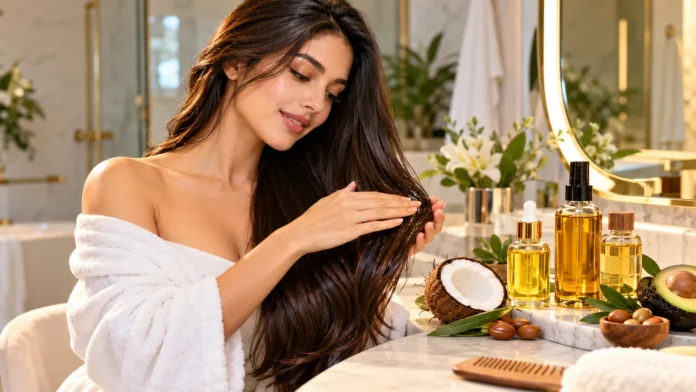

Hair oils work by coating, lubricating, or, in some cases, partially penetrating the hair fiber. Ingredients such as argan oil, coconut oil, jojoba oil, and almond oil can improve the appearance of dry-looking strands. However, not every oil works equally well for every hair type, making proper product selection important.
Whether you have straight, curly, fine, thick, or color-treated hair, understanding different oils can help you develop a suitable routine. This guide explores the best natural hair oils, their potential benefits, application methods, and practical tips for maintaining soft, manageable, and glossy-looking hair.
Why Are Hair Oils Good for Smooth and Shiny Hair?
Hair oils can improve smoothness by reducing friction between individual strands and helping the outer hair surface feel more conditioned. When the cuticle lies relatively flat, light reflects more evenly, creating a shinier appearance. Certain oils also help reduce roughness caused by everyday styling. These effects make hair easier to detangle and manage.
Natural scalp oils normally help lubricate hair, but they may not travel evenly along every strand. Curly, coily, and longer hair can experience greater dryness toward the ends. Applying suitable hair oils can supplement regular conditioning in these areas. The results depend on the oil’s composition, your hair texture, and the amount used.
Hair oils are not a complete solution for every hair concern. They can improve softness and appearance, but they cannot permanently repair severely damaged strands or replace a balanced hair care routine. Regular cleansing, appropriate conditioning, and gentle styling remain important. Choosing the right oil helps support these habits rather than replacing them.
Argan Oil: A Popular Choice for Glossy, Manageable Hair
Argan oil is widely used in hair care products because of its lightweight texture and conditioning properties. Extracted from the kernels of the argan tree, it contains fatty acids and vitamin E compounds. When applied appropriately, argan oil can help lubricate strands, improve softness, and reduce the appearance of frizz. Many people enjoy its smooth finishing effect.
Argan oil is particularly useful as a finishing product for hair that looks dull or feels rough. A small amount distributed through the lengths and ends can enhance shine without requiring a lengthy treatment. However, some formulations contain additional ingredients that influence their performance. Checking product labels helps distinguish pure argan oil from blended hair serums.
For everyday use, begin with one or two drops and adjust according to your hair’s length and thickness. Warm the oil between your palms before smoothing it over areas that need extra conditioning. Avoid applying excessive amounts near the roots if your hair becomes oily easily. The goal is comfortable softness without unwanted heaviness.
Coconut Oil: Best for Pre-Wash Conditioning and Dry Ends
Coconut oil is a popular natural hair treatment because its fatty acid composition allows some penetration into the hair fiber. Research on certain hair types suggests that coconut oil can help reduce protein loss when used appropriately. This makes it an interesting option for pre-wash conditioning. However, individual results vary according to hair condition and application.
Some people find coconut oil especially useful on coarse, porous, or chemically treated hair. Its rich texture can help lubricate strands and reduce friction during washing. Others may find that it leaves their hair feeling heavy or stiff. These differences make it important to observe your hair’s response rather than assuming coconut oil suits everyone.
To use coconut oil before shampooing, apply a small amount to dry lengths and ends. Leave it on briefly according to your comfort and hair needs, then wash thoroughly with a suitable shampoo. Avoid excessive application because removing heavy residue may require additional cleansing. Consistent, moderate use is generally more practical than applying large quantities.
Jojoba Oil: A Lightweight Option for Everyday Hair Shine
Jojoba oil is technically a liquid wax derived from the seeds of the jojoba plant. Its composition differs from many traditional vegetable oils, making it useful in lightweight conditioning formulations. It can help coat strands, improve lubrication, and create a smoother appearance. People seeking gentle shine without a particularly rich finish may appreciate jojoba-based products.
Fine or straight hair may benefit from carefully applied jojoba oil because excessive heavy conditioning can make these textures appear flat. However, jojoba oil can still create buildup when applied in large amounts. Its suitability depends on strand thickness, product formulation, and personal preferences. Starting with a very small quantity helps prevent unnecessary heaviness.
Jojoba oil is commonly included in leave-in treatments, conditioners, and hair serums. These products may combine it with other ingredients to improve spreadability and overall performance. Apply a little through the mid-lengths and ends when additional softness is desired. If your scalp is sensitive or irritated, avoid experimenting with new scalp treatments without appropriate guidance.
Sweet Almond and Avocado Oils for Softness and Conditioning
Sweet almond oil is commonly used in hair care because it contains fatty acids that can improve lubrication and softness. Its smooth texture makes it suitable for many conditioning blends. Some people use it to manage rough-looking ends or improve detangling. However, results depend on the amount applied and how the formulation interacts with individual hair strands.
Avocado oil is another plant-derived oil frequently included in rich conditioning treatments. It contains fatty acids and other naturally occurring components that contribute to its emollient properties. Avocado-based masks may appeal to people with thick or coarse hair seeking additional softness. A richer formula may be less comfortable for fine hair that becomes weighed down easily.
Both oils can be used in pre-wash treatments or suitable leave-in formulations. Start with a small amount and distribute it evenly through areas that feel rough. People with known almond allergies should review ingredients carefully and seek appropriate medical advice before using almond-derived products. Choosing a commercially formulated treatment may also provide more predictable application and rinsing.
Grapeseed and Sunflower Oils for Lightweight Hair Finishing
Grapeseed oil is often appreciated for its relatively light texture and ability to spread easily. It contains fatty acids that help lubricate hair and reduce friction between strands. When used sparingly, it may provide a smooth finish without the richness associated with some heavier oils. This makes grapeseed-based products worth considering for finer hair textures.
Sunflower oil is another commonly used ingredient in hair conditioning products. Its emollient properties can help strands feel softer and improve the appearance of dryness. It may be combined with other oils, conditioning agents, or silicones in commercial formulas. These combinations often influence how lightweight, glossy, or manageable the finished product feels.
Neither grapeseed nor sunflower oil guarantees better results than other natural oils. Hair texture, porosity, product concentration, and application technique all affect performance. Begin with a small amount and focus on areas needing additional lubrication. If the product leaves your hair looking greasy, reduce the quantity or choose a different formulation.
How to Choose the Best Hair Oil for Your Hair Type
The best hair oil depends on how your hair behaves during washing, drying, and styling. Fine hair may respond well to lightweight formulations containing jojoba or grapeseed oil. Thick or coarse hair may tolerate richer products with coconut, avocado, or argan oil. However, individual preferences and overall formulation matter more than broad hair-type categories.
Curly and coily hair may benefit from oils that support comfortable detangling and help reduce friction during styling. Color-treated hair might need additional conditioning alongside products designed for chemically processed strands. Straight hair can also benefit from lightweight finishing oils. The goal is to improve manageability while maintaining a feel that suits your preferences.
Consider your scalp condition when selecting a hair oil, particularly if you experience dandruff, itching, or sensitivity. Products intended for hair lengths are not automatically suitable for scalp application. Fragrance and botanical ingredients may also trigger irritation in some individuals. Testing a small amount and following product instructions can help identify a comfortable option.
How to Apply Hair Oil for Maximum Smoothness and Shine
Proper application can make a noticeable difference in how hair oil performs. Begin with clean or appropriately prepared hair, depending on whether the product is intended for leave-in or pre-wash use. Dispense a small amount into your palms and spread it evenly. Applying too much at once can create residue and make strands difficult to style.
For a glossy finishing effect, concentrate on the mid-lengths and ends, where hair often experiences greater dryness. Smooth the product gently over the surface without excessive pulling or rubbing. A wide-tooth comb may help distribute certain products when appropriate. Avoid applying oil near your scalp unless the treatment specifically recommends it.
Hair oils can sometimes be used on either damp or dry strands, depending on the product. Applying a suitable oil after conditioning may help reduce friction and support a smoother finish. However, oils are not automatically heat protectants. When using heated styling tools, choose a product specifically formulated for heat protection and follow its instructions.
Pre-Wash Hair Oiling vs. Leave-In Oil Treatments
Pre-wash oiling involves applying an appropriate oil before cleansing the hair. This method may help reduce friction during washing and provide additional conditioning for certain hair types. Coconut oil is commonly used for this purpose because of its particular interaction with hair fibers. The amount and duration should reflect your individual needs and comfort.
Leave-in oil treatments are designed to remain on the hair after washing or during styling. They often focus on improving softness, reducing frizz, and creating a glossy finish. Lightweight argan, jojoba, and blended hair oils are common examples. These products are generally applied in small amounts to avoid making freshly washed hair feel heavy.
Choosing between pre-wash and leave-in treatments depends on the results you want. If your hair feels rough during cleansing, a suitable pre-wash treatment may be useful. If you primarily want a smoother finishing appearance, a lightweight leave-in product may be more convenient. Both approaches can work when incorporated thoughtfully into a balanced routine.
How Often Should You Use Hair Oil?
Hair oiling frequency varies according to hair texture, washing habits, and the formulation being used. Some people apply a tiny amount of finishing oil after each wash, while others prefer occasional pre-wash treatments. There is no universal schedule that works for everyone. Hair that becomes oily quickly may require less frequent application.
Start by using your chosen oil conservatively and observing how your hair responds. If strands become easier to detangle and feel comfortable without residue, the routine may be suitable. If hair appears excessively greasy or coated, use less product or apply it less frequently. Product instructions can provide additional guidance.
Daily oiling is not essential for maintaining manageable hair. Regular conditioner may already provide sufficient lubrication for some people, making extra treatments unnecessary. Applying oil repeatedly without appropriate cleansing can contribute to buildup. A simple, consistent routine generally provides a more practical approach than layering multiple products throughout the day.
Common Hair Oil Mistakes and How to Avoid Them
One common mistake is assuming that applying more oil will automatically make hair smoother or shinier. Excessive product can leave strands looking greasy and attract unwanted buildup. Some people also apply rich oils directly to the scalp despite experiencing irritation or dandruff. Choosing the right application area is just as important as selecting the oil.
Another mistake is expecting hair oils to permanently reverse damage or guarantee faster hair growth. While suitable oils can improve lubrication and reduce some friction-related wear, they do not restore severely damaged hair to its original condition. Claims about dramatic growth from ordinary cosmetic oils should be approached carefully. Persistent scalp or hair concerns may require professional evaluation.
Finally, avoid using unfamiliar essential oils directly on the scalp without proper safety guidance. Concentrated essential oils can cause irritation or allergic reactions, even when marketed as natural treatments. Pure botanical ingredients are not automatically suitable for everyone. Choose products designed for hair use, follow label directions, and stop application if discomfort develops.
Conclusion
The best hair oils for smooth, shiny hair depend on your individual hair texture, conditioning needs, and styling habits. Argan oil can provide a glossy finishing effect, while coconut oil may be useful for pre-wash care. Jojoba, grapeseed, sweet almond, avocado, and sunflower oils offer additional conditioning options. Choosing suitable formulations helps create more manageable strands without unnecessary product buildup.
Hair oil benefits are closely connected to correct application and realistic expectations. Using small amounts, concentrating on appropriate areas, and following product instructions can improve your experience. Regular cleansing, conditioning, and gentle styling remain important for maintaining comfortable hair. Natural oils work best as part of a balanced routine rather than as replacements for everyday care.
Ultimately, achieving smoother-looking hair does not require expensive products or complicated treatments. Begin with an oil that matches your hair’s needs and observe how it performs over time. Adjust the amount and frequency according to softness, shine, and manageability. Consistent, thoughtful care can help your hair feel comfortable and look naturally glossy.
Frequently Asked Questions (FAQs)
Which hair oil is best for smooth and shiny hair?
Argan oil is a popular choice for improving hair shine and smoothness, while jojoba and grapeseed oils may suit lighter conditioning needs. The best option depends on hair texture, thickness, and product formulation.
Can I apply hair oil every day?
Some lightweight hair oils can be used daily in small amounts, depending on your hair’s needs. However, frequent application is unnecessary if it causes heaviness, buildup, or an uncomfortable scalp.
Is coconut oil or argan oil better for hair?
Coconut oil is often useful for pre-wash conditioning, while argan oil is commonly preferred for lightweight finishing and shine. Neither is universally better, and their suitability depends on individual hair characteristics.
Should hair oil be applied to wet or dry hair?
Many finishing oils can be applied to damp or dry hair, depending on their formulation. Follow the manufacturer’s instructions and focus on the lengths and ends for a smoother appearance.
Can hair oils repair damaged hair permanently?
Hair oils can improve lubrication, softness, and the appearance of damaged strands, but they cannot permanently restore severely damaged hair. Gentle handling and appropriate conditioning help reduce further wear.