

Build a Routine Around Your Hair
A good hair care routine supports the look and feel you want while fitting your hair’s texture, scalp, and lifestyle. It does not need to involve a long list of products or a daily wash. The most useful habits are often simple: cleanse when your scalp needs it, condition regularly, handle strands gently, and limit avoidable damage.
Hair can be straight, wavy, curly, coily, fine, thick, or a mix of textures, and each type may respond differently to products and techniques. Even two people with similar hair can have different needs because of scalp oiliness, coloring, climate, or styling habits. Use your own hair’s response as a guide instead of following a routine just because it is popular.
Healthy-looking hair care is also about managing expectations. Products can improve softness, shine, and manageability, but they cannot change every feature of your natural hair or guarantee faster growth. Focus on keeping your scalp comfortable and reducing dryness, breakage, and tangles; those practical goals support hair that looks more polished over time.
Understand Your Hair and Scalp Needs
Start by noticing how your hair and scalp behave between wash days. Does your scalp feel oily quickly, or do your ends feel dry before your roots do? Does your hair tangle easily, lose definition, or become weighed down by products? These observations can help you choose a routine that addresses your actual concerns.
Consider the effects of coloring, heat styling, swimming, weather, and protective hairstyles. Chemically treated or frequently heat-styled hair may need more conditioning and gentler handling, while fine hair can feel flat when heavy products build up. Your routine may also change with the seasons, exercise habits, or a new haircut.
You do not need to label your hair perfectly before starting. Make one small adjustment at a time, such as changing shampoo placement or using less styling product, and see how your hair responds. If you have ongoing scalp irritation, sudden shedding, or noticeable hair loss, seek advice from a qualified health professional rather than relying on cosmetic products alone.
Choose a Shampoo Schedule That Works for You
There is no universal number of wash days that suits every scalp and hair type. People with an oily scalp, frequent workouts, or heavy product use may prefer more frequent shampooing, while others may be comfortable washing less often. Let scalp comfort, visible buildup, and how your hair feels guide the schedule.
Dry, curly, coily, or textured hair may need a different wash routine from fine, straight hair because natural oils travel along strands differently. However, stretching wash days too long can leave some scalps uncomfortable or flaky. Adjust your frequency when needed rather than assuming that less washing is always better for healthy-looking hair.
If your scalp becomes itchy, greasy, or coated with styling products, consider washing sooner. If frequent shampooing leaves your hair feeling rough, try a gentler cleanser or change how often you wash. The aim is a clean, comfortable scalp and manageable hair, not a rigid calendar or a routine that ignores what your hair is telling you.
Shampoo the Scalp, Not Just the Strands
Before shampooing, thoroughly wet your hair with lukewarm water so the cleanser can spread more easily. Apply a modest amount of shampoo to your scalp, then massage gently with your fingertips rather than scratching with your nails. This helps lift oil, sweat, dead skin, and styling residue from the roots.
Focus cleansing where oil and buildup collect, especially around the crown, hairline, and nape. As you rinse, the lather can travel down the lengths and remove some surface residue without requiring you to scrub the ends. Rinse thoroughly, since leftover shampoo may make hair feel coated or leave the scalp uncomfortable.
A second shampoo is not always necessary, but it may help after heavy styling products or when the first wash does not remove visible buildup. If you do shampoo twice, use a small amount and keep the second cleanse gentle. Pay attention to how your scalp and hair feel afterward, then adjust the amount or method next time.
Condition to Improve Softness and Manageability
Conditioner helps soften strands, improve slip, and make detangling easier after shampooing. Apply a rinse-out conditioner mainly to the mid-lengths and ends if your hair is fine or tends to get oily near the roots. For dry, curly, or textured hair, you may prefer to distribute it through more of the lengths.
Use your fingers or a wide-tooth comb to spread conditioner evenly while minimizing tugging. Leave it on for the time stated on the product, then rinse as directed. If your ends still feel dry, try a richer formula or a small amount of leave-in conditioner, but introduce one change at a time.
Conditioner should make your hair easier to manage without leaving it limp, greasy, or coated. If that happens, use less product, apply it farther from the roots, or rinse more thoroughly. People with very dry or curly hair may enjoy a deeper conditioning treatment occasionally, though a basic rinse-out conditioner remains useful for regular wash days.
Detangle Gently to Reduce Breakage
Hair is more vulnerable to stretching and breakage when it is wet, so detangle with care after washing. Use your fingers or a wide-tooth comb, begin at the ends, and work upward in small sections. Holding the hair above a knot can reduce pulling at the scalp while you carefully loosen tangles.
The best time to detangle depends on your texture and styling routine. Some curly or coily hair is easier to comb while damp and coated with conditioner, while some straight hair is less fragile after it has partially dried. Avoid forcing a brush through knots; add slip with conditioner or a detangling product if needed.
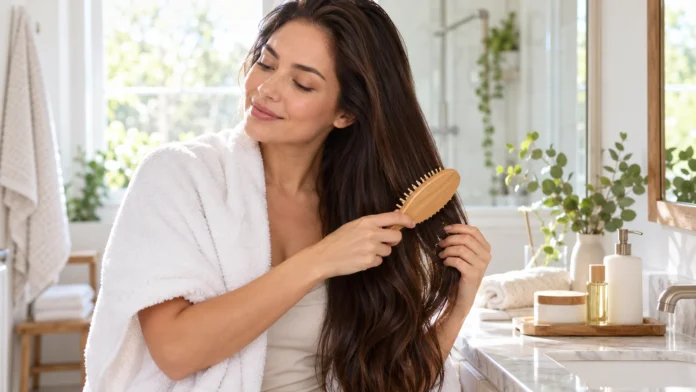
Daily brushing is not required for every hair type, and excessive brushing can create friction and split ends. Brush or comb enough to style your hair and manage tangles, using a tool suited to your texture and length. Clean your brushes regularly, because strands, lint, oil, and styling product can collect between the bristles.
Dry Hair Without Rough Rubbing
After washing, gently squeeze excess water from your hair with your hands. Wrap it in a soft towel or cotton T-shirt and press lightly to absorb moisture instead of rubbing the fabric back and forth. Rough towel drying can create friction, tangles, frizz, and breakage, especially for long or textured hair.
Letting hair air-dry can reduce exposure to heat, but it may not suit every schedule or style. If you use a blow dryer, allow hair to partially air-dry first and choose a lower or moderate heat setting. Keep the dryer moving and avoid holding hot air close to one section for an extended time.
Detangle according to what works for your texture as the hair dries. Some people find a wide-tooth comb useful while hair is damp, while others prefer to wait until it is less wet. Avoid sleeping with soaking wet hair if it tangles or feels uncomfortable, and choose a drying approach that leaves your scalp and strands feeling manageable.
Use Heat Styling Carefully
Frequent high-heat styling can leave hair looking dry, dull, or more prone to breakage. If you use a blow dryer, curling iron, or flat iron, choose a heat protectant designed for your styling method and apply it as directed. Use the lowest setting that gives you the result you want, and avoid repeated passes over the same section.
Flat irons and curling wands should generally be used on dry hair unless the tool is specifically designed for damp hair. Divide hair into manageable sections and keep the tool moving rather than clamping one spot for too long. Give your hair occasional breaks from heat by choosing air-dried styles, braids, buns, or its natural texture.
Heat protection can help reduce styling stress, but it does not make unlimited heat harmless. If your hair feels brittle or develops more split ends, reduce the temperature, shorten styling time, or use hot tools less often. A trim can remove damaged ends for a neater appearance, but it does not repair damage farther up the strand.
Select Products for Your Hair’s Needs
Choose shampoo and conditioner based on your scalp and hair concerns rather than packaging claims alone. A lightweight formula may suit fine hair, while drier or coarser strands may feel better with more conditioning. If your scalp is sensitive, a simpler formula may be more comfortable, but reactions vary from person to person.
Styling products can help define curls, smooth frizz, add volume, or hold a style in place. Start with a small amount and distribute it evenly, since excess product can make hair feel sticky or heavy. Use clarifying products only as needed to address buildup, and follow their directions rather than treating them as daily shampoo.
Avoid switching several products at once, because it becomes difficult to tell what is helping or causing a problem. Give a new product a fair trial if it feels comfortable, but stop using it if it causes persistent itching, burning, or irritation. For specific scalp conditions, a dermatologist can recommend an appropriate care plan.
Adapt the Routine for Curly, Fine, or Color-Treated Hair
Curly and coily hair often benefits from conditioning and careful detangling to support definition and reduce knots. Apply styling products to damp hair in sections if that helps distribute them evenly, then avoid excessive combing once curls have formed. A satin or silk-style pillowcase or a loose protective style may help reduce overnight friction for some people.
Fine or straight hair can lose volume when conditioners and oils are too rich or applied close to the scalp. Use lighter products where needed, rinse thoroughly, and avoid layering more styling product than your hair can handle. If the roots become oily quickly, cleanse the scalp when it needs it rather than relying only on dry shampoo.
Color-treated, relaxed, or otherwise chemically processed hair may feel more fragile and need gentle handling. Follow the aftercare instructions provided by your stylist, use conditioner consistently, and space out chemical services when possible. If you swim, spend time in sun, or use heat frequently, consider protective habits that fit your routine and reduce unnecessary stress on the strands.
Support Hair Health With Everyday Habits
Healthy-looking hair care extends beyond the shower, but no single food or supplement can guarantee a particular hair result. A balanced diet, adequate hydration, and enough sleep support general well-being, while the hair routine helps manage how strands look and feel. Be cautious about products promising dramatic growth or quick repair without reliable evidence.
Avoid hairstyles that create persistent tension or discomfort at the roots. Tight ponytails, braids, extensions, or repeated pulling can stress hair over time, so vary styles and choose a comfortable hold. Remove accessories gently, and do not use elastic bands that snag or break strands when taking them out.
Schedule trims when split ends or uneven shape bother you, though the timing depends on your style and hair goals. A trim can make ends look neater, but it does not speed up growth from the scalp. If you notice sudden or ongoing shedding, patchy hair loss, pain, or scalp changes, consult a clinician for assessment.
Conclusion
The best hair care routine is one that keeps your scalp comfortable and your strands manageable while fitting your texture and lifestyle. Cleanse as needed, focus shampoo on the scalp, condition regularly, detangle gently, and handle wet hair with care.
Limit unnecessary heat and tight styles, choose products for your actual needs, and make adjustments one at a time. Healthy-looking hair does not require a complicated regimen; consistent habits and realistic expectations often make a bigger difference than adding more products.
Pay attention to changes in your scalp or hair and seek professional guidance for persistent irritation or unusual hair loss. With a flexible routine, you can support softness, shine, definition, and manageability in a way that feels sustainable for you.
FAQs
How often should I wash my hair?
Wash when your scalp feels oily, sweaty, or coated with product. The right frequency varies with hair texture, scalp needs, activity, and styling habits, so adjust based on comfort.
Should I shampoo the full length of my hair?
Focus shampoo on the scalp, where oil and buildup collect. Rinsing lets cleanser travel down the lengths, which may be enough to clean them without extra scrubbing.
Is conditioner necessary after every shampoo?
Conditioner can soften hair and make it easier to detangle after washing. Apply it where your hair needs moisture, often the mid-lengths and ends, and adjust the amount if strands feel weighed down.
How can I reduce heat damage when styling?
Use hot tools less often, apply a suitable heat protectant, and choose a low or moderate temperature. Let hair partially air-dry first and avoid repeated passes over the same section.
What should I do if I notice unusual hair loss?
If shedding is sudden, persistent, patchy, or accompanied by scalp symptoms, speak with a qualified health professional or dermatologist. Hair care products alone may not address the underlying cause.