

Why Visit Azerbaijan?
Azerbaijan combines futuristic architecture, medieval cities, dramatic mountains, semi-desert landscapes, ancient rock art, and distinctive Caucasian cuisine within one relatively compact destination. Baku provides the energy of a modern capital, while smaller towns and mountain villages reveal older traditions. This contrast makes Azerbaijan particularly appealing to travelers who enjoy mixing city sightseeing with history, food, and outdoor scenery.
The country sits between Eastern Europe and Western Asia, which is reflected in its architecture, traditions, food, and cultural influences. Travelers can wander through stone lanes in Baku, explore Silk Road heritage in Sheki, visit mountain settlements, and see unusual natural landscapes within the same journey. A carefully planned week can therefore feel surprisingly varied.
Azerbaijan is best explored without rushing from attraction to attraction. Spend enough time in Baku before adding countryside destinations, and choose regional stops that match your interests. History lovers, photographers, hikers, food-focused travelers, and architecture enthusiasts can all build very different itineraries while still experiencing the country’s strongest cultural and natural highlights.
Explore Baku’s Old City
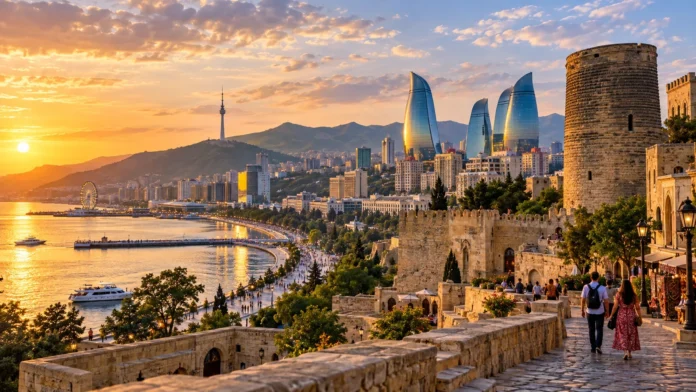
Baku’s Old City, commonly known as Icherisheher, is the historic heart of the capital and an excellent place to begin exploring Azerbaijan. Stone walls surround narrow lanes filled with traditional buildings, courtyards, shops, mosques, and architectural details. The district feels dramatically different from the glass towers and broad modern avenues found only a short walk away.
The Palace of the Shirvanshahs is one of the most important landmarks within the historic quarter. Its stone courtyards, chambers, and religious structures offer a glimpse into the city’s medieval past. Nearby, the Maiden Tower remains one of Baku’s most recognizable monuments and provides another connection to the city’s complicated history and changing architectural identity.
Allow time to walk without a strict route because some of the most atmospheric corners appear away from the busiest streets. Small cafés, workshops, balconies, and quiet passageways make the Old City more than a collection of major monuments. Visiting early in the morning or later in the day can also create a calmer experience.
See Modern Baku and the Caspian Waterfront
Modern Baku provides a striking contrast with the Old City. The Flame Towers dominate parts of the skyline, while contemporary buildings, landscaped spaces, shopping areas, and broad streets reveal Azerbaijan’s newer architectural ambitions. Seeing both historic and modern Baku during the same day demonstrates how rapidly the character of the city changes between neighborhoods.
Baku Boulevard stretches along the Caspian Sea and is ideal for an evening walk. Gardens, open spaces, views across the water, and nearby entertainment areas make the waterfront especially pleasant when daytime temperatures begin falling. The city lights create an attractive atmosphere after sunset, making the boulevard an easy addition after museums or historic sightseeing.
Higher viewpoints can provide a broader understanding of Baku’s unusual setting between the Caspian coast and dry surrounding landscapes. From elevated areas, visitors can see the Old City, waterfront, modern towers, and expanding urban districts together. Sunset is particularly rewarding because changing light emphasizes the contrast between sandstone architecture and reflective glass buildings.
Discover Gobustan Rock Art and Mud Volcanoes
Gobustan is one of the most worthwhile day trips from Baku for travelers interested in archaeology and unusual landscapes. The reserve contains thousands of ancient rock carvings depicting people, animals, hunting, boats, and everyday activities. Walking through the rocky terrain provides a powerful sense of how communities used this landscape long before modern Baku developed nearby.
The surrounding semi-desert environment adds considerably to the experience. Instead of viewing the petroglyphs inside a traditional museum, visitors move through an exposed rocky landscape shaped by wind, geology, and centuries of human activity. A visitor center can provide useful background before you explore the archaeological areas themselves.
Mud volcanoes are often combined with a Gobustan excursion because Azerbaijan has several striking examples within reach of the region. Their bubbling surfaces and barren surroundings create scenery unlike most conventional tourist attractions. Access conditions can vary after rain, so practical footwear and flexible transportation arrangements can make the excursion significantly easier.
Visit Ateshgah and Yanar Dag
The Absheron Peninsula around Baku contains attractions strongly connected with Azerbaijan’s long association with natural gas and fire. Ateshgah, often called the Fire Temple, is a historic complex associated with religious practices centered around naturally occurring flames. Its stone courtyard and surrounding chambers make it an interesting cultural stop beyond central Baku.
Yanar Dag offers a different type of experience, with flames burning along a section of hillside where natural gas reaches the surface. The attraction is relatively simple, but it provides an unusual visual connection to the natural processes that helped shape Azerbaijan’s reputation as the “Land of Fire.” Evening visits can make the flames appear more dramatic.
Ateshgah and Yanar Dag are often practical to combine within the same half-day or day excursion. This reduces transportation time and creates a clear theme linking history, religion, geology, and energy. Adding these locations to a Baku stay also helps visitors understand why imagery connected with fire appears so frequently throughout Azerbaijani identity and modern design.
Travel to Historic Sheki
Sheki is one of Azerbaijan’s most rewarding destinations outside Baku and a strong choice for travelers interested in Silk Road history. Located near the foothills of the Greater Caucasus, the city combines traditional architecture, cobbled streets, crafts, caravanserai heritage, and a greener setting than the semi-arid landscapes around the capital.
The Palace of the Sheki Khans is the city’s best-known architectural attraction. Its decorative exterior, detailed interior designs, and colorful shebeke windows demonstrate remarkable craftsmanship. Exploring the surrounding historic area afterward gives greater context, with older buildings, workshops, streets, and caravanserai structures recalling Sheki’s importance as a trading center.
Food is another reason to spend at least one night rather than making an extremely rushed visit. Sheki has distinctive culinary traditions, including regional sweets and hearty local dishes. Evening walks can also be enjoyable once day visitors leave, allowing you to experience the historic center at a slower pace beneath the surrounding mountain landscape.
Experience Khinalig and the Greater Caucasus
Travelers drawn to dramatic mountain scenery should consider exploring the Greater Caucasus beyond Azerbaijan’s main cities. Khinalig is one of the country’s best-known highland settlements, surrounded by rugged peaks and sweeping valleys. The journey itself is part of the attraction because roads climb through increasingly dramatic scenery as urban environments disappear.
Village visits provide a different perspective on Azerbaijan from Baku’s modern skyline. Stone houses, mountain agriculture, traditional lifestyles, and expansive viewpoints create an environment shaped heavily by elevation and geography. Respect local communities by treating villages as lived-in places rather than simply scenic backgrounds for photographs.
Weather becomes especially important in high mountain regions. Temperatures can be noticeably cooler than in Baku, and road conditions may change with rain, snow, or seasonal weather. Carry layers, suitable footwear, water, and enough time so your schedule does not depend on completing mountain journeys at an unrealistic pace.
Enjoy Nature and Activities Around Gabala
Gabala is a popular option for travelers looking to combine mountain landscapes with accessible recreational activities. Forested surroundings, seasonal greenery, nearby mountains, and resort facilities create a different atmosphere from Baku. It can work particularly well for families or travelers who want outdoor scenery without committing to demanding multi-day trekking.
Depending on the season, visitors can explore scenic viewpoints, lakes, forest areas, and mountain attractions. Cable-car experiences and recreational facilities may also provide elevated views without requiring a difficult hike. The region’s cooler setting can feel refreshing when temperatures around lower areas of Azerbaijan become warmer during summer.
Gabala can be included as part of a wider northwestern journey toward Sheki rather than treated as an isolated destination. Combining the two creates a useful balance between nature and cultural history. Travelers with limited time should still avoid packing too many stops into one day, since mountain roads and sightseeing can make journeys longer than expected.
Try Traditional Azerbaijani Food
Azerbaijani cuisine is one of the highlights of traveling through the country. Plov, a rice dish prepared with various meats, fruits, herbs, or other ingredients, is among the most recognizable foods. Kebabs, dolma, soups, flatbreads, grilled vegetables, and meat dishes also appear regularly, providing plenty of variety across different meals.
Regional food becomes particularly interesting when traveling outside Baku. Sheki has its own specialties, while different areas may prepare similar dishes with local variations. Rather than repeatedly ordering international food, ask restaurants what they are known for and try dishes that reflect the region you are currently visiting.
Tea is also an important part of Azerbaijani hospitality and daily social life. It is commonly enjoyed slowly, often accompanied by sweets, preserves, or small snacks. Taking time for tea in a traditional setting can become a memorable cultural experience because it encourages the slower pace that suits many historic towns and countryside journeys.
Choose the Best Time to Visit Azerbaijan
Spring and autumn are excellent seasons for many Azerbaijan itineraries because temperatures are generally comfortable for urban sightseeing and regional travel. April through June and September through October can work particularly well for travelers combining Baku, historical towns, and lower-elevation outdoor attractions. These periods often avoid the strongest summer heat and winter cold.
Summer can still be an attractive season, especially for travelers heading toward mountain regions where temperatures are cooler. Baku and lower areas may become hot, so early sightseeing and evening walks can feel more comfortable. Mountain destinations can offer an appealing escape while providing hiking, scenery, and longer daylight hours.
Winter brings a completely different atmosphere and can be attractive for travelers interested in snow-covered mountains or quieter city sightseeing. High-elevation areas may require more careful travel planning because of weather and road conditions. Whatever month you choose, pack according to the regions on your itinerary rather than assuming conditions will remain similar everywhere.
Plan Transportation and Your Azerbaijan Itinerary
Baku should generally receive at least two or three days on a first visit because the Old City, waterfront, museums, modern architecture, and nearby peninsula attractions can easily fill that time. Gobustan or the Absheron Peninsula can then be added as separate excursions. This creates a more relaxed introduction before beginning longer journeys across the country.
Travelers with a week can consider combining Baku with Sheki, Gabala, or a mountain destination. Longer trips make it easier to include several regions without spending every day moving between hotels. Organizing destinations geographically helps reduce backtracking and leaves more time for food, walking, and spontaneous stops along the way.
Trains, buses, private drivers, organized tours, and rental vehicles can all play roles depending on the route. For remote mountain areas, local drivers or tours may simplify logistics considerably. Always leave extra time before flights or major connections, especially when returning from countryside destinations where road conditions or weather may affect journey times.
Practical Tips for Visiting Azerbaijan
Pack comfortable walking shoes because historic centers, archaeological areas, and mountain villages can involve uneven surfaces. Lightweight clothing works well during warmer months, while layers are important for cooler evenings and higher elevations. Sun protection is useful around Baku, Gobustan, and other exposed landscapes where shade may be limited.
Respectful clothing is appropriate when visiting mosques, religious sites, and more traditional communities. Learning a few basic local phrases can also make interactions warmer, although travelers may encounter English more frequently in tourism-focused areas of Baku. Patience and polite communication are valuable whenever language differences make arrangements less straightforward.
Check current travel conditions before moving toward sensitive border areas or remote regions, because access and official guidance can change. Use established roads and local advice rather than assuming every route shown digitally is suitable for visitors. Thoughtful planning lets you focus on Azerbaijan’s architecture, food, mountains, and history without creating avoidable logistical problems.
Conclusion
Azerbaijan offers a memorable combination of ancient history, modern architecture, mountain scenery, unusual geology, and distinctive food. Baku provides an ideal introduction through its Old City, Caspian waterfront, and contemporary skyline, while Gobustan and the Absheron Peninsula reveal entirely different historical and natural landscapes nearby.
Traveling farther opens up even greater variety. Sheki brings Silk Road heritage and traditional craftsmanship, while Khinalig and the Greater Caucasus provide dramatic mountain scenery. Gabala adds accessible nature and recreation, making it possible to create an itinerary that balances culture, landscapes, food, and outdoor experiences.
The best Azerbaijan travel guide is ultimately one that leaves enough time to experience these contrasts rather than simply collecting attractions. Spend several days in Baku, choose countryside destinations that genuinely interest you, and allow room for tea, regional meals, and unplanned stops. That slower approach reveals far more of Azerbaijan’s character.
FAQs
How many days do you need in Azerbaijan?
Seven to ten days works well for many first-time visitors. This provides enough time for Baku, one or two nearby excursions, and several days exploring Sheki, mountains, or another regional destination.
What are the best places to visit in Azerbaijan?
Top choices include Baku’s Old City, the Caspian waterfront, Gobustan, Ateshgah, Yanar Dag, Sheki, Khinalig, and the Greater Caucasus. Gabala is also popular for mountain scenery and recreation.
What is the best time to visit Azerbaijan?
Spring and autumn are excellent for sightseeing because temperatures are generally comfortable. Summer can be useful for mountain travel, while winter appeals to visitors interested in cooler cities and snowy highland scenery.
What food should I try in Azerbaijan?
Try plov, kebabs, dolma, traditional soups, flatbreads, local sweets, and regional specialties. Azerbaijani tea culture is also worth experiencing, particularly when tea is served with preserves or sweets.
Is Baku enough for a first trip to Azerbaijan?
Baku makes an excellent starting point, but exploring beyond the capital reveals much more variety. Adding Gobustan, Sheki, or a Caucasus mountain destination creates a more complete first experience of Azerbaijan.