
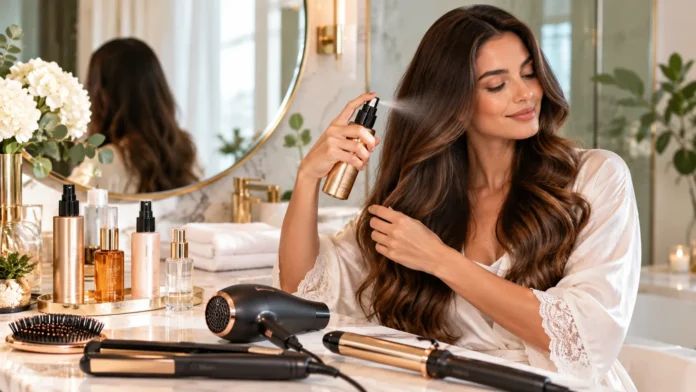

Why Heat Protectants Are Essential for Styling Hair
Heat styling tools such as flat irons, curling wands, and blow dryers can make everyday hairstyling more convenient. However, frequent exposure to high temperatures can weaken hair fibers, remove moisture, and contribute to breakage. Choosing the best heat protectants for styling hair helps reduce avoidable damage while making it easier to manage your hair during regular styling routines.
Heat protectants are specially formulated products designed to reduce the effects of heat on hair strands. They commonly contain conditioning ingredients and film-forming compounds that help distribute heat more evenly across the hair surface. Although these products cannot prevent every form of heat damage, they can support better hair care when used alongside suitable styling techniques.
Different hair types have different requirements when choosing heat protection products. Fine hair may benefit from lightweight sprays, while thicker or textured hair may prefer conditioning creams and serums. Understanding your hair’s needs, the styling tools you use, and the characteristics of different formulas can help you select effective protection without adding unnecessary products to your routine.
How Do Heat Protectants Work to Prevent Hair Damage?
Heat protectants work by forming a thin coating around the hair shaft that helps moderate heat transfer during styling. This protective layer can reduce moisture loss and improve the way hair responds to heated tools. Many formulas also contain conditioning ingredients that make hair easier to detangle and manage, reducing additional friction during the styling process.
Common heat-protective ingredients include silicones, polymers, and selected conditioning agents that coat the surface of individual strands. Ingredients such as dimethicone and amodimethicone can improve slip and help reduce friction between hair fibers. However, the effectiveness of a heat protectant depends on its complete formulation rather than the presence of one particular ingredient.
It is important to understand that heat protectants reduce potential damage rather than make hair completely resistant to high temperatures. Repeated exposure to excessive heat can still weaken the hair structure, even when protection is applied correctly. Using lower temperature settings, limiting repeated styling passes, and following product instructions are essential parts of safer heat styling.
Best Heat Protectant Sprays for Everyday Blow-Drying
Heat protectant sprays are popular for blow-drying because they are generally easy to distribute through damp hair. Many formulas help improve manageability while reducing friction during brushing and drying. Lightweight sprays are particularly useful for people who prefer simple styling routines and do not want to apply thick creams before using a hair dryer.
A good blow-dry protectant should spread evenly, feel comfortable on the hair, and suit your preferred styling method. Some sprays also include ingredients that assist with detangling or reducing static. When comparing products, look for clear instructions explaining whether the formula should be applied to damp hair and which styling temperatures it is designed to tolerate.
For everyday styling, choose a spray that matches your hair thickness and conditioning needs rather than relying entirely on advertising claims. Fine strands may respond better to lighter formulas, while dry lengths may benefit from additional conditioning. Applying the product evenly before blow-drying and using moderate heat can help support manageable hair without unnecessary exposure to high temperatures.
Best Heat Protectants for Flat Irons and Curling Wands
Flat irons and curling wands apply concentrated heat directly to hair strands, making appropriate heat protection especially important. Products intended for these tools are often available as fine mists, dry sprays, or lightweight styling serums. The best option depends on your hair type, preferred finish, and whether the manufacturer recommends applying the formula before direct-contact styling.
When choosing a heat protectant for straightening or curling, check the product’s stated temperature compatibility and application instructions. Some formulas are designed for use on dry hair, while others should be applied before blow-drying. Using a product incorrectly may affect styling results, so it is important to follow the specific directions provided on its packaging.
Hair should be completely dry before using conventional flat irons or curling wands unless the appliance is specifically designed for another method. Allow any applied product to dry fully before making contact with heated plates or barrels. Using the lowest effective temperature and avoiding repeated passes over the same section can further reduce avoidable damage.
Best Lightweight Heat Protectants for Fine Hair
Fine hair can be sensitive to heavy styling products because individual strands have a smaller diameter than coarser hair. Rich creams, thick oils, and excessive product application may leave some fine hair feeling coated or difficult to manage. Lightweight heat protectant sprays and carefully formulated leave-in products can be useful choices for people who want protection without substantial buildup.
Water-based sprays and fine-mist formulas are often convenient for distributing product evenly through delicate strands. Look for products that describe their intended use clearly and avoid assuming that a lighter texture means weaker heat protection. A well-formulated lightweight product can support heat styling when it is suitable for the tool and applied according to instructions.
Fine hair may also require additional attention to styling temperature because repeated high heat can contribute to breakage. Start with a lower setting and increase it only if necessary within the tool’s recommended range. Gentle brushing, moderate blow-drying, and limiting repeated use of heated tools can complement your heat protectant and help reduce unnecessary mechanical stress.
Best Heat Protectant Creams for Thick, Curly, and Coily Hair
Thick, curly, and coily hair can have different styling and conditioning needs depending on individual strand structure and moisture requirements. Some people prefer heat protectant creams because these formulas combine thermal protection with ingredients that improve slip and manageability. Creams can be particularly useful before blow-drying when the product is designed to work with damp hair.
A conditioning heat protectant may contain silicones, moisturizing agents, or ingredients that help reduce friction during detangling. These characteristics can make styling more comfortable, especially when working with hair that tangles easily. However, product thickness alone does not determine effectiveness, and different curly or coily hair types may respond better to different formulations.
When applying a cream, divide the hair into manageable sections so the product reaches the lengths evenly. Begin with the recommended quantity and adjust only when appropriate for your hair length and density. Gentle detangling, controlled dryer temperatures, and suitable attachments can help maintain your preferred texture while reducing unnecessary stress from styling tools.
Best Heat Protectants for Color-Treated and Damaged Hair
Color-treated, bleached, and chemically processed hair may be more vulnerable to additional damage from frequent heat styling. Chemical treatments can alter the hair’s structure, making gentle handling and appropriate conditioning particularly important. Heat protectants intended for fragile hair often combine thermal protection with conditioning ingredients that help improve manageability and reduce friction during everyday styling.
Leave-in conditioners with clearly stated heat-protective properties may be useful for hair that requires additional softness and detangling support. Some products also contain ingredients designed to improve the feel of chemically treated strands. However, claims about strengthening or repairing hair should be considered carefully because topical products cannot completely reverse all structural damage.
People with noticeably fragile hair may benefit from reducing the frequency of heated styling rather than depending entirely on stronger products. Lower temperature settings and careful handling can help limit additional wear. If hair continues breaking easily or the scalp becomes irritated after chemical treatments, professional guidance can help identify a more suitable care approach.
Key Ingredients to Look for in Heat Protection Products
Understanding product ingredients can help you compare heat protectants more confidently when choosing between sprays, creams, and serums. Many formulas rely on film-forming ingredients that coat hair strands and help moderate heat exposure. Silicones, selected polymers, and conditioning agents are commonly used because they can improve manageability while supporting the product’s protective function.
Dimethicone and amodimethicone are examples of silicones commonly found in hair care formulations. Hydrolyzed proteins and selected synthetic polymers may also appear in products designed to support thermal styling. Ingredients such as glycerin and panthenol can contribute conditioning benefits, although their presence does not automatically mean that a product provides reliable heat protection.
Temperature ratings can be useful when evaluating different formulas, particularly for flat irons and curling wands. Some products advertise protection at temperatures up to approximately 230°C or 450°F, but these claims depend on the manufacturer’s testing and formulation. A high temperature rating should never be treated as permission to use excessive heat unnecessarily.
How to Apply Heat Protectant Before Styling Hair
Correct application is important because uneven product distribution may leave sections of hair with less protection during styling. Begin by reading the product instructions to determine whether it should be used on damp or dry hair. For a damp-hair spray, gently remove excess water with a towel before applying the recommended amount throughout the lengths.
Dividing your hair into sections can help distribute a spray, cream, or serum more evenly. Focus on the areas that will be exposed to heat, including the middle lengths and ends. Use a suitable comb or your fingers to spread the product gently when recommended, taking care to avoid pulling or stretching fragile strands.
Before using a flat iron or curling wand, ensure that your hair is fully dry and that the product has settled according to its instructions. Apply additional protection only when the manufacturer recommends it for subsequent styling. Work with manageable sections, use appropriate temperature settings, and avoid holding heated tools against one area longer than necessary.
Common Mistakes to Avoid When Using Heat Protectants
One common mistake is applying a heat protectant without checking whether it is suitable for the chosen styling tool. Some products are intended primarily for blow-drying, while others are formulated for use before flat irons and curling wands. Understanding these differences helps prevent incorrect application and allows users to follow the product’s intended protective method.
Another mistake is applying excessive amounts of product in the hope of achieving greater heat protection. Too much spray, cream, or serum may cause residue without necessarily improving protective performance. Using the recommended quantity and distributing it evenly is generally more useful than layering several products that have similar functions or incompatible application requirements.
Relying on heat protectant while repeatedly using the highest tool setting is another avoidable problem. Excessive temperature and frequent styling can still cause damage despite product application. Reducing unnecessary passes, using gentler techniques, and allowing time between heat styling sessions can help limit cumulative wear while maintaining a manageable hair care routine.
How to Choose an Affordable Heat Protectant for Your Routine
The best heat protectant does not necessarily have to be the most expensive product available. Affordable sprays, creams, and serums can be suitable when they are formulated for the intended styling method and applied correctly. Instead of choosing products based only on price or popularity, compare the directions, thermal protection claims, ingredients, and conditioning benefits.
Consider how often you style your hair and which appliances you use most regularly. Someone who primarily blow-dries may prefer a lightweight damp-hair spray, while a person using a flat iron may need a product specifically suitable for dry-hair styling. Selecting a formula that fits your existing routine can make consistent application easier.
It can also help to consider fragrance preferences, scalp sensitivity, hair thickness, and the amount of product needed for each application. Starting with one suitable heat protectant makes it easier to understand how your hair responds. Combining appropriate protection with gentle detangling and reduced heat exposure often matters more than collecting numerous styling products.
Conclusion
Heat protectants are useful additions to a hair care routine when blow dryers, flat irons, or curling wands are used regularly. These products help reduce some effects of high temperatures while improving manageability through selected conditioning ingredients. Choosing a suitable formula depends on your hair type, styling preferences, and the specific appliances involved in your routine.
Lightweight sprays are convenient for many everyday blow-drying routines, while conditioning creams and serums may suit hair needing additional manageability. Products intended for direct-contact styling should be selected according to their application instructions and temperature compatibility. Regardless of the formula, heat protection works best when combined with moderate temperatures and careful styling practices.
Maintaining healthy hair involves more than applying a product immediately before using heated tools. Gentle washing, appropriate conditioning, careful detangling, and reducing unnecessary heat exposure can all support long-term hair care. By choosing a reliable heat protectant and using it correctly, you can enjoy your preferred styling routine while limiting avoidable heat-related damage.
Frequently Asked Questions (FAQs)
What is the best heat protectant for styling hair?
The best heat protectant depends on your hair type and styling tool. Lightweight sprays suit many blow-drying routines, while creams and serums may suit hair needing additional conditioning and manageability.
Should I apply heat protectant to wet or dry hair?
It depends on the product. Some heat protectants are designed for damp hair before blow-drying, while others suit dry-hair styling. Always follow application instructions and ensure hair is dry before conventional flat ironing.
Can I use heat protectant every day?
You can generally use a suitable heat protectant whenever heat styling is necessary, following its instructions. However, daily high