

Top 10 Things to Do in Rome for an Epic City Break
Rome is the kind of city where an ordinary walk can take you past an ancient temple, a Baroque fountain, a Renaissance palace, and a neighborhood trattoria within minutes. Italy’s capital contains so many famous landmarks that first-time visitors often make the mistake of trying to see everything at once. A better Rome city break combines essential attractions with slower experiences such as wandering historic streets, eating Roman dishes, and watching evening life unfold in a piazza. Ancient ruins provide the city’s dramatic foundation, while churches, museums, gardens, markets, and neighborhoods reveal centuries of later history. Whether you have three days or a full week, thoughtful planning helps you experience Rome without spending your entire holiday rushing between attractions.
The best things to do in Rome include obvious icons such as the Colosseum, Vatican Museums, Trevi Fountain, Pantheon, and Spanish Steps, but the city becomes more memorable when you move beyond individual monuments. Spend an evening in Trastevere, walk beside the Tiber, explore Villa Borghese, and taste traditional Roman food away from the busiest sightseeing streets. Comfortable shoes are essential because many of Rome’s greatest experiences occur between scheduled attractions rather than inside them. Booking high-priority sights ahead can also protect valuable city-break time during busy periods. This guide covers ten essential Rome experiences while adding practical tips on timing, neighborhoods, food, walking, and sightseeing so you can build an epic trip without turning it into an exhausting checklist.
1. Explore the Colosseum, Roman Forum and Palatine Hill
The Colosseum is the natural starting point for a first Rome itinerary because few landmarks communicate the scale of ancient Roman history as powerfully. The enormous amphitheater stands within the city’s archaeological core and remains impressive even if you have seen it countless times in photographs. Give yourself time to appreciate the exterior before entering, because different viewpoints reveal its arches, damaged walls, and relationship with the surrounding ruins. Inside, the exposed underground structures help visitors imagine how complicated the building once was beneath the arena floor. Instead of treating the Colosseum as a thirty-minute photo stop, allow the architecture to provide context for the ancient city you will explore afterward.
Your experience becomes much richer when you understand what actually happened inside the amphitheater rather than concentrating entirely on its appearance. Large public spectacles were part of Roman political and social life, turning entertainment into a powerful expression of status and imperial authority. Looking down toward the arena encourages you to imagine the crowds occupying the surrounding seating levels nearly two thousand years ago. A guided visit or good audio explanation can help distinguish historical evidence from the exaggerated images created by films and television. History does not need to feel academic here because the physical structure makes its scale tangible. Even travelers who normally avoid archaeological sites often find the Colosseum surprisingly easy to connect with.
The Roman Forum should be considered part of the same essential ancient Rome experience rather than a secondary attraction beside the Colosseum. Temples, arches, basilicas, columns, and surviving foundations occupy the valley that once formed the political, religious, and commercial heart of Roman public life. At ground level, the ruins can initially look confusing because structures from different periods overlap across a wide archaeological landscape. Give yourself time to identify several major buildings instead of attempting to understand every stone. Looking back toward the Colosseum or surrounding hills also helps you appreciate how closely connected ancient Rome’s monumental spaces were. Comfortable footwear becomes particularly important because surfaces can be rough and shade may be limited.
Palatine Hill offers a different perspective by taking you above much of the Forum and surrounding archaeological area. Traditionally associated with Rome’s earliest stories and later imperial residences, the hill contains ruins, gardens, terraces, and broad viewpoints. From elevated areas, the Forum becomes easier to understand because you can see how temples, roads, and public buildings fit together below. This is also an excellent place to slow down after spending time in more crowded archaeological sections. Bring water during warm weather and avoid scheduling your visit at the most uncomfortable part of a very hot afternoon. Ancient Rome is far more enjoyable when you have enough energy to look around rather than simply searching for the nearest exit.
Plan roughly half a day for the broader archaeological area if the Colosseum, Roman Forum, and Palatine Hill are major priorities. Starting earlier can reduce heat and leave the afternoon available for a relaxed lunch and another nearby neighborhood. Monti, located close to the ancient sites, works particularly well afterward because its streets provide cafés, restaurants, and a more intimate atmosphere. Avoid scheduling the Vatican Museums immediately after a substantial ancient Rome visit, since combining two enormous attractions can create sightseeing fatigue. Rome rewards visitors who balance major monuments with lighter periods. Treat the Colosseum complex as the centerpiece of one part of the day rather than the beginning of an endless marathon through every landmark.
2. Spend Time at the Vatican Museums and St Peter’s Basilica
The Vatican Museums deserve several hours because they contain far more than the single famous room many visitors rush toward. Galleries, sculptures, tapestries, maps, archaeological objects, decorated rooms, and religious art create an enormous collection that can quickly become overwhelming without some priorities. Decide before arriving whether you want a broad overview or whether particular sections matter most to you. Trying to study every object can turn a fascinating museum into an endurance exercise. Move slowly enough to notice ceilings, courtyards, and architectural details between major works. A focused visit usually feels much more rewarding than attempting to complete the entire complex as though you were checking items from a list.
The Sistine Chapel naturally becomes one of the major highlights because Michelangelo’s ceiling and Last Judgment have become central images of Renaissance art. Seeing the space in person provides a different understanding of its scale and the relationship between individual painted scenes. The room can become busy, making patience more useful than expecting a quiet museum-gallery experience. Respect the rules governing behavior and photography rather than focusing solely on securing a perfect personal image. Give yourself time to look upward and absorb the composition rather than immediately moving toward the exit. The chapel feels more meaningful when experienced as the culmination of a broader Vatican Museums visit instead of the only reason for entering.
St Peter’s Basilica offers another monumental experience nearby and deserves enough time to appreciate its scale, interior decoration, chapels, and architectural details. The immense central space can initially make individual works seem small until you realize how carefully proportions have been designed. Michelangelo’s Pietà is one of the celebrated artworks visitors seek out, while Bernini’s contribution to the basilica’s interior reinforces the sense of theatrical grandeur. Visitors interested in viewpoints may also consider the dome experience when access and personal mobility make it suitable. Dress respectfully because the basilica remains an active place of worship. Even travelers with limited religious interest can appreciate the building as a major achievement of architecture and artistic patronage.
St Peter’s Square should not be rushed simply because it sits outside the main interior attractions. Bernini’s sweeping colonnades shape the enormous public space and create one of Rome’s most recognizable urban scenes. Stand in different positions to understand how the architecture frames the basilica rather than taking only one photograph from the center. Early morning and evening can create particularly atmospheric views when changing light emphasizes the stone. The square also gives you physical space after hours inside museums and churches. Sitting nearby for a short break before continuing toward the Tiber can prevent one of Rome’s most significant areas from becoming another attraction you leave feeling exhausted.
Devote a substantial part of one day to Vatican City rather than combining it with several distant attractions. Booking important museum entry ahead can make the day more predictable, while comfortable clothing and shoes are essential because you may spend hours standing and walking. Afterward, explore Prati for lunch or dinner instead of immediately returning to the busiest central Rome streets. Its orderly avenues and restaurants provide a pleasant contrast with the dense historic center. Castel Sant’Angelo is also nearby if you still have energy, although it can easily become a separate experience. The best Vatican day combines impressive art with enough breaks to keep you engaged from beginning to end.
3. Step Inside the Pantheon and Wander the Historic Center
The Pantheon is one of Rome’s most extraordinary buildings because ancient engineering remains visible within an architectural space that still feels remarkably complete. Its massive portico immediately dominates Piazza della Rotonda, but the interior provides the real sense of scale. Once inside, look upward toward the dome and central oculus rather than rushing directly toward individual monuments or tombs. Natural light entering through the opening changes throughout the day, giving the space a surprisingly dynamic character. The relationship between the circular interior and enormous dome has influenced architects for centuries. Even a relatively short visit can become one of your strongest memories of Rome if you spend several minutes simply observing the proportions.
The Pantheon’s appeal also comes from its layers of history rather than from ancient Rome alone. Originally associated with Roman religious architecture, the building later became a Christian church, helping explain its continued survival and ongoing significance. Renaissance artist Raphael is buried inside, adding another chapter to a structure that has lived through dramatically different periods of Rome’s history. Instead of viewing it as a perfectly preserved time capsule, recognize that continued use has repeatedly reshaped its meaning. That continuity is characteristic of Rome, where ancient, medieval, Renaissance, Baroque, and modern life often occupy the same physical spaces. Few places demonstrate this layering more clearly than the Pantheon.
Piazza della Rotonda outside deserves a little time of its own. Cafés, visitors, street life, and the sound of the fountain create a lively setting around the monumental façade. Prices directly beside famous sights may be higher, so decide whether the view itself is worth paying more for your coffee or meal. Otherwise, walk only a few streets away and you will find plenty of alternatives. Returning later in the evening can reveal a different atmosphere once the harshest daylight disappears. Rome’s great monuments often become more appealing after dark, when illuminated stone and active piazzas turn sightseeing areas into social spaces.
The surrounding historic center is ideal for an unstructured walk because several major Rome attractions sit within comfortable distance. Piazza Navona, Campo de’ Fiori, churches, narrow lanes, Renaissance palaces, fountains, and small shops can all be connected without needing transportation. Allow yourself to turn down streets simply because they look interesting rather than following navigation every minute. Rome often rewards these small detours with hidden courtyards, decorative façades, unusual fountains, or quiet piazzas. Stop for espresso, gelato, or a quick snack when you need a break. Walking without a rigid destination provides an important contrast to timed museum tickets and formal archaeological visits.
A particularly effective city-break strategy is visiting the Pantheon during a broader central Rome walking day. Begin around Piazza Navona or Campo de’ Fiori, continue toward the Pantheon, and gradually move toward Trevi or the Spanish Steps depending on your energy. This keeps several major sights geographically connected and prevents unnecessary cross-city transportation. Avoid placing too many ticketed attractions into the same route because spontaneous stops will inevitably take longer than expected. The historic center should feel like a neighborhood you are exploring rather than a corridor between monuments. Give yourself room to sit, observe, eat, and revisit favorite places after dark.
4. See the Trevi Fountain Early and Again at Night
The Trevi Fountain is one of Rome’s most theatrical landmarks, filling a relatively compact piazza with an enormous composition of architecture, sculpture, rock, and moving water. The first surprise for many visitors is how suddenly it appears after walking through surrounding streets. Rather than sitting within a huge ceremonial square, the fountain feels almost squeezed into the historic neighborhood, which makes its scale even more dramatic. Stand farther back initially so you can appreciate the complete façade before moving closer to the water. Notice how sculpture seems to emerge directly from Palazzo Poli behind it. Even visitors skeptical of extremely famous attractions often find the fountain genuinely impressive in person.
Crowds can heavily influence your experience, which is why timing matters more here than at many Rome attractions. Early morning often provides a calmer atmosphere and makes it easier to appreciate architectural details without concentrating entirely on navigating through people. Visiting during quieter hours also improves photography because you can spend time composing views instead of raising your phone above a crowd. However, do not expect total solitude at one of the world’s most recognizable fountains. Rome is a major tourism city throughout much of the year. The goal should be a more comfortable experience rather than chasing an unrealistic empty-piazza photograph.
Returning after dark is worthwhile even if you have already visited during daylight. Illumination emphasizes the white stone and moving water while the surrounding streets take on a more atmospheric evening character. The fountain becomes a social stop during a broader nighttime walk through central Rome, particularly when combined with the Pantheon, Spanish Steps, or nearby streets. Evening may still be busy, but the visual effect is distinctly different. Visiting important Rome landmarks twice can sometimes be more rewarding than adding another mediocre attraction to your itinerary. The Trevi Fountain is particularly suitable because it requires relatively little additional travel when you are already staying or dining centrally.
The tradition of throwing a coin into the fountain has become almost as famous as the monument itself. Whether you participate for fun or simply observe others doing it, avoid climbing onto restricted areas or behaving in ways that damage the site. Rome’s public monuments remain shared cultural spaces rather than elaborate backgrounds created for social-media photographs. Keep belongings secure in dense crowds and maintain awareness when concentrating on your camera. A small bag worn securely is easier to manage than carrying multiple loose items. These basic habits allow you to enjoy popular areas without becoming distracted by preventable problems.
After seeing Trevi, resist the temptation to immediately leave for another distant attraction. Several nearby streets offer cafés, churches, shops, gelaterias, and attractive corners that provide an easy continuation of your walk. You can move toward the Spanish Steps, continue toward the Pantheon, or simply explore smaller lanes without a destination. Early morning visitors may enjoy breakfast nearby after seeing the fountain, while evening travelers can incorporate it into a relaxed post-dinner stroll. This flexibility makes Trevi one of the easiest major sights to fit into a Rome city break. Think of it as a memorable stop within the historic center rather than a standalone half-day excursion.
5. Relax in Piazza Navona and Explore Nearby Streets
Piazza Navona is one of Rome’s most beautiful public spaces and works best when you spend time experiencing it rather than simply crossing from one end to the other. Its long shape reflects the ancient stadium that once occupied the site, while later Baroque architecture transformed the area into an elegant urban showpiece. Bernini’s Fountain of the Four Rivers dominates the center, surrounded by additional fountains and elaborate façades. Walk the entire length before choosing somewhere to pause because the square changes perspective at each end. Street activity, artists, visitors, and cafés keep the piazza lively through much of the day.
The Fountain of the Four Rivers rewards closer inspection because its sculptural details are easy to overlook when you first encounter the larger composition. Figures, animals, rocks, plants, and the central obelisk create a dramatic focal point that interacts with the surrounding architecture. Across the square, Sant’Agnese in Agone adds another important Baroque façade to the scene. You do not need advanced art-history knowledge to enjoy the visual competition between these monumental elements. Simply observe how water, stone, architecture, and open space work together. Piazza Navona is a good reminder that some of Rome’s greatest attractions are public spaces you can appreciate without creating a complicated museum schedule.
Nearby streets contain some of central Rome’s most enjoyable walking territory. Via dei Coronari and surrounding lanes offer historic architecture, shops, cafés, and routes toward the Tiber and Castel Sant’Angelo. Moving only a few minutes away from the main piazza can reduce the intensity of visitor crowds while preserving the historic atmosphere. Look upward regularly because decorative windows, balconies, religious shrines, and architectural details appear above ordinary storefront level. Rome is a city where focusing only straight ahead means missing half the scenery. Slow walking allows you to notice these details without adding any formal attractions to your schedule.
Campo de’ Fiori sits nearby and provides another well-known piazza experience, although its character changes according to time of day. Morning activity has traditionally centered on its market, while evenings can become more focused on restaurants, bars, and social gatherings. The surrounding streets are more interesting than the square alone, so continue toward Piazza Farnese, Via Giulia, or neighboring lanes when you have time. This area works especially well for travelers who enjoy exploring cities through street life rather than museums. Stop for lunch or aperitivo and observe how the neighborhood changes as workers, residents, visitors, and evening crowds move through the same spaces.
Piazza Navona can become the anchor for one of your least structured afternoons in Rome. After several mornings devoted to the Colosseum or Vatican Museums, having time without a major timed entry can feel refreshing. Start with a long lunch, explore nearby churches and lanes, pause for coffee, and return to the square as evening approaches. This slower rhythm helps prevent cultural overload while still surrounding you with remarkable architecture and history. Rome does not require constant ticket purchasing to feel extraordinary. Some of the city’s strongest experiences come from occupying its public spaces long enough to notice how people actually use them.
6. Climb the Spanish Steps and Walk Through Villa Borghese
The Spanish Steps create one of central Rome’s most recognizable urban scenes, connecting Piazza di Spagna with the church of Trinità dei Monti above. The staircase is beautiful from below, particularly when viewed together with the surrounding façades and the Barcaccia fountain in the piazza. Walk upward at a relaxed pace rather than treating the climb as something to complete quickly. Looking back provides increasingly broad views toward the streets of central Rome. Early morning can feel calmer, while later hours bring considerably more activity. Respect local rules governing the monument instead of using the steps as ordinary seating or picnic space.
Piazza di Spagna also serves as a gateway to one of Rome’s major shopping districts. Via dei Condotti and nearby streets contain luxury brands, but travelers uninterested in shopping can still enjoy the architecture and people-watching. Move beyond the most famous storefronts and you will find smaller lanes connecting toward Via del Corso and the historic center. This area is particularly convenient when you want an easy sightseeing period between more demanding attractions. Stop for coffee or walk toward lesser-known streets rather than trying to create a formal itinerary. Central Rome is compact enough that the Spanish Steps can become part of several different walking routes.
At the top, continue toward Villa Borghese instead of immediately descending into the same busy shopping streets. The large park provides welcome greenery, walking paths, trees, fountains, gardens, museums, and open areas where you can slow down after days of stone monuments. Rome can feel intensely urban, so including a substantial park helps create a better-balanced city break. Walking here is particularly pleasant during spring or cooler parts of the day. Families may appreciate the extra space, while couples and solo travelers can enjoy a quiet break without leaving central Rome. Bring a drink and allow yourself time without needing to accomplish anything specific.
The Borghese Gallery is one of Rome’s major art museums and can become the centerpiece of a visit to the park for travelers particularly interested in sculpture and painting. Its collection is associated with major artists including Bernini and Caravaggio, making it especially rewarding after seeing Baroque architecture elsewhere around Rome. Because the experience differs from enormous museums, many visitors find its scale easier to manage. Plan the gallery separately from casual park wandering so you do not feel rushed between art and outdoor time. Those who prefer not to add another museum can still enjoy Villa Borghese independently. The park remains worthwhile even without entering a cultural attraction.
Finish the area around the Pincian Terrace, where elevated views provide another perspective across Rome. Late afternoon can be particularly atmospheric when softer light spreads across rooftops, domes, and distant landmarks. From here, you can descend toward Piazza del Popolo and continue into central streets for dinner or aperitivo. This creates an excellent half-day route combining a famous landmark, green space, panoramic views, and neighborhood walking without excessive transportation. It also offers a useful break from archaeological sightseeing. Rome feels more varied when you alternate ancient ruins and churches with gardens, viewpoints, shopping streets, and ordinary urban life.
7. Eat, Wander and Spend an Evening in Trastevere
Trastevere is one of Rome’s best-known neighborhoods for evening atmosphere, but it deserves exploration before restaurant tables fill the streets. Located across the Tiber from much of the historic center, the district combines narrow cobbled lanes, ochre-colored buildings, churches, ivy-covered façades, small piazzas, restaurants, and residential corners. Wander during late afternoon when you can appreciate architectural details before nighttime crowds arrive. Do not expect every street to feel undiscovered, because Trastevere has become extremely popular with visitors. Its appeal comes from combining lively hospitality with genuine historic urban fabric rather than pretending tourism has not changed the neighborhood.
Piazza di Santa Maria in Trastevere forms one of the district’s natural gathering points. The basilica dominates the square while cafés and surrounding streets create a social atmosphere that continues into the evening. Step inside the church if it is open and appropriate to do so, because its interior adds historical depth to an area often discussed mainly for nightlife. Afterward, choose smaller lanes extending away from the piazza rather than remaining on the busiest pedestrian routes. Several minutes of walking can noticeably change the atmosphere. Trastevere becomes more interesting when you balance its famous central areas with quieter residential streets.
Food is an important reason to visit, but selecting restaurants thoughtfully matters in such a popular neighborhood. Traditional Roman dishes such as carbonara, amatriciana, cacio e pepe, and saltimbocca appear widely, yet quality varies just as it does in any high-traffic dining district. Look at menus before sitting down and avoid choosing solely because someone aggressively invites you inside. Smaller trattorias away from the most crowded squares may provide a more relaxed meal, although popularity does not automatically mean poor quality. Dinner reservations can be useful when you have a particular restaurant in mind. Otherwise, arrive with several options so you can adapt.
Evening is when Trastevere becomes especially energetic. Bars, restaurants, gelaterias, piazzas, and narrow streets fill with people, creating a social environment that contrasts strongly with quiet early mornings around ancient monuments. Travelers seeking nightlife may stay late, while those preferring atmosphere without crowds can enjoy dinner and leave before the district becomes busiest. Keep normal awareness around valuables in dense pedestrian areas and avoid assuming every lively square provides the best food. Trastevere should feel like an evening neighborhood experience rather than one specific attraction. Walk, eat, pause for a drink, and let the area’s changing atmosphere shape the night.
Travelers staying several days should consider returning to Trastevere in daylight for a different perspective. From the neighborhood, you can continue upward toward the Janiculum Hill for wider views or explore nearby streets leading toward the river. Morning reveals deliveries, residents, cafés, and quieter façades that are difficult to notice when restaurants dominate the evening scene. This second visit can be particularly enjoyable after staying out late elsewhere because it requires no major ticket or strict schedule. Rome’s neighborhoods often deserve repeated visits at different times. Trastevere is one of the clearest examples of how morning calm and nighttime energy can make the same streets feel like separate destinations.
8. Walk to Castel Sant’Angelo and Along the Tiber
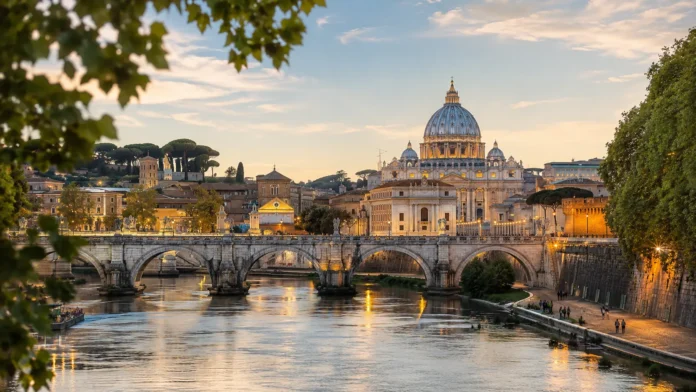
Castel Sant’Angelo creates one of Rome’s most distinctive riverside silhouettes, especially when approached across Ponte Sant’Angelo. Originally connected with Emperor Hadrian’s mausoleum and later transformed through centuries of defensive and papal use, the structure embodies Rome’s habit of repeatedly repurposing ancient buildings. Even if you do not immediately enter, walking around the exterior provides attractive views from the river. The bridge itself is part of the experience, with statues framing the approach toward the cylindrical fortress. Early evening can be especially appealing when softer light reaches the stone. This area connects naturally with Vatican City, making it easy to incorporate into the same part of Rome.
Inside, the building reveals how dramatically its function changed over time. Passages, courtyards, fortifications, rooms, terraces, and historical displays turn the visit into something different from a conventional palace or archaeological site. The route gradually rises, rewarding visitors with increasingly broad views over Rome. From upper areas, St Peter’s dome becomes particularly prominent and the surrounding historic center spreads across the skyline. Travelers suffering from monument fatigue may still enjoy the visit because movement through the building varies more than in a standard gallery. Give yourself time to appreciate both the history and the changing viewpoints.
The surrounding Tiber riverfront offers a pleasant walking route between sightseeing areas. Rome’s river does not dominate the city in the same way as waterways in some European capitals because high embankments separate much of it from street level. However, bridges create beautiful perspectives toward domes, historic buildings, and tree-lined banks. Crossing back and forth also helps you connect neighborhoods geographically rather than relying entirely on buses or taxis. Ponte Umberto I and other nearby bridges can offer attractive viewpoints depending on your walking route. River walking is especially useful in the evening when you want scenery without another formal attraction.
From Castel Sant’Angelo, you can walk toward Piazza Navona through Via dei Coronari and surrounding historic streets. This route combines several of central Rome’s strongest elements within a manageable distance: riverside scenery, Renaissance streets, restaurants, churches, and a monumental piazza. Alternatively, walk toward St Peter’s Square if Vatican City is your next destination. The compactness of these connections is one reason walking should form the backbone of most Rome city breaks. Transportation is useful for longer distances, but using it constantly can cause you to miss the neighborhoods connecting famous sights. Build routes around nearby attractions instead of treating every monument as an isolated destination.
Sunset and nighttime are particularly attractive around the river because illuminated bridges and monuments create a softer atmosphere after intense daytime sightseeing. You might schedule Castel Sant’Angelo for late afternoon, enjoy the upper views, and then walk toward dinner as the city lights appear. This timing also allows the attraction to act as a transition between a cultural afternoon and relaxed evening. Avoid planning another major museum immediately afterward. Use the river as part of the experience and stop when a view catches your attention. Rome is most rewarding when you occasionally allow beautiful light or an unexpected street to delay your schedule.
9. Escape Central Rome on the Appian Way
The Appian Way provides a dramatically different experience from central Rome because ancient road surfaces, archaeological remains, countryside, trees, villas, and quieter landscapes replace dense piazzas and traffic. Once one of the Roman world’s important roads, sections of Via Appia Antica now offer an unusual opportunity to walk or cycle through a landscape where ancient history and nature overlap. The experience is particularly welcome after several days inside crowded central neighborhoods. Comfortable shoes are essential because original stone sections can be uneven. Bring water and plan according to weather, especially when visiting during hot periods with strong sunlight.
Walking is the simplest way to experience part of the route if you have only a few hours. Begin in a practical section where historical remains are relatively concentrated and move at a pace that allows you to look closely at tombs, walls, stones, and countryside. Do not feel obligated to cover an enormous distance simply because the road extends far beyond Rome. A shorter focused walk can provide a stronger experience than exhausting yourself trying to reach every landmark. Weekday traffic conditions and access can differ by section, so remain attentive around vehicles. The peaceful image of an entirely empty ancient road does not apply equally everywhere.
Cycling can allow you to explore farther, although riding over old paving requires comfort and careful attention. Some travelers enjoy the combination of countryside and archaeology, while others may prefer walking because uneven surfaces reduce cycling enjoyment. Choose equipment suited to the route rather than automatically renting the most basic city bicycle. Stop frequently instead of focusing on distance because much of the appeal lies in observing ruins and landscapes along the way. If you are not a confident cyclist, there is no disadvantage in exploring on foot. The Appian Way should feel like a change of pace, not an athletic challenge you need to complete.
Catacomb sites in the broader Appian Way area add another historical dimension for travelers interested in early Christian Rome and underground burial spaces. Guided access helps explain how these networks developed and how burial practices reflected religious and social history. Conditions underground naturally differ from the sunny road above, making the combination especially memorable. Follow site rules carefully and remember that these are historically significant burial environments rather than adventurous caves. Visitors uncomfortable with enclosed underground spaces may prefer concentrating on outdoor archaeology. There is enough to see along the Appian Way without making catacombs mandatory for every traveler.
Dedicate at least half a day if you want the Appian Way to feel like a genuine escape from central Rome. Pack lightly, start earlier during warm seasons, and avoid scheduling a demanding museum immediately before or afterward. When you return to the historic center, the contrast makes Rome’s dense urban landscape feel even more impressive. This experience is particularly worthwhile for second-time visitors or anyone spending four or more days in the city. It demonstrates that ancient Rome extends beyond the Colosseum and Forum. Exploring the old road adds countryside, movement, and archaeological atmosphere to an itinerary otherwise dominated by monumental urban sites.
10. Eat Traditional Roman Food and Experience Local Neighborhoods
Eating well should be considered one of the top things to do in Rome rather than something squeezed between attractions. Roman cuisine is famous for dishes built around relatively simple ingredients and confident flavors, including carbonara, cacio e pepe, amatriciana, gricia, saltimbocca, artichokes, and different preparations of seasonal vegetables. Instead of trying everything during one huge dinner, spread traditional dishes across your city break. Lunch can be an excellent opportunity for pasta, while evenings may work better for longer meals after sightseeing. Ask what is seasonal and be willing to explore beyond the handful of dishes most frequently promoted to international visitors.
Testaccio is particularly interesting for travelers who want to connect Roman food with a neighborhood historically associated with working-class traditions and the city’s food culture. Restaurants and food businesses here can provide a different atmosphere from dining beside Trevi Fountain or Piazza Navona. Exploring Testaccio also gives you a reason to move beyond the immediate historic center and see how modern Rome functions around ordinary residential streets. A market visit can add snacks, produce, prepared dishes, and people-watching to the experience. Do not arrive expecting an untouched secret neighborhood, but do expect a more everyday urban rhythm than around Rome’s most photographed monuments.
Pizza al taglio provides one of the easiest casual meals during a busy sightseeing day. Sold by the slice and available with numerous toppings, it allows you to eat quickly without committing to a long restaurant stop. Supplì, Rome’s fried rice snacks, are another useful option when you want something small between attractions. Bakeries, markets, and neighborhood food shops can therefore become as valuable as formal restaurants during a short city break. Save longer dinners for evenings when you have enough time to enjoy them. Alternating casual food with traditional trattorias also helps keep the trip interesting and manageable.
Coffee culture deserves a little attention because ordering espresso in Rome can become part of your daily rhythm rather than a special event. Standing at the bar for a quick coffee is a simple local habit that works perfectly between sightseeing stops. Cappuccino is common at breakfast, while espresso becomes an easy option throughout the day. Gelato naturally provides another essential pleasure, but look for shops emphasizing genuine ingredients rather than mountains of brightly colored product designed mainly for visual impact. Small food choices accumulate into some of the strongest travel memories. You may remember a perfect espresso or unexpected gelato flavor longer than one additional museum room.
End at least one Rome day with a slow dinner rather than another attraction. Choose Trastevere, Testaccio, Monti, Prati, or another neighborhood that fits naturally with your daytime route and allow several hours for food and conversation. Avoid eating only within sight of major monuments simply because those locations seem convenient. Moving several streets away can change atmosphere and provide more varied dining choices. Rome’s greatest city-break advantage is that history and ordinary pleasure coexist constantly. A trip combining spectacular landmarks with pasta, wine, coffee, markets, evening walks, and neighborhood life feels far more complete than one built entirely around sightseeing tickets.
Conclusion
Rome delivers an epic city break because it combines monumental history with an unusually enjoyable everyday street experience. The Colosseum, Roman Forum, and Palatine Hill reveal the physical scale of the ancient city, while the Pantheon demonstrates how Roman architecture continued shaping later centuries. Vatican City introduces another enormous layer of art, religion, and architecture, and Baroque landmarks such as Trevi Fountain and Piazza Navona transform public spaces into theatrical masterpieces. These headline attractions deserve their reputation. However, Rome becomes truly memorable when you connect them by walking through neighborhoods rather than treating each as an isolated photograph.
The most successful Rome itinerary balances major attractions across several days. Visiting the Colosseum complex and Vatican Museums on the same day may look efficient on paper but can leave you too exhausted to appreciate either properly. Give each major area enough time and place lighter experiences between demanding attractions. Villa Borghese, riverside walks, Trastevere, food stops, and evening piazzas provide natural opportunities to slow down. Rome is not a destination where constant movement automatically produces a better trip. Leaving space in the schedule allows unexpected churches, streets, cafés, and viewpoints to become part of your experience.
Walking should form the core of most Rome city breaks because central attractions are connected by streets full of historical and cultural interest. The Pantheon, Piazza Navona, Trevi Fountain, Spanish Steps, Campo de’ Fiori, and countless smaller landmarks can be combined naturally without repeatedly using transportation. Comfortable shoes are therefore more important than packing an elaborate wardrobe for every day. Use buses, metro services, taxis, or other transportation when distances genuinely justify them. Otherwise, let walking reveal how the city fits together. Some of Rome’s best discoveries happen because you took the wrong turn and found something that was never on your itinerary.
Food and neighborhood experiences deserve equal priority with museums and ruins. A bowl of traditional pasta in Testaccio, evening walk through Trastevere, espresso at a neighborhood bar, or slice of Roman pizza can make the city feel lived-in rather than purely historical. Choose restaurants with some thought, but avoid making every meal another research project that requires crossing town. Eat where your day’s route naturally takes you and leave room for spontaneous discoveries. Rome offers enough excellent food that one supposedly perfect restaurant should never control your schedule. Simple meals often provide the most satisfying break between ambitious sightseeing periods.
Ultimately, the top things to do in Rome are not simply ten attractions to complete before departure. They represent different layers of the city: ancient Rome, Christian Rome, Renaissance and Baroque art, neighborhood life, public spaces, gardens, food, and the landscape beyond the historic center. First-time visitors should prioritize the famous icons while leaving enough time to wander without purpose. Three days can provide a powerful introduction, but four or five days allow the city to feel far less rushed. Rome rewards curiosity more than speed. Slow down occasionally, look above street level, return to favorite piazzas at night, and allow the Eternal City to surprise you between the landmarks you came to see.
Frequently Asked Questions About Things to Do in Rome
What are the top things to do in Rome for first-time visitors?
First-time visitors should prioritize the Colosseum and Roman Forum, Vatican Museums and St Peter’s Basilica, Pantheon, Trevi Fountain, Piazza Navona, Spanish Steps, and at least one neighborhood such as Trastevere. Add Villa Borghese, Castel Sant’Angelo, or the Appian Way if your schedule allows.
How many days do you need for a Rome city break?
Three days can cover Rome’s biggest highlights, but four or five days provides a much better balance between monuments, museums, neighborhoods, food, and relaxed walking. Longer stays also allow time for the Appian Way or less-touristy districts without sacrificing essential attractions.
What is the best area of Rome for walking and sightseeing?
The historic center is particularly convenient because the Pantheon, Trevi Fountain, Piazza Navona, Spanish Steps, Campo de’ Fiori, and many smaller attractions can be reached on foot. Areas around Monti, Prati, and Trastevere are also useful depending on your daily itinerary.
Is Rome easy to explore without a car?
Yes, visitors generally do not need a car for a Rome city break. Walking works well throughout the center, while public transport and taxis can handle longer journeys when needed.
What should you not miss in Rome at night?
Trevi Fountain, Piazza Navona, the Pantheon area, Trastevere, and illuminated streets around the historic center are especially atmospheric after dark. A slow evening walk followed by a traditional Roman dinner is one of the easiest ways to experience the city beyond daytime sightseeing.