
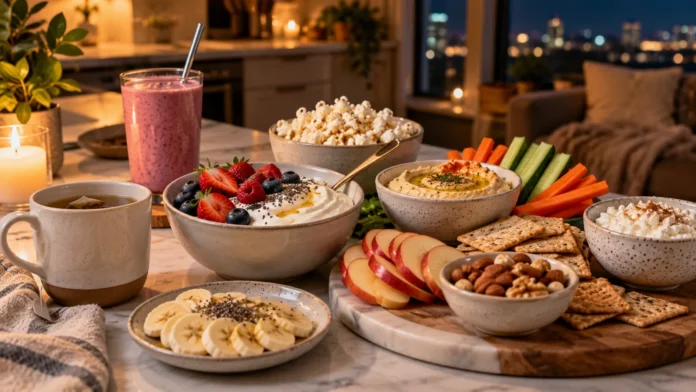

Feeling hungry late at night is common, especially after a busy day, an early dinner, or an evening full of activities. Choosing healthy late-night snacks can help satisfy your hunger while providing essential nutrients that support your overall well-being. Instead of reaching for whatever happens to be available, keeping a few nutritious and convenient options at home can make evening snacking more enjoyable.
Late-night eating is not automatically unhealthy, and your body still needs nourishment during the evening. The type of food you choose, your individual hunger levels, and your sleep routine all influence how comfortable you feel afterward. Foods containing protein, fiber, healthy fats, and other beneficial nutrients can be satisfying choices when you want something to eat before bedtime.
Fortunately, preparing nutritious bedtime snacks does not have to involve complicated recipes or expensive ingredients. From Greek yogurt and fresh fruit to whole-grain toast and homemade popcorn, plenty of delicious options are easy to prepare. This guide explores healthy snacks to eat at night, their nutritional benefits, and practical ways to enjoy them as part of a balanced eating routine.
Why Choosing Healthy Late-Night Snacks Matters
Healthy late-night snacks can provide nourishment when you feel hungry after dinner or during evening activities. Your body continues using energy overnight, and eating when hungry is a normal part of meeting your nutritional needs. Choosing foods that offer valuable nutrients can support overall health while making your evening routine more comfortable and satisfying.
Some bedtime snacks contain combinations of protein, fiber, and healthy fats that help provide lasting satisfaction. For example, yogurt with fruit or whole-grain toast with nut butter offers more nutritional variety than a snack containing only refined carbohydrates. However, different foods work for different people, and enjoyment also matters when choosing something to eat.
Late-night snacks should fit naturally into your overall eating habits rather than follow strict rules about when food is allowed. Some people enjoy a snack shortly before sleeping, while others prefer eating earlier. Paying attention to hunger, comfort, and personal preferences can help you develop a balanced evening routine without unnecessary food restrictions.
Greek Yogurt With Fresh Berries
Greek yogurt with fresh berries is a convenient late-night snack that combines creamy texture with natural sweetness. Greek yogurt provides protein and calcium, while berries contribute fiber, vitamins, and plant compounds. This combination makes a refreshing option for people who enjoy something cool and satisfying during the evening.
To prepare this snack, add plain Greek yogurt to a bowl and top it with strawberries, blueberries, raspberries, or another favorite fruit. You can include chopped nuts, cinnamon, or a little honey for additional flavor. Using fresh or frozen berries makes the recipe easy to enjoy throughout different seasons.
Greek yogurt also works well as a base for several creative snack combinations. Try mixing in sliced banana, oats, or a spoonful of nut butter to create different textures. If you avoid dairy, a fortified plant-based yogurt can be an alternative, although protein and nutrient content vary between products.
Bananas With Peanut Butter
Bananas with peanut butter make a simple and delicious evening snack that requires very little preparation. Bananas provide carbohydrates, potassium, and fiber, while peanut butter contributes protein and unsaturated fats. Together, these ingredients offer complementary nutrients and a satisfying combination of naturally sweet and savory flavors.
Slice a ripe banana and spread peanut butter over the pieces, or enjoy the banana alongside a spoonful of peanut butter. For extra variety, sprinkle cinnamon or add a few chopped nuts. The ingredients are widely available, making this snack particularly convenient when you want something quick after a busy evening.
You can also use almond butter, sunflower seed butter, or another spread that suits your preferences and dietary needs. Choose options appropriate for any food allergies in your household. This snack is easy to adapt and works equally well as an afternoon treat or a simple addition to breakfast.
Oatmeal With Cinnamon and Fruit
Oatmeal is a comforting late-night snack for anyone who enjoys something warm before bedtime. Oats provide complex carbohydrates and soluble fiber, including beta-glucan, which supports normal digestive health. Adding fruit and other toppings creates a nutritious combination that can be customized according to personal taste.
Prepare plain rolled oats with milk, a fortified plant-based alternative, or water until they reach your preferred consistency. Add cinnamon, sliced apples, bananas, or berries for natural sweetness and additional nutrients. A spoonful of yogurt or nut butter can also make the bowl creamier and provide extra protein.
Oatmeal is particularly convenient because it can be prepared quickly using basic kitchen ingredients. Overnight oats offer another option when you prefer a chilled snack that requires no evening cooking. Experimenting with different fruits and toppings helps keep this familiar whole-grain food interesting and enjoyable.
Cottage Cheese With Fresh Fruit
Cottage cheese is a protein-rich dairy food that works well with both sweet and savory ingredients. Its mild flavor makes it easy to combine with peaches, berries, pineapple, or sliced apples. The fruit adds natural sweetness and fiber, creating a simple snack with a pleasant balance of flavors and textures.
To prepare a quick bowl, add cottage cheese and top it with your preferred fresh fruit. Sprinkle cinnamon or add chopped walnuts if you enjoy a little extra crunch. Different cottage cheese varieties offer different textures and sodium levels, so choose one that suits your preferences and nutritional needs.
For a savory alternative, combine cottage cheese with cucumber, tomatoes, and fresh herbs. This creates a refreshing snack that works well when sweet foods are less appealing. If cottage cheese is not available, plain yogurt or another protein-containing food can provide a similarly convenient option.
Whole-Grain Toast With Avocado
Whole-grain toast with avocado is a satisfying snack that combines fiber-rich carbohydrates with beneficial unsaturated fats. Avocados also contain potassium and several vitamins that contribute to a balanced diet. Their creamy texture pairs naturally with toasted bread, creating a quick snack that feels substantial without requiring complicated preparation.
Start by toasting a slice of whole-grain bread and spreading mashed avocado across the surface. Add lemon juice, black pepper, or fresh herbs for flavor. You can also include sliced tomatoes or a cooked egg if you prefer a combination with additional protein and texture.
This snack can be adjusted according to your appetite and available ingredients. Whole-grain crackers or a small sandwich can provide alternatives when you do not want traditional toast. Choosing a combination you enjoy makes it easier to prepare a nourishing snack whenever evening hunger appears.
Almonds, Walnuts, and Other Nuts
Nuts are convenient late-night snacks because they require almost no preparation and offer a range of important nutrients. Almonds contain vitamin E, while walnuts provide plant-based omega-3 fatty acids. Many nuts also contribute protein, fiber, and minerals, making them useful additions to a varied eating pattern.
Enjoy your favorite nuts on their own or combine them with dried fruit for contrasting flavors. You can also add them to yogurt, oatmeal, or homemade snack mixes. Roasted and unsalted varieties are convenient options, although the best choice depends on your taste and dietary preferences.
Different nuts offer different nutritional benefits, so including variety can make snacking more interesting. Cashews, pistachios, peanuts, and hazelnuts all have distinctive flavors and textures. Anyone with a nut allergy should choose an appropriate alternative, such as roasted seeds or another snack that meets their nutritional needs.
Air-Popped Popcorn With Simple Seasonings
Popcorn is a whole-grain food that can make an enjoyable evening snack, especially while watching a movie or relaxing at home. Air-popped popcorn contains fiber and has a light, crunchy texture. Its versatility makes it easy to prepare with different seasonings without needing elaborate ingredients.
Prepare popcorn using an air popper or another suitable cooking method and transfer it to a bowl. Add a little olive oil, nutritional yeast, cinnamon, or your favorite herbs for additional flavor. Homemade popcorn allows you to control the ingredients while experimenting with sweet and savory combinations.
Popcorn can be enjoyed alongside fruit, cheese, or another snack if you want more variety. Prepackaged versions differ in their ingredients, so reading labels can help you choose one that matches your preferences. The familiar crunch and flexibility make popcorn a practical option for many evening routines.
Apple Slices With Almond Butter
Apple slices with almond butter offer a combination of crisp fruit and creamy nut spread. Apples provide fiber and vitamin C, while almond butter contributes unsaturated fats, vitamin E, and some protein. These ingredients create a naturally sweet snack that is quick to assemble and easy to customize.
Wash and slice an apple, then enjoy the pieces with almond butter for dipping. Adding cinnamon can enhance the flavor without requiring a complicated recipe. You can also use peanut butter or another suitable spread if almond butter is unavailable or not your preferred choice.
For additional variety, combine apple slices with yogurt or sprinkle chopped seeds over the nut butter. The snack works well with several apple varieties, from tart green apples to sweeter red ones. Choose flavors that you enjoy rather than following a rigid combination of ingredients.
Hummus With Fresh Vegetables
Hummus with fresh vegetables is a savory late-night snack that provides fiber, plant-based protein, and a variety of nutrients. Traditional hummus is made from chickpeas, tahini, lemon juice, and seasonings. Its creamy texture makes it an appealing dip for crunchy vegetables and other simple snack ingredients.
Try serving hummus with cucumber slices, carrot sticks, bell peppers, or cherry tomatoes. Whole-grain pita bread and crackers are also convenient options for dipping. Preparing vegetables earlier in the day can make this snack especially easy to assemble when you want something quick during the evening.
Hummus can be purchased ready-made or prepared at home using cooked chickpeas and preferred seasonings. Homemade versions allow you to experiment with ingredients such as roasted peppers, garlic, or fresh herbs. This flexible snack adds vegetables and legumes to your diet in an enjoyable way.
Chia Pudding With Milk and Berries
Chia pudding is a convenient make-ahead snack that combines chia seeds with milk or a suitable plant-based alternative. Chia seeds absorb liquid and develop a soft, pudding-like texture. They provide fiber, plant-based omega-3 fatty acids, and minerals that contribute to a varied and nutritious eating pattern.
To prepare chia pudding, mix chia seeds with enough milk to create your preferred consistency and refrigerate until thickened. Add berries, banana slices, or a little vanilla for extra flavor. Stirring the mixture during the initial preparation helps distribute the seeds evenly and prevents large clumps.
Because chia pudding can be prepared ahead of time, it works well for busy evenings when cooking feels inconvenient. You can create different versions using cocoa powder, cinnamon, or fruit puree. Allow the seeds to hydrate fully before eating, and adjust the consistency according to your preferences.
Whole-Grain Crackers With Cheese
Whole-grain crackers with cheese make a convenient savory snack that combines carbohydrates, protein, and calcium. The crackers provide a crunchy texture, while cheese adds a creamy or firm contrast depending on the variety. This pairing requires very little preparation and can be customized using ingredients already available in your kitchen.
Choose whole-grain crackers and pair them with cheddar, mozzarella, cottage cheese, or another preferred cheese. Add cucumber slices, grapes, or tomatoes for additional freshness and variety. Different combinations create interesting flavors while contributing several food groups to your evening snack.
Cheese varieties differ in sodium, fat, and protein content, so choose according to your dietary needs and preferences. If you avoid dairy, suitable plant-based spreads or hummus can provide alternatives. The simplicity of this snack makes it especially practical when you want something satisfying without cooking.
Hard-Boiled Eggs With Whole-Grain Toast
Hard-boiled eggs are a convenient source of protein and contain nutrients such as choline, vitamin B12, and selenium. Pairing an egg with whole-grain toast creates a combination of protein, carbohydrates, and fiber. This simple snack can be prepared quickly if the eggs have already been cooked and refrigerated safely.
Serve a peeled hard-boiled egg with toast, black pepper, or a little mashed avocado. You can also add sliced tomatoes or cucumbers for freshness. Preparing hard-boiled eggs earlier in the day makes them a useful option when you want a ready-to-eat snack after evening activities.
Eggs are versatile and can also be enjoyed scrambled or as part of a small sandwich. The preparation method can depend on your preferences and available time. Proper refrigeration and safe food handling are important, particularly when preparing cooked eggs in advance.
Smoothies Made With Fruit and Yogurt
Fruit smoothies provide an easy way to combine several nutritious ingredients into one refreshing evening snack. Blending fruit with yogurt or milk creates a drink containing carbohydrates, vitamins, and potentially protein. Smoothies are particularly appealing when you prefer something cool or have several ripe fruits available.
Combine banana, berries, and plain yogurt with enough milk to reach your preferred consistency. You can also add oats, nut butter, or spinach for additional nutrients and flavor variety. Frozen fruit creates a thicker texture and allows you to prepare smoothies without relying on fresh produce every day.
Smoothies can be adjusted to fit different preferences, including dairy-free versions made with fortified plant-based alternatives. They are best enjoyed at a comfortable pace, just like other foods. Choosing familiar ingredients and avoiding unnecessary complexity makes homemade smoothies an accessible option for evening nourishment.
Edamame With Light Seasonings
Edamame, or young soybeans, make a nutritious savory snack that provides plant-based protein, fiber, and several minerals. Their mild flavor works well with simple seasonings, making them suitable for people who enjoy warm, lightly salted snacks. Frozen edamame is widely available in many grocery stores and can be prepared conveniently.
Cook frozen edamame according to the package directions until fully heated and ready to eat. Add a little salt, lemon juice, or mild seasoning for flavor. If using edamame in pods, remove the beans before eating because the fibrous outer pods are generally not consumed.
Edamame can also be combined with rice, vegetables, or other foods when you want a more substantial evening meal. People with soy allergies should avoid this snack and choose another protein source. For everyone else who enjoys soy foods, edamame offers a simple way to add legumes to their diet.
Kiwi and Other Fresh Fruits Before Bed
Fresh fruit is a convenient late-night snack because it requires minimal preparation and provides essential vitamins, minerals, and fiber. Kiwi, berries, oranges, and bananas offer different flavors and nutritional benefits. Choosing seasonal fruit can also make evening snacking more affordable and enjoyable throughout the year.
Kiwi is sometimes discussed in relation to sleep because small studies have explored whether eating it may influence sleep quality. However, evidence remains limited, and kiwi should not be considered a treatment for sleep problems. Its established nutritional benefits include vitamin C and fiber, which make it a valuable food regardless of bedtime.
Fruit can be enjoyed on its own or paired with yogurt, cheese, nuts, or another favorite food. Mixing different fruits adds variety and allows you to experiment with flavors. Selecting ripe, appealing options makes it easier to enjoy fruit as part of a flexible evening eating routine.
Tips for Choosing Healthy Snacks Before Bed
Choosing an evening snack begins with paying attention to hunger and considering which foods sound satisfying. Some people prefer a small snack, while others need something more substantial after an active day. There is no universal snack size or specific nighttime eating rule that works for everyone.
Combining foods from different nutritional groups can create satisfying options with a variety of nutrients. Examples include fruit with yogurt, toast with nut butter, or vegetables with hummus. These combinations offer carbohydrates, protein, fiber, and fats in different proportions, allowing you to choose according to your appetite and preferences.
Comfort is another important consideration, particularly for people who experience heartburn or digestive discomfort near bedtime. Very spicy or acidic foods may worsen symptoms for some individuals, while others tolerate them without difficulty. Notice how different foods affect you personally and adjust your evening routine without unnecessarily restricting your choices.
Common Mistakes to Avoid With Late-Night Snacking
One common misconception is that eating after a particular hour is automatically unhealthy. The body does not stop using nutrients simply because it is nighttime, and hunger can occur at any hour. Overall eating patterns, nutritional variety, and individual needs are more meaningful than following an arbitrary evening cutoff.
Another mistake is ignoring genuine hunger because of strict food rules or concerns about eating late. Going to bed uncomfortable and hungry is not necessary for maintaining a balanced lifestyle. Choosing a snack that feels satisfying can be a reasonable response, especially after exercise, an early dinner, or a particularly active day.
Eating while distracted can sometimes make it harder to notice enjoyment and fullness, although this does not mean snacks must follow rigid rules. Taking time to appreciate your food may help make the experience more satisfying. Flexibility and a positive relationship with eating are important parts of healthy habits.
Conclusion
Healthy late-night snacks can be a convenient and enjoyable way to satisfy hunger while adding valuable nutrients to your daily eating routine. Foods such as Greek yogurt, fruit, oatmeal, nuts, and whole-grain toast provide different combinations of protein, fiber, vitamins, and minerals. The best options are those that meet your needs and taste preferences.
Preparing nutritious evening snacks does not require expensive ingredients, strict food rules, or complicated recipes. Simple combinations like bananas with peanut butter, crackers with cheese, and vegetables with hummus can provide variety and satisfaction. Keeping convenient ingredients available makes it easier to respond to hunger without unnecessary stress.
Late-night eating can fit comfortably into a balanced lifestyle when you choose foods that you enjoy and that leave you feeling well. Pay attention to your appetite, consider your personal comfort, and experiment with different nutritious combinations. With a little preparation, evening snacks can become a pleasant part of your routine.
Frequently Asked Questions (FAQs)
1. What are the healthiest snacks to eat late at night?
Greek yogurt with berries, bananas with nut butter, oatmeal, whole-grain toast, and hummus with vegetables are nutritious options. The best choice depends on your hunger, preferences, and individual nutritional needs.
2. Is it unhealthy to eat snacks before bedtime?
Eating before bedtime is not automatically unhealthy. If you are hungry, a satisfying snack can fit into a balanced diet, although certain foods may cause digestive discomfort for some people.
3. What late-night snacks contain protein?
Greek yogurt, cottage cheese, hard-boiled eggs, edamame, cheese, and nut butter provide protein. Pairing these foods with fruit, vegetables, or whole grains can add nutritional variety and satisfying flavors.
4. Can eating bananas or kiwi help improve sleep?
Bananas and kiwi contain useful nutrients, and limited research has explored possible relationships between certain foods and sleep. However, neither fruit is a proven treatment for sleep difficulties.
5. What are easy late-night snacks that require no cooking?
Fresh fruit, yogurt, nuts, whole-grain crackers with cheese, and vegetables with hummus require little or no preparation. These convenient foods can provide valuable nutrients while satisfying evening hunger.