
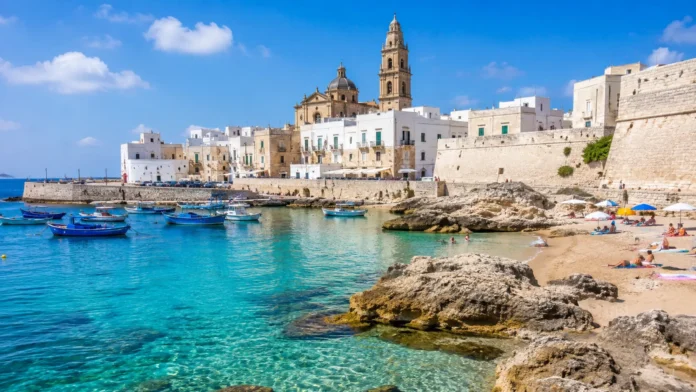

Monopoli, Italy Guide: Beaches, Old Town & Things to Do
Monopoli is one of Puglia’s most appealing coastal towns, combining an atmospheric old town with clear Adriatic water, small sandy coves, historic churches, fishing traditions, and an easygoing southern Italian rhythm. Located on the coast south of Bari, it feels lively enough to provide good restaurants and evening atmosphere without losing the intimate character that makes smaller Puglian towns special. Whitewashed houses crowd around narrow lanes that suddenly open onto the sea, while colorful fishing boats add character to the historic harbor. Beaches begin remarkably close to the old center, making it possible to combine sightseeing and swimming within the same day. For travelers exploring central Puglia, Monopoli offers an excellent balance of culture, coastline, food, and convenience.
What makes Monopoli particularly attractive is how naturally its experiences fit together. You can spend the morning wandering through stone lanes, stop for seafood or focaccia at lunch, swim beneath the old defensive walls during the afternoon, and return to the historic center for an evening passeggiata. Travelers who want more beaches can follow the coast south, while those interested in Puglia’s famous inland towns can easily combine Monopoli with places such as Polignano a Mare, Alberobello, Locorotondo, or Ostuni. Staying overnight gives the town a different personality once many daytime visitors leave. This Monopoli travel guide covers the best beaches, old town highlights, things to do, food experiences, nearby trips, accommodation areas, and practical tips for planning an enjoyable stay.
Explore Monopoli Old Town on Foot
Monopoli’s historic center, or centro storico, is the best place to begin exploring because many of the town’s most memorable sights sit within a compact walkable area. Instead of following a strict route, allow yourself to wander through narrow streets lined with white and honey-colored stone buildings, small balconies, shrines, cafés, and doorways opening onto quiet courtyards. Some lanes seem almost residential before unexpectedly leading to a church or broad sea view. The lack of a rigid sightseeing path is part of the attraction because discoveries happen naturally while walking. Comfortable shoes are helpful on uneven stone surfaces, particularly if you plan to spend several hours exploring. Early morning provides a peaceful atmosphere, while evening brings noticeably more activity.
The old town reflects Monopoli’s long relationship with the Adriatic Sea, and its defensive architecture becomes especially noticeable along the waterfront. Stone walls wrap around sections of the historic center, reminding visitors that coastal communities once needed substantial protection from attacks arriving by sea. Walking beside these fortifications gives you wide views across the water and reveals how tightly the town has developed around the coastline. The combination of old walls and bright turquoise water is especially photogenic in clear weather. Rather than rushing from one landmark to another, pause at the openings and terraces where local streets meet the sea. These transitional spaces between architecture and coastline create some of the most memorable views in Monopoli.
Small piazzas provide natural breaks while exploring the maze of streets. Some contain cafés or restaurants, while others are dominated by churches and historic façades that reveal the town’s religious and architectural heritage. Sitting for a coffee can be just as rewarding as visiting another formal attraction because daily life unfolds around you. Local residents pass through on errands, families gather later in the day, and restaurant tables begin filling as evening approaches. Travelers accustomed to tightly scheduled city itineraries may find Monopoli refreshingly easy to experience without constantly checking a list. The old town rewards curiosity and observation more than speed, making it particularly enjoyable for slow travel.
Photography enthusiasts will find the historic center most attractive when softer light emphasizes textures without producing extremely harsh shadows. Early morning can provide empty streets and gentle light around the harbor, while late afternoon and evening often create warmer tones on stone buildings. During the middle of summer, bright midday sunlight can produce dramatic contrasts between whitewashed walls and deep shadows inside narrow lanes. Rather than photographing only major landmarks, look for ordinary details such as blue shutters, laundry, faded doors, religious icons, bicycles, stone staircases, and plants overflowing from balconies. These smaller scenes communicate Monopoli’s character more effectively than repeating the same postcard viewpoint. Respect residential privacy when photographing homes or people.
One reason the Monopoli old town works so well for travelers is that you do not need transportation once you arrive. Historic streets, the waterfront, harbor, cathedral, restaurants, and the nearest beach can all be combined comfortably on foot. This makes Monopoli particularly appealing if you are traveling through Puglia without renting a car. You can create an entire day around short walks instead of spending hours transferring between attractions. Even visitors staying outside the historic center will find the central area compact once they reach it. Give yourself at least several hours for unstructured exploration, because the old town becomes far more enjoyable when you stop treating each lane merely as the fastest route toward another destination.
Visit Porto Vecchio and Monopoli’s Waterfront
Porto Vecchio, Monopoli’s old harbor, is one of the town’s most recognizable and atmospheric places. Traditional small fishing boats often sit against a backdrop of stone buildings, creating a scene that immediately connects the historic center with the Adriatic. The harbor does not feel isolated from town life because narrow streets lead directly toward the waterfront from the old center. Walking around the area allows you to observe both working maritime traditions and the more relaxed visitor experience that has developed around them. Morning can be especially appealing when the harbor feels calm and local activity is beginning. Later in the day, the water takes on changing shades of blue depending on sunlight and weather.
The colorful boats are an obvious photographic subject, but the wider setting is what makes the harbor memorable. Historic buildings rise behind the waterfront, while defensive structures and church towers add layers to the skyline. Instead of standing in one position, walk around the edges of the harbor to see how the composition changes. Looking inward emphasizes the old town, while facing outward provides broader views toward the open Adriatic. This is also an excellent place to understand how compact Monopoli really is. Beaches, restaurants, churches, fortifications, and residential lanes are all remarkably close together, helping explain why the town works so well for travelers who prefer walking.
Castello Carlo V stands near the waterfront and adds a more imposing element to Monopoli’s coastal scenery. The fortress occupies a strategic position beside the sea, reflecting the defensive importance of this part of the town. Even if you do not spend much time visiting the interior, walking around the structure helps connect Monopoli’s current seaside atmosphere with its more turbulent maritime history. The castle also forms part of an attractive waterfront walk where old defensive walls meet open sea views. Depending on events or local access arrangements, interior use may vary, so travelers interested in entering should check locally during their visit. The exterior remains worthwhile as part of a broader old-town walk.
Continue beyond the harbor along the seafront rather than turning immediately back into the historic lanes. The promenade provides a different perspective on Monopoli because you can see how the old town rises behind its stone walls. Sections of coastline alternate between rocky edges, small coves, and more developed waterfront areas. On calm days, the water can appear remarkably clear close to shore, particularly where sunlight reaches pale seabed areas. Evening walks are especially enjoyable because temperatures begin dropping and more residents come outside. This is an ideal time to combine sightseeing with an aperitivo or leisurely dinner rather than trying to fit another formal attraction into the day.
The waterfront also helps travelers appreciate why staying overnight in Monopoli feels different from making a short daytime visit. Early mornings can be quiet around the harbor, while evenings bring diners, walkers, and local social life into public spaces. Seeing the same waterfront under different light makes the town feel more dimensional than arriving for only a few hours. If your accommodation is in or near the old town, returning to Porto Vecchio after dinner requires almost no planning. You can simply follow whichever streets look interesting until you reach the water again. This easy relationship between harbor and historic center is one of Monopoli’s greatest strengths as a coastal destination.
Best Beaches in Monopoli for Swimming and Relaxing
Cala Porta Vecchia is the most convenient beach for travelers staying in Monopoli’s old town because it sits immediately beside the historic center. Few destinations allow you to walk through ancient lanes and reach a sandy swimming spot within minutes. The beach is relatively compact, with the old defensive walls creating a dramatic backdrop that makes it especially memorable despite its modest size. During warm summer days, it can become busy because both visitors and residents appreciate the easy access. Arriving earlier in the morning gives you a better chance of finding space and experiencing calmer surroundings. Even if you do not plan to spend hours sunbathing, it is worth stopping to see how closely the town meets the sea.
Cala Cozze is another small coastal option close to central Monopoli and can be useful when you want a quick swim without traveling far from town. Like many beaches along this coastline, its appeal comes from clear water and an intimate cove-like setting rather than a huge stretch of sand. Smaller beaches can fill quickly during peak summer periods, making flexibility helpful when several options are available nearby. Bring only what you need because compact urban coves do not always offer the space associated with large resort beaches. Water shoes can also be useful around rocky sections of the Puglian coast. Combining several small beaches during your stay can be more enjoyable than spending every day at the same crowded spot.
Cala Porto Bianco and nearby coastal areas extend the beach possibilities farther south from the old town. These coves offer beautiful water while remaining relatively accessible from central Monopoli, particularly for travelers comfortable with a longer walk or short ride. The coastline here alternates between sandy pockets and rocky areas, giving swimmers several different settings to explore. As always, water conditions can change with wind and weather, so judge swimming conditions on the day rather than assuming every cove will remain perfectly calm. Beaches closest to town naturally become popular during high season. Visiting outside the busiest midday hours can provide a noticeably more relaxed experience.
Travelers willing to continue farther south will discover additional beaches and lidos scattered along Monopoli’s coastline. Some areas provide organized beach clubs with loungers, umbrellas, food, showers, or other services, while nearby stretches may remain simpler and more natural. Choosing between a lido and free beach depends on how you prefer spending the day. A beach club can be convenient if you want guaranteed shade and facilities, whereas public beaches provide greater flexibility and lower cost. During July and August, popular facilities may become busy, so planning ahead can be useful. In late spring or early autumn, the same coastline often feels much less crowded while still offering appealing seaside conditions.
When planning a Monopoli beach day, remember that the strongest midday sun can feel intense during summer. Bring adequate water, sun protection, and shade rather than relying on finding everything after reaching a small cove. Avoid leaving valuables unattended while swimming, particularly at busy public beaches. If you are traveling with children, evaluate entry conditions and waves carefully because small coastal beaches can vary significantly. Early morning and late afternoon are often the most pleasant periods for combining swimming with sightseeing. Monopoli’s greatest beach advantage is variety and proximity, allowing you to enjoy the Adriatic without dedicating an entire vacation day to reaching a distant resort.
See Monopoli Cathedral and Historic Churches
The Cathedral of Maria Santissima della Madia is one of Monopoli’s most important architectural landmarks and deserves time even if your main reason for visiting is the coast. Its elaborate Baroque appearance contrasts beautifully with the relatively simple whitewashed streets surrounding parts of the old town. The building’s scale becomes particularly impressive when approached through the compact historic center, where narrow lanes suddenly reveal much grander religious architecture. Step inside respectfully to appreciate the decorative interior and sense of history that are easy to miss from photographs alone. Dress appropriately for a place of worship and avoid disrupting services. The cathedral provides a cultural counterbalance to beach time and helps explain Monopoli’s historical importance beyond its attractive waterfront.
The story associated with the Madonna della Madia forms an important part of Monopoli’s religious identity. Local tradition connects the sacred icon with the town and with events that have been remembered through celebrations over generations. Even travelers without a particular religious interest can appreciate how such traditions shape community identity and local festivals. Churches in southern Italy often function as much more than architectural attractions because they remain tied closely to processions, family histories, neighborhood life, and annual celebrations. Observing this connection adds depth to a visit that might otherwise focus only on scenic beauty. Monopoli becomes more interesting when its religious heritage is considered alongside its fishing and maritime traditions.
Beyond the cathedral, the old town contains numerous smaller churches that can be discovered naturally while wandering. Their façades range from relatively simple to richly decorated, and some interiors contain artwork or architectural details that provide unexpected highlights. You do not need to enter every church for the experience to feel meaningful. Instead, choose several that catch your attention and allow enough time to appreciate them rather than treating each doorway as another item to photograph. Opening times can vary, particularly outside major tourist periods. If a church is closed, simply continue exploring because another historic building or piazza is rarely far away in central Monopoli.
Churches also provide useful landmarks when navigating the old town without a strict route. Bell towers rise above the dense residential streets, helping you orient yourself while creating attractive visual compositions from different angles. Early in the day, church squares may feel quiet, while evenings can bring a completely different atmosphere as restaurants and local gatherings fill nearby streets. Sitting near one of these historic spaces allows you to observe how modern life continues around centuries-old architecture. This coexistence is one of Puglia’s defining travel experiences. Historic monuments rarely feel separated into museum districts because they remain woven into neighborhoods where people live, shop, eat, and socialize.
Visitors interested in architecture should pay attention to the contrast between Monopoli’s defensive coastal structures and its religious buildings. Fortifications appear solid, practical, and closely tied to maritime security, whereas Baroque church interiors often emphasize dramatic decoration and visual richness. Experiencing both within a short walking distance reveals different chapters of the town’s development. The old center is compact enough that these contrasts appear repeatedly during an ordinary stroll. Rather than researching every architectural term before arriving, simply observe changes in stonework, decoration, scale, and function. Monopoli’s churches become more memorable when experienced as part of the surrounding streets rather than isolated monuments visited only because a guidebook labels them essential.
Best Things to Eat and Drink in Monopoli
Seafood should feature prominently in a Monopoli food itinerary because the town’s identity remains closely connected to the Adriatic. Restaurant menus may include grilled or baked fish, mussels, octopus, squid, shrimp, seafood pasta, or combinations that change according to season and availability. Rather than searching automatically for an international-style menu, look for places where local ingredients shape the dishes. Asking about the catch or daily specials can lead to better choices than ordering something simply because it sounds familiar. Waterfront restaurants provide atmosphere, but excellent meals can also be found deeper inside the historic center. Compare several menus while walking instead of sitting at the first establishment beside a major attraction.
Orecchiette is one of Puglia’s most recognizable pasta shapes and is well worth trying during a stay in Monopoli. The small ear-shaped pasta works particularly well with regional vegetables, tomato-based sauces, or other simple combinations where ingredients remain distinct. You may encounter different preparations depending on restaurant style and season, so there is no need to search for one supposed definitive version. Puglian cooking generally rewards travelers who appreciate straightforward dishes made from good ingredients rather than expecting elaborate presentations. Fresh vegetables, legumes, olive oil, cheese, and bread often play important supporting roles. Eating regionally helps turn meals into part of the travel experience rather than merely a break between attractions.
Focaccia is another excellent choice, especially when you want a quick lunch that does not interrupt sightseeing. Puglian versions can be substantial and flavorful, often featuring tomatoes, olives, or other toppings that make them satisfying without requiring a formal meal. Bakeries are useful places to experience everyday local food while keeping travel costs manageable. Pick up focaccia before heading toward the beach or enjoy it while exploring areas outside the busiest restaurant streets. Panzerotti are another popular option you may encounter, offering a warm, portable snack with various fillings. Trying simple bakery food alongside restaurant meals creates a more varied and authentic eating experience during your stay.
Aperitivo is an enjoyable way to transition from beach time or sightseeing into the evening. Find a table near a piazza, waterfront area, or quieter old-town street and slow down with a drink and small snacks before dinner. Puglia produces a range of regional wines, and local recommendations can help you discover varieties that pair naturally with seafood and vegetables. Travelers who do not drink alcohol can still enjoy the social rhythm of aperitivo with nonalcoholic options. The point is less about consuming a particular beverage and more about embracing the slower period before dinner. Monopoli becomes especially atmospheric when daylight softens and tables begin spreading through historic streets.
Dessert and coffee provide additional opportunities to experience local habits without planning a formal food tour. Gelato is naturally appealing after a warm afternoon, while pastries can make breakfast or an evening treat more interesting. Espresso remains a simple way to pause between sightseeing stops and is usually enjoyed quickly at a bar unless you prefer a seated experience. Avoid trying to fit every recommended Puglian specialty into one day because rich meals combined with hot weather can become exhausting. Spread culinary experiences across your stay and leave room for discoveries. One unexpectedly excellent bakery, small seafood restaurant, or neighborhood café may become more memorable than chasing a long list of famous dishes.
Day Trips and Places to Visit Near Monopoli
Polignano a Mare is one of the easiest destinations to combine with Monopoli because the two coastal towns are relatively close yet feel visually distinct. Polignano is famous for dramatic limestone cliffs and tightly packed buildings rising above the Adriatic, whereas Monopoli feels more connected to its fishing harbor and collection of small beaches. Visiting both helps travelers appreciate different versions of Puglia’s coastline. A half-day can cover the main viewpoints and historic center, although staying longer allows time for meals and slower exploration. Travelers using public transportation can often include Polignano without requiring a rental car. Returning to Monopoli afterward provides a useful contrast, particularly if you prefer its more spacious waterfront atmosphere.
Alberobello makes an excellent inland day trip because its trulli houses create scenery completely different from the coast. The town is one of Puglia’s most recognizable destinations, so visiting earlier can make the busiest areas easier to enjoy during popular seasons. Allow time to walk beyond the most photographed streets because quieter sections help you appreciate the architecture without focusing only on souvenir shops. Combining Alberobello with another inland town can work if you have transportation and a full day, but avoid creating an itinerary that becomes mostly driving. Monopoli’s location makes it easy to alternate coastal days with inland exploration. This variety is one reason it works so well as a base in Puglia.
Locorotondo is another appealing option for travelers who enjoy historic towns, whitewashed architecture, and slower-paced exploration. Its hilltop setting and compact old center offer a different atmosphere from Monopoli while maintaining the visual character associated with central Puglia. A few relaxed hours are enough to explore the core, enjoy lunch, and take in surrounding countryside views. Locorotondo combines naturally with Alberobello for travelers with a car, although either destination can also justify a slower standalone visit. Moving between the Adriatic coast and Valle d’Itria landscapes demonstrates how much variety exists within a relatively small part of Puglia. Avoid treating these communities as interchangeable because each has distinct architecture and surroundings.
Ostuni, often recognized for its whitewashed hilltop appearance, is another strong day-trip choice from Monopoli. The historic center climbs through narrow lanes and staircases, so comfortable footwear is particularly useful. Views from elevated parts of town stretch across countryside toward the Adriatic on clear days, creating a completely different perspective from Monopoli’s sea-level waterfront. Ostuni can become busy during the height of summer, but wandering away from primary visitor routes often reveals quieter residential corners. Allow enough time for an unhurried lunch or evening meal if your schedule permits. Combining Monopoli and Ostuni gives travelers two contrasting examples of the white architecture strongly associated with Puglia.
Travelers with additional days can also explore rural masserie, olive-growing landscapes, archaeological sites, or smaller communities rather than visiting only the most famous Instagram locations. The countryside surrounding Monopoli contains longstanding agricultural traditions that reveal another side of the region beyond beach tourism. Staying at or dining in a masseria can provide a deeper connection to regional food and rural architecture. If you rent a car, build flexibility into your itinerary so unexpected villages or countryside stops can become part of the day. Public transportation works well for certain major destinations but provides less freedom in rural areas. Monopoli is most useful as a base when you alternate excursions with days devoted entirely to enjoying the town itself.
Where to Stay and Best Time to Visit Monopoli
Staying inside Monopoli’s old town is ideal for travelers who want historic atmosphere and immediate access to restaurants, evening walks, the harbor, and Cala Porta Vecchia. Accommodation here may include small guesthouses, apartments, boutique properties, and rooms within restored historic buildings. The main advantage is convenience because you can return after dinner without arranging transportation. However, old-town properties may involve stairs, compact rooms, limited parking access, or some evening street noise. Travelers carrying heavy luggage should check accessibility details before booking. If romantic surroundings and walkability matter more than having extensive hotel facilities, the centro storico is usually the most satisfying area.
Staying just outside the historic center can provide more practical access while keeping major attractions within walking distance. This option often works better for travelers arriving with a car because parking near ancient streets can be complicated or restricted. Modern accommodations may also provide elevators, larger rooms, easier luggage handling, or more straightforward vehicle access. The tradeoff is having slightly less historic atmosphere immediately outside your door. For many travelers, a ten- or fifteen-minute walk is a reasonable compromise between convenience and character. Check the exact distance to the old town rather than relying on broad descriptions such as “central Monopoli,” because accommodation listings may define central locations differently.
Beach-focused travelers may prefer staying farther south along the coastline, particularly if swimming and relaxation are more important than spending every evening in the historic center. Coastal hotels, apartments, resorts, or masserie can provide easier access to larger beaches and organized lidos. A car becomes more useful when accommodation is outside central Monopoli, especially for dinner or sightseeing trips. This type of stay works particularly well for families or visitors planning a longer summer holiday. You can still visit the old town several times while enjoying a quieter base away from central activity. Decide whether you want Monopoli primarily as a cultural town or a beach destination before choosing accommodation.
Late spring and early autumn are excellent periods for travelers seeking warm weather with fewer peak-summer crowds. May, June, September, and parts of October can provide pleasant conditions for walking, sightseeing, dining outside, and spending time beside the sea, although exact swimming temperatures vary by personal preference and yearly weather. July and August bring the strongest summer atmosphere along with hotter temperatures and significantly greater demand. Those months suit travelers who prioritize beach life and lively evenings but require more advance planning. Winter provides an entirely different experience, with quieter streets and fewer beach activities. Choosing the best time depends on whether swimming, sightseeing, food, or a calmer local atmosphere matters most.
How long you should stay depends on the role Monopoli plays within your wider Puglia itinerary. One full day allows you to see the old town, harbor, cathedral, waterfront, and a nearby beach, but it can feel rushed if you also want leisurely meals. Two or three nights provide a better balance between sightseeing and relaxation while creating time for nearby day trips. Four or more nights make sense if you want Monopoli to serve as your primary base for central Puglia. Avoid changing hotels every night simply to collect more destinations. Staying longer lets you enjoy early mornings and evenings when the town’s atmosphere is often at its best.
Practical Monopoli Travel Tips for a Better Visit
Monopoli is well suited to travelers who prefer exploring on foot, particularly within the historic center. Once you reach the old town, most major sights and central beaches are close enough that driving becomes unnecessary. Wear comfortable shoes because stone streets and uneven surfaces can become tiring after several hours. Summer visitors should carry water and sun protection, especially when walking along exposed waterfront areas during midday. A lightweight layer can still be useful during breezier evenings near the Adriatic. Designing each day around walking also makes spontaneous stops at cafés, bakeries, churches, and small beaches much easier.
Travelers using a rental car should research parking before arriving at accommodation in or near the old town. Historic centers were not designed for modern traffic, and access may be restricted in certain streets or periods. Never assume you can drive directly to the door of a centrally located guesthouse simply because navigation software suggests a route. Ask your accommodation for current parking and access instructions before arrival. This can save considerable frustration after a long travel day. Once parked, leaving the vehicle in place while exploring central Monopoli is usually more convenient than repeatedly moving it for short distances.
Train travel makes Monopoli appealing within a broader Puglia itinerary because visitors can combine several coastal and urban destinations without necessarily renting a car for the entire trip. The railway station sits outside the deepest part of the old center, so allow time to walk or arrange transportation with luggage. Trains can be especially convenient for trips toward Bari or nearby coastal towns. Inland destinations may require additional planning, transfers, buses, tours, or a car depending on where you want to go. Build some flexibility around regional transportation rather than scheduling connections too tightly. Public transport can reduce parking concerns while giving travelers more freedom to enjoy wine or longer dinners.
Restaurant timing may differ from what some international visitors expect, particularly when dinner begins later than at home. Instead of trying to eat a full evening meal unusually early, use aperitivo or a snack to bridge the gap after a long beach day. Popular restaurants can fill during summer, so reservations are worth considering when you have a particular place in mind. At the same time, avoid scheduling every meal in advance because discovering small restaurants while wandering is part of Monopoli’s appeal. Keep a few promising options rather than one mandatory choice. Eating slightly away from the most obvious waterfront positions can also reveal quieter atmospheres and interesting local menus.
Finally, resist turning Monopoli into another short stop between more famous Puglian destinations. The town’s strength lies in the ability to move slowly between beach, harbor, historic streets, food, and everyday coastal life. Arriving for two hours, photographing the old port, and leaving means missing much of what makes the destination enjoyable. Spend an evening in the centro storico, swim near the old walls, walk the waterfront without an itinerary, and allow time for a long meal. Monopoli does not require constant entertainment to feel rewarding. Its appeal comes from combining attractive surroundings with an unusually easy rhythm of travel.
Conclusion
Monopoli is one of the most balanced destinations on Puglia’s Adriatic coast because it offers much more than a picturesque old town. Historic streets, defensive walls, Baroque churches, a working harbor, clear water, and convenient beaches all sit within a relatively compact area. This combination makes it easy to create varied days without spending excessive time traveling between attractions. You can explore architecture in the morning, swim after lunch, watch fishing boats at the harbor, and enjoy dinner outdoors without leaving central Monopoli. Few destinations make the transition between cultural sightseeing and beach relaxation feel quite so effortless. That versatility is a major reason Monopoli deserves more than a quick stop.
The historic center should form the heart of any first visit. Wandering its narrow streets introduces you to churches, residential corners, small piazzas, waterfront views, and architectural details that are difficult to appreciate from a strict sightseeing route. Porto Vecchio adds maritime character, while Castello Carlo V and the coastal walls reveal the strategic importance of Monopoli’s position on the Adriatic. The cathedral provides another essential perspective through its religious and architectural heritage. None of these places require a complicated itinerary. Exploring them naturally on foot allows the old town to reveal itself gradually rather than feeling like a collection of disconnected attractions.
Monopoli’s beaches make the town particularly appealing during warmer months. Cala Porta Vecchia allows visitors to swim beside the historic center, while additional coves extend along the coastline for travelers wanting variety. Those staying longer can explore beaches farther south or spend a day at a lido with additional facilities. The ability to combine swimming with sightseeing means you rarely have to choose between a cultural day and a beach day. Simply adjust your schedule according to weather and crowds. Morning sightseeing followed by an afternoon swim often creates one of the most enjoyable rhythms for a summer visit.
The town also works exceptionally well as a base for exploring central Puglia. Polignano a Mare offers dramatic coastal scenery nearby, while Alberobello, Locorotondo, and Ostuni introduce the distinctive architecture and landscapes of the interior. Travelers with additional time can explore masserie, olive-growing countryside, and smaller communities that receive fewer visitors. Returning to Monopoli after a day trip is part of the appeal because evenings in the old town feel relaxed and lively without requiring another sightseeing schedule. Spending several nights in one base also reduces constant packing. This slower approach usually produces a more satisfying Puglia itinerary than changing accommodation every day.
Ultimately, the best Monopoli experience comes from leaving enough unscheduled time to enjoy the destination rather than simply document it. Walk through the old town without knowing exactly which street you will take, stop when the harbor light looks beautiful, order something unfamiliar at a bakery, and spend an extra hour beside the sea when the weather is perfect. Major sights provide useful structure, but Monopoli’s atmosphere fills the spaces between them. Whether you visit for beaches, history, food, photography, or as a base for exploring Puglia, the town adapts easily to different travel styles. Give it at least a full day, and preferably several nights, to experience why this Adriatic town is worth lingering in.
Frequently Asked Questions About Monopoli, Italy
Is Monopoli, Italy worth visiting?
Yes, Monopoli is worth visiting for its atmospheric old town, historic harbor, churches, coastal walls, excellent food, and beaches within walking distance of the center. It works especially well for travelers who want both cultural sightseeing and relaxed Adriatic beach time.
How many days do you need in Monopoli?
One full day covers the main old-town attractions and a nearby beach, but two or three nights provide a much more relaxed experience. Stay longer if you plan to use Monopoli as a base for day trips around Puglia.
What are the best beaches in Monopoli?
Cala Porta Vecchia is the most convenient beach beside the old town, while Cala Cozze, Cala Porto Bianco, and additional coves farther south provide more swimming options. Beach conditions and crowd levels vary, so exploring several beaches can be worthwhile.
Is Monopoli better than Polignano a Mare?
Neither is universally better because they offer different experiences. Polignano a Mare is famous for dramatic cliff scenery, while Monopoli generally offers a broader combination of harbor atmosphere, old-town streets, accessible beaches, restaurants, and a relaxed coastal stay.
Can you visit Monopoli without a car?
Yes, central Monopoli is highly walkable, and train connections make it possible to reach other major coastal destinations without driving. A rental car becomes more useful if you want to explore rural masserie, remote beaches, or smaller inland towns on your own schedule.