
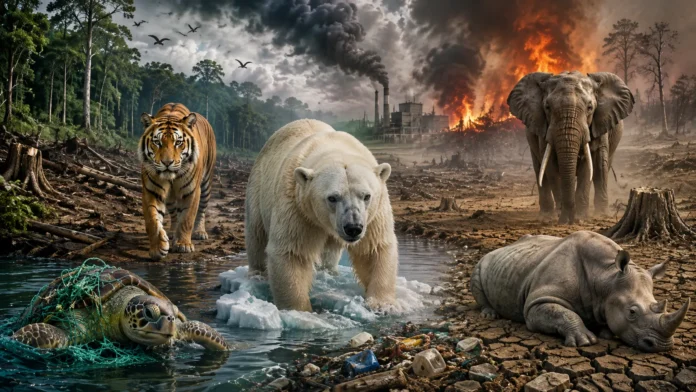

Why Are Some Animals Becoming Extinct?
Animals become extinct when a species disappears completely because no living individuals remain anywhere on Earth. Extinction has always been part of nature, but human activities are now increasing pressure on many wildlife populations around the world. Forest destruction, pollution, climate change, hunting, invasive species, and illegal wildlife trade can reduce populations much faster than some animals can recover. Species with small populations, slow reproduction, or very specialized habitats are often especially vulnerable to these pressures. When several threats occur at the same time, an already declining population can become dangerously small within only a few generations. Understanding why some animals are becoming extinct is therefore essential for protecting biodiversity and maintaining healthy ecosystems.
Every animal species depends on particular conditions for food, water, shelter, reproduction, and survival. When those conditions change too quickly, animals may struggle to adapt or move somewhere safer. A tropical bird that depends on one type of forest may disappear if that forest is cleared for agriculture or development. A marine animal may decline when warming oceans alter its food supply or damage the habitats where it reproduces. Even animals that appear adaptable can become threatened when suitable habitat becomes fragmented into small isolated areas. Extinction is usually the final result of a long period of population decline rather than a sudden disappearance.
Human activity is not the only possible cause of extinction because natural disasters, disease, competition, and environmental changes have affected species throughout Earth’s history. However, modern human populations can transform habitats on a scale and at a speed that many species have difficulty tolerating. Roads can divide ecosystems, industrial activity can pollute rivers, fishing can remove marine animals faster than populations reproduce, and greenhouse gas emissions can alter entire climate systems. These pressures can combine with natural challenges and make survival even more difficult. Conservation scientists therefore examine both immediate causes and the wider environmental conditions affecting a species. Protecting wildlife often requires addressing several connected problems rather than solving only one threat.
This article explains why animals become extinct, including habitat loss, climate change, hunting, pollution, invasive species, disease, overfishing, and declining genetic diversity. It also explores why some animals are more vulnerable than others and what happens to ecosystems when species disappear. You will learn how endangered species differ from extinct animals and why conservation programs sometimes succeed in rebuilding populations. The goal is to explain extinction in a clear and practical way without treating every threatened species as though it faces exactly the same problem. Different animals need different conservation strategies because their habitats, diets, reproductive rates, and threats can vary greatly. Understanding these differences is one of the first steps toward preventing future extinctions.
What Does Animal Extinction Mean?
Animal extinction occurs when the last living member of a species dies and no individuals remain anywhere in the world. Once that happens naturally, the species cannot reproduce or return without extraordinary technologies that currently remain highly limited or experimental. Extinction is different from a species becoming rare because rare animals still have living populations that may potentially recover. Conservation organizations therefore monitor population size, distribution, reproductive success, and environmental threats before extinction occurs. Early action can be much more effective than waiting until only a handful of animals remain. Preventing population collapse is generally easier than attempting to rescue a species at the very edge of disappearance.
A species may first become vulnerable or endangered as its population decreases or its geographical range becomes smaller. If those pressures continue, the species may move closer to extinction and eventually survive only in isolated locations. Some animals become functionally extinct before every individual dies because too few remain to maintain a healthy reproducing population. A population may also contain individuals that are too geographically separated to find mates successfully. In other situations, most remaining animals may be too old or genetically similar to rebuild the population effectively. This shows why simply counting surviving individuals does not always reveal the complete extinction risk.
Scientists distinguish between global extinction and local extinction, which is sometimes called extirpation. A locally extinct animal has disappeared from one region but still survives somewhere else in the world. Wolves, large cats, birds, and other animals have historically disappeared from parts of their former ranges while continuing to survive elsewhere. If suitable conditions return, conservation programs may sometimes reintroduce such species into regions where they previously lived. Global extinction is much more final because there is no remaining wild or captive population from which recovery can begin. This distinction is important when reading reports about disappearing wildlife.
Extinction can occur naturally over geological time as environments change and new species evolve. Fossil evidence shows that countless organisms disappeared long before modern humans existed. However, the concern today is that multiple human-caused pressures can accelerate population decline across many groups of animals. Habitat conversion, intensive harvesting, pollution, introduced species, and climate change can operate simultaneously across large regions. Species that might otherwise have adapted over thousands of years may instead face major environmental changes within decades. The speed of modern environmental change is therefore an important part of today’s conservation challenge.
Habitat Loss Is One of the Biggest Causes of Extinction
Habitat loss occurs when the natural environment an animal depends on is destroyed, degraded, or converted for another use. Forests may be cleared for agriculture, wetlands may be drained for construction, and grasslands may be replaced with roads or urban development. When habitat disappears, animals lose food sources, nesting areas, shelter, breeding grounds, and safe places to raise their young. Some species can move into nearby environments, but highly specialized animals may have nowhere suitable to go. Habitat loss can therefore reduce populations even when animals are not being directly hunted or killed. It is one of the most important reasons many species become threatened.
Deforestation is particularly damaging because forests support enormous numbers of animals, plants, fungi, and microorganisms. Removing trees changes temperature, moisture, food availability, and the physical structure of an entire ecosystem. Animals that depend on tree cavities, particular fruits, forest insects, or dense vegetation may struggle to survive once the habitat is cleared. Forest edges can also expose wildlife to predators, human disturbance, fires, and different environmental conditions. Even when some trees remain, the ecosystem may no longer provide everything specialist species require. Protecting forest area and quality is therefore important for maintaining wildlife populations.
Wetlands provide another example of habitat that can be easily damaged. Frogs, fish, waterbirds, insects, reptiles, and mammals may depend on wetlands for feeding or reproduction. Draining a wetland can remove breeding sites and change water flow across the surrounding landscape. Pollution entering the remaining water can create additional pressure on already reduced populations. Migratory animals can also be affected because they may rely on several different wetlands during long seasonal journeys. Losing even one important stopover site can make migration much more difficult. Habitat protection therefore needs to consider how different locations are connected across an animal’s life cycle.
Habitat restoration can sometimes reverse part of this damage. Replanting native vegetation, restoring wetlands, protecting rivers, and managing forests more sustainably can improve conditions for wildlife. Restoration is usually most successful when it recreates ecological functions rather than simply planting any available vegetation. Animals need appropriate food, water, shelter, breeding locations, and connections with other populations. Restored habitat may also take years or decades to develop enough complexity for sensitive species. Preventing destruction in the first place can therefore be more effective than attempting to rebuild a highly complex ecosystem later. Conservation commonly combines protection of remaining habitat with restoration of damaged areas.
Habitat Fragmentation Can Isolate Animal Populations
Habitat fragmentation happens when one large natural area is divided into smaller pieces by roads, farms, cities, fences, mines, or other development. The total amount of habitat may not disappear completely, yet the remaining sections can become too isolated for wildlife to move between them. Animals may need large territories for hunting, mating, seasonal migration, or finding water. When movement routes are blocked, populations can become trapped in small areas with limited resources. Small isolated populations are generally more vulnerable to disease, natural disasters, and genetic problems. Fragmentation can therefore increase extinction risk even when some habitat remains.
Roads are a common source of fragmentation because they create both physical and behavioral barriers. Animals trying to cross roads may be killed by vehicles, while other species avoid noisy or brightly lit areas completely. A road can divide one breeding population into several smaller groups that rarely interact. Over time, these groups may become genetically isolated and less resilient to environmental change. Large mammals often face particular problems because their natural ranges can cover hundreds or thousands of square kilometers. Wildlife crossings and protected corridors can help reconnect divided landscapes.
Agricultural development can create similar challenges when natural habitat is converted into large areas of crops or pasture. Some wildlife can move through farms, but other species need continuous forest, grassland, or wetland environments. Pesticides, fences, irrigation systems, and human activity can make agricultural landscapes even harder to cross. Animals may become restricted to small patches of natural vegetation surrounded by unsuitable land. Those patches may not provide enough food or breeding opportunities to maintain healthy populations. Conservation planning therefore often focuses on creating connections between remaining natural areas.
Wildlife corridors are protected strips of habitat that allow animals to move between larger ecosystem areas. These corridors can help individuals find mates, follow seasonal resources, and escape local threats such as fire or drought. Movement also allows genes to flow between populations, reducing some problems associated with long-term isolation. Effective corridors need to match the behavior and habitat preferences of the animals they are intended to protect. A corridor suitable for a deer may not necessarily work for an amphibian or forest-dependent bird. Landscape conservation therefore requires understanding how specific species actually move through their environment.
How Climate Change Is Threatening Animals
Climate change alters temperatures, rainfall, seasons, ocean conditions, and the frequency or intensity of certain extreme events. Animals adapted to a particular climate may struggle when local conditions move outside the range they can tolerate. Some species can shift toward cooler regions or higher elevations, but others are blocked by geography or human development. Animals living on mountaintops, islands, polar regions, or isolated habitats may have especially limited options for moving. Climate changes can also happen faster than some species can adapt genetically. These pressures can gradually shrink populations and increase extinction risk.
Temperature affects more than whether an animal simply feels hot or cold. It can influence reproduction, migration timing, food availability, disease transmission, and interactions between predators and prey. If insects emerge earlier in spring because of warmer temperatures, migrating birds may arrive after an important food peak has passed. Reptiles whose offspring’s sex is influenced by incubation temperature may experience changes in population balance. Warmer water can reduce oxygen availability for some aquatic organisms and alter where fish populations can survive. Small changes can therefore spread through many connected biological processes. Climate change often affects ecosystems indirectly as well as through heat itself.
Polar animals are especially associated with climate-related habitat changes because sea ice plays a major role in their ecosystems. Animals may use ice for resting, hunting, breeding, escaping predators, or reaching feeding grounds. Earlier melting or later freezing can shorten the period during which those activities are possible. Marine food webs can also shift as ocean temperatures and ice conditions change. Even animals that do not live directly on ice may depend on prey species affected by changing conditions. Climate change can therefore influence entire ecological networks rather than only a few visible species.
Reducing extinction risks from climate change involves both limiting future warming and helping wildlife adapt to unavoidable changes. Protecting large connected habitats can give animals more opportunities to move as temperatures shift. Restoring wetlands and forests can strengthen ecosystems and provide refuges during extreme events. Conservationists may also identify climate-resistant habitats that are likely to remain suitable for longer periods. Some particularly vulnerable species may require more intensive management when natural movement is impossible. Climate-focused conservation therefore needs to consider how habitats may change in the future rather than protecting only today’s conditions.
Why Hunting and Poaching Can Cause Extinction
Hunting becomes a serious conservation problem when animals are removed faster than their populations can replace themselves through reproduction. Species that mature slowly, produce few offspring, or require many years between generations are particularly vulnerable to heavy hunting. Large mammals often fall into this category because each adult animal represents many years of growth and reproductive potential. Removing too many breeding adults can cause population decline even while younger animals remain visible. Legal hunting can sometimes be managed sustainably, but uncontrolled hunting can produce very different outcomes. The key issue is whether the rate of removal exceeds the population’s ability to recover.
Poaching refers to illegal hunting, capture, or killing of wildlife and is a major threat to certain species. Animals may be targeted for meat, skins, horns, tusks, scales, feathers, traditional products, pets, or commercial collections. High prices in illegal wildlife markets can encourage organized networks to continue hunting even when populations become extremely small. Rarity can sometimes increase the market value of wildlife products, creating additional pressure on declining species. Rangers and enforcement agencies therefore face both ecological and criminal challenges when protecting threatened animals. Reducing illegal trade requires action throughout the supply chain rather than only at the place where animals are killed.
Large animals are often particularly vulnerable because they usually reproduce more slowly than smaller animals. Elephants, rhinoceroses, some large cats, sharks, and other long-lived species can take years to reach reproductive age. A population may therefore need decades to recover after intensive hunting. Losing experienced adult animals can also affect social structures, migration knowledge, and breeding success. In highly social species, the loss of one individual may influence more than just population numbers. Conservation planning must therefore consider behavior and family structure as well as simple counts. Protecting breeding adults can be especially important for population recovery.
Reducing poaching requires enforcement, community involvement, consumer education, and alternative livelihoods in areas where wildlife exploitation supports local income. Protected areas alone may not work if surrounding communities receive no benefit from conservation. Programs that involve local people in tourism, wildlife management, monitoring, or sustainable businesses can sometimes create stronger incentives for protection. Governments can also strengthen laws and improve international cooperation against trafficking networks. Public demand matters because illegal markets ultimately depend on buyers. Conservation therefore needs to address both the killing of animals and the economic forces encouraging that killing.
How Illegal Wildlife Trade Threatens Species
Illegal wildlife trade involves the capture, transport, sale, or purchase of protected animals and animal products in violation of laws or international agreements. Animals can be trafficked alive for the exotic pet trade or killed for valuable body parts. Birds, reptiles, primates, big cats, marine animals, and many lesser-known species can all be affected. Removing wildlife from nature reduces breeding populations and can damage ecosystems where those animals perform important ecological roles. Transport conditions may also kill many captured animals before they ever reach buyers. The true number removed from the wild can therefore be much larger than the number eventually sold.
Rare animals can become especially valuable to collectors, which creates a dangerous economic pattern. As a population declines and the species becomes harder to obtain, scarcity may increase the price buyers are willing to pay. Higher prices can encourage additional illegal collection precisely when the population can least tolerate it. Small reptiles, amphibians, birds, insects, and fish can be particularly difficult to monitor because they may be hidden or transported easily. Online marketplaces and social media can also create new channels connecting sellers with international buyers. Law enforcement therefore needs to adapt continually to changing trafficking methods.
Wildlife trade can also move diseases between species and regions. Captured animals may be crowded together under stressful conditions where pathogens can spread more easily. Transporting them across borders can introduce diseases into populations that have little previous exposure. Escaped or released exotic pets may also become invasive species in their new environments. The wildlife trade therefore creates ecological and health risks beyond the direct removal of threatened animals. Responsible regulation and disease monitoring are important components of wildlife management. Conservation problems are often connected in ways that are not immediately obvious.
Consumers can reduce demand by avoiding products made from threatened wildlife and researching the legal and sustainable origin of exotic animals before purchasing them. People should not assume that an animal advertised online was bred legally simply because a seller makes that claim. Strong traceability systems and responsible captive breeding can help legitimate markets avoid supporting wild collection. International agreements can also restrict trade in species at risk. Effective enforcement requires cooperation among source countries, transit countries, and final markets. Reducing demand is especially important because wildlife trafficking becomes less profitable when fewer people are willing to buy illegally sourced animals.
Pollution Can Make Habitats Unsafe for Wildlife
Pollution affects animals through contaminated air, water, soil, and food. Chemicals released from agriculture, industry, mining, transportation, and household waste can enter natural ecosystems and expose wildlife to harmful substances. Some pollutants cause immediate poisoning, while others accumulate slowly inside animal tissues over time. Predators near the top of food chains may receive especially high concentrations because pollutants can build up as they consume contaminated prey. Even pollution that does not immediately kill animals can affect reproduction, immune function, development, or behavior. Long-term population decline can therefore occur without obvious mass die-offs.
Plastic pollution has become a major concern in marine and freshwater ecosystems. Animals can swallow plastic because it resembles food or becomes mixed with natural prey. Plastic can block digestive systems, reduce feeding, injure internal tissues, or create a false feeling of fullness. Seabirds, turtles, fish, marine mammals, and many other animals have been documented interacting with plastic waste. Larger plastic items can also entangle animals and interfere with swimming, feeding, or breathing. Microplastics create additional questions because tiny particles can spread widely through food webs. Reducing plastic leakage into ecosystems is therefore an important conservation goal.
Agricultural pollution can alter rivers, lakes, coastal waters, and terrestrial habitats. Fertilizers entering water can stimulate excessive algae growth, which may eventually reduce dissolved oxygen and create conditions unsuitable for fish and other aquatic organisms. Pesticides can affect target pests but may also harm beneficial insects, birds, amphibians, and other wildlife when exposure is poorly controlled. Some pollutants remain in ecosystems for long periods and can travel far from where they were originally released. The consequences may therefore affect species far beyond the source of contamination. Sustainable agricultural practices can help reduce these unintended ecological effects.
Pollution prevention is often easier than cleaning heavily contaminated ecosystems after damage has occurred. Improving waste management, treating industrial discharge, reducing unnecessary chemical use, and preventing oil or plastic releases can protect many species simultaneously. Environmental regulations can limit dangerous pollutants when governments enforce them effectively. Businesses can redesign production systems to reduce waste and use less harmful materials. Individuals can also contribute through responsible disposal and lower consumption of unnecessary single-use products. Protecting wildlife from pollution ultimately requires action from households, industries, agriculture, and governments together.
Overfishing Is Putting Some Marine Species at Risk
Overfishing occurs when fish and other marine animals are removed faster than their populations can reproduce. Modern fishing technologies can locate and capture enormous quantities of marine life, increasing the risk that poorly managed populations will decline. A fishery may initially appear productive even while the number of breeding adults is falling. Eventually, there may be too few mature individuals to replace those being caught. Recovery can be slow when heavily depleted species reproduce late or have complex life cycles. Sustainable fishing therefore depends on understanding the biology of each population.
Sharks are particularly vulnerable to excessive fishing because many species grow slowly and produce relatively few young. Their populations cannot always recover quickly from intensive harvesting or accidental capture. Removing large predators can also influence the structure of marine food webs. Changes in predator numbers may affect prey populations and indirectly alter other parts of the ecosystem. This means overfishing one species can have consequences extending beyond that species alone. Ecosystem-based fisheries management attempts to account for these wider connections.
Bycatch is another major concern because fishing gear can unintentionally capture animals that were not being targeted. Sea turtles, seabirds, dolphins, sharks, juvenile fish, and many other species can become caught in nets, hooks, or traps. Some can be released alive, but others are injured or die before being returned to the water. Modifying fishing gear and changing where or when fishing occurs can reduce bycatch significantly in some situations. Monitoring is also necessary to determine which species are being affected most severely. Better fishing practices can therefore protect wildlife while allowing sustainable food production to continue.
Marine protected areas can provide safe locations where fish populations have opportunities to grow and reproduce with reduced fishing pressure. Catch limits, seasonal closures, size restrictions, and gear regulations are additional management tools used to prevent overexploitation. These measures work best when they are based on reliable scientific data and supported by effective enforcement. Fish populations often cross national boundaries, making international cooperation necessary for some species. Consumers can also encourage sustainable fisheries by supporting responsibly managed seafood sources. Protecting marine biodiversity requires balancing human food needs with the biological limits of ocean populations.
Invasive Species Can Push Native Animals Toward Extinction
An invasive species is an organism introduced outside its natural range that spreads and causes ecological, economic, or other significant harm. Not every introduced species becomes invasive because many fail to survive or remain relatively limited. Problems arise when an introduced predator, competitor, parasite, or disease spreads rapidly in an ecosystem where native species have few defenses. Island ecosystems can be especially vulnerable because their animals may have evolved without certain types of predators. Introduced cats, rats, snakes, or other predators can therefore cause severe declines among native wildlife. Some extinctions have been strongly connected with introduced species.
Invasive predators can be devastating when native animals do not recognize them as threats. Ground-nesting birds may have evolved on islands where mammalian predators were historically absent. When rats or cats are introduced, eggs and chicks can suddenly become easy prey. Native species may not reproduce fast enough to compensate for the new level of predation. Small populations can collapse particularly quickly because every lost breeding adult matters. Removing invasive predators from important breeding islands has therefore become a major conservation strategy in some regions.
Competition can create different problems. An introduced species may consume the same food as native wildlife, occupy nesting locations, or spread into habitats used by vulnerable species. If the invader reproduces faster or tolerates disturbed environments better, native populations may gradually lose access to essential resources. Invasive plants can also transform habitats used by animals even without competing with them directly. Changes in vegetation can alter fire patterns, shelter, water availability, or food sources. The effects of invasive species therefore extend throughout ecosystems.
Preventing invasive species from arriving is often much cheaper and more effective than controlling them after they become established. Biosecurity measures can inspect cargo, luggage, ships, agricultural products, and other pathways through which organisms travel. Pet owners should also avoid releasing exotic animals into the wild because released pets can sometimes establish breeding populations. Early detection allows conservation agencies to respond before an introduced species spreads widely. Once an invasion covers a large region, complete removal can become extremely difficult. Prevention, monitoring, and rapid response are therefore essential components of biodiversity conservation.
Disease Can Threaten Small Wildlife Populations
Disease is a natural part of ecosystems, but outbreaks can become especially dangerous for species with small populations. When only a few hundred or thousand individuals remain, a highly infectious disease can remove a large proportion of the population within a short period. Small populations may also contain less genetic variation related to immune responses. This can make it harder for some groups to resist new pathogens. Environmental stress from habitat loss or food shortages can further weaken animals and increase disease susceptibility. Disease can therefore combine with other threats rather than acting independently.
Global movement of humans, animals, plants, and goods can transport pathogens into areas where wildlife has never encountered them before. Native species may have little evolved resistance to an introduced disease. Amphibians provide a well-known example of how infectious disease can contribute to dramatic population declines across multiple species. Similar concerns exist for bats, birds, marine mammals, and other wildlife groups. Once a pathogen becomes established in wild populations, eliminating it can be extremely difficult. Conservationists may need to focus on protecting disease-free populations or improving environmental resilience.
Climate change can also influence the distribution of diseases and their vectors. Warmer temperatures may allow mosquitoes, ticks, parasites, or pathogens to survive in regions that were previously unsuitable. Changing rainfall patterns can alter breeding conditions for disease-carrying organisms. Wildlife weakened by heat, drought, habitat loss, or reduced food may also become more vulnerable to infection. Researchers therefore increasingly study disease as part of a wider environmental system. Protecting habitat quality can sometimes improve a population’s ability to withstand outbreaks.
Conservation programs may use veterinary care, vaccination, captive breeding, quarantine, or careful movement of animals when disease threatens critically endangered species. These interventions can be difficult because treating free-ranging wildlife is far more complicated than treating domestic animals. Captive programs also need strict disease-control procedures to avoid introducing pathogens during reintroduction. Monitoring can provide early warning when unusual illness appears in a vulnerable population. Cooperation between wildlife biologists, veterinarians, governments, and local communities is often necessary. Wildlife health has become an increasingly important part of modern conservation.
Why Small Populations Are More Likely to Become Extinct
A large population can usually withstand the loss of some individuals more easily than a very small population. When only a few animals remain, a single wildfire, storm, disease outbreak, drought, or pollution event can remove a large proportion of the entire species. Random fluctuations in births and deaths also become more important when numbers are low. Several unsuccessful breeding seasons can push the population downward even without a new external threat. Small populations therefore face risks simply because there are fewer individuals available to absorb losses. This is sometimes described as demographic vulnerability.
Finding suitable mates can also become difficult as populations shrink. Animals may be scattered across large areas or separated by roads, farms, and other barriers. Individuals can spend more energy searching for partners and may never reproduce successfully. Social species can experience additional problems if their hunting, migration, defense, or breeding systems depend on groups of a certain size. Losing too many members can therefore reduce survival beyond the direct effect of having fewer animals. Population density can matter almost as much as the total number remaining.
Small populations often lose genetic diversity because fewer individuals contribute genes to future generations. Close relatives may reproduce with one another more frequently, increasing the chance that harmful recessive genetic variants will be expressed. Reduced genetic diversity can also limit the population’s ability to adapt to new diseases, temperatures, or environmental conditions. These problems do not mean every small population is immediately doomed, but they can make recovery more difficult. Conservationists sometimes manage breeding or move individuals between populations to increase genetic diversity. Genetics has therefore become an important part of endangered-species management.
Once populations become extremely small, several negative processes can reinforce one another. Low numbers reduce genetic diversity, reduced diversity may affect health or reproduction, and poor reproduction pushes numbers even lower. Habitat loss, disease, or climate stress can intensify the decline further. Conservation scientists sometimes refer to combinations of these effects as an extinction vortex. Breaking the cycle may require rapid protection, habitat management, and carefully planned breeding programs. Acting before numbers reach this stage greatly improves the chances of recovery.
Why Animals With Slow Reproduction Are More Vulnerable
Some animals can produce many offspring every year, while others may raise only one or two young after long pregnancies or breeding intervals. Species with slow reproductive rates naturally recover more slowly after hunting, habitat destruction, disease, or other population losses. Elephants, whales, large sharks, and many primates provide examples of animals with relatively slow life histories. They may take years to reach sexual maturity before producing any offspring at all. Losing one breeding adult can therefore represent many future offspring that will never be produced. This makes heavy exploitation particularly dangerous.
Long-lived species can appear common for years even while their population is heading toward decline. Adults may remain visible after reproduction has already dropped below the level needed for long-term replacement. By the time fewer young animals become obvious, many years of population decline may already have occurred. Conservationists therefore examine age structure rather than counting only the total number of individuals. A population dominated by older animals may have fewer opportunities for recovery. Successful conservation needs enough healthy breeding adults and enough young animals surviving to maturity.
Slow reproduction also means recovery can take decades after a threat has been reduced. Stopping hunting may prevent further decline, but the population cannot instantly return to its previous size. Habitat must remain protected for long enough to support several generations of reproduction. Governments and communities therefore need patience when evaluating whether conservation efforts are working. Short-term increases may be encouraging without yet guaranteeing long-term security. Long-lived wildlife often requires long-term conservation commitments.
Fast-reproducing species are not automatically safe from extinction because overwhelming habitat destruction or disease can still reduce them rapidly. However, high reproductive rates can give some animals greater potential to rebuild populations when conditions improve. Species survival therefore depends on a combination of reproduction, habitat, mortality, geographic range, and adaptability. Conservation scientists study these life-history characteristics when deciding which populations require urgent intervention. A strategy effective for a rapidly breeding rodent may be unsuitable for a slowly reproducing rhinoceros. Understanding reproductive biology is essential for realistic recovery planning.
How Extinction Affects Ecosystems
Every species interacts with other organisms and with its physical environment. Animals can function as predators, prey, pollinators, seed dispersers, scavengers, grazers, ecosystem engineers, or competitors. When a species disappears, these relationships may change in ways that extend far beyond the missing animal itself. A predator’s extinction can allow prey populations to increase dramatically, while losing a pollinator can reduce reproduction in certain plants. The resulting changes may then affect additional species that depend on those plants or animals. Extinction can therefore create a chain of ecological consequences.
Predators often play particularly important roles in controlling prey populations and influencing animal behavior. Removing a major predator can change where herbivores feed and how abundant they become. Increased grazing may then reduce vegetation, affecting birds, insects, soil, and waterways. Ecologists describe some of these cascading effects as trophic cascades because changes move through different levels of a food web. Not every ecosystem responds in exactly the same way, but the possibility shows why predator conservation can benefit many other species. Protecting one animal can sometimes help maintain an entire ecological community.
Seed-dispersing animals provide another important ecological service. Birds, primates, bats, rodents, elephants, and other animals eat fruits and transport seeds to new locations. If these species disappear, certain plants may have fewer opportunities to spread or regenerate. Declining plant populations can then reduce food and shelter for other wildlife. Similar relationships exist between flowering plants and their animal pollinators. Biodiversity depends on networks of interactions rather than isolated species living independently.
Humans also benefit from functioning ecosystems through food production, water quality, soil fertility, climate regulation, cultural values, and economic activities. Wildlife loss can therefore affect human communities as well as natural systems. Maintaining biodiversity can make ecosystems more resilient to disturbances such as disease, drought, and environmental change. Scientists are still discovering ecological relationships involving species that may appear unimportant at first glance. Allowing species to disappear can remove functions we do not yet fully understand. Preventing extinction is therefore partly about protecting the stability and complexity of ecosystems themselves.
Can Endangered Animals Recover?
Yes, endangered animals can recover when the major causes of their decline are identified and effectively reduced. Recovery may involve protecting habitat, stopping hunting, controlling invasive species, reducing pollution, restoring food sources, or managing breeding populations. Some species respond relatively quickly once threats are removed, while others require decades of sustained conservation. Population recovery depends on reproduction rate, remaining habitat, genetic diversity, and the number of individuals left. The earlier conservation begins, the more options are usually available. Critically small populations are much harder and more expensive to rebuild.
Protected areas can help by giving animals secure places to feed, breed, migrate, and raise offspring. However, simply drawing a boundary on a map is not enough if illegal hunting, habitat degradation, or human conflict continues inside the area. Effective protection often requires trained staff, funding, monitoring, enforcement, and support from local communities. Wildlife may also travel beyond protected boundaries during migration or seasonal movements. Conservation therefore increasingly considers entire landscapes rather than isolated parks. Cooperation among neighboring regions can be essential for wide-ranging species.
Captive breeding can provide a temporary safety net for species facing extremely high extinction risk. Carefully managed breeding programs can maintain populations while threats in the wild are addressed. Animals may eventually be reintroduced when suitable habitat becomes secure enough to support them. Captive breeding is not easy because small populations can develop genetic problems, behavioral changes, or difficulties adapting after release. It should therefore complement habitat conservation rather than replace it. A species cannot truly recover if there is nowhere safe for released animals to live.
Community involvement frequently determines whether conservation succeeds over the long term. People living near wildlife may experience costs from crop damage, livestock losses, restricted resource use, or dangerous animal encounters. Conservation programs that ignore those challenges can create resentment and weak local support. Strategies such as compensation, sustainable tourism, local employment, education, and community-managed conservation can create shared benefits. When wildlife survival becomes valuable to nearby communities, protection may become much more sustainable. Successful conservation is therefore both an ecological and a human challenge.
What Can Be Done to Prevent Animal Extinction?
Protecting natural habitats is one of the most effective ways to prevent extinction because every species ultimately needs somewhere suitable to live. Governments can establish protected areas, regulate damaging development, restore degraded ecosystems, and maintain wildlife corridors between fragmented habitats. Land-use planning can also identify particularly important breeding grounds or migration routes before new infrastructure is built. Businesses can reduce deforestation and environmental damage within supply chains. Local communities can participate in managing forests, wetlands, grasslands, and coastal ecosystems. Habitat conservation benefits many species at the same time rather than addressing only one animal.
Reducing direct exploitation is equally important for species threatened by hunting, fishing, or wildlife trade. Strong laws need effective enforcement so illegal killing does not remain profitable. International cooperation can target trafficking networks that move wildlife products across borders. Sustainable fishing regulations can prevent marine populations from being harvested faster than they reproduce. Consumers can avoid illegally sourced wildlife products and choose responsibly managed seafood. Reducing demand can make exploitation less financially attractive.
Climate action and pollution reduction can address broader threats affecting entire ecosystems. Reducing greenhouse gas emissions can limit future climate disruption, while protecting forests and wetlands can support both biodiversity and climate goals. Better waste management can prevent plastic and toxic substances from entering rivers and oceans. Sustainable farming practices can reduce pesticide and fertilizer pollution while maintaining food production. Cleaner industrial processes can reduce contamination near wildlife habitats. Environmental problems are interconnected, so solutions often provide multiple benefits.
Individuals can also contribute without needing to become professional conservationists. Supporting credible conservation organizations, reducing unnecessary waste, planting native species, keeping pets from harming wildlife, and making informed purchasing decisions can all help. People can participate in citizen-science projects that collect valuable information about birds, insects, mammals, and other species. Voting and community participation can influence environmental policies and local land-use decisions. Education can also reduce misinformation and build public support for threatened species. Preventing extinction ultimately requires action at individual, community, national, and international levels.
Final Thoughts on Why Some Animals Are Becoming Extinct
Understanding why some animals are becoming extinct requires looking at multiple pressures rather than searching for one universal cause. Habitat loss, fragmentation, climate change, hunting, wildlife trade, pollution, overfishing, invasive species, and disease can all reduce animal populations. Many endangered species face several of these threats at the same time. A population already weakened by habitat loss may become much more vulnerable to drought, disease, or hunting. Small populations then face additional problems involving reproduction and genetic diversity. Extinction often develops through this combination of reinforcing pressures.
Some species are naturally more vulnerable because they reproduce slowly, occupy small geographical areas, or depend on very specific habitats. Animals living on isolated islands or mountaintops may have few alternative places to move when conditions change. Large mammals may need enormous territories and many years to produce new generations. Highly specialized feeders may struggle if one important food source disappears. These biological differences explain why the same environmental change can affect species very differently. Conservation strategies therefore need to be designed around each animal’s ecology.
Extinction matters because animals are parts of interconnected ecosystems rather than independent objects. Losing predators can alter prey populations, while losing pollinators or seed dispersers can affect plant reproduction. Those changes can influence food webs, forests, waterways, and ultimately human communities. Biodiversity also represents millions of years of evolutionary history that cannot simply be recreated once it disappears. Preventing extinction therefore protects ecological relationships as well as individual species. Healthy ecosystems are generally more valuable and resilient when their natural biological diversity remains intact.
The encouraging reality is that extinction is not always inevitable once a species becomes endangered. Populations can recover when habitat is protected, exploitation is reduced, and conservation efforts continue long enough to produce results. Captive breeding, wildlife corridors, anti-poaching programs, habitat restoration, pollution controls, and community conservation can all contribute to successful recovery. The most effective approach is usually to act before populations reach critically low numbers. Protecting wildlife also means addressing the human activities and economic systems that create environmental pressure. With informed and sustained action, many threatened species can still have a future.
Frequently Asked Questions
What is the biggest cause of animal extinction?
Habitat loss is one of the most important threats because animals lose food, shelter, breeding areas, and space when ecosystems are destroyed or fragmented. Climate change, hunting, pollution, invasive species, and other pressures can make habitat-related declines even worse.
Why are animals becoming extinct faster today?
Human activities can change environments much faster than many species can naturally adapt. Deforestation, pollution, climate change, intensive harvesting, infrastructure development, and wildlife trade can affect large populations within relatively short periods.
What animals are most vulnerable to extinction?
Animals with small populations, restricted habitats, slow reproductive rates, specialized diets, or limited ability to move are often especially vulnerable. Large mammals, island species, amphibians, and some marine animals can therefore face particularly serious risks.
Can an extinct animal come back?
Once the final individual of a species dies, natural recovery is impossible because no breeding population remains. Scientists are researching genetic technologies related to de-extinction, but they cannot currently restore lost ecosystems or reproduce an extinct species exactly in most cases.
How can humans help stop animal extinction?
People can support habitat protection, reduce pollution, avoid illegal wildlife products, choose sustainable products, support conservation organizations, and encourage effective environmental policies. Large-scale government, industry, and international action is also essential.