

IT Asset Disposition: Process, Benefits & Best Practices
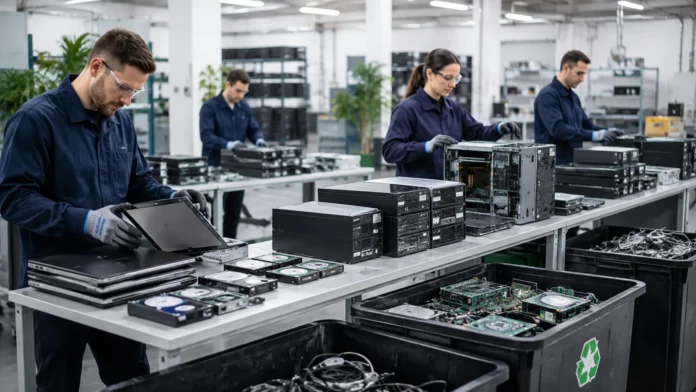
IT asset disposition, commonly shortened to ITAD, is the structured process organizations use to retire, reuse, resell, recycle, or securely dispose of technology that has reached the end of its useful business life. Those assets can include laptops, desktops, servers, storage devices, smartphones, tablets, networking equipment, printers, monitors, and other electronics. Simply removing old equipment from an office does not complete the process because devices may still contain sensitive business information and retain significant resale value. Poor disposal can expose confidential data, create environmental problems, and leave organizations with incomplete asset records. A mature ITAD program addresses security, financial recovery, compliance, sustainability, logistics, and documentation together rather than treating equipment retirement as routine waste removal.
The growing use of cloud services, remote work, mobile devices, and distributed offices has made IT asset disposition more complicated than it once was. Organizations may now need to collect devices from employees in multiple cities, remove access credentials, verify data sanitization, determine whether equipment can be reused, and coordinate environmentally responsible recycling for anything that no longer has economic value. Effective ITAD begins long before a device enters a recycling facility because asset inventory, retention rules, security policies, and hardware lifecycle planning all affect the final outcome. Businesses that build repeatable processes can reduce risk while recovering more value from technology investments. This guide explains the complete ITAD process, key benefits, data-security requirements, vendor considerations, sustainability practices, and practical steps for managing end-of-life IT assets responsibly.
What Is IT Asset Disposition and Why Does It Matter?
IT asset disposition is the final stage of the technology asset lifecycle, beginning when equipment is removed from active business use and ending when its final destination has been verified and documented. An asset may be redeployed internally, refurbished, resold, donated, returned to a leasing company, harvested for parts, recycled, or physically destroyed depending on its condition and security requirements. The important distinction is that ITAD is a controlled business process rather than simply throwing away unwanted electronics. Every device should have a known status, owner, data-security treatment, and final disposition. This structure helps organizations avoid losing track of equipment once it leaves an employee’s desk or data center.
Security is one of the most important reasons for implementing formal ITAD procedures. Retired devices may contain customer records, employee information, intellectual property, emails, passwords, application data, financial information, or system credentials. Deleting visible files or resetting a device without understanding its storage technology may not always provide sufficient assurance that information is inaccessible. A proper ITAD process applies approved data sanitization or destruction methods before an asset is transferred outside trusted control. Organizations should also document which devices were processed and whether sanitization succeeded. This prevents old hardware from becoming an overlooked source of data breaches after employees assume it has already been safely retired.
Financial value provides another important reason to manage ITAD carefully. Business technology can retain significant resale value even when it no longer meets an organization’s internal performance requirements. Recent laptops, smartphones, servers, networking equipment, and specialized hardware may be suitable for refurbishment or secondary markets after data has been securely removed. Recovering this value can offset the cost of new technology purchases and make hardware refresh programs more economical. Waiting too long to dispose of equipment can reduce resale prices as devices age. Businesses therefore benefit from linking ITAD decisions with planned lifecycle replacement instead of allowing retired assets to remain forgotten in storage rooms for years.
Environmental responsibility is another core part of modern IT asset disposition. Electronic equipment contains metals, plastics, batteries, circuit boards, glass, and other materials that should not be handled like ordinary office waste. Reusing functional equipment generally preserves more value and avoids unnecessary manufacturing demand, while responsible recycling can recover materials from devices that can no longer be used. Improper disposal may send electronics to landfills or poorly controlled processing environments. Organizations with sustainability goals increasingly include ITAD within broader circular-economy and environmental programs. A strong disposition strategy therefore considers whether equipment should be reused first, recycled second, and treated as waste only when no responsible recovery pathway remains.
ITAD also matters because asset retirement affects governance and operational accuracy. An organization cannot maintain a trustworthy technology inventory if devices remain listed as active after being sold, recycled, or physically destroyed. Inaccurate records can affect software licensing, insurance, cybersecurity monitoring, financial accounting, and future purchasing decisions. A mature process updates systems of record as equipment moves through retirement stages. This allows IT, security, finance, procurement, legal, and sustainability teams to work from the same lifecycle information. IT asset disposition becomes far more valuable when it is connected with enterprise asset management rather than operating as an isolated end-of-life activity.
The IT Asset Disposition Process Step by Step
The ITAD process begins by identifying assets that are ready to leave active service. Devices may reach retirement because they are obsolete, damaged, no longer supported, replaced during refresh cycles, returned by employees, or no longer required after an office closes. Each asset should be matched with an inventory record before it is moved into a disposal workflow. Useful information can include serial number, asset tag, model, assigned user, storage type, location, ownership status, and security classification. Leasing or contractual obligations should also be checked before disposition begins. Accurate intake ensures that the organization knows exactly which equipment entered the process and prevents missing assets from being hidden inside large batches.
The next step is decommissioning, which removes the device from normal business operations and associated systems. This may involve disabling user access, removing the asset from device-management platforms, transferring required business files, revoking certificates, removing licenses, disconnecting cloud accounts, and updating network records. Decommissioning should occur in a controlled sequence so necessary information is preserved before storage is sanitized. For servers and infrastructure, teams may also need to migrate workloads, update dependencies, and confirm that other systems no longer rely on the hardware. A device should not leave operational control until responsible teams agree it is ready. Clear decommissioning checklists reduce the risk of accidentally destroying information that still has legitimate business value.
Data sanitization or destruction follows once retention and migration requirements have been completed. The appropriate method depends on the storage technology, sensitivity of the data, device condition, and whether the hardware is intended for reuse. Functioning assets may be securely erased using approved media-specific techniques, while failed or highly sensitive storage may require physical destruction. Mobile devices, SSDs, hard drives, backup media, and embedded storage should not automatically receive identical treatment. Verification is essential before any device is approved for resale or donation. If sanitization fails, the asset should move to an exception process where another method or physical destruction can be applied.
After data security has been addressed, the organization evaluates the remaining hardware for reuse or recovery value. Functional equipment may be graded according to age, cosmetic condition, battery health, configuration, performance, and market demand. Some devices can be redeployed internally, while others can be refurbished or sold. Components from damaged assets may still retain value when memory, processors, screens, or other parts can be recovered safely. Equipment with no practical reuse value should move into a responsible recycling stream. This stage helps organizations avoid destroying valuable hardware unnecessarily while ensuring that security remains the first priority before financial recovery.
The final stage includes reconciliation, reporting, and documented final disposition. Each asset should be matched against the original intake list so missing serial numbers or unexplained devices can be investigated. Records may include sanitization results, resale value, recycling status, destruction certificates, processing dates, vendor details, and final disposition type. Financial teams can reconcile recovered value, while sustainability teams may use recycling and reuse data for environmental reporting. IT should update asset-management systems so retired devices no longer appear active. A successful ITAD process therefore ends with evidence, not merely with equipment disappearing from a storage room.
Data Security and Secure Destruction in ITAD
Data security is often the highest-risk element of IT asset disposition because equipment can change hands several times after leaving its original environment. A laptop might move from an employee to an IT department, then to a logistics provider, ITAD vendor, refurbisher, reseller, or recycler. Until the data has been securely sanitized, every transition increases the number of people and organizations that could potentially access information. Businesses should therefore minimize the amount of time unsanitized equipment spends outside controlled storage. Clear chain-of-custody procedures should begin as soon as a device is collected. Security responsibility continues until the organization has reliable evidence that sensitive data is no longer accessible.
Secure erasure can preserve the value of functioning equipment when the storage technology supports an appropriate sanitization process. Approved tools may use device commands, overwriting, cryptographic erasure, or other techniques depending on the media. The organization should not assume that deleting files, reinstalling an operating system, or performing a casual factory reset automatically satisfies its security requirements. The chosen method should reflect the device type and sensitivity of the information previously stored. Completion should also be verified rather than accepted solely because an application displayed a successful message. Sanitization records tied to individual serial numbers create stronger evidence than generic statements that an entire batch was wiped.
Solid-state drives require particular attention because their internal controllers and flash-memory management differ significantly from traditional magnetic hard drives. Wear leveling, spare blocks, and internal remapping can make simplistic overwrite procedures inappropriate for some SSDs. ITAD policies should therefore include media-specific procedures rather than one universal wipe method developed years ago for spinning disks. Device-supported secure erase or properly implemented cryptographic erasure may be suitable in some environments, while physical destruction may be necessary when the device is damaged or cannot be sanitized reliably. The essential principle is matching the method to the technology. Security should never depend on assumptions about how a storage device works internally.
Physical destruction remains important when storage cannot be securely erased, when the asset has failed, or when organizational policy requires the information-bearing media to be permanently unusable. Shredding, crushing, disintegration, and other controlled processes can be used depending on the media and required destruction level. Merely damaging a device casing or drilling an arbitrary hole should not automatically be considered sufficient. The destruction process needs to affect the components that actually hold the data. Organizations should also ensure destroyed electronics enter responsible recycling streams afterward. Data security and environmental responsibility should remain connected even when the storage itself has been physically destroyed.
Documentation strengthens every data-security step. Useful records may include asset identification, media type, sanitization method, tool used, date, result, operator, physical destruction status, and final destination. When third-party vendors perform the work, organizations should understand what evidence will be returned and how quickly records will become available. Certificates can support audits, but they should reflect an actual controlled process rather than serving as the only reason the business trusts the outcome. Failed wipes, missing assets, or devices with inaccessible storage should trigger documented exceptions. Data security is strongest when organizations can explain both the normal ITAD process and what happens when that process does not work as planned.
Asset Tracking, Chain of Custody and Documentation
Accurate asset tracking is the foundation of a reliable ITAD program because organizations cannot secure or recover value from equipment they cannot locate. Every device entering disposition should be associated with a unique identifier, ideally using an existing asset tag and manufacturer serial number. Records can also include model, employee assignment, storage capacity, physical condition, acquisition date, and ownership details. Capturing this information during intake prevents confusion when hundreds or thousands of similar devices are processed together. Barcode or QR scanning can make large-scale collection more efficient. The objective is to maintain a clear relationship between the physical asset and the digital record describing its status.
Chain of custody describes who controls an asset at each point between collection and final disposition. This is especially important when unsanitized devices leave offices, employee homes, data centers, or other trusted environments. Handoffs should be documented so responsibility remains clear during transportation, temporary storage, processing, resale, or destruction. Higher-risk organizations may require tamper-evident containers, secure vehicles, sealed collection bins, restricted storage rooms, or witnessed processing. The level of control should reflect the sensitivity of the information involved. A chain-of-custody process is valuable because it reduces the period during which nobody can confidently explain where an asset is located.
Temporary storage deserves more attention than it often receives. Retired laptops and drives are frequently placed in closets, loading areas, or spare rooms while teams wait for enough equipment to justify a vendor pickup. If these locations are unlocked or poorly monitored, devices can disappear long before formal disposition occurs. Dedicated secure storage areas should limit access to authorized personnel and maintain a record of assets entering or leaving. High-value equipment should also be protected from theft even after data has been sanitized. An asset does not stop being financially valuable simply because the company has decided to retire it.
Transportation controls become particularly important when an external provider collects equipment. Organizations should know who performs pickups, whether transport is dedicated or consolidated, and what happens if a vehicle is delayed or involved in an incident. Asset counts should be confirmed at both collection and receipt whenever practical. If the vendor uses subcontractors, the organization should understand how responsibility continues through those relationships. A secure warehouse at the final destination does not eliminate risks that occur during transportation. Contracts and operating procedures should address custody throughout the journey rather than concentrating only on what happens inside the processing facility.
Final documentation should allow the organization to reconstruct the lifecycle of a retired asset without relying on employee memory. Reports can show when equipment was collected, which security method was used, whether sanitization passed verification, what financial value was recovered, and whether the device was reused, resold, recycled, or destroyed. This evidence supports internal audits and can help answer customer or regulatory questions later. Reconciliation should compare final reports with original asset lists so missing items are investigated promptly. Strong documentation does not need to become unnecessarily complicated. It simply needs to be consistent, accurate, and detailed enough to demonstrate that assets reached an approved final outcome.
Reuse, Resale and Value Recovery From Retired IT Assets
Reuse should often be considered before recycling because a functioning asset typically retains more economic and environmental value when it continues serving a useful purpose. A laptop that no longer meets the requirements of an engineering team may still work perfectly for administrative tasks or training environments. Internal redeployment can extend useful life without requiring the organization to purchase another device. Before reuse, the asset should be securely sanitized, inspected, reconfigured, and reassigned through normal inventory controls. Battery condition, warranties, performance, and support availability should also be considered. Extending hardware life is beneficial only when reliability and security remain acceptable for the intended user.
Resale can generate meaningful financial recovery from equipment that has left internal service but still has demand in secondary markets. Recent business laptops, smartphones, networking hardware, servers, memory, and other components may retain value depending on age and condition. Market prices can decline quickly as technology generations change, which means storing retired assets for months can quietly reduce potential returns. Organizations should therefore process equipment promptly once it is officially approved for disposition. Transparent grading standards help determine expected resale value. Vendors should also explain fees, commissions, refurbishment costs, and other deductions so the business understands how gross resale proceeds become actual recovered revenue.
Refurbishment can increase value when small investments make equipment more attractive or reliable. Replacing batteries, upgrading memory, cleaning devices, installing missing components, or repairing minor cosmetic issues may improve resale outcomes. However, refurbishment costs should be compared with realistic market value rather than applied automatically. An older laptop worth very little may not justify extensive labor simply because it can technically be repaired. ITAD providers with strong market knowledge can help determine which devices are worth improving and which should move directly into parts recovery or recycling. The objective is maximizing net value, not making every retired asset look new.
Parts harvesting can provide another recovery option for hardware that is no longer functional as a complete device. Memory modules, processors, storage components, power supplies, screens, networking cards, and other parts may retain useful value. Internal reuse may be possible when components support existing equipment, while external resale can create additional revenue. Data-bearing parts must still receive appropriate sanitization or destruction before leaving control. Parts recovery should also be documented so the original asset record reflects what happened to its components. This prevents confusion when a server is listed as recycled even though valuable parts were removed beforehand.
Value recovery should never compromise security or governance. A vendor offering unusually high resale returns is not automatically the best ITAD provider if asset tracking, data handling, or downstream controls are weak. Organizations should establish minimum security requirements first and evaluate financial returns within those boundaries. Revenue reporting should be transparent enough that assets sold, prices received, fees charged, and final proceeds can be reconciled. Finance and IT teams may also need clear rules for how recovered value is credited internally. A mature ITAD program treats resale as one benefit of secure disposition rather than allowing resale revenue to determine every decision.
Sustainable ITAD and Responsible Electronics Recycling
Sustainability has become a major part of IT asset disposition because technology refresh cycles can generate large amounts of electronic equipment. Reuse is often the most environmentally beneficial first option when hardware remains functional and secure because it extends the life of products that already consumed energy and materials during manufacturing. Internal redeployment, resale, donation, and refurbishment can all keep equipment in productive use longer. Organizations should therefore avoid sending valuable functioning devices directly into material recycling simply because processing them that way is easier. Lifecycle extension supports circular-economy goals while also improving financial recovery. Security controls still need to be completed before any device receives a second life.
When reuse is no longer practical, responsible recycling can recover materials from electronic equipment and reduce the amount sent to landfill. Computers and mobile devices contain metals, plastics, circuit boards, batteries, glass, and numerous other materials requiring controlled processing. Specialized recyclers can separate usable materials and manage hazardous components through appropriate downstream channels. Businesses should understand where materials go after leaving the initial ITAD facility rather than assuming all collected electronics are processed responsibly. Downstream transparency is particularly important when equipment or components cross borders. Sustainability claims become more meaningful when the full recycling chain is understood rather than stopping at the first collection point.
Batteries require special attention because lithium-ion cells can create safety risks if they are damaged, stored improperly, or mixed into ordinary waste. Swollen or compromised batteries should be isolated and handled according to appropriate safety procedures rather than remaining inside large piles of retired laptops. ITAD providers should have specific processes for identifying, transporting, and recycling batteries. Organizations collecting remote-work devices should also instruct employees not to mail damaged equipment through ordinary channels without guidance. Battery management is both an environmental and physical-safety issue. A strong ITAD program recognizes these risks before assets reach the recycling stage.
Sustainability reporting can benefit from reliable ITAD data. Organizations may track the number of assets reused, percentage resold, weight of electronics recycled, materials recovered, or devices diverted from landfill. Such metrics can support broader environmental goals and provide evidence that hardware lifecycle policies are producing measurable outcomes. However, reporting should avoid exaggerated environmental claims unsupported by actual vendor data. Clear definitions make results easier to compare across years. For example, an organization should distinguish equipment reused as complete devices from equipment recycled for raw materials. Better measurement helps sustainability teams identify where lifecycle extension can improve further.
Procurement decisions can also influence future ITAD outcomes. Equipment designed for repairability, component replacement, secure erasure, and longer support periods may retain value more effectively at end of life. Standardizing hardware models can simplify refurbishment and parts harvesting, while strong encryption can improve sanitization options when devices are retired. Leasing arrangements may create different disposition responsibilities than outright ownership. Sustainability therefore should not begin only after equipment becomes obsolete. Organizations can improve ITAD performance years earlier by considering eventual reuse, security, and recycling when selecting and deploying technology in the first place.
Choosing an ITAD Vendor
Selecting an ITAD vendor should begin with security capabilities rather than the lowest pickup price. The provider may receive devices containing recoverable confidential information, meaning it effectively becomes part of the organization’s security environment until sanitization is complete. Ask how assets are received, inventoried, stored, transported, sanitized, verified, and released for resale. The provider should be able to explain different approaches for hard drives, SSDs, mobile devices, and failed media rather than offering one generic destruction method. Secure facilities and controlled employee access are also important. A provider that cannot clearly describe its data-handling process should not be trusted simply because it offers convenient logistics.
Asset reporting is another major vendor-selection factor. Businesses should understand whether the provider records serial numbers, model information, condition, sanitization results, resale status, and final disposition for individual assets. Reports should be available in a format that can be reconciled with internal inventory systems. Large organizations may also value automated integrations or standardized export formats that reduce manual data entry. Ask how exceptions are reported when serial numbers cannot be read or when equipment arrives that was not listed originally. Visibility helps the organization confirm that assets actually followed the expected workflow instead of disappearing into a bulk processing stream.
Resale capabilities matter when recovering value is an important objective. Vendors should explain how assets are graded, refurbished, priced, and sold across secondary markets. Transparency around fees is essential because a high advertised recovery percentage means little if transportation, testing, repair, storage, and sales charges are unclear. Organizations can request sample settlement reports to understand how final proceeds are calculated. Market reach also influences value because a provider with multiple resale channels may find better opportunities for specialized equipment. Security requirements should remain consistent regardless of where the asset is eventually sold.
Environmental practices should be examined carefully for assets that cannot be reused. Ask where electronics, batteries, circuit boards, plastics, and other materials go after initial processing. Responsible providers should understand their downstream recycling partners and maintain controls over materials throughout the chain. Organizations should be cautious when providers cannot explain what happens after equipment leaves their immediate facility. Cheap recycling can hide poor downstream practices if electronics are exported or dismantled under unsafe conditions. Vendor environmental policies should therefore be evaluated alongside security rather than treated as a marketing brochure separate from operational reality.
Contracts should clearly define responsibilities, service levels, reporting, incident notification, insurance, data-security requirements, transportation procedures, resale arrangements, and final disposition. Organizations should understand whether subcontractors are involved and whether the same controls apply to them. Periodic audits or reviews can help confirm that vendor practices remain consistent after the initial procurement process. Performance measures may include pickup times, reporting accuracy, sanitization success rates, resale recovery, and reconciliation exceptions. A good ITAD relationship combines trust with evidence. Organizations should be able to verify performance rather than relying indefinitely on promises made during vendor selection.
IT Asset Disposition for Remote and Hybrid Workforces
Remote work has changed ITAD logistics because equipment may now be located in employee homes rather than centralized offices. When workers leave the company or receive replacement hardware, organizations need a reliable way to collect laptops, monitors, phones, docks, security keys, and other assets. Simply asking employees to ship devices back without tracking can create lost equipment and inconsistent handling. Return workflows should identify which assets the employee possesses and provide clear shipping or pickup instructions. Prepaid packaging and scheduled courier services can make compliance easier. The process should also establish what happens when equipment is damaged, missing, or located in another country.
Data security should begin before a returned device physically reaches the organization. Endpoint management can help remove access, revoke tokens, disable corporate accounts, and enforce encryption while the equipment remains in the employee’s possession. Remote wipe capabilities may provide additional protection, although they should not replace physical recovery when the asset itself must be returned. A device that is offline or damaged may never receive the wipe instruction. Organizations should therefore combine technical controls with collection logistics. The goal is limiting data exposure throughout the period between employee offboarding and verified sanitization.
Shipping remote devices introduces additional custody considerations. Standard consumer packaging may provide inadequate protection for valuable laptops or devices containing batteries. Organizations can provide purpose-designed return kits, labels, instructions, and tracking numbers to reduce damage and loss. Employees should know whom to contact if equipment is unsafe to ship because of battery swelling or other physical damage. Shipment tracking should connect with asset records so missing packages are investigated quickly. Once received, returned devices should enter the same controlled ITAD intake process used for office equipment rather than being placed casually in an open storage area.
Remote work also creates hidden asset categories that may not appear in traditional IT inventories. Home-office programs can distribute monitors, headsets, mobile hotspots, printers, security devices, webcams, and accessories alongside laptops. Some items have little resale value but may still require tracking because of cost or embedded storage. Others can be reused by another employee if collection and refurbishment are economical. Clear policy should define which equipment must be returned and which items employees may keep. Without these rules, organizations may spend more on shipping than the equipment is worth or unintentionally abandon data-bearing devices outside company control.
International remote work adds further complexity because shipping regulations, customs requirements, electronics recycling rules, and logistics costs vary by country. In some cases, using an approved regional ITAD provider can be more efficient than shipping old equipment back to headquarters. The organization still needs consistent security and reporting requirements across every region. Asset records should capture local processing rather than losing visibility simply because a device never returns to the primary office. Global ITAD programs therefore benefit from standardized policies combined with flexible regional execution. Distributed workforces make centralized governance more important even when physical processing happens in many different locations.
Common ITAD Mistakes to Avoid
One of the most common ITAD mistakes is allowing retired assets to accumulate indefinitely in storage. Teams often postpone disposition because equipment is no longer operationally urgent once replacement devices have been deployed. Over time, closets and warehouses can fill with laptops, drives, phones, and servers whose inventory records become increasingly unreliable. These devices continue carrying data-security risk while their resale value declines. Regular disposition cycles prevent asset backlogs from becoming large uncontrolled projects. Treating retirement as part of the normal hardware lifecycle creates better security and stronger financial recovery than waiting several years before addressing accumulated equipment.
Another mistake is focusing only on visible computers while overlooking storage embedded in other equipment. Printers, multifunction devices, network appliances, servers, mobile devices, storage arrays, and specialized hardware may contain persistent information or credentials. IT teams should identify storage-bearing components during decommissioning rather than assuming that only removable hard drives create risk. Forgotten configuration data can expose network information even when a device never stored customer documents. Equipment inventories should therefore describe functionality and storage characteristics where practical. Comprehensive ITAD covers all technology that can retain sensitive information, not simply laptops and desktop computers.
Using factory resets as a universal sanitization method is another dangerous assumption. Reset behavior varies by device, operating system, encryption configuration, and storage technology. Some modern devices may provide strong cryptographic sanitization when properly configured, while other systems may leave recoverable information. Organizations should define approved methods instead of asking individual employees to decide whether a reset is sufficient. Sanitization should also be verified before an asset enters resale channels. A convenient button is not automatically equivalent to a documented enterprise security process.
Poor vendor oversight can create serious problems even when internal procedures are strong. Organizations sometimes assume that once a recycler collects equipment, all security responsibility has transferred automatically. In reality, the business may still face consequences if assets are lost, resold without sanitization, or handled through insecure downstream channels. Vendors should be evaluated, contracted, monitored, and periodically reviewed. Chain-of-custody records and asset-level reporting help verify that services occurred as promised. Outsourcing physical processing does not mean outsourcing accountability for the information stored on the devices.
The final major mistake is measuring ITAD success through only one metric. Maximizing resale revenue while ignoring data security is dangerous, but physically destroying every device regardless of condition can waste financial and environmental value. Similarly, reporting recycling weight without confirming secure sanitization provides an incomplete picture. Mature programs balance security, compliance, reuse, financial recovery, environmental responsibility, and process efficiency. Metrics should reflect this broader objective. IT asset disposition works best when organizations recognize that the goal is not simply removing old hardware but managing its final lifecycle stage intelligently.
Conclusion
IT asset disposition is a critical part of technology lifecycle management because equipment remains a security, financial, and environmental responsibility even after employees stop using it. Laptops, servers, smartphones, storage devices, networking equipment, and other assets can retain valuable information and resale potential long after they leave production. A structured ITAD process ensures that those assets are identified, decommissioned, secured, evaluated, and moved toward an approved final destination. Simply sending old equipment to a recycler does not provide the same level of control. Effective disposition begins with accurate inventory and ends only when the organization can verify what happened to each relevant asset.
Data security should remain the highest priority throughout the process. Secure erasure, cryptographic sanitization, media-specific procedures, and controlled physical destruction can all have appropriate roles depending on the device and risk level. Organizations should avoid assuming that deleting files or performing a casual reset provides sufficient protection. SSDs, hard drives, mobile devices, backup media, and embedded storage require different considerations. Verification and documentation create confidence that the selected method actually produced the intended result. Security should be completed before financial recovery or external reuse is allowed to influence disposition decisions.
A mature ITAD program can also return meaningful financial value. Functional technology may be redeployed internally, refurbished, resold, donated, or harvested for usable parts instead of moving directly into recycling. Processing equipment promptly helps preserve secondary-market value and reduces the cost of storing obsolete hardware. At the same time, devices that no longer have practical value should enter responsible electronics recycling streams. This balance supports both cost management and sustainability. Secure reuse generally creates more value than premature destruction when the risk can be controlled appropriately.
Strong governance ties the entire process together. Asset tracking, chain of custody, secure storage, transportation controls, vendor oversight, reconciliation, and certificates provide the evidence required to manage disposition confidently. Remote and hybrid work make these controls even more important because equipment may be distributed across employee homes and multiple countries. Organizations should design clear return workflows rather than solving every offboarding case manually. Vendors can provide valuable expertise and logistics, but the business should continue monitoring security and final outcomes. Accountability cannot disappear simply because physical processing has been outsourced.
Ultimately, the best IT asset disposition programs are planned as part of the full technology lifecycle instead of being created after hardware becomes obsolete. Procurement teams can consider repairability and resale value, IT teams can maintain accurate inventories, security teams can enforce encryption, and records-management teams can define data-retention requirements long before disposal begins. When retirement arrives, these earlier decisions make secure disposition significantly easier. A repeatable ITAD process reduces data risk, improves compliance readiness, recovers financial value, supports sustainability goals, and keeps asset records accurate. Managing the end of a device’s life carefully is just as important as managing its deployment.
Frequently Asked Questions About IT Asset Disposition
What is IT asset disposition?
IT asset disposition, or ITAD, is the controlled process of retiring, sanitizing, reusing, reselling, recycling, or securely destroying technology that is no longer needed. It combines data security, asset tracking, value recovery, environmental responsibility, and documentation.
What are the main steps in the ITAD process?
A typical ITAD process includes identifying assets, decommissioning them, securing or destroying stored data, evaluating equipment for reuse or resale, recycling unusable hardware, and documenting final disposition. Asset tracking and verification should continue throughout the process.
Why is data sanitization important in ITAD?
Retired devices may still contain confidential business, customer, employee, or system information even after users delete visible files. Proper sanitization helps prevent unauthorized recovery before equipment is reused, sold, donated, returned, or recycled.
What happens to old IT equipment during ITAD?
Equipment may be redeployed internally, refurbished, resold, donated, harvested for parts, recycled, or physically destroyed depending on its condition, value, and security requirements. Reusable assets should only leave controlled custody after required data sanitization has been verified.
How do you choose an ITAD vendor?
Look for strong data-security procedures, asset-level tracking, transparent chain of custody, reliable sanitization verification, responsible recycling practices, clear resale reporting, and well-defined contractual responsibilities. The best provider should offer evidence of what happened to each asset rather than only confirming that a bulk shipment was processed.