
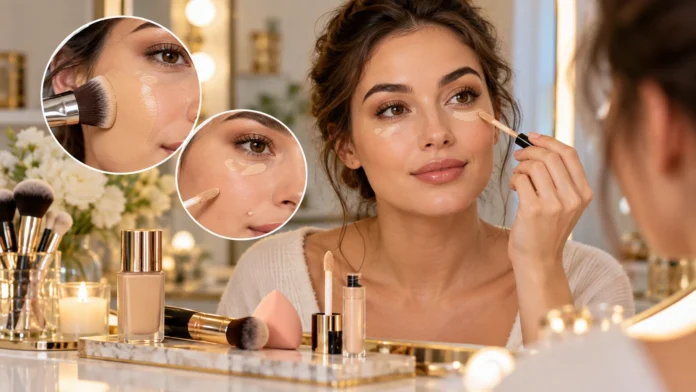

What Is Foundation?
Foundation is a complexion product designed to create a more even-looking base across larger areas of the face. It can help reduce the appearance of redness, uneven skin tone, minor discoloration, and other variations while creating the finish you prefer. Foundation is available in liquid, cream, stick, serum, and powder formulas with coverage ranging from sheer to full.
The purpose of foundation is generally to unify the complexion rather than completely hide every imperfection. Lightweight formulas may allow freckles and natural skin texture to remain visible, while fuller-coverage products can create a more polished appearance. The right amount depends on your makeup style, skin type, and how much visible coverage you personally want.
Foundation is usually applied across the face or concentrated on areas where the complexion needs evening out. It can be blended with fingers, brushes, or makeup sponges depending on the formula. Choosing the correct shade and undertone is important because foundation covers more surface area, making a poor color match much more noticeable.
What Is Concealer?
Concealer is a more targeted complexion product used to cover specific areas rather than the entire face. It is commonly applied under the eyes, around the nose, over blemishes, and on areas with redness or discoloration. Concealers are usually more concentrated than foundation, allowing a relatively small amount of product to provide noticeable coverage where it is needed.
Different concealers are designed for different purposes. A lightweight, flexible formula may work well under the eyes, while a thicker or longer-lasting formula may be better for blemishes. Some concealers also have brightening finishes that make tired-looking areas appear fresher. Choosing a formula according to the area being covered usually produces better results than using one heavy product everywhere.
Concealer can be worn with foundation or used on its own for a more minimal makeup look. Someone who already has relatively even skin may need only a few small areas of coverage. In that case, strategically applied concealer can create a polished appearance without requiring a complete layer of foundation across the face.
Foundation vs Concealer: The Main Difference
The biggest difference between foundation and concealer is how they are typically used. Foundation creates an even base over larger areas of the complexion, while concealer provides more concentrated coverage in smaller targeted areas. Foundation addresses the overall appearance of the skin, whereas concealer focuses on specific concerns that remain visible or need additional correction.
Texture and pigmentation can also differ. Concealer is often more concentrated because it needs to cover discoloration using a relatively small amount of product. Foundation tends to spread more easily across the skin because it is designed for broader application. However, modern formulas vary considerably, so some foundations can be very full coverage while certain concealers remain lightweight.
The products are designed to complement one another rather than compete for the same role. Foundation can create a consistent complexion, and concealer can then add extra coverage under the eyes or over blemishes. You do not always need both, though. The right combination depends on your skin, desired finish, and how much coverage you want.
Which Product Gives More Coverage?
Concealer generally provides stronger coverage in small areas because it contains more concentrated pigment. A tiny amount can often reduce the appearance of dark circles, blemishes, or redness more effectively than adding additional foundation. This makes concealer useful when you want higher coverage without making the entire face look heavily made up.
Foundation coverage varies much more widely. Sheer formulas may simply soften uneven tone, while medium and full-coverage foundations can hide significant discoloration across the face. Because foundation is designed to cover a larger area, even full-coverage formulas usually need to remain blendable enough to create a consistent finish without looking excessively thick.
Rather than choosing the highest possible coverage in both products, consider using foundation lightly and adding concealer only where necessary. This approach can create a more natural appearance while still providing enough correction. Strategic coverage often looks smoother because the skin is not carrying multiple heavy layers over areas that did not need them.
How Foundation Creates an Even Base
Foundation works by reducing visible differences in tone across the complexion. Redness around the nose, uneven pigmentation, and minor marks can become less noticeable once a thin, consistent layer is blended across the skin. This creates a smoother visual base for other makeup products such as blush, bronzer, highlighter, and concealer.
You do not necessarily need foundation from the forehead to the jawline in the same amount. Concentrating product around the center of the face and blending outward can provide coverage where it is most useful. The outer areas often need less product. This technique can keep the complexion looking natural while still improving overall evenness.
Foundation should blend into the skin rather than look like a separate layer sitting on top of it. Proper skincare preparation, a suitable formula, and thin application can help achieve this effect. Building coverage gradually also gives you greater control. Applying too much immediately can emphasize texture and make the final result more difficult to correct.
How Concealer Targets Specific Areas
Concealer is most effective when placed directly over the areas that need additional attention. Under the eyes, it can brighten shadows and soften the appearance of dark circles. Around the nose, it can cover redness, while small amounts over blemishes can reduce their visibility without requiring additional foundation across the entire surrounding area.
Application should be precise because concealer is usually more pigmented. Instead of covering a large under-eye triangle or heavily coating every blemish, begin with small dots and blend the edges outward. This keeps the strongest coverage concentrated where it is actually needed. You can then build another thin layer if discoloration remains visible.
Different areas may require different techniques. Under-eye skin moves frequently and may benefit from flexible formulas, while blemishes may need a more durable product that stays in place. Understanding these differences helps prevent common problems such as creasing, cakiness, or concealer disappearing from spots before the rest of your makeup.
Should Foundation or Concealer Go First?
Foundation is usually applied before concealer because the foundation may already cover much of the discoloration you planned to conceal. Once the base is blended, you can see exactly which areas still need additional coverage. This reduces the amount of concealer required and helps prevent unnecessary layering around the eyes or over blemishes.
Applying concealer first can sometimes work, particularly when color correction is involved. For example, a small amount of corrector may be placed under the foundation to neutralize strong discoloration. However, applying ordinary skin-toned concealer first and then blending foundation over it may move or dilute the coverage you carefully placed.
There is no absolute rule for every makeup style. If your preferred technique creates a finish you enjoy, you can adjust the order. For most everyday routines, however, foundation first and concealer second provides greater control. It allows each product to perform its main role without using more coverage than necessary.
How to Choose the Right Foundation Shade
Foundation should generally match your overall complexion as closely as possible. Test potential shades along the jawline rather than relying only on the back of your hand, which may have a different color. A good match should blend naturally into both the face and neck without creating an obvious line or requiring excessive blending to hide a mismatch.
Undertone is just as important as shade depth. Skin may have warm, cool, neutral, or other subtle undertones that affect how foundation appears after application. A foundation can be technically light or dark enough but still look orange, pink, or gray if the undertone does not work with your complexion.
Check the shade in natural-looking light whenever possible. Some foundations also change slightly as they dry, so give the product time to settle before making a final judgment. A close match makes the rest of your makeup easier because concealer, blush, and other complexion products can blend into a consistent base rather than correcting foundation color problems.
How to Choose the Right Concealer Shade
The best concealer shade depends on what you want it to do. For blemishes, redness, and spot concealing, choose a shade that closely matches your foundation or natural skin tone. A noticeably lighter concealer can highlight a blemish rather than hiding it, particularly when the surrounding complexion is several shades deeper.
For under-eye brightening, a concealer slightly lighter than your foundation can create a fresh appearance. The difference should usually remain subtle rather than dramatically pale. If the shade is too light, the under-eye area may appear gray, chalky, or disconnected from the rest of your complexion, especially when dark circles are strong.
Strong discoloration may benefit from color correction before concealer. Peach, salmon, or orange tones can help neutralize certain types of darkness depending on skin depth. Corrector should be used sparingly so it does not create another thick layer. Once the discoloration is softened, less skin-toned concealer may be necessary to finish the area.
Which Is Better for Dark Circles?
Concealer is usually more effective than foundation for dark circles because it provides concentrated coverage where darkness is strongest. A flexible under-eye formula can brighten shadows while allowing the skin to move naturally. Foundation alone may soften mild discoloration, but adding repeated layers under the eyes can become heavy without fully correcting stronger darkness.
If your dark circles have noticeable blue, purple, or brown tones, a corrector may help before concealer. Neutralizing the underlying color can reduce how much concealer you need. This often creates a smoother result because the under-eye area is covered with thinner layers instead of relying on one very thick application of skin-toned product.
Use concealer mainly around the darkest areas rather than automatically covering everything beneath the eyes. The inner corners often show the most shadow for many people. Blend outward and add more only when necessary. Targeted placement preserves natural skin texture and reduces the chance that the concealer settles heavily into fine lines.
Which Is Better for Blemishes and Redness?
Concealer is generally better for individual blemishes because it provides concentrated coverage without requiring extra foundation everywhere else. Choose a shade close to your skin tone and apply a tiny amount directly to the spot. Allow it to sit briefly if greater coverage is needed, then blend the edges carefully while leaving the center relatively undisturbed.
Foundation can handle broader redness more efficiently. If redness appears across the cheeks, chin, or larger areas, covering each spot individually with concealer can take more time and produce an uneven texture. A thin layer of foundation can reduce the overall redness, after which concealer can target anything that remains visible.
For strong redness, avoid repeatedly layering heavy products immediately. Building gradually helps the makeup remain smoother and easier to control. Skin preparation can also make a difference because irritated or dry areas may cause complexion products to cling unevenly. The goal should be reducing visible redness while maintaining a comfortable, natural-looking finish.
Can You Wear Concealer Without Foundation?
Yes, concealer can be worn without foundation, and this approach is ideal for people who prefer light, natural makeup. Apply a small amount under the eyes, around the nose, or over individual blemishes, then blend the edges carefully into bare skin. A good shade match is especially important because there is no foundation surrounding the concealer to help disguise differences.
This technique allows natural skin texture, freckles, and variations in tone to remain visible while still creating a more polished appearance. It can also make a morning makeup routine faster. People with relatively even complexions may find that foundation adds coverage they do not actually need, making concealer-only makeup a comfortable everyday alternative.
If necessary, apply a small amount of powder over oily areas or places where concealer tends to move. Avoid setting the entire face simply because one spot needs additional longevity. A minimalist approach works best when every product has a clear purpose. Concealer alone can create surprisingly complete-looking makeup when placement is thoughtful.
Can You Wear Foundation Without Concealer?
Foundation can absolutely be worn without concealer if it provides enough coverage for your preferences. A medium or full-coverage formula may already reduce dark circles, redness, and minor blemishes enough that no additional product is necessary. Skipping concealer can simplify your routine and reduce the number of layers sitting on areas with natural texture.
Even sheer foundation may be enough if you are comfortable with some discoloration remaining visible. Makeup does not need to hide every mark to look polished. A light foundation can create a more consistent overall tone while allowing the skin to retain a natural appearance. This approach can feel particularly comfortable for casual daytime makeup.
If you notice one or two areas that need additional coverage, you can always add concealer later. There is no requirement to include both products every time you wear makeup. Choosing only what your complexion needs can prevent cakiness and make your routine faster, more flexible, and easier to adjust from day to day.
How to Use Foundation and Concealer Together
Begin with skincare suited to your skin type and allow it to absorb before applying makeup. Blend a thin layer of foundation across areas with uneven tone, starting with less product than you think you need. Once the base is complete, step back and identify which dark circles, blemishes, or redness remain visible before reaching for concealer.
Place concealer only over those areas and gently blend the edges. Under the eyes, use a small amount and avoid piling product directly into fine lines. Over blemishes, keep the center covered while softening the product around it. This creates higher coverage where necessary without making the entire face look uniformly heavy.
Set the makeup according to your skin’s needs. Oily areas may benefit from a small amount of powder, while dry areas may look better with minimal setting. Avoid automatically applying large amounts of powder everywhere. Balanced layering helps foundation and concealer work together while preserving a smoother, more skin-like finish throughout the day.
Conclusion
Foundation and concealer serve different but complementary roles in a makeup routine. Foundation is primarily used to even the overall complexion across larger areas, while concealer provides concentrated coverage for dark circles, blemishes, redness, and other specific concerns. Understanding this difference makes it easier to use both products efficiently without creating unnecessary layers.
You do not always need foundation and concealer at the same time. Concealer alone can provide targeted coverage for minimal makeup, while foundation alone may offer enough evening of the complexion for many people. When both are used, foundation usually goes first so you can determine exactly where additional coverage is still necessary.
The best results come from choosing formulas that suit your skin type, matching shades carefully, and applying thin layers. Makeup should support the finish you want rather than follow rigid rules. Whether you prefer full coverage or a barely-there look, using foundation and concealer according to their strengths can create a smoother, fresher, and more natural complexion.
FAQs
What is the main difference between foundation and concealer?
Foundation is designed to even the overall complexion across larger areas, while concealer provides more concentrated coverage for specific concerns such as dark circles, blemishes, redness, or discoloration.
Do I apply foundation or concealer first?
Foundation usually goes first because it may already cover much of the discoloration. You can then apply concealer only where extra coverage is needed, which helps prevent unnecessary product buildup.
Can I use concealer instead of foundation?
Yes. Concealer can be applied selectively to dark circles, redness, and blemishes while leaving the rest of the skin bare. This creates a lighter, more natural makeup look.
Should concealer be lighter than foundation?
For under-eye brightening, concealer can be slightly lighter than foundation. For blemishes and spot coverage, choose a shade close to your foundation or natural skin tone for better blending.
Is foundation or concealer better for acne?
Foundation is useful for broader redness or multiple areas of discoloration, while concealer is better for targeted blemishes. Using a thin foundation layer followed by spot concealing often provides balanced coverage.