
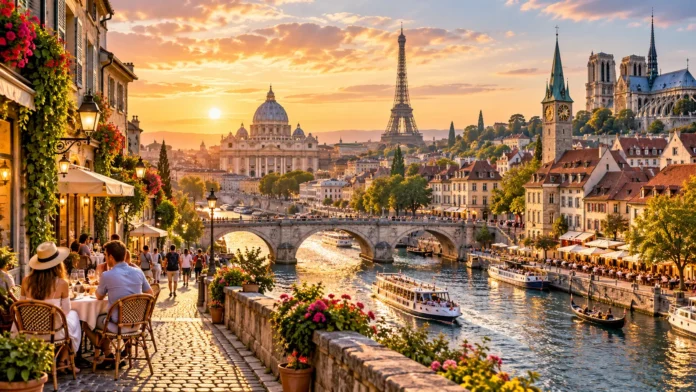

Europe is one of the world’s most exciting travel destinations, offering historic cities, beautiful architecture, fascinating cultures, and unforgettable experiences. From the romantic streets of Paris to the ancient landmarks of Rome, every destination has its own character. Travelers can explore famous museums, picturesque neighborhoods, impressive castles, and lively public squares throughout the continent.
Discovering the best European cities allows visitors to experience different cultures, traditional cuisines, and remarkable architectural styles. Some cities are famous for their historical attractions, while others attract travelers with beautiful beaches, scenic canals, or mountain landscapes. Whether you are planning your first European vacation or returning for another adventure, there are countless places worth exploring.
This guide highlights the best European cities and places to visit, including iconic capitals and charming destinations with distinctive attractions. It also provides practical tips for choosing the right destinations, planning transportation, and deciding when to travel. With thoughtful preparation, exploring Europe’s beautiful cities can become a memorable and rewarding experience.
Paris, France: The City of Art and Iconic Landmarks
Paris is among the most famous European cities, attracting visitors with its beautiful architecture, artistic heritage, and recognizable landmarks. The Eiffel Tower remains one of the city’s biggest attractions, offering spectacular views of the surrounding skyline. Travelers can also explore the Arc de Triomphe, Champs-Élysées, and historic neighborhoods. Walking through Paris reveals elegant streets and charming public spaces.
Art enthusiasts should visit the Louvre Museum, which houses an extraordinary collection of artworks from different periods. The Musée d’Orsay is another popular destination, particularly for its impressive collection of Impressionist paintings. Visitors can also admire the Gothic architecture of Notre-Dame Cathedral. These cultural landmarks make Paris an outstanding destination for travelers interested in history and creativity.
Beyond its famous monuments, Paris offers enjoyable experiences through its traditional cafés, gardens, and scenic riverfront areas. A walk along the Seine provides beautiful views of historic bridges and surrounding buildings. Neighborhoods such as Montmartre feature artistic streets and attractive viewpoints. Spending several days in Paris allows travelers to explore its cultural highlights without unnecessary rushing.
Rome, Italy: Explore Ancient History and Architecture
Rome is one of Europe’s most historically significant cities, offering remarkable monuments that reflect centuries of cultural development. The Colosseum is among its most recognizable attractions, representing the impressive engineering of ancient Rome. Nearby, the Roman Forum preserves important archaeological remains. Visitors can explore these landmarks to understand the city’s extraordinary historical importance.
The Pantheon is another remarkable attraction, famous for its ancient architecture and enormous dome. Travelers can also visit the Trevi Fountain, Spanish Steps, and beautiful public squares scattered across the city. Vatican City, surrounded by Rome, is home to St. Peter’s Basilica and the Vatican Museums. These destinations provide outstanding opportunities for sightseeing and cultural exploration.
Rome is equally famous for its traditional Italian cuisine and lively neighborhood atmosphere. Visitors can enjoy pasta dishes, freshly prepared pizza, and regional desserts at local restaurants. Exploring areas such as Trastevere reveals narrow streets, historic buildings, and inviting public spaces. The combination of ancient history and everyday culture makes Rome an unforgettable European destination.
London, England: Historic Attractions and Modern Experiences
London is one of Europe’s most diverse cities, combining royal landmarks, historic neighborhoods, and modern cultural attractions. Buckingham Palace, the Tower of London, and Westminster Abbey are among its most recognizable destinations. Visitors can also admire the Houses of Parliament and Big Ben. These landmarks provide fascinating insights into British history and architecture.
The city features world-class museums, including the British Museum, Natural History Museum, and Victoria and Albert Museum. Many permanent collections offer free general admission, making cultural sightseeing accessible to different budgets. Travelers can also explore famous neighborhoods such as Covent Garden and Notting Hill. London’s extensive public transportation network makes visiting different attractions relatively convenient.
Outdoor spaces add another enjoyable dimension to the city. Hyde Park, Regent’s Park, and the Thames riverside provide opportunities for walking and relaxation. Visitors can also explore local food markets, traditional shopping streets, and distinctive cultural districts. London offers enough attractions to fill several days, making it especially appealing for first-time European travelers.
Barcelona, Spain: Beautiful Architecture and Mediterranean Beaches
Barcelona is one of the most colorful European cities, famous for its extraordinary architecture, Mediterranean coastline, and lively cultural atmosphere. The Sagrada Família is its most recognizable attraction, featuring the remarkable architectural vision of Antoni Gaudí. Visitors can also explore Park Güell and Casa Batlló. These distinctive landmarks make Barcelona particularly attractive for architecture enthusiasts.
The Gothic Quarter offers a completely different experience through its narrow medieval streets and historic public squares. Travelers can discover beautiful churches, independent shops, and traditional cafés while exploring the neighborhood. La Rambla is another famous pedestrian area connecting central Barcelona with the waterfront. Visitors should remain attentive to personal belongings in crowded tourist locations.
Barcelona also provides excellent opportunities to enjoy seaside scenery without leaving the city. Barceloneta Beach attracts visitors looking for coastal walks, sunshine, and relaxing waterfront experiences. Local markets introduce travelers to traditional Catalan foods and fresh regional ingredients. Combining cultural sightseeing with Mediterranean beach activities makes Barcelona a versatile European travel destination.
Amsterdam, Netherlands: Scenic Canals and Historic Neighborhoods
Amsterdam is one of the most picturesque cities in Europe, known for its beautiful canals, historic buildings, and welcoming urban atmosphere. The city’s canal network creates charming views throughout its central neighborhoods. Visitors can explore narrow streets, traditional bridges, and waterfront architecture. Walking along the canals provides an enjoyable introduction to Amsterdam’s distinctive character.
The Rijksmuseum and Van Gogh Museum are among the city’s major cultural attractions. These museums showcase significant artistic collections and provide valuable insights into European art history. The Anne Frank House is another important destination, offering a meaningful educational experience connected to World War II. Advance reservations are often necessary for popular attractions.
Amsterdam also features attractive parks, local markets, and charming residential neighborhoods. Vondelpark provides a peaceful setting for outdoor relaxation, while the Jordaan district is known for its picturesque streets. Cycling is a major part of local transportation, although visitors should respect designated bicycle lanes. Amsterdam’s compact center makes it especially convenient for short European city breaks.
Prague, Czech Republic: Fairytale Streets and Historic Castles
Prague is one of the most beautiful historic cities in Central Europe, celebrated for its Gothic architecture and remarkably preserved old town. The famous Charles Bridge connects scenic neighborhoods across the Vltava River. Visitors can admire historic statues and impressive views of Prague Castle. The surrounding architecture creates an atmosphere that feels almost timeless.
Prague Castle is among the city’s most important landmarks, featuring historic courtyards, palaces, and St. Vitus Cathedral. Old Town Square is another essential attraction, known for its beautiful buildings and astronomical clock. Travelers can explore the surrounding streets on foot. Many central attractions are located close enough to combine within a walking itinerary.
The city also offers traditional Czech cuisine, scenic viewpoints, and peaceful gardens. Visitors can enjoy local pastries and regional dishes at established restaurants throughout the historic center. Petřín Hill provides attractive views over Prague’s rooftops and river. Its combination of architecture, history, and walkable neighborhoods makes Prague an excellent European destination.
Vienna, Austria: Imperial Palaces and Classical Music
Vienna is famous for its elegant architecture, imperial heritage, and longstanding connection to classical music. The Austrian capital features grand boulevards, beautiful public buildings, and historic cultural institutions. Schönbrunn Palace is one of its most popular attractions, offering impressive interiors and landscaped gardens. Visitors can explore its historic surroundings while learning about Austria’s imperial past.
The Hofburg Palace complex and St. Stephen’s Cathedral are additional highlights within Vienna’s historic center. Art enthusiasts can visit the Belvedere Museum, known for its important Austrian art collections. The city also has a strong musical heritage associated with composers such as Mozart and Beethoven. Concert halls and cultural venues continue to celebrate this artistic tradition.
Vienna’s traditional coffeehouse culture provides another memorable experience for travelers. Historic cafés serve pastries, coffee, and regional specialties in elegant surroundings. The city’s parks and pedestrian-friendly streets make relaxed sightseeing enjoyable. Vienna is particularly attractive for visitors who appreciate architecture, museums, music, and a quieter pace of urban exploration.
Budapest, Hungary: Thermal Baths and Riverside Views
Budapest is one of Central Europe’s most impressive capitals, famous for its monumental buildings and beautiful Danube River scenery. The Hungarian Parliament Building is among its most recognizable landmarks, particularly when illuminated after sunset. Visitors can also explore Buda Castle and Fisherman’s Bastion. These attractions provide spectacular views of the river and surrounding city.
The city’s historic thermal baths are another major attraction, reflecting Budapest’s long tradition of bathing culture. Széchenyi Thermal Bath is especially well known for its grand architecture and extensive bathing facilities. Travelers should check age restrictions, health guidance, and admission conditions before visiting. Budapest’s museums and historic neighborhoods provide additional cultural activities.
Walking across the Chain Bridge offers memorable views of Budapest’s contrasting riverbanks. The Buda side features hills and historic attractions, while Pest contains broad boulevards and important civic buildings. Traditional Hungarian cuisine adds another enjoyable dimension to a visit. Budapest offers a rewarding combination of impressive architecture, cultural heritage, and scenic urban landscapes.
Lisbon, Portugal: Colorful Streets and Coastal Scenery
Lisbon is one of Europe’s most attractive coastal capitals, known for its colorful buildings, historic trams, and beautiful hillside viewpoints. The city’s streets feature decorative tiles, traditional architecture, and lively neighborhood squares. Alfama is particularly popular for its narrow lanes and historic atmosphere. Exploring these areas provides an excellent introduction to Portuguese culture.
Belém is another important district, home to remarkable historic attractions such as the Jerónimos Monastery and Belém Tower. These landmarks reflect Portugal’s maritime history and architectural heritage. Visitors can also enjoy waterfront walks along the Tagus River. The city’s famous viewpoints, known as miradouros, provide beautiful perspectives of Lisbon’s rooftops and surrounding landscape.
Lisbon is also celebrated for its traditional cuisine, including seafood dishes and pastel de nata pastries. Local markets and small restaurants offer opportunities to experience regional flavors. Travelers can take day trips to nearby Sintra, famous for its romantic palaces and scenic hills. Lisbon’s combination of culture, history, and coastal scenery makes it an appealing destination.
Florence, Italy: Renaissance Art and Beautiful Architecture
Florence is one of Europe’s most important artistic cities and a remarkable destination for lovers of Renaissance history. Located in Italy’s Tuscany region, it features historic streets, impressive churches, and famous art museums. The Cathedral of Santa Maria del Fiore dominates the city’s skyline with its magnificent dome. Its surrounding square is a central attraction for visitors.
The Uffizi Gallery is among Florence’s most celebrated museums, displaying important Renaissance masterpieces. Travelers can also visit the Accademia Gallery, which houses Michelangelo’s famous sculpture of David. Ponte Vecchio is another recognizable landmark, crossing the Arno River. These attractions reveal Florence’s extraordinary contribution to European art and cultural development.
Beyond its museums, Florence offers beautiful viewpoints, traditional markets, and excellent regional cuisine. Piazzale Michelangelo is a popular destination for panoramic views of the historic skyline. Visitors can also explore nearby Tuscan towns and countryside landscapes through organized day trips. Florence provides a memorable combination of architectural beauty, artistic heritage, and Italian cultural experiences.
Edinburgh, Scotland: Castles and Atmospheric Old Streets
Edinburgh is one of Europe’s most distinctive historic capitals, known for its dramatic castle, medieval streets, and impressive hillside scenery. Edinburgh Castle stands above the city on a rocky volcanic formation. The Royal Mile connects several important attractions throughout the Old Town. Visitors can explore historic buildings, atmospheric passageways, and fascinating cultural landmarks.
The Palace of Holyroodhouse and nearby Scottish Parliament area provide additional opportunities to learn about the city’s history. Edinburgh also features excellent museums, including the National Museum of Scotland. Its historic center contains numerous viewpoints and architectural landmarks. The contrast between medieval Old Town and Georgian New Town adds to the city’s appeal.
Outdoor enthusiasts can enjoy scenic walks around Holyrood Park, which includes the famous Arthur’s Seat. The elevated landscape offers impressive views, although routes can be steep and exposed to changing weather. Edinburgh’s gardens, independent shops, and traditional restaurants provide quieter alternatives. The city is especially enjoyable for travelers interested in history, literature, and scenic landscapes.
Dubrovnik, Croatia: Medieval Walls and Adriatic Sea Views
Dubrovnik is one of Europe’s most beautiful coastal cities, famous for its historic stone walls and stunning Adriatic Sea scenery. Its UNESCO-listed Old Town features narrow streets, limestone buildings, and impressive historic architecture. Visitors can explore public squares, churches, and attractive waterfront areas. The city’s preserved medieval character makes it a remarkable sightseeing destination.
Walking along the historic city walls is a popular activity, providing panoramic views of red rooftops and the surrounding coastline. The walls include steps and exposed sections, so comfortable footwear and suitable weather conditions are important. Fort Lovrijenac is another impressive landmark nearby. These historic attractions reveal Dubrovnik’s strategic importance as a maritime city.
Beyond the Old Town, visitors can enjoy coastal viewpoints, scenic boat excursions, and relaxing walks beside the Adriatic Sea. Lokrum Island is a popular nearby destination for nature and peaceful surroundings. Summer brings warm weather but also large visitor numbers. Spring and early autumn can offer a more relaxed atmosphere for exploring Dubrovnik.
Copenhagen, Denmark: Colorful Waterfronts and Nordic Design
Copenhagen is one of Northern Europe’s most attractive cities, combining historic charm with modern Scandinavian design. Its colorful Nyhavn waterfront is among the most photographed destinations in Denmark. Visitors can admire historic townhouses, traditional boats, and picturesque canal views. The city is also known for its thoughtful urban planning and welcoming public spaces.
Popular attractions include Rosenborg Castle, Amalienborg Palace, and the famous Little Mermaid statue. Travelers can also explore beautiful gardens, museums, and historic shopping streets. Copenhagen’s compact central districts make sightseeing convenient by walking or public transportation. Its extensive cycling infrastructure also reflects the city’s strong commitment to everyday mobility.
Food and design are important parts of Copenhagen’s cultural identity. Visitors can discover traditional Danish pastries, local markets, and contemporary Nordic architecture. Tivoli Gardens is another recognizable attraction, known for its landscaped surroundings and seasonal entertainment. Copenhagen provides an enjoyable European city break for travelers interested in history, design, and relaxed waterfront scenery.
Kraków, Poland: Historic Squares and Cultural Heritage
Kraków is one of Poland’s most beautiful historic cities, known for its medieval architecture and lively cultural atmosphere. The Main Market Square forms the heart of its Old Town, surrounded by important historic buildings. St. Mary’s Basilica and the Cloth Hall are major landmarks. Visitors can explore nearby streets while appreciating the city’s preserved architectural heritage.
Wawel Royal Castle is another essential destination, located on a hill overlooking the Vistula River. The castle complex includes impressive buildings connected to Poland’s royal history. Kraków’s Kazimierz district is also important for its Jewish cultural heritage and historic sites. Museums and guided tours provide opportunities to learn about the city’s complex past.
Travelers interested in historical education can arrange a respectful visit to the Auschwitz-Birkenau Memorial and Museum outside Kraków. This site preserves the history of Nazi persecution and the Holocaust. Within Kraków, visitors can enjoy traditional Polish cuisine, scenic parks, and cultural institutions. The city offers meaningful experiences for travelers interested in European history.
Athens, Greece: Ancient Ruins and Mediterranean Culture
Athens is one of Europe’s most historically significant cities, famous for its extraordinary ancient Greek monuments. The Acropolis rises above the modern capital, with the Parthenon serving as its most recognizable landmark. Visitors can explore archaeological sites that reveal important aspects of ancient civilization. These attractions make Athens particularly appealing for history enthusiasts.
The Acropolis Museum provides valuable background about the ancient structures and artifacts found around the historic site. Travelers can also visit the Ancient Agora and explore the charming Plaka neighborhood. Its narrow streets contain traditional shops, cafés, and attractive buildings. Walking through central Athens reveals a fascinating contrast between ancient history and contemporary city life.
Greek cuisine is another highlight, offering dishes such as souvlaki, fresh salads, and traditional pastries. Visitors can enjoy scenic viewpoints from Lycabettus Hill or explore nearby coastal areas. Athens also serves as a convenient starting point for trips to Greek islands. Its combination of archaeology, culture, and Mediterranean atmosphere makes it unforgettable.
Best Time to Visit European Cities
The best time to visit European cities depends on the destinations, weather conditions, and experiences you prefer. Spring, particularly April through June, is popular because many cities enjoy comfortable temperatures and beautiful seasonal scenery. Parks and public gardens often become especially attractive. This period can be ideal for walking tours and outdoor sightseeing.
Autumn, especially September and October, is another excellent season for exploring European destinations. Temperatures are often milder than during peak summer, making historic city centers more comfortable to explore. Some destinations also experience fewer visitors after major holiday periods. However, weather patterns vary considerably between northern, central, and southern Europe.
Summer brings long daylight hours, outdoor festivals, and warm weather, but popular attractions can become crowded. Winter offers a different atmosphere through seasonal decorations, markets, and cultural events in many cities. Travelers should consider regional climate differences when choosing dates. Selecting a season that suits your preferred activities makes the journey more enjoyable.
How to Plan a European Cities Travel Itinerary
Planning a European city itinerary begins with selecting destinations that match your interests and available travel time. First-time visitors often enjoy combining major capitals with smaller historic cities. Paris and Amsterdam work well together, while Prague, Vienna, and Budapest form another appealing route. Choosing nearby destinations helps reduce transportation time between stops.
Europe’s extensive railway network makes travel between many major cities relatively convenient. High-speed trains connect several important destinations, although journey times and services vary by route. Budget airlines provide additional options for longer distances. Comparing transportation costs, luggage policies, and station locations helps travelers choose the most practical connections.
Allow enough time to explore each destination without creating an exhausting schedule. Two to four days can provide a useful introduction to many major European cities, depending on their size and attractions. Check passport requirements, visa eligibility, and relevant entry procedures before departure. Booking popular attractions and accommodation early can also make travel planning easier.
Essential Tips for Traveling Around Europe
Travelers should research local transportation systems before arriving in each European city. Many destinations offer reliable buses, trams, metro systems, and regional trains. Public transportation can be more convenient than renting a car in busy historic centers. Walking is also an excellent way to experience traditional neighborhoods, provided routes and conditions are suitable.
Accommodation prices can vary considerably depending on location, season, and the popularity of the destination. Staying slightly outside major tourist districts may provide more choices while maintaining convenient transportation access. Travelers should also compare attraction tickets and check whether reservations are required. Planning a realistic budget helps avoid unnecessary expenses throughout the trip.
Safety and preparation are important parts of any European vacation. Keep valuable belongings secure in crowded places, use reliable transportation services, and follow local regulations. Carry suitable clothing for changing weather conditions and respect cultural differences between countries. Taking time to understand basic travel requirements helps create a smoother and more enjoyable experience.
Conclusion
Europe offers an extraordinary collection of beautiful cities, each with its own history, architecture, and cultural identity. From the artistic treasures of Paris and Florence to the historic streets of Prague and Edinburgh, travelers can discover countless memorable attractions. Exploring different European destinations provides opportunities to experience remarkable cultural diversity within one continent.
The best European cities to visit depend on your travel interests, available time, and preferred experiences. History enthusiasts may enjoy Rome and Athens, while architecture lovers can explore Barcelona and Vienna. Travelers seeking picturesque waterfronts may prefer Amsterdam, Copenhagen, Lisbon, or Dubrovnik. Every destination offers something distinctive.
Planning a European vacation becomes more enjoyable when you choose suitable destinations and allow enough time for exploration. Researching transportation, seasonal weather, and important attractions helps create a practical itinerary. Whether you are visiting Europe for the first time or planning another journey, its beautiful cities offer unforgettable experiences.
Frequently Asked Questions
What are the most beautiful European cities to visit?
Paris, Rome, Prague, Florence, Vienna, and Amsterdam are among Europe’s most beautiful cities. Each offers distinctive architecture, historic landmarks, cultural attractions, and scenic neighborhoods that appeal to different travel interests.
Which European cities are best for first-time visitors?
Paris, London, Rome, Amsterdam, and Barcelona are popular choices for first-time visitors. They offer famous attractions, established tourism facilities, public transportation, and plenty of activities for short or extended vacations.
What is the cheapest European city to visit?
Travel costs depend on accommodation, transportation, and season. Cities such as Kraków, Budapest, and Prague can offer comparatively affordable options, particularly when visitors travel outside major holidays and book accommodation in advance.
How many European cities can you visit in 10 days?
Visiting three European cities in ten days is a practical option for many travelers. Choosing destinations with convenient transportation connections allows enough time for sightseeing without spending too much of the trip traveling.
What is the best month to visit European cities?
May and September are often excellent months for visiting European cities because many destinations experience comfortable sightseeing weather. However, the ideal travel month depends on regional climate, seasonal events, and personal preferences.