
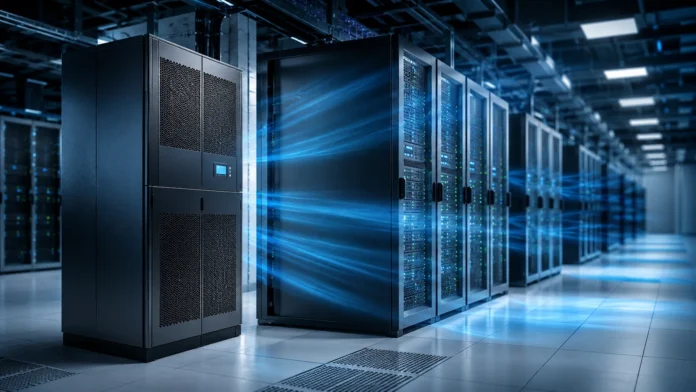

What Is a CRAC Unit? A Complete Guide to Data Center Cooling
Modern data centers generate enormous amounts of heat because servers, storage devices, networking equipment, and power systems operate continuously. Without reliable cooling, temperatures can rise rapidly enough to reduce equipment performance, increase failure risks, and disrupt critical digital services. One of the most established technologies used to manage this heat is the CRAC unit, short for Computer Room Air Conditioner. Unlike ordinary comfort air conditioning, CRAC systems are designed for environments where temperature, airflow, and moisture conditions must remain carefully controlled around sensitive IT equipment. They are commonly found in server rooms, enterprise data centers, telecommunications facilities, and other mission-critical spaces. Understanding how CRAC cooling works can help facility teams make better decisions about reliability and energy efficiency.
The role of traditional CRAC technology is also changing as server power densities increase and data centers adopt more sophisticated cooling architectures. Modern facilities may combine CRAC units with hot-aisle containment, cold-aisle containment, variable-speed fans, economizers, chilled-water systems, rear-door heat exchangers, or direct liquid cooling. ASHRAE continues to recognize CRAC and CRAH equipment as common cooling solutions for data-processing environments, while newer high-density computing creates additional thermal-management requirements. This guide explains what a CRAC unit is, how it works, its major components, CRAC versus CRAH differences, airflow strategies, efficiency considerations, maintenance requirements, and its place in modern data center cooling.
What Is a CRAC Unit?
A CRAC unit is a Computer Room Air Conditioner specifically engineered to control conditions inside rooms containing computers, servers, network equipment, and other heat-producing electronics. Unlike conventional building air conditioners primarily designed for human comfort, CRAC systems are built to manage high levels of sensible heat generated continuously by IT equipment. They circulate conditioned air through the data center while removing heat from server exhaust air and returning cooler air toward equipment intakes. Many systems can also help manage moisture conditions to protect sensitive electronics from environmental extremes. CRAC units may operate continuously throughout the year because server loads rarely disappear when employees leave a building. This continuous-duty requirement makes reliability an important part of CRAC system design.
The basic purpose of CRAC cooling is to maintain suitable inlet conditions for information technology equipment rather than simply making the room feel cold. Servers normally draw relatively cool air through their front surfaces and discharge hotter air from their rear exhaust fans. A properly designed cooling system captures that heated air, removes its thermal energy, and redistributes conditioned air where the servers can use it effectively. This circulation process continues constantly while the IT equipment remains operating. Temperature sensors and controls help the cooling system respond as thermal loads change throughout the room. When airflow distribution is designed correctly, the CRAC can maintain stable server inlet temperatures without wasting excessive energy by cooling areas that do not require it.
CRAC systems belong to a broader category commonly called precision cooling or mission-critical cooling. Precision cooling differs from standard comfort HVAC because server rooms contain large sensible heat loads and require far more continuous airflow than typical offices or homes. Human-occupied spaces experience changing heat loads as people enter and leave, whereas data centers may run near consistent electrical loads around the clock. Computer equipment is also more sensitive to excessive temperature and certain moisture conditions than most ordinary building contents. Consequently, cooling equipment for data centers is designed around equipment reliability, airflow management, redundancy, and continuous operation. This makes the selection and placement of CRAC equipment an engineering decision rather than simply a matter of installing a larger conventional air conditioner.
ASHRAE identifies Computer Room Air Conditioning and Computer Room Air Handling equipment among the most common air-cooling configurations used in data centers and telecommunications facilities. CRAC systems are described as compressorized cooling systems and can be manufactured in several arrangements, including direct-expansion air-cooled and water-cooled configurations. This distinction matters because a CRAC generally contains or works directly with a refrigeration circuit rather than relying exclusively on centralized chilled water. Manufacturers may offer upflow or downflow airflow arrangements depending on how conditioned air needs to reach server racks. A system’s exact configuration therefore depends on room architecture, heat density, redundancy requirements, mechanical infrastructure, and the airflow strategy used throughout the facility.
A CRAC unit should ultimately be viewed as part of an entire thermal-management system rather than an isolated cooling appliance. Even a powerful unit can perform poorly when racks are positioned incorrectly, floor openings are poorly located, return air mixes with supply air, or airflow pathways are blocked. Likewise, an efficiently organized server room may require less cooling energy because conditioned air reaches IT equipment without unnecessary mixing. Modern data center design therefore considers cooling capacity, rack arrangement, airflow containment, fan control, monitoring, environmental targets, and redundancy together. CRAC equipment provides the refrigeration and airflow necessary to remove heat, but the surrounding infrastructure determines how effectively that cooling reaches the servers. Good cooling begins with system-level planning rather than simply increasing air-conditioning capacity.
How Does a CRAC Unit Work?
A CRAC unit works by drawing warm air from the data center, passing that air across a cooling coil, removing heat, and then returning conditioned air to the server environment. In a typical direct-expansion CRAC system, refrigerant circulates through a closed refrigeration circuit containing components such as an evaporator, compressor, condenser, and expansion device. Warm return air passes across the evaporator coil, where refrigerant absorbs heat from the airflow. The resulting cooler air is moved back toward the IT equipment through fans and an appropriate distribution system. Meanwhile, the absorbed heat is carried through the refrigerant circuit and ultimately rejected outside the conditioned server space. This continuous refrigeration cycle allows the CRAC to manage heat generated by operating IT equipment.
The process begins when hot exhaust air from servers travels toward the CRAC unit’s return-air opening. Depending on the facility design, the unit may receive hot air directly from the room, from a hot aisle, through ceiling return pathways, or through ducting designed specifically for server exhaust. The cooling coil reduces the temperature of this return air before supply fans redistribute it. Airflow may travel under a raised floor and emerge through perforated floor tiles, or it may be supplied overhead or directly into cold aisles. ASHRAE notes that CRAC and CRAH units are available in downflow and upflow designs to accommodate different air-delivery strategies. Proper return and supply separation helps ensure that each unit processes the hottest available return air efficiently.
Inside a direct-expansion system, the refrigerant changes pressure and temperature as it travels through the cooling cycle. After absorbing heat at the evaporator, refrigerant moves toward the compressor, where its pressure rises before it reaches the condenser. The condenser then transfers the captured heat away from the data center environment, often to outdoor air or another heat-rejection medium. Refrigerant subsequently passes through an expansion device that reduces its pressure before returning to the evaporator coil. This cycle repeats continuously while cooling is required. Because the compressor is a major electrical consumer, efficient compressor control can significantly affect overall data center energy use. Modern CRAC equipment may therefore use variable-capacity compressors, staged cooling, advanced controls, or other strategies to better match actual thermal demand.
Fans are equally important because cooling capacity has little value if conditioned air cannot reach the server intake. Traditional computer-room units often relied on constant-speed fans, but newer equipment increasingly uses direct-drive plug fans and electronically controlled motors that can vary airflow according to demand. ASHRAE notes this evolution from older belt-driven centrifugal fans toward direct-drive fan technologies with speed control. Variable-speed operation can reduce fan electricity consumption when full airflow is unnecessary, while maintaining sufficient pressure and temperature conditions in occupied server aisles. Sensors may monitor supply temperature, return temperature, containment pressure, or underfloor static pressure to influence fan speed. These controls allow the cooling system to respond more precisely to changing server workloads.
The final step is delivering cooled air to the correct location without allowing it to bypass the IT equipment or mix prematurely with hot exhaust. Air that travels around racks without entering servers is effectively wasted because it consumes fan and refrigeration energy without removing useful IT heat. Similarly, hot exhaust that returns to server intakes can create localized hot spots even when the room’s average temperature appears acceptable. Successful CRAC operation therefore depends on airflow management as much as refrigeration performance. Blanking panels, sealed cable openings, containment barriers, appropriate floor tiles, and rack positioning can all improve cooling effectiveness. When airflow paths are controlled carefully, the CRAC can operate at more efficient temperature settings while still maintaining safe server inlet conditions.
Main Components of a CRAC Cooling System
The compressor is one of the defining components of a traditional direct-expansion CRAC system because it drives refrigerant through the cooling cycle. It compresses refrigerant vapor after that refrigerant has absorbed heat inside the data center, raising its pressure and temperature before heat rejection occurs at the condenser. Compressors may operate at fixed capacities, use staged arrangements, or support variable-capacity control depending on equipment design. Matching compressor output with actual thermal load can improve energy efficiency compared with frequent full-capacity cycling. Because data centers operate continuously, compressor reliability is also crucial to facility availability. Preventive maintenance, appropriate redundancy, and monitoring can reduce the risk that a single refrigeration problem interrupts cooling to mission-critical equipment.
The evaporator coil is the heat-transfer surface where warm return air gives up thermal energy to the refrigerant. Fans pull or push server-room air across the coil while relatively cool refrigerant flows through internal tubing. As heat moves from the air into the refrigerant, supply-air temperature drops before that conditioned air returns to the IT space. Dust, debris, or airflow restrictions across the coil can reduce heat-transfer effectiveness and force the system to work harder. Regular inspection and cleaning are therefore important parts of CRAC preventive maintenance. Coil performance must also be considered alongside airflow volume because insufficient airflow can reduce cooling effectiveness even when the refrigeration circuit itself remains capable of absorbing additional heat.
The condenser removes the thermal energy that the refrigerant collected from the data center. In an air-cooled arrangement, this heat is commonly rejected through an outdoor condenser where fans move ambient air across a refrigerant coil. Water-cooled configurations instead transfer heat through water-based heat-rejection infrastructure that may ultimately connect to cooling towers or other systems. ASHRAE recognizes both air-cooled and water-cooled direct-expansion CRAC arrangements among common configurations. Condenser performance can influence system efficiency because refrigeration equipment must work harder when heat rejection becomes more difficult. Dirty coils, restricted airflow, high ambient conditions, inadequate water flow, or malfunctioning fans can therefore increase power use and potentially reduce available cooling capacity.
The supply fan system moves conditioned air from the CRAC toward server racks and represents another significant component of total cooling performance. Modern units commonly use electronically commutated motors or other variable-speed fan technologies that adjust airflow instead of operating constantly at maximum volume. Lowering fan speed during reduced demand can generate meaningful energy savings because fan power changes substantially with operating speed. However, fan settings cannot simply be reduced without considering rack airflow requirements and pressure conditions throughout the room. Too little air can create hot spots, while excessive airflow wastes energy and may disturb carefully designed containment pressure relationships. Effective fan control therefore balances energy efficiency with sufficient cooling delivery to every critical IT intake.
Sensors, controllers, filters, humidification components, communication interfaces, alarms, and monitoring systems complete the CRAC installation. Temperature sensors can be located at supply outlets, return points, rack intakes, or other critical locations depending on the control strategy. Moisture-related sensors may monitor dew point or relative humidity when environmental control requires it. Filters help reduce airborne contamination before conditioned air returns to expensive electronic equipment, although clogged filters can restrict airflow and increase fan energy. Modern controllers may also connect to a building management system or data center infrastructure management platform for centralized monitoring. Together, these components transform the CRAC from a simple refrigeration appliance into an actively controlled precision cooling system capable of supporting around-the-clock technology operations.
CRAC vs CRAH: What Is the Difference?
CRAC and CRAH equipment perform similar room-level cooling functions, but they remove heat using different mechanical systems. CRAC stands for Computer Room Air Conditioner, while CRAH means Computer Room Air Handler. A traditional CRAC is compressorized and commonly uses a direct-expansion refrigeration system to cool the air. A CRAH generally contains a chilled-water cooling coil supplied by a separate central chiller plant rather than incorporating a local refrigeration compressor for its primary cooling process. ASHRAE specifically describes CRAHs as special-purpose chilled-water air handlers while identifying CRACs as compressorized systems. This difference influences installation requirements, scalability, maintenance responsibilities, energy performance, and which cooling architecture makes sense for a particular data center.
In a CRAC installation, the refrigeration cycle is closely associated with the computer-room cooling unit itself and its corresponding heat-rejection equipment. This can make CRAC systems practical for smaller data centers, individual server rooms, telecommunications sites, edge facilities, or buildings without a central chilled-water plant. Capacity can sometimes be added incrementally by installing additional units as IT demand increases. However, using many independent compressors across a very large facility may create different efficiency and maintenance considerations than operating centralized chilled-water infrastructure. The exact economics depend on climate, facility size, redundancy design, equipment technology, electricity cost, and operating conditions. CRAC equipment therefore remains useful, but it should be selected based on the total cooling architecture rather than simply because it is familiar.
A CRAH receives chilled water produced elsewhere in the facility, usually by central chillers or another chilled-water source. Warm data center air passes through the CRAH cooling coil, transfers heat into the chilled water, and then returns to server equipment at a lower temperature. The warmed water travels back toward the cooling plant, where its heat is removed before it circulates through the system again. This architecture separates room-level air movement from central refrigeration production. Large campuses can potentially benefit from centralized cooling plants, waterside economization, thermal storage, or other strategies that are easier to integrate with chilled-water systems. CRAH installations nevertheless require pumps, piping, water management, controls, and dependable central cooling infrastructure, creating their own design and maintenance requirements.
Neither system is automatically superior in every application because site requirements determine which architecture offers the best balance. A smaller server environment may prefer CRAC systems because installing a complete central chilled-water plant would be unnecessarily complex and expensive. A large hyperscale or enterprise facility may benefit from chilled-water air handlers, larger air-handling systems, liquid cooling, or hybrid approaches designed around enormous and changing heat loads. Redundancy also influences the decision because operators must consider what happens when a compressor, chiller, pump, fan, or electrical supply fails. Maintenance capabilities and available technical staff matter as well. Facility designers therefore compare lifecycle cost, cooling density, efficiency targets, local climate, water availability, expansion plans, and reliability requirements before choosing CRAC, CRAH, or another technology.
Modern terminology can occasionally become confusing because manufacturers offer increasingly sophisticated products that combine economization, variable capacity, hybrid heat rejection, or other technologies. The simple CRAC-versus-CRAH distinction remains useful, but actual equipment specifications should always be reviewed instead of relying solely on a product label. Some facilities also use both systems in different sections depending on heat density and infrastructure. High-density AI or GPU environments may introduce rear-door heat exchangers or direct liquid cooling alongside traditional room air cooling. ASHRAE’s current data center guidance recognizes that high-density equipment can require separate environmental controls and cooling solutions. CRAC and CRAH technologies therefore remain important, but they increasingly operate as pieces of broader hybrid thermal-management strategies.
CRAC Airflow, Temperature, and Humidity Control
Effective CRAC cooling starts with controlling the path of supply and return air through the data center. Server racks are generally arranged so equipment draws conditioned air from a designated cool side and releases heated exhaust toward a separate hot side. Alternating rows of racks can create cold aisles and hot aisles, reducing the opportunity for exhaust air to immediately re-enter neighboring server intakes. CRAC units can then deliver conditioned air through raised-floor openings, overhead pathways, ducts, or direct room distribution depending on facility design. The objective is to provide enough cool air to each rack without excessive bypass or recirculation. Careful airflow design can often improve thermal performance without requiring additional mechanical cooling capacity.
Cold-aisle containment physically separates the cool server-intake area from the remainder of the room using doors, roofs, curtains, or solid barriers. This reduces mixing between conditioned supply air and hotter exhaust air before the air travels through server equipment. Servers draw cooling air from within the contained aisle and release their exhaust into the surrounding hot zone. CRAC return pathways then collect the warmer air so it can be cooled again. Keeping cold air isolated can allow supply temperatures to be managed more efficiently because the risk of localized hot-air recirculation is reduced. Containment effectiveness depends on sealing openings, maintaining suitable pressure relationships, coordinating fan speeds, and ensuring that every rack receives sufficient airflow under changing IT loads.
Hot-aisle containment takes the opposite approach by enclosing server exhaust rather than the supply-air region. Heated air leaving the back of servers is captured inside the contained aisle and directed toward the cooling-system return path before it can mix significantly with room air. The remaining room can function primarily as the cool-air reservoir feeding server fronts. Hot return air can sometimes improve cooling-unit effectiveness because a larger temperature difference across the cooling system may support better heat transfer. However, facility workers, fire protection, ceiling systems, and mechanical layouts must all be considered when designing containment. Neither hot-aisle nor cold-aisle containment should be installed casually because airflow behavior affects equipment temperatures, pressure conditions, safety systems, and maintenance accessibility.
Temperature control should focus on the conditions experienced by IT equipment rather than relying solely on a thermostat mounted somewhere in the room. ASHRAE’s thermal guidance emphasizes equipment inlet conditions and provides recommended and allowable environmental envelopes for different classes of computing equipment. The 2021 guidance shown in ASHRAE’s handbook lists a recommended dry-bulb temperature range of 64.4°F to 80.6°F, or approximately 18°C to 27°C, for A1 through A4 air-cooled equipment classes. This does not mean every data center should simply operate at one universal temperature. Equipment specifications, redundancy, heat density, airflow distribution, altitude, failure scenarios, and organizational risk tolerance must all be considered when selecting operating conditions.
Moisture management is also important, although modern data center humidity guidance is more nuanced than older rules that maintained narrow relative-humidity bands. Excessive moisture can contribute to corrosion and other reliability concerns, particularly in environments containing gaseous contaminants. Extremely dry conditions have historically raised concerns about electrostatic discharge, although ASHRAE research contributed to broader acceptable moisture ranges in newer thermal guidelines. ASHRAE also notes that dew point can provide a more consistent measure of moisture content across data center environments because relative humidity changes with temperature. Facility teams should therefore follow current equipment and ASHRAE guidance rather than applying outdated humidity targets automatically. Appropriate sensors, controls, alarms, and maintenance are necessary to keep environmental conditions within the selected operating envelope.
How to Improve CRAC Unit Energy Efficiency
Improving CRAC efficiency begins with reducing air mixing and bypass airflow before purchasing additional cooling equipment. Cold supply air that returns directly to the CRAC without passing through servers represents wasted fan and refrigeration energy. Likewise, hot server exhaust entering rack intakes can force operators to lower supply-air temperatures unnecessarily just to compensate for poor distribution. Installing blanking panels in unused rack spaces can prevent exhaust air from circulating through empty equipment positions. Sealing cable openings and unnecessary floor penetrations can reduce leakage from raised-floor supply plenums. Properly positioned floor tiles, containment systems, and return pathways can direct conditioned air toward real IT loads, allowing the existing CRAC infrastructure to operate more efficiently.
Variable-speed fans can create another opportunity for substantial energy savings because a data center rarely needs identical airflow everywhere at every moment. Newer computer-room cooling units increasingly use direct-drive fans with electronically controlled motors instead of older constant-speed belt-driven systems. Sensors can regulate fan speeds according to differential pressure, supply temperature, return temperature, or containment requirements. When IT demand decreases, fan output can potentially be reduced rather than continuing to move maximum airflow through the entire facility. However, aggressive fan reductions can cause hot spots if control points do not represent conditions across all racks. Effective variable-airflow control therefore requires accurate sensors, appropriate setpoints, commissioning, and ongoing monitoring.
Cooling setpoints also have a direct relationship with energy consumption. Historically, some data centers were kept considerably colder than necessary because operators believed lower room temperatures automatically produced greater reliability. Modern thermal guidance demonstrates that many classes of IT equipment can operate reliably within broader recommended environmental envelopes when airflow is properly managed. Raising overly conservative supply or room temperature setpoints can reduce compressor work and increase opportunities for economization in suitable climates. Changes should nevertheless be gradual and supported by rack-inlet temperature monitoring so hidden hot spots are not overlooked. The goal is not to operate equipment as hot as possible, but to avoid consuming energy to maintain unnecessarily low temperatures that provide little additional reliability benefit.
Redundant CRAC units also need coordinated controls because redundancy can accidentally become an efficiency problem when multiple units operate against each other. For example, one cooling unit may attempt to dehumidify while another nearby unit humidifies because their sensors observe slightly different conditions. Similar conflicts can occur when independent units use poorly coordinated temperature setpoints or fan strategies. Modern control platforms can coordinate groups of cooling units so they respond collectively to room demand rather than operating as isolated machines. Dead bands and well-designed sensor locations can further reduce unnecessary cycling and competing environmental-control actions. Commissioning is especially valuable after equipment expansions because airflow and thermal behavior can change significantly when new racks or additional CRAC units are introduced.
Data center teams should ultimately evaluate cooling efficiency using facility-level performance rather than focusing only on the efficiency rating of an individual CRAC unit. IT utilization, electrical distribution, UPS losses, fan power, compressor performance, airflow effectiveness, outdoor climate, heat rejection, and server inlet conditions all interact. Economizer modes may reduce mechanical refrigeration in favorable conditions, while advanced monitoring can reveal recurring hot spots or excess cooling. Larger facilities increasingly consider hybrid air and liquid approaches as rack power densities rise, especially around AI and GPU computing. ASHRAE’s high-density equipment guidance acknowledges that high-powered processors and memory can require increased cooling and potentially separate cooling systems. Efficient CRAC operation therefore depends on matching air cooling to workloads it can handle effectively.
CRAC Unit Maintenance and Common Problems
Regular preventive maintenance is essential because CRAC equipment frequently operates continuously in environments where cooling interruptions can threaten expensive IT systems. Maintenance programs normally include checking filters, coils, fans, motors, refrigerant conditions, electrical connections, condensate systems, sensors, alarms, and control settings. Filters should be inspected because accumulated dust increases airflow resistance and forces fans to work harder. Dirty evaporator or condenser coils can reduce heat-transfer performance and increase compressor workload. Mechanical components should be examined for vibration, unusual noise, loose hardware, or signs of wear before minor problems become failures. Maintenance schedules should follow the equipment manufacturer’s requirements while accounting for operating hours, environmental cleanliness, redundancy, and the criticality of the facility being cooled.
Refrigerant problems can significantly reduce the performance of direct-expansion CRAC units. Low refrigerant charge caused by leakage may reduce cooling capacity and potentially create abnormal compressor operating conditions. Excessive or incorrectly charged refrigerant can also interfere with normal system performance. Technicians should therefore diagnose refrigerant circuits using appropriate pressures, temperatures, manufacturer specifications, and operating conditions rather than simply adding refrigerant whenever cooling appears weak. Leaks should be identified and repaired instead of treating repeated refrigerant additions as routine maintenance. Regulations governing refrigerants can also vary by jurisdiction and refrigerant type, making qualified service especially important. Proper refrigeration maintenance protects cooling capacity while helping reduce unnecessary energy use and avoid premature compressor problems.
Airflow problems are another common reason a CRAC system may appear undersized even when its nominal cooling capacity is sufficient. Blocked floor tiles, dirty filters, misplaced equipment, open rack spaces, poor containment, excessive cable congestion, and incorrectly positioned floor openings can all prevent conditioned air from reaching server intakes. Increasing compressor capacity may not solve these problems because the data center already has cold air available; it simply is not reaching the correct location. Temperature monitoring at rack fronts can reveal whether certain areas receive inadequate cooling while other parts of the room remain overcooled. Airflow balancing and containment improvements may resolve hot spots more efficiently than adding another cooling unit. This is why thermal troubleshooting should examine both refrigeration capacity and airflow distribution.
Sensor problems can cause equally confusing symptoms because CRAC controls depend on accurate environmental information. A poorly located temperature sensor may detect unusually cold or hot air that does not represent the actual server inlet conditions. A failed or drifting humidity sensor can trigger unnecessary humidification or dehumidification, increasing energy use and potentially causing conflicts among multiple units. Pressure sensors used for variable-fan control must also be calibrated and positioned appropriately. Monitoring systems should identify abnormal readings and compare information from multiple locations when possible. Regular sensor calibration, inspection, and trending can help operators detect gradual changes before they produce noticeable cooling problems. Reliable control begins with reliable measurements, particularly in large rooms where thermal conditions vary significantly from one rack to another.
Maintenance planning should also consider redundancy because taking a CRAC unit offline for service temporarily changes the available cooling capacity and room airflow pattern. Facilities commonly use designs described as N, N+1, 2N, or other redundancy arrangements depending on their availability requirements. A room that operates safely with all units available may encounter hot spots when one unit is disabled, even if total remaining cooling capacity appears adequate mathematically. Maintenance teams should understand how air distribution changes during equipment outages and verify that remaining units can support the current IT load. High-temperature alarms and response procedures should remain active throughout maintenance work. Testing failure scenarios before an actual emergency can reveal weaknesses that ordinary day-to-day operation may hide.
Are CRAC Units Still Used in Modern Data Centers?
CRAC units remain widely relevant despite major changes in data center technology. ASHRAE continues to identify CRAC and CRAH units among common cooling solutions for data-processing facilities, although the equipment itself has evolved considerably. Modern CRAC systems can include variable-speed fans, sophisticated compressors, remote monitoring, intelligent controls, economizer options, and integration with facility management platforms. These improvements allow CRAC technology to support significantly more efficient operation than many older constant-speed computer-room air conditioners. Smaller enterprise data centers, edge computing facilities, telecommunications rooms, laboratories, and dedicated server rooms can still be strong applications. Existing facilities may also continue using CRAC infrastructure successfully when airflow and thermal loads remain within the equipment’s practical capabilities.
The main challenge comes from rapidly increasing rack power density. Traditional enterprise racks historically produced heat loads that could be managed effectively with room-level air cooling, but AI accelerators and modern GPU servers can concentrate far greater heat in much smaller spaces. Air has practical limitations in how efficiently it can remove enormous quantities of thermal energy from densely packed processors. ASHRAE’s fifth-edition thermal guidance introduced the H1 environmental class for high-density air-cooled equipment, reflecting the changing requirements created by powerful CPUs, GPUs, and high-density memory. As density increases further, facilities may supplement CRAC systems with closer-coupled cooling or liquid-based technologies rather than expecting room air conditioning alone to manage every thermal load.
In-row cooling is one alternative or complementary approach that places cooling equipment directly between or beside server racks. By shortening the distance between heat generation and heat removal, in-row units can reduce the mixing and fan energy associated with moving large amounts of air across an entire room. Rear-door heat exchangers offer another strategy by capturing heat immediately as server exhaust leaves a rack. These systems may use chilled water or other fluids to transfer heat more effectively than long-distance room airflow. CRAC units can still maintain surrounding room conditions while localized equipment manages the highest-density racks. Hybrid designs can therefore preserve useful existing infrastructure while adding targeted cooling where traditional approaches encounter practical airflow limitations.
Direct-to-chip liquid cooling moves thermal energy away from processors using liquid-filled cold plates positioned directly on high-heat components. Because liquids can transport much more heat per unit volume than air, these systems are increasingly attractive for high-performance computing and AI workloads. Immersion cooling goes further by placing compatible computing hardware partially or entirely within specially designed dielectric fluids. These technologies do not necessarily eliminate every requirement for room-level environmental control because power equipment, storage, networking hardware, and other components may still release heat into the room. CRAC or CRAH units can therefore remain part of a hybrid architecture even when processors receive direct liquid cooling. The future of data center cooling is increasingly about matching different technologies to different heat loads rather than choosing one universal solution.
The right question is consequently not whether CRAC technology has become obsolete, but whether it matches the thermal density, reliability goals, and infrastructure of a particular facility. Well-designed CRAC systems can remain effective for many traditional server environments and edge installations where power density stays within manageable ranges. Facilities experiencing rapidly rising rack loads should model future thermal requirements before simply adding more room air conditioners. Airflow containment, variable-speed control, improved monitoring, economization, and better rack organization may extend existing CRAC capacity, while extreme-density areas may justify liquid or close-coupled cooling. Data center design continues to evolve as computing hardware becomes more powerful. CRAC units remain an important part of that ecosystem, but they increasingly operate within flexible and mixed cooling architectures.
Frequently Asked Questions
What does CRAC stand for in a data center?
CRAC stands for Computer Room Air Conditioner. It is precision cooling equipment designed to remove heat and maintain suitable environmental conditions around servers, storage systems, networking hardware, and other sensitive IT equipment.
What is the difference between CRAC and normal air conditioning?
A normal comfort air conditioner is primarily designed to maintain comfortable conditions for people, while a CRAC unit is engineered for continuous computer-room heat loads and precise airflow management. CRAC systems are typically better suited to around-the-clock operation, high sensible heat loads, monitoring, and mission-critical cooling requirements.
What is the difference between CRAC and CRAH?
A CRAC typically uses a compressorized direct-expansion refrigeration system, while a CRAH generally uses chilled water supplied by a separate central cooling plant. Both circulate conditioned air through data center environments, but their heat-removal infrastructure is different.
Where should CRAC units be placed in a data center?
Placement depends on room design, airflow direction, rack arrangement, containment strategy, and available mechanical infrastructure. CRAC units may be installed inside the data room, in adjacent mechanical galleries, or in configurations that use raised-floor, overhead, or other air-distribution pathways.
Do modern data centers still need CRAC units?
Many modern data centers and server rooms still use CRAC equipment, particularly where rack densities remain suitable for air cooling. High-density AI and GPU environments may supplement or replace some room-level air cooling with in-row, rear-door, or liquid-cooling technologies.
Conclusion: Understanding CRAC Cooling in Modern Data Centers
A CRAC unit, or Computer Room Air Conditioner, is a specialized cooling system designed to remove the continuous heat created by servers and other information technology equipment. Unlike conventional comfort cooling, its job is centered on maintaining reliable equipment inlet conditions, managing large sensible heat loads, and supporting continuous operation. Traditional CRAC systems use compressor-driven refrigeration to absorb heat from return air and reject that heat outside the protected server environment. Fans then redistribute conditioned air through raised floors, overhead systems, cold aisles, or other airflow pathways. The technology has supported data centers for decades and continues to play an important role in modern facilities. Its effectiveness, however, depends heavily on appropriate design and airflow management.
Understanding how a CRAC system works also explains why cooling capacity alone does not determine data center reliability. A poorly managed room can experience hot spots even when its installed air-conditioning capacity significantly exceeds the calculated IT heat load. Hot and cold air mixing, floor leakage, open rack spaces, blocked pathways, inaccurate sensors, and uncoordinated fans can prevent available cooling from reaching equipment effectively. Improving containment and airflow distribution can therefore deliver significant benefits before additional mechanical capacity is installed. Temperature monitoring should focus on server inlet conditions rather than one convenient room thermostat. When refrigeration, airflow, controls, and rack design operate together, CRAC equipment can provide much more predictable thermal performance.
The comparison between CRAC vs CRAH further demonstrates why cooling architecture should match the size and infrastructure of the facility. CRAC units use compressorized cooling, whereas CRAH equipment usually depends on chilled water produced by a central plant. Neither approach is automatically the best solution for every data center. Smaller facilities may value the relative independence and modularity of CRAC systems, while large campuses may prefer centralized chilled-water architectures or more advanced hybrid systems. Climate, energy prices, water availability, capacity requirements, expansion plans, redundancy targets, and maintenance capabilities all influence the final choice. Effective thermal design considers the entire lifecycle rather than simply comparing equipment purchase prices.
Energy efficiency is becoming especially important because cooling represents a significant supporting load within many data centers. Variable-speed fans, coordinated controls, broader appropriate temperature ranges, improved containment, cleaner heat-transfer surfaces, and carefully managed airflow can all reduce unnecessary cooling energy. Current thermal guidance also provides operators with more sophisticated approaches to temperature and moisture management than the excessively cold server rooms common in earlier decades. ASHRAE emphasizes balancing reliability with energy efficiency while maintaining equipment inlet conditions within appropriate environmental envelopes. Modern CRAC operation therefore involves continuous monitoring and optimization rather than simply setting a low thermostat. Small improvements across airflow, controls, maintenance, and setpoints can collectively produce substantial operational benefits.
As AI, high-performance computing, and GPU infrastructure continue increasing rack power density, CRAC technology will increasingly share the cooling workload with other solutions. In-row systems, rear-door heat exchangers, cold-plate cooling, and immersion technologies can remove concentrated heat closer to where it is generated. Traditional room cooling can still maintain environmental conditions for lower-density racks and equipment that remains air cooled. This creates hybrid facilities where several cooling technologies operate together according to workload requirements. Understanding what a CRAC unit is and how data center cooling works therefore remains valuable even as the industry adopts liquid cooling and higher-density infrastructure. The most successful cooling strategy is ultimately the one that protects IT reliability while delivering the required capacity, flexibility, maintainability, and energy efficiency.