
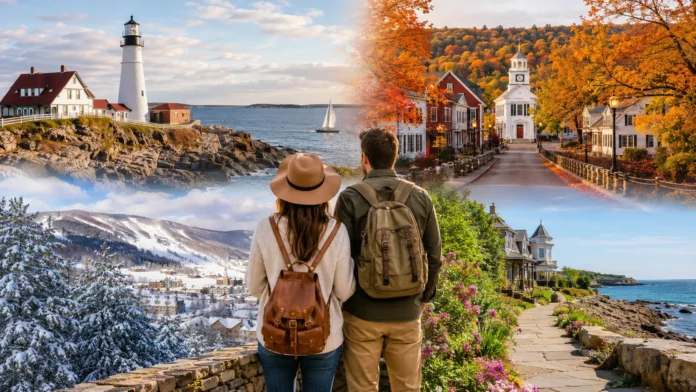

15 Best Day Trips From Boston for Every Season
Boston is one of the best cities in the United States for travelers who enjoy exploring beyond their hotel base. Within a few hours, you can reach historic battlefields, rocky Atlantic beaches, artistic seaside towns, Gilded Age mansions, mountain roads, islands, museums, and some of New England’s best food destinations. The variety is especially impressive because the ideal day trip changes dramatically with the season. Summer favors beaches and ferries, fall brings extraordinary foliage, winter creates cozy historic-town escapes, and spring is perfect for gardens, walking trails, and Revolutionary history. Choosing the right destination for the weather can turn an ordinary free day into one of the highlights of your Boston vacation.
Some of the best day trips from Boston require a car, but many are surprisingly easy without one. Salem, Providence, Gloucester, Newburyport, and Portland have useful rail connections, while seasonal ferries can carry travelers directly from Boston to Provincetown or the Harbor Islands. Other destinations, including Newport, the Berkshires, Cape Cod National Seashore, and the White Mountains, become much easier with your own vehicle. Travel times can also change considerably during summer weekends, holiday periods, and peak fall foliage season, so early departures are valuable. When possible, avoid designing a schedule that depends on returning to Boston at an exact minute. New England day trips are most enjoyable when there is enough flexibility for a long lunch, scenic stop, or unexpected detour.
The fifteen destinations below cover history, beaches, food, architecture, hiking, islands, small towns, and seasonal scenery. Natural LSI keywords such as Boston day trips, weekend trips from Boston, New England road trips, places near Boston, coastal towns near Boston, fall trips from Boston, summer getaways, historic Massachusetts towns, and Boston sightseeing alternatives are included contextually throughout the guide. Each section explains what makes the destination worthwhile, how to spend your day, which season suits it best, and what practical considerations may affect your plans. Some locations are less than an hour away, while others represent ambitious full-day adventures requiring an early start. Whether you live in Boston or are visiting for several days, these escapes reveal how much of New England lies within easy reach.
1. Salem, Massachusetts: Best for History, Halloween and Coastal Atmosphere
Salem is one of the easiest and most distinctive day trips from Boston because it combines colonial history, maritime heritage, museums, architecture, and an unusually strong modern identity. The city is famous internationally for the 1692 Salem witch trials, but limiting your visit to witch-themed attractions misses a large part of its story. Salem was also an important maritime trading center, and that history appears in waterfront sites, historic homes, museum collections, and old streets throughout downtown. The Peabody Essex Museum adds world-class art and cultural collections to the itinerary, while the House of the Seven Gables connects the city with literary history. Because central Salem is compact, visitors can see a great deal without a car once they arrive.
Begin around the historic center and use walking as your main transportation. The Salem Witch Trials Memorial provides a sober introduction to the people who were executed during the trials, while nearby streets lead toward museums, historic buildings, shops, and the waterfront. Travelers interested in architecture can simply wander through residential areas where centuries-old houses create a classic New England streetscape. Destination Salem emphasizes that the city’s identity extends through maritime trade, literature, museums, piracy, architecture, and its complex witch-trial history. Try to balance entertaining attractions with historically grounded sites so the day does not turn an actual tragedy into nothing more than Halloween imagery. Salem becomes considerably more interesting when its different historical layers are explored together.
October is the most famous time to visit, but it is also the month requiring the most planning. Haunted Happenings draws enormous numbers of visitors, making transportation, restaurant reservations, and attraction tickets much more competitive than during ordinary weekends. Salem’s official tourism organization recommends the city throughout the year and highlights winter museums, spring walks, summer events, and its exceptionally busy autumn season. If Halloween atmosphere is your main goal, October can be unforgettable, but arrive early and expect crowds rather than imagining empty cobbled streets beneath colorful leaves. September provides much of the autumn mood with somewhat less intensity. Winter, meanwhile, can be excellent for travelers who prioritize museums and historic architecture over festivals.
Spring and summer reveal a completely different Salem. Warmer weather makes waterfront exploration more appealing, gardens return to life, and outdoor dining allows the city’s maritime character to stand alongside its supernatural reputation. Summer can also be paired with harbor experiences or additional North Shore stops if you are traveling by car. Families may appreciate the greater variety of daytime activities compared with late-October weekends, when Halloween programming dominates much of downtown. Spring is particularly pleasant for walking because temperatures are usually easier than peak summer heat, though New England rain can always alter plans. Regardless of season, check attraction hours before departure because smaller historic sites may not maintain identical schedules year-round. A flexible indoor-outdoor plan makes Salem resilient to unpredictable weather.
Salem is convenient enough that you do not necessarily need to turn it into a road trip. Rail connections from Boston make a car-free day practical, and seasonal ferry options may also operate depending on the time of year. Once downtown, most major attractions are concentrated within a comfortable walking area, so parking can become more trouble than it is worth during crowded periods. Allow six to eight hours if this is your first visit because the city contains enough history, food, museums, shopping, and waterfront scenery to fill a complete day. Return to Boston after dinner if you want to experience Salem’s evening atmosphere. For history lovers, fall travelers, families, photographers, and anyone seeking an easy escape, Salem remains one of the best day trips from Boston in almost every season.
2. Concord and Lexington: Best for Revolutionary History and Spring Walks
Concord and Lexington provide one of the most meaningful day trips from Boston for travelers interested in the origins of the American Revolution. Minute Man National Historical Park stretches through Lexington, Lincoln, and Concord and protects important landscapes associated with the fighting of April 19, 1775. The National Park Service notes that the park lies approximately 22 miles outside Boston and preserves significant structures, battlefields, landscapes, and stories connected with the opening battles of the Revolution. Unlike a conventional museum visit, the experience involves driving or walking between historic landscapes where events actually unfolded. This makes the day particularly engaging for visitors who prefer history outdoors rather than behind display cases. Spring adds an especially appropriate atmosphere around Patriots’ Day commemorations.
The North Bridge in Concord is a natural priority because it is associated with one of the best-known moments of the opening battle. Nearby, the Minute Man statue by Daniel Chester French provides another iconic connection with the site and the “shot heard round the world” tradition. From there, Battle Road offers a chance to follow sections of the route along which fighting continued between colonial militia and British forces. The National Park Service recommends the Battle Road Trail and offers ranger programs during much of the main visitor season. Walking part of the landscape helps explain the battle far better than simply reading a plaque beside a parking lot. Give yourself time to stop at historic homes and interpretive areas rather than rushing from monument to monument.
Concord also has an extraordinary literary history that makes the day trip worthwhile even for travelers who are not fascinated by military events. Ralph Waldo Emerson, Henry David Thoreau, Louisa May Alcott, and Nathaniel Hawthorne are all strongly connected with the town and surrounding area. Walden Pond provides a nature-focused counterpoint to Revolutionary sites, while literary homes and Concord’s compact center allow travelers to shift from battlefield history to nineteenth-century intellectual life. The Wayside, associated with several important authors, has offered limited seasonal guided access during 2026, demonstrating why individual historic-house schedules should be checked before visiting. This combination of literature and Revolution gives Concord unusual depth for a destination so close to Boston.
Spring is arguably the most meaningful season because Patriots’ Day programming and commemorative events connect directly with April 1775. The National Park Service continues to run special events and regular ranger programs from late May through October, while park grounds remain accessible year-round from sunrise to sunset. Summer works well for families who want visitor-center programming and open historic buildings, though exposed walking routes can become hot. Autumn brings colorful foliage to stone walls, fields, and colonial landscapes, making history particularly photogenic. Winter offers solitude and dramatically smaller crowds but fewer open interiors. A snowy North Bridge can be beautiful, though weather and icy paths deserve practical caution.
A car makes it easier to connect Lexington Green, Battle Road, Concord center, Walden Pond, and scattered historic sites within one day. Travelers without a vehicle can still reach parts of the area through regional transportation and rideshare combinations, but doing so requires more planning. Minute Man National Historical Park itself is surprisingly large, covering nearly one thousand acres, and the National Park Service notes that visitors may need transportation between different sections. Plan around your strongest interest rather than attempting every battlefield and literary site in a single rushed visit. History enthusiasts could easily dedicate the entire day to the park, while literature lovers might spend more time in Concord proper. Either way, the area offers one of the richest cultural escapes from Boston.
3. Plymouth: Best for Early American History and Waterfront Views
Plymouth is a classic Boston day trip for travelers who want to explore early colonial history beside a scenic Massachusetts waterfront. The town is associated with the arrival of the Mayflower in 1620, but a thoughtful visit should include both English colonial history and the much longer history of the Indigenous peoples of the region. Plimoth Patuxet Museums approaches these interconnected stories through the Historic Patuxet Homesite, a recreated seventeenth-century English village, craft demonstrations, and additional historic sites. Downtown Plymouth adds the harbor, Plymouth Rock, historic streets, monuments, restaurants, and Mayflower II. The result is a day trip that combines structured historical interpretation with relaxed coastal wandering rather than requiring visitors to remain inside one museum.
Plimoth Patuxet Museums should receive several hours if historical interpretation is your main reason for traveling south of Boston. Rather than relying only on static displays, the experience uses historic environments and educators to explore everyday life, Indigenous history, colonial settlement, food, craft, and community. In 2026, the museum’s principal sites operate seven days a week from 9:00 a.m. to 5:00 p.m. through the Sunday following Thanksgiving, though visitors should still confirm schedules for their date. The broader organization has also tied its current programming to the United States’ 250th anniversary. Visiting with time for questions makes the experience far more valuable than treating the site as another quick photo opportunity.
Mayflower II is another highlight and sits in Plymouth Harbor rather than at the main Plimoth Patuxet campus. The full-scale reproduction arrived in Massachusetts in 1957 and has since become a historic vessel in its own right after major restoration work. Stepping aboard provides a powerful sense of how limited the physical space would have been during a seventeenth-century Atlantic crossing. Nearby, Plymouth Rock requires only a short stop, and its historical symbolism is more important than its visual size. Walking along the waterfront afterward creates a pleasant transition from formal history to harbor scenery. Brewster Gardens and the older streets around downtown can easily fill additional time without requiring another admission ticket.
Summer is excellent for combining history with harbor cruises, whale watching, seafood, and longer waterfront walks. Fall adds colorful foliage and cranberry-country possibilities in the wider Plymouth County region, while Thanksgiving season creates an obvious historical connection but also greater visitor interest. Official regional tourism information describes Plymouth as a year-round destination and highlights beaches, whale watching, cranberry landscapes, museums, and coastal experiences in addition to its early-American sites. Winter is quieter, though some major seasonal attractions operate on reduced schedules or close. Spring works well for visitors wanting comfortable temperatures before summer crowds. Check each attraction separately because year-round access to the town does not mean every museum operates identically throughout the year.
Driving from Boston is generally the simplest option and can take roughly an hour in favorable conditions, although traffic heading toward Cape Cod can significantly increase travel times. A car also gives you the flexibility to visit the main museum campus and waterfront efficiently because they are not all concentrated in one immediate downtown block. Visitors without cars can investigate regional rail and local transportation, but the trip becomes less seamless. Start early if you want Plimoth Patuxet, Mayflower II, the waterfront, and a relaxed seafood meal in one day. Plymouth is particularly good for families, history enthusiasts, and travelers who want educational sightseeing without giving up ocean views. It also makes an excellent shoulder-season escape when beach-focused destinations farther down Cape Cod feel too quiet.
4. Rockport and Gloucester: Best for Classic New England Seaside Scenery
Rockport and Gloucester sit on Cape Ann and together create one of the most satisfying coastal day trips from Boston. Gloucester has a strong working-waterfront identity, maritime history, beaches, seafood, and whale-watching excursions, while Rockport feels smaller and more artistic. Combining both towns provides a fuller experience than choosing only one because you can move between active harbor life and postcard-like streets within the same outing. Gloucester’s official tourism site emphasizes beaches, whale watching, harbor tours, fresh seafood, and its walkable waterfront neighborhoods. Rockport adds galleries, boutiques, ocean views, and the famous Bearskin Neck area, where small shops occupy a narrow peninsula surrounded by harbor scenery. The entire Cape Ann landscape feels unmistakably New England.
Start in Gloucester if maritime history interests you. Walk near the harbor, visit waterfront monuments, explore downtown streets, and consider a whale-watching trip when operators are running during the warmer season. Cape Ann’s position near productive offshore waters has made Gloucester a major departure point for marine excursions, though weather and sea conditions always influence schedules. Beach travelers can build part of the day around Good Harbor Beach or another coastal stop if parking and seasonal regulations allow. Seafood naturally fits the itinerary, whether you prefer a casual fish sandwich or a longer restaurant lunch. Gloucester also works well for photographers because fishing vessels, historic buildings, rocky shoreline, and changing harbor light provide far more variety than a conventional beach town.
Rockport provides the slower half of the day. Bearskin Neck is the obvious place to wander, with galleries, gift shops, food stops, and harbor views clustered along narrow streets. Motif No. 1, the famous red fishing shack, has become one of the most recognizable artistic subjects on the Massachusetts coast. Do not limit your visit to that single photograph, because the surrounding harbor and residential streets reveal much more of Rockport’s charm. Stop for coffee or ice cream, browse local art, and spend time simply looking across the water. The town is busiest in summer, but spring and early autumn can offer a calmer experience with pleasant walking conditions. Winter creates a quieter, almost contemplative coastal atmosphere for travelers comfortable with cold winds.
Summer is the obvious season if beaches, boat tours, and a lively harbor are priorities. Fall, however, may be even better for travelers interested in photography because cooler air, fewer peak-season beach crowds, and early autumn color create a beautiful coastal combination. Spring brings reopening galleries, milder weather, and increasing activity around the harbor. Winter works best for a shorter food-and-scenery trip rather than a full beach itinerary, since many seasonal businesses reduce hours. Always check whale-watching schedules and beach regulations before departure rather than assuming summer-style activities operate year-round. Coastal weather can also change quickly, so bring an extra layer even when Boston feels warm. Ocean wind makes Cape Ann noticeably cooler than inland destinations on some days.
One advantage of Cape Ann is that you can visit without driving. The MBTA Commuter Rail’s Newburyport/Rockport Line provides daily Boston service to Gloucester, with the journey listed by Gloucester tourism authorities at approximately one hour and twenty minutes. Rail also serves Rockport, making a car-free coastal escape possible when you plan local walking and transportation carefully. Driving provides greater freedom to combine beaches, viewpoints, and both town centers, but summer parking can become difficult. Allow a full day if you want Gloucester and Rockport together rather than treating one as an afterthought. For seafood lovers, photographers, couples, artists, and anyone seeking a classic Massachusetts coast experience, Cape Ann is one of Boston’s most dependable escapes.
5. Newburyport and Plum Island: Best for Birding, Beaches and a Relaxed Downtown
Newburyport combines an attractive historic downtown with immediate access to the natural landscapes of Plum Island, making it an excellent day trip for travelers who want both shops and wildlife. Brick buildings, independent restaurants, boutiques, waterfront paths, and a maritime atmosphere give downtown enough activity for several relaxed hours. Plum Island lies just beyond the city and provides beaches, marshes, dunes, and important bird habitat around the Parker River National Wildlife Refuge. The contrast between the polished town center and open coastal ecosystem is the main reason to combine them. You can have breakfast beside historic streets, spend midday watching shorebirds or walking the beach, and return downtown for dinner. Few Boston-area escapes offer such an easy transition between town and protected coastline.
Begin in downtown Newburyport and walk toward the waterfront before the busiest part of the day. The compact center suits slow exploration, particularly for travelers who enjoy independent shops, coffee, architecture, and restaurants more than major ticketed attractions. Maritime history is visible throughout the area, reflecting the city’s long relationship with shipbuilding and coastal trade. After a morning walk, drive toward Plum Island for a dramatic change in scenery. Salt marshes and dunes replace brick streets, and birdwatching becomes one of the most rewarding activities. Bring binoculars if you have them, even if you are not an experienced birder, because the refuge’s wildlife can make a casual visitor unexpectedly interested. The slower pace is part of the destination’s appeal.
Spring is arguably the best season for nature-focused visitors because bird migration brings additional activity to the coastal ecosystem. Warmer temperatures make walking pleasant without the full intensity of peak summer beach traffic. Summer shifts the emphasis toward sand, swimming, and coastal relaxation, though parking and beach access become more competitive. Fall combines cooler walking weather with migratory birds and increasingly beautiful marsh colors. Winter can be surprisingly atmospheric for photographers who enjoy empty beaches, dramatic skies, and cold ocean scenery. The main requirement in every season is checking current refuge access, weather, and beach conditions before departure. Protected areas sometimes impose seasonal restrictions to safeguard nesting wildlife, and respecting those limits is essential.
Food is another reason to make Newburyport more than a quick stop on the way to Plum Island. Downtown restaurants range from casual cafés to seafood-focused dining, providing a comfortable place to warm up after a winter beach walk or linger after a summer afternoon by the water. Travelers who prefer picnics can pick up food before heading toward the island, though waste should be managed carefully in wildlife areas. Summer evenings are especially pleasant around the waterfront when daylight remains long. In colder months, the same historic streets feel cozy beneath early evening lights, creating a completely different day-trip personality. Because Newburyport works without a packed attraction schedule, it is particularly suited to couples or travelers who want conversation, scenery, and food rather than constant sightseeing.
The commuter rail makes Newburyport one of the easier car-free day trips north of Boston, although reaching Plum Island from the station requires additional local transportation or rideshare planning. A car is therefore preferable if the refuge and beaches are your main priority. Leave early on peak summer weekends because parking and coastal traffic can affect a relaxed schedule quickly. Pack according to the season rather than Boston’s downtown forecast, as exposed coastal areas can feel windier and cooler. This destination is ideal for birders, photographers, beach walkers, shoppers, and travelers who want a quieter alternative to Salem or Cape Cod. Newburyport and Plum Island prove that a memorable Boston day trip does not require famous monuments when landscape and small-town atmosphere are strong enough.
6. Providence, Rhode Island: Best for Food, Art and WaterFire Evenings
Providence is one of the best urban day trips from Boston because it offers excellent food, architecture, universities, art, and a compact downtown without feeling like a smaller version of Boston. The Rhode Island capital has enough cultural depth for an entire weekend, but its center is manageable enough to explore during a single day. College Hill brings historic streets and institutions such as Brown University and the Rhode Island School of Design, while downtown provides theaters, restaurants, river walks, and public spaces. Federal Hill is famous for Italian-American dining, and newer restaurants have expanded the city’s broader culinary reputation considerably. Providence suits travelers who want a day away without abandoning urban energy. It is especially useful when weather makes beach or mountain plans less attractive.
Begin around downtown and the river before walking uphill toward College Hill. The city’s pedestrian bridge and RiverWalk provide an easy introduction, while Benefit Street offers one of the strongest concentrations of historic architecture in the region. Museums and galleries provide indoor options during rain, summer heat, or winter cold. Food should receive significant time because Providence is not a destination where lunch should be treated as a rushed necessity. You can build an itinerary around bakeries, neighborhood restaurants, modern tasting menus, Italian-American classics, or casual markets depending on your budget. Art-focused travelers may prioritize RISD-related collections, while families can consider additional attractions farther from downtown. The city is flexible enough to reward very different interests.
WaterFire can completely transform the experience if your travel date matches one of its scheduled lightings. The installation uses bonfires along downtown rivers with music, performers, vendors, and evening programming, creating one of Providence’s signature public events. GoProvidence lists multiple WaterFire dates during 2026, including full and partial lightings across summer, autumn, and even December. Because the event happens after sunset, a WaterFire day trip means returning to Boston later than usual, but the atmosphere can justify the long day. Restaurants overlooking the rivers become particularly busy during full lightings, and local tourism officials recommend booking desirable tables in advance. Check the official schedule rather than assuming every weekend includes the event.
Providence works in every season. Spring makes College Hill and riverfront walking especially pleasant, while summer adds outdoor dining, boat tours, festivals, and WaterFire dates. Fall introduces crisp weather and strong cultural programming, making it an excellent alternative when rural foliage destinations become crowded. Winter shifts attention indoors toward museums, restaurants, theater, holiday events, and seasonal light displays. GoProvidence’s 2026 calendar illustrates how active the city remains beyond summer, with arts festivals, performances, food events, and winter programming continuing throughout the year. Because the trip does not depend on one weather-sensitive attraction, Providence is a useful backup destination when a planned beach day becomes rainy.
Travel from Boston is straightforward by car, commuter rail, or intercity train, making Providence one of the easiest day trips for travelers without access to a vehicle. Rail can also be faster than driving when Interstate traffic becomes heavy, particularly during weekday commuting periods. Once you arrive, many central attractions are walkable, although buses or rideshare services help when visiting farther neighborhoods. A six-to-ten-hour day provides enough time for architecture, a museum, excellent food, and riverfront walking. Extend into the evening when WaterFire or a performance justifies the later return. Providence is particularly good for food travelers, art lovers, couples, and people who want another New England city experience without spending hours in transit. Its compact scale encourages exploration rather than logistical planning.
7. Newport, Rhode Island: Best for Mansions, Ocean Views and Summer Elegance
Newport offers one of New England’s most distinctive day trips because Gilded Age mansions, colonial streets, sailing culture, and dramatic Atlantic coastline exist within a relatively compact area. Bellevue Avenue is lined with estates originally built as elaborate summer “cottages” by some of America’s wealthiest families during the nineteenth and early twentieth centuries. The Breakers is the best-known mansion, while Marble House, The Elms, Rosecliff, and other properties provide different architectural styles and stories. Rhode Island tourism authorities note that these houses now operate as museums and host seasonal events throughout summer, fall, and the Christmas period. Between mansion visits, Newport’s harbor and historic streets prevent the day from feeling like one continuous house tour. Ocean scenery remains present almost everywhere.
If you only have one day, tour one major mansion rather than trying to enter three or four. The Breakers provides the most famous introduction to Vanderbilt-era extravagance, while The Elms or Marble House can be equally rewarding for travelers with specific architectural interests. Current 2026 schedules vary by property, and the Preservation Society publishes date-specific operating information because some houses close or alter access seasonally. This is important for winter and shoulder-season visits when assuming summer schedules can create disappointment. Allow roughly ninety minutes for one mansion, then spend the rest of the day outdoors and downtown. Newport becomes much more interesting when Gilded Age luxury is contrasted with the older colonial streets and working harbor.
The Cliff Walk is the natural outdoor counterpart to the mansions. The 3.5-mile public path follows Newport’s coastline with ocean views on one side and famous estates on the other, creating a combination of architecture and landscape unlike almost anywhere else in New England. Travelers should know that a damaged section between Narragansett Avenue and Webster Street currently requires a detour, while other portions remain open. The northern section is generally easier, while farther southern areas become rougher and require more secure footwear. You do not need to complete the entire route to appreciate it. A shorter walk near Forty Steps and the mansion district can provide the classic scenery without consuming half your day.
Summer brings sailing, harbor activity, long daylight, and the fullest visitor schedule, making it Newport’s most energetic season. Spring and early autumn can be even better for walking because temperatures are milder and coastal scenery remains beautiful. Fall creates pleasant conditions along Ocean Drive, while winter introduces holiday decorations at selected mansions and a much quieter downtown atmosphere. Newport’s tourism authorities note that mansion events and displays extend into the Christmas season, so this is not strictly a warm-weather destination. Cold-season visitors should expect strong coastal wind and reduced hours at some attractions. Whatever the season, check the Cliff Walk status and mansion schedule shortly before departing because restoration work and weather can affect access.
A car is the easiest way to make Newport a Boston day trip, particularly if you want Ocean Drive, mansion access, and several neighborhoods in one day. Summer traffic and parking can become difficult, so leave Boston early and avoid waiting until late morning to begin the drive. Public transportation combinations are possible but make the excursion substantially longer and less flexible. Plan a waterfront lunch or early dinner rather than eating only near the busiest mansion areas. Six to eight hours in Newport provides enough time for one mansion, part of the Cliff Walk, downtown wandering, and harbor views. For architecture lovers, couples, photographers, and travelers who enjoy historic luxury beside wild ocean scenery, Newport remains one of Boston’s most memorable full-day escapes.
8. Portsmouth, New Hampshire: Best for Historic Streets and Cozy Seasonal Trips
Portsmouth is a compact New Hampshire seaport that feels ideally sized for a relaxed Boston day trip. Its downtown combines brick buildings, independent shops, restaurants, waterfront parks, historic houses, and streets that encourage wandering without a strict sightseeing schedule. The city has centuries of maritime history but also feels contemporary because of its strong restaurant, arts, and cultural scenes. New Hampshire tourism material describes Portsmouth as an active seaport with museums, theaters, shops, restaurants, and maritime experiences rooted in a history stretching back to the seventeenth century. Unlike larger cities, major downtown attractions remain close enough that you can park once and spend much of the day walking. This makes Portsmouth particularly appealing when you want an easy getaway rather than a complicated itinerary.
Strawbery Banke Museum is the destination’s most significant historical attraction. The nearly ten-acre museum preserves historic houses on their original sites in the former Puddle Dock neighborhood and interprets more than 350 years of community life. Instead of representing only one colonial moment, individual houses and exhibitions explore different time periods, occupations, families, and cultural experiences. That wider chronology distinguishes Strawbery Banke from living-history sites focused on a single decade. In 2026, the main seasonal house-and-garden experience runs from June 17 through November 1, with regular Wednesday-through-Monday hours and special guided arrangements on Tuesdays. Check details if the museum is central to your trip because off-season experiences operate differently.
After the museum, walk through Prescott Park and toward the waterfront before exploring downtown shops and restaurants. Portsmouth’s size makes spontaneous browsing easy, and there is no need to schedule every hour. Seafood fits naturally into the day, but the restaurant scene is broader than traditional New England fare and includes contemporary cooking, bakeries, cafés, and international influences. Travelers interested in maritime history can investigate harbor cruises or nearby New Castle during warmer seasons. Shopping-focused visitors may spend more time downtown, while history lovers can seek additional preserved houses and sites. The city is particularly photogenic when brick façades, church steeples, narrow streets, and harbor scenery appear together. A slower pace allows those small architectural details to become part of the experience.
Autumn is arguably Portsmouth’s most atmospheric season because cooler temperatures and foliage make walking especially enjoyable. Summer adds harbor cruises, longer museum hours on selected weekends, outdoor dining, and active parks. Spring provides lighter crowds as gardens and outdoor programming return, though early-season weather can remain unpredictable. Winter is excellent for travelers who enjoy historic towns under holiday lights, cozy restaurants, and seasonal programming rather than outdoor sightseeing. Strawbery Banke’s famous winter ice-skating and holiday programming can give the city a completely different personality from summer. Because Portsmouth remains a functioning downtown rather than a seasonal resort, there is always something to do even when some visitor attractions close. That year-round character makes it unusually dependable.
Driving from Boston usually provides the most straightforward journey and allows you to add nearby coastal stops if time permits. The route is short enough for a comfortable day but still feels like a genuine change of state and atmosphere. Parking can require patience on summer weekends and during major events, and Strawbery Banke specifically advises visitors to allow extra time because its own parking is limited. Once parked, walking is generally the easiest way to experience central Portsmouth. Plan six to eight hours if you want Strawbery Banke, lunch, downtown shopping, and the waterfront without rushing. Portsmouth is an especially strong choice for couples, history enthusiasts, food travelers, and anyone looking for a charming New England day trip that works beyond peak summer.
9. Portland, Maine: Best for Food, Lighthouses and a Car-Free City Escape
Portland is one of the longer Boston day trips on this list, but it rewards an early start with an exceptional combination of food, waterfront scenery, historic streets, art, and nearby lighthouses. The Old Port is the obvious center of activity, where cobblestone streets and nineteenth-century brick warehouses meet restaurants, boutiques, galleries, and a working waterfront. Maine’s tourism authority describes Portland as a compact city where maritime history and a highly developed food and design scene coexist within a walkable downtown. This makes the destination particularly satisfying for travelers who want a full urban experience without driving between attractions once they arrive. You can easily spend an entire day eating, wandering, shopping, and watching Casco Bay activity.
Food deserves to become a central activity rather than a break between attractions. Portland is famous for lobster rolls and seafood, but its culinary scene extends far beyond traditional coastal dishes. Bakeries, coffee shops, oyster bars, innovative restaurants, breweries, and small producers make it possible to structure the entire day around several smaller food experiences. Start with breakfast or coffee after arrival, walk the Old Port, then plan a substantial lunch before exploring the Eastern Promenade or museums. Reservations can be valuable for highly popular restaurants, particularly on summer weekends. Travelers who prefer spontaneity should identify several alternatives instead of becoming dependent on one famous dining room. The city is small enough that changing plans rarely ruins the day.
If you have a car, Portland Head Light in nearby Cape Elizabeth makes an excellent addition. Maine tourism materials describe it as the state’s oldest and one of its most photographed lighthouses, set within Fort Williams Park with trails and coastal scenery. The rocky shoreline provides exactly the kind of New England imagery many visitors hope to see during a Maine trip. Without a car, focus on Portland itself and consider harbor cruises or local waterfront experiences rather than spending valuable day-trip time arranging transportation to several distant lighthouses. The Eastern Promenade provides convenient water views close to downtown. This flexibility means Portland works well both as a road trip and as a train-based escape from Boston.
Summer creates the fullest version of Portland, with harbor cruises, outdoor dining, long evenings, and active waterfront neighborhoods. Autumn brings cooler air, regional foliage, and an excellent food-focused atmosphere without depending on beach weather. Spring works well for travelers comfortable with variable coastal conditions, while winter shifts the day toward restaurants, museums, breweries, shops, and atmospheric streets. Portland’s official tourism organization promotes the region across all four seasons and emphasizes the blend of arts, food, maritime heritage, beaches, lighthouses, and outdoor activities. A winter trip can be especially rewarding if your priority is eating rather than sailing. Always bring an extra layer because Maine’s waterfront can feel significantly colder than Boston.
The Amtrak Downeaster makes Portland a realistic car-free trip, while driving provides flexibility for lighthouses and coastal stops. Because the journey takes several hours round-trip, start early and treat Portland as an ambitious full day rather than a casual afternoon excursion. Train travelers should confirm the final return departure before settling into dinner, particularly during seasons with schedule variations. Drivers should remember that weekend traffic can stretch travel times during summer and peak foliage periods. Seven to ten hours in Portland itself provides enough time for the Old Port, meals, waterfront walking, and one cultural attraction. Portland is ideal for food lovers, couples, photographers, and travelers who want to say they reached Maine without committing to an overnight. It feels distant enough from Boston to provide genuine contrast.
10. Cape Cod National Seashore: Best for Beaches, Hiking and Wild Atlantic Scenery
Cape Cod National Seashore is a better day-trip choice than a conventional Cape beach when you want dramatic dunes, Atlantic coastline, marshes, trails, and a stronger connection with protected landscape. The National Park Service manages extensive seashore areas across the Outer Cape, including beaches, ponds, historic structures, cycling routes, and walking trails. Choosing one portion of the seashore is essential for a Boston day trip because attempting to cover the entire Cape will result in more driving than exploring. Eastham is practical for attractions around Salt Pond, Coast Guard Beach, and Nauset Marsh, while farther north offers the Province Lands and additional dune environments. The landscape changes continuously, making the Cape feel far wilder than its famous summer-resort reputation suggests.
Walking trails provide an excellent alternative when beach weather is too cool for swimming. The National Park Service lists routes including the one-mile Fort Hill Trail, 1.3-mile Nauset Marsh loop, Atlantic White Cedar Swamp Trail, and extensive Great Island route, among many others. Cyclists can use paved routes such as the Nauset Bicycle Trail or Province Lands Bicycle Trail depending on the area they choose. These options make the national seashore useful beyond July and August. Bring appropriate footwear because trails range from boardwalks to sand and uneven coastal terrain. Birdwatching can also be excellent around marshes and wooded areas. A day combining one trail with one beach usually feels more satisfying than constantly driving between several famous names.
Summer provides the classic Cape Cod experience but also the greatest logistical challenge. Traffic crossing onto the Cape can be severe on peak weekends, and beach parking may fill early, so departing Boston at dawn can dramatically improve the day. Once settled, however, long daylight makes swimming, walking, cycling, and sunset views easy to combine. Spring brings migratory birds, blooming landscapes, cooler temperatures, and fewer beach crowds. Autumn is exceptional for hiking because humidity decreases and the coast becomes quieter after traditional summer vacations end. Winter creates dramatic solitude but demands careful weather preparation and realistic expectations about closed seasonal services. The national seashore remains beautiful in cold months precisely because it feels exposed and elemental.
Pack more than you would for an ordinary urban day trip. Water, snacks, sunscreen, insect repellent, comfortable walking shoes, a wind layer, and beach equipment may all be useful depending on the season. Cell coverage can vary in some outer areas, so download maps and route information before leaving Boston. Ocean conditions deserve respect because Atlantic surf, currents, changing tides, and cold water can create hazards even on visually calm days. Follow lifeguard and National Park Service guidance rather than assuming every beach functions like a protected bay. Wildlife should also be observed from appropriate distances. The best Cape Cod day trips are those where travelers adapt to coastal conditions instead of forcing an itinerary regardless of weather or water.
Driving is by far the most practical option for a National Seashore-focused excursion from Boston. Choose one area before departure and avoid the temptation to drive all the way from Eastham to Provincetown simply because each location looks nearby on a map. Summer traffic turns relatively short Cape distances into much longer journeys, while shoulder seasons allow greater flexibility. A full day may include an early trail, beach time, seafood lunch, one lighthouse area, and a late-afternoon scenic stop before returning north. Cape Cod National Seashore is best for families, hikers, beach lovers, birders, photographers, and anyone wanting genuine Atlantic scenery. It is one of the strongest seasonal contrasts with Boston’s dense urban streets and one of New England’s defining landscapes.
11. Provincetown: Best for a Summer Ferry Adventure From Boston
Provincetown sits at the tip of Cape Cod and feels surprisingly accessible from Boston when seasonal fast ferries are operating. The town combines colorful streets, beaches, galleries, restaurants, LGBTQ+ culture, maritime history, dune landscapes, and one of New England’s most distinctive creative communities. Commercial Street forms the main pedestrian spine, where shops, art spaces, cafés, and historic buildings create constant activity during the warmer months. Beyond town, the Cape Cod National Seashore surrounds Provincetown with beaches, dunes, cycling routes, and wild coastal scenery. The combination makes it possible to enjoy an urban-style walking day and a nature experience without changing destinations. Arriving by water also transforms transportation into part of the excursion rather than lost time inside a car.
The seasonal ferry is what makes Provincetown unusually attractive as a Boston day trip. Bay State Cruise Company’s 2026 fast-ferry schedule runs daily from May 16 through October 18, with a Boston departure at 8:30 a.m. reaching Provincetown at 10:05 a.m. and multiple return options during the main season. Boston Harbor City Cruises also operates seasonal service, with crossing times around ninety-five minutes depending on conditions and schedule. These services allow travelers to avoid Cape traffic entirely while enjoying harbor views from the boat. Schedules remain weather-sensitive and seasonal, so always verify your exact return sailing before leaving Boston. Booking in advance is wise during summer weekends and major Provincetown events.
Once ashore, you can spend several hours without needing a vehicle. Walk Commercial Street, browse galleries, stop for seafood, and visit the Pilgrim Monument area if history interests you. Bicycle rentals provide another option for reaching nearby parts of the Province Lands, though the terrain can be hillier than visitors expect. The National Park Service’s Province Lands Bicycle Trail forms a 5.45-mile loop with spurs toward Herring Cove and Race Point, passing forests, dunes, and cranberry-bog landscapes. Travelers who prefer a slower day can simply divide time between town and one beach. Provincetown is not a destination improved by rushing through twenty attractions. Its creative atmosphere and people-watching deserve as much attention as formal sightseeing.
Summer is unquestionably the easiest season because ferry schedules, restaurants, galleries, beach activities, and events operate at full intensity. Early autumn can be even more appealing for travelers seeking cooler walking weather while ferries remain in service. Bay State Cruises currently extends weekend-only fast-ferry service into mid-November 2026, creating limited late-fall opportunities as well. Winter Provincetown is atmospheric but no longer functions as a simple ferry day trip from Boston, so driving becomes necessary and many seasonal businesses reduce hours. Spring sits between these experiences as the town gradually becomes more active. If your trip depends on a particular restaurant, gallery, or tour outside summer, confirm opening information individually rather than assuming year-round availability.
Provincetown makes an excellent day trip for couples, solo travelers, art lovers, beach visitors, and anyone who wants a memorable journey without driving. Ferry passengers should arrive at the Boston dock early because missing the morning sailing can remove several hours from an already limited day. Bring a light jacket even in summer because the ride across Massachusetts Bay can feel much cooler than city streets. Travelers prone to seasickness may also want to prepare before departure when conditions are rough. Once in Provincetown, keep your schedule simple enough that you can comfortably reach MacMillan Pier before the return sailing. Few Boston excursions feel as much like a miniature vacation. The moment the skyline disappears behind the boat, the day trip has already begun.
12. Martha’s Vineyard: Best for an Ambitious Summer Island Day
Martha’s Vineyard is one of the most ambitious day trips from Boston because reaching the island requires traveling to Cape Cod and then taking a ferry. However, an early start can reward determined travelers with colorful gingerbread cottages, historic towns, beaches, lighthouses, harbors, and an island atmosphere that feels far removed from the mainland. Oak Bluffs and Vineyard Haven are the easiest communities to explore on a short visit, while Edgartown adds elegant historic homes and an especially photogenic waterfront. Travelers with more time can continue toward Aquinnah or western parts of the island, but attempting the entire Vineyard in a single day creates unnecessary transportation pressure. Choose two communities and allow enough time to actually experience them.
The Steamship Authority operates year-round ferry service from Woods Hole to Martha’s Vineyard, with the crossing taking approximately 45 minutes. During the warmer season, ferries serve both Vineyard Haven and Oak Bluffs, while Vineyard Haven remains the primary year-round destination. Walk-on passengers generally do not need the vehicle reservations required for cars, making it easier to leave your vehicle on the Cape and explore the island through buses, bicycles, or local transportation. For a Boston day trip, bringing a car onto the ferry usually wastes too much time. Park on the mainland and keep the island portion flexible. Always check the last return sailing before deciding how far from the terminal to travel.
Oak Bluffs is particularly enjoyable for first-time visitors because the colorful cottages around the Martha’s Vineyard Camp Meeting Association create one of the island’s most recognizable scenes. The Flying Horses Carousel adds nostalgic character, while the waterfront provides restaurants and harbor views. Vineyard Haven feels more connected with everyday island transportation and shopping, while Edgartown offers beautifully preserved architecture and a refined harbor atmosphere. The Steamship Authority highlights sea captains’ homes, gingerbread cottages, fishing villages, five lighthouses, and the historic carousel among the Vineyard’s attractions. Public buses can connect major communities, but travel time must be respected when you have a fixed ferry home. Do not spend the day watching a bus clock.
Summer offers the easiest and fullest version of this trip, with frequent transportation, open businesses, beaches, and longer daylight. Early fall is beautiful and generally calmer, though ferry schedules and individual attraction hours begin shifting after peak season. Spring can be charming once businesses reopen, while winter is much better suited to an overnight getaway than a Boston day trip because reduced daylight and seasonal activity make the lengthy journey less efficient. Summer weekends also bring crowds, so weekdays are preferable when your schedule allows. Weather matters twice because road traffic to Woods Hole and ferry conditions both affect timing. Build generous buffers around connections rather than creating an itinerary that collapses after one delay.
Expect a very early departure from Boston and a late return if you want meaningful island time. The drive to Woods Hole can exceed expectations during Cape traffic, so use current travel estimates rather than generic mileage calculations. Reserve parking if appropriate, know which shuttle serves the ferry terminal, and keep essential confirmations available offline. Once on Martha’s Vineyard, avoid turning the experience into a mission to see every famous town. A relaxed Oak Bluffs lunch, bus ride to Edgartown, waterfront walk, and return ferry can provide a more memorable day than racing to Aquinnah and back. Martha’s Vineyard is best for travelers who genuinely enjoy the journey and are comfortable with a long day. For everyone else, it is better saved for an overnight stay.
13. Boston Harbor Islands: Best for a Quick Summer Escape Without Leaving Boston
The Boston Harbor Islands provide the shortest true escape on this list because you can board a ferry downtown and reach hiking trails, beaches, historic forts, and harbor views within an hour. The national and state park encompasses 34 islands and peninsulas, although only selected islands receive regular public ferry service. Spectacle Island is ideal for hiking, picnics, skyline views, and beach time, while Georges Island is known for Fort Warren when access is available. Peddocks Island offers another distinctive landscape and a greater feeling of separation from the city. Because Boston’s skyline remains visible from many viewpoints, the trip creates an unusual experience: you feel removed from downtown without actually traveling very far.
Spectacle Island is the simplest option for travelers wanting a relaxed outdoor day. The island has a 1.5-mile accessible perimeter trail, a lifeguarded beach during the appropriate season, hiking routes, and panoramic viewpoints from North Drumlin. Pack a picnic, walk to the higher points, and allow enough time to sit beside the water rather than returning on the earliest possible ferry. The landscape has undergone dramatic transformation over its history, which adds an interesting environmental story to what now appears like a recreational island. Families appreciate the manageable trail network, while photographers can frame Boston from across the harbor. Because facilities are more limited than downtown, bring water and essentials rather than assuming you can purchase everything after arrival.
Ferry operations are highly seasonal and subject to temporary changes, so current planning matters. For 2026, regular public service runs from mid-May into October, with separate spring, summer, and fall schedules. Park access information notes that most public ferry service operates from mid-May to mid-October, while individual islands can have different access restrictions. Georges Island has also experienced temporary closures and repair-related service changes during the current season, illustrating why visitors should check park alerts on the morning of departure instead of relying on a saved itinerary. Ferry tickets from Boston are generally round-trip, but departure choices still determine how long you can remain ashore.
Summer is the obvious season for swimming, picnicking, and longer ferry schedules, while early fall may be even more comfortable for hiking. October can provide clear harbor air and a completely different atmosphere from hot July weekends. The park has scheduled special discounted ferry days during 2026, including a $5 closing weekend in October for selected islands, showing that late-season visits can offer excellent value. Spring trips are possible once ferries begin, though ocean temperatures remain cold and weather can change quickly. Winter access is considerably more limited and generally depends on special programs or private transportation. Bring layers in every season because wind on the harbor can make islands feel cooler than downtown Boston.
The greatest advantage is convenience. You can have breakfast in Boston, board at Long Wharf, spend much of the day outdoors, and return for dinner without a car or highway traffic. That makes the islands ideal for travelers staying in Boston who want nature but do not have enough time for Cape Cod or Maine. Pay close attention to the final ferry because missing it creates a much bigger problem than missing a subway train. The park specifically advises ferry visitors to remain aware of the final island departure. Boston Harbor Islands suit families, hikers, budget travelers, photographers, and anyone wanting an easy summer day trip. They prove that leaving the city emotionally does not always require leaving it geographically.
14. The Berkshires: Best for Fall Foliage, Art and Cultural Escapes
The Berkshires stretch across western Massachusetts and offer a very different New England experience from Boston’s coastline. Rolling hills, forested roads, small towns, museums, gardens, performance venues, and country restaurants make the region particularly attractive to travelers who enjoy scenic drives and cultural stops. Stockbridge and Lenox provide useful day-trip anchors because they combine attractive town centers with major institutions and surrounding landscapes. The drive is long enough that you should treat the Berkshires as a full-day road trip rather than a casual extension of Boston sightseeing. Once there, however, the slower pace immediately feels rewarding. Instead of moving between dense city blocks, you travel through villages, hills, and wooded roads where the journey itself becomes part of the destination.
Stockbridge is closely associated with artist Norman Rockwell and retains the carefully composed small-town appearance that many visitors associate with traditional New England. The Norman Rockwell Museum is an obvious stop for American art enthusiasts, while the surrounding area includes historic homes, gardens, and scenic drives. Lenox provides restaurants, shops, and cultural associations of its own, including nearby Tanglewood during the summer performance season. Combining both towns creates a balanced day, but avoid attempting every museum in the region. Choose one major cultural attraction and let the remaining hours focus on scenery, food, and walking. The Berkshires are strongest when the trip feels spacious rather than overprogrammed. A long lunch can be as appropriate as another admission ticket.
Fall is the most visually dramatic season, when hillsides transform into layers of red, orange, gold, and green. Peak foliage periods also attract heavy visitor demand, so weekend traffic and restaurant crowds should be expected rather than treated as surprises. Start from Boston early and consider weekday travel when possible. Summer provides another excellent season because cultural programming, gardens, hiking, and outdoor dining operate at full strength. Spring is quieter and attractive once landscapes begin greening, though mud and variable weather can affect trails. Winter turns the Berkshires into a snow-season destination for skiing, cozy inns, museums, and cultural weekends. A day trip remains possible, but short daylight makes careful planning more important.
For a fall-focused trip, spend more time driving scenic secondary roads and less time chasing one supposedly perfect foliage viewpoint. Conditions vary across elevations and from week to week, so flexibility usually produces better experiences than following a rigid “peak color” prediction. Stop in Stockbridge, walk around Lenox, visit a museum, and build in one short nature walk if weather allows. Summer visitors might instead center the day around Tanglewood or gardens, while winter travelers may prioritize indoor art and a warm meal. The region contains enough attractions for several days, so accepting that you will not see everything makes a one-day visit more satisfying. A Boston excursion should function as an introduction rather than an attempt to conquer the Berkshires.
A car is effectively essential for making the Berkshires work as a flexible Boston day trip. Distances between cultural attractions, towns, and scenic areas make public transportation impractical for a short visit. Leave before normal morning traffic if possible and prepare for a late return, especially during fall foliage weekends or summer events. Because the region sits significantly farther inland and at higher elevations than Boston, weather can differ noticeably, particularly during winter and shoulder seasons. Check forecasts for your exact destination rather than relying on Boston temperatures. The Berkshires are ideal for art lovers, leaf-peepers, couples, scenic drivers, and travelers who want a classic New England countryside experience. If you have only one autumn day outside Boston, this region deserves serious consideration.
15. White Mountains, New Hampshire: Best for Fall Drives and Mountain Adventure
The White Mountains are the most ambitious road-trip destination on this list, but they deliver some of New England’s most dramatic mountain scenery. Forested valleys, hiking trails, waterfalls, mountain passes, rivers, and scenic roads create an experience completely different from Boston or the coast. North Conway provides a practical town base for food and services, while the Kancamagus Highway offers one of the region’s most famous scenic drives. The trip requires an early departure and a willingness to spend substantial time in the car, so it suits travelers who enjoy road trips rather than people seeking effortless sightseeing. Once mountain views begin appearing, however, the long journey starts feeling worthwhile. This is New England at its most expansive and rugged.
The Kancamagus Highway is particularly famous during autumn because the road winds through White Mountain National Forest beneath dense foliage and mountain ridges. Scenic overlooks and trailheads encourage frequent stops, so the road should never be treated simply as a route between two towns. During peak foliage weekends, those stops also create traffic and parking pressure, making an extremely early start valuable. Choose two or three viewpoints and perhaps one short hike instead of attempting every waterfall and trail on the map. Weather changes rapidly in mountain terrain, and fog can transform the experience completely within an hour. Bring layers, water, and proper footwear even if your plan sounds like “just a scenic drive.” The mountains frequently turn casual stops into unexpected walks.
Summer is excellent for hiking, waterfalls, outdoor attractions, and long daylight, while fall produces the region’s most celebrated scenery. Winter changes the White Mountains into a skiing and snow-sports destination but also requires serious driving preparation. Roads can be icy, storms can develop quickly, and some seasonal scenic attractions close entirely, so winter day trips should be built around current conditions rather than summer itineraries. Spring is the least predictable period because melting snow, mud, variable temperatures, and limited seasonal operations can complicate outdoor plans. That does not make spring impossible, but it rewards flexible expectations. Every season offers something different, which is exactly why the White Mountains deserve a place in an article focused on year-round Boston day trips.
North Conway makes a useful lunch or afternoon stop because restaurants, shops, and services provide a break from mountain roads. Depending on the season, travelers can combine the town with a section of the Kancamagus, a short waterfall walk, scenic railroad experience, or other outdoor attraction. Do not add Mount Washington simply because it looks close on a map unless you have carefully considered time and operating conditions. The region is larger than many first-time visitors expect, and driving between attractions can consume the day quickly. Pick one theme: foliage drive, hiking day, winter sports, or scenic family outing. A focused itinerary reduces stress and provides more actual time in the landscape. Mountain trips reward depth just as much as urban ones.
Expect the journey from Boston to take several hours each way depending on traffic, weather, and your specific White Mountains destination. This means the trip is best suited to people comfortable leaving near sunrise and returning after dinner. During peak autumn weekends, traffic can become particularly heavy, so weekday travel dramatically improves the experience when possible. In winter, carry appropriate emergency supplies and never continue into worsening conditions simply because you have already driven a long distance. Cell reception can be unreliable in some mountain areas, making downloaded maps valuable. The White Mountains are best for hikers, photographers, fall foliage enthusiasts, skiers, families, and adventurous road-trippers. When conditions cooperate, few day trips from Boston provide a stronger sense of having traveled somewhere completely different.
Frequently Asked Questions About Day Trips From Boston
What is the best day trip from Boston without a car?
Salem is one of the easiest choices because you can reach the city by rail and explore most major downtown attractions on foot. Providence, Gloucester, Newburyport, Portland, and seasonal Boston Harbor Island or Provincetown ferry trips also provide strong car-free possibilities.
What is the best fall day trip from Boston?
The Berkshires and White Mountains offer the most dramatic fall foliage, while Concord, Salem, Portsmouth, and Newburyport provide beautiful autumn scenery with shorter journeys. Peak foliage timing changes with weather and elevation, so check current regional foliage reports before choosing a specific weekend.
What are the best summer day trips from Boston?
Provincetown, Martha’s Vineyard, Cape Cod National Seashore, Boston Harbor Islands, Newport, and Cape Ann are especially rewarding in summer because ferries, beaches, cruises, and outdoor attractions operate more extensively. Summer weekends are also the busiest, so early departures and advance reservations are particularly important.
Where can you go from Boston for a winter day trip?
Providence, Salem, Portsmouth, Portland, Newport, and the Berkshires can all work well in winter because museums, restaurants, historic centers, or seasonal activities provide reasons to visit beyond warm-weather attractions. The White Mountains are another option for prepared travelers seeking skiing or snow scenery, but road conditions must be taken seriously.
How far should you travel for a Boston day trip?
Destinations within roughly one to two hours each way usually provide the most relaxed experience, while locations farther away require an early start and a longer day. Provincetown can feel easier than its road distance suggests during ferry season, while the Berkshires, White Mountains, and Martha’s Vineyard are better suited to travelers comfortable with more ambitious logistics.