
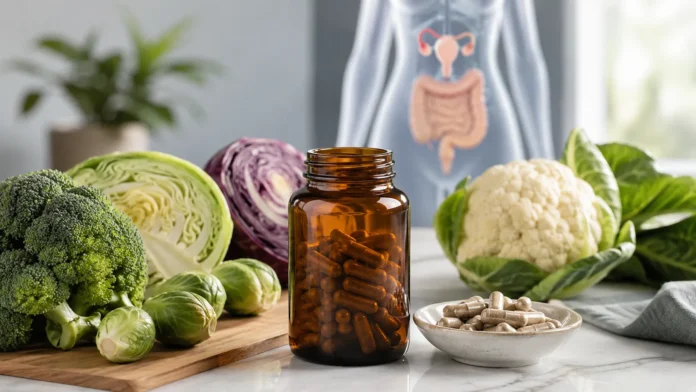

DIM Supplement: What It Does, Potential Benefits and Important Risks
DIM supplements have become increasingly popular among people looking for support with hormone balance, acne, menopause symptoms, estrogen metabolism, and other hormone-related concerns. DIM stands for 3,3′-diindolylmethane, a compound produced when the body digests certain substances naturally present in cruciferous vegetables such as broccoli, cabbage, cauliflower, kale, and Brussels sprouts. Because these vegetables are widely associated with healthy eating, DIM supplements often carry a strong “natural hormone support” reputation. However, concentrated DIM supplements behave differently from simply eating a serving of broccoli, and many popular claims go further than current human evidence supports.
Most interest in DIM centers on its interaction with estrogen metabolism. Small human studies indicate that supplementation can alter the relative amounts of different estrogen metabolites found in urine. This has led manufacturers to market DIM for “estrogen dominance” and hormonal detoxification. The problem is that changing a laboratory measurement does not automatically mean improving symptoms, lowering disease risk, or correcting a hormone disorder. Estrogen metabolism is complex, and there is no single metabolite ratio that determines whether someone’s hormones are healthy or unhealthy.
DIM is also promoted for hormonal acne, premenstrual symptoms, menopause, weight management, prostate health, and even cancer prevention. Laboratory studies provide interesting reasons to investigate some of these areas, but clinical research in people remains limited. A supplement can demonstrate anti-inflammatory or hormone-related activity in cells without producing a meaningful health benefit when swallowed by humans. Understanding this difference can prevent preliminary research from being mistaken for proven treatment.
Safety deserves equal attention. DIM is often marketed as a simple vegetable-derived supplement, yet concentrated doses can influence hormone pathways and enzymes involved in medication metabolism. This creates potential concerns for people using hormonal contraception, menopausal hormone therapy, tamoxifen, or certain prescription medicines. Pregnancy and breastfeeding are also situations in which DIM supplements are generally avoided because reliable safety data are lacking and hormone-modulating effects are possible.
For healthy adults who are considering DIM, the best approach is to understand exactly what they hope to achieve before buying a supplement. Eating cruciferous vegetables provides fiber, vitamins, minerals, and many plant compounds without delivering the same concentrated dose found in a capsule. A DIM supplement may have legitimate biological activity, but it should be treated as an active supplement rather than a harmless shortcut to perfect hormones. The sections below explain what DIM does, which potential benefits have been studied, possible side effects, dosing considerations, and who should be especially cautious.
What Is DIM and Where Does It Come From?
DIM, or 3,3′-diindolylmethane, is a compound related to the digestion of indole-3-carbinol, often abbreviated I3C. I3C forms when compounds in cruciferous vegetables are broken down after the plant tissue is chopped, chewed, or otherwise damaged. Once I3C reaches the acidic environment of the stomach, it can be transformed into several compounds, including DIM. This means people can naturally produce small amounts of DIM after eating vegetables such as broccoli, cabbage, cauliflower, Brussels sprouts, and kale.
A DIM supplement is different from eating these foods because it delivers the compound in a concentrated and often specially formulated form. Some supplements use absorption-enhancing technologies because ordinary crystalline DIM does not dissolve particularly well in water. As a result, 100 milligrams from one formulation may not behave identically to the same labeled amount from another. This variation is one reason supplement dosing cannot be interpreted as simply equivalent to eating a particular number of servings of vegetables.
DIM belongs to a broader group of biologically active compounds studied for their effects on cellular signaling, hormone metabolism, inflammation, and detoxification enzymes. Much of the early enthusiasm came from laboratory experiments examining cancer cells and estrogen-related pathways. These experiments are useful for identifying possible mechanisms, but they represent the beginning of evidence rather than the end. A compound that changes a pathway in cultured cells does not automatically prevent disease in a living person.
The relationship between cruciferous vegetables and DIM can also create a misleading health halo. Broccoli and similar vegetables are nutritious because they provide fiber, folate, vitamin C, vitamin K, minerals, and a complex mixture of phytochemicals. A DIM capsule isolates or concentrates one piece of that nutritional system. Supplementation therefore should not be viewed as a substitute for eating vegetables, even if the supplement originated from a plant-related compound.
For consumers, the most important distinction is that DIM is biologically active. It is not merely a powdered vegetable. It can influence estrogen metabolites and potentially interact with enzymes that process medications. That makes it worthy of the same thoughtful approach used with other active supplements: identify the reason for using it, understand the evidence, examine the dose and formulation, and consider whether your medications or medical history make supplementation inappropriate.
How Does DIM Affect Estrogen Metabolism?
Estrogen is not one single hormone behaving in one single way. The body produces several estrogens, including estradiol, estrone, and estriol, and then metabolizes them into additional compounds before elimination. Different enzymes participate in these pathways, producing metabolites such as 2-hydroxyestrone and 16-alpha-hydroxyestrone. DIM has attracted attention because human and laboratory studies suggest it can change the relative amounts of some of these metabolites.
Supplement marketing often simplifies this science by describing one pathway as “good estrogen” and another as “bad estrogen.” Human biology is much more complicated. A urinary metabolite ratio may provide useful information in a research study, but it does not function as a simple score for hormonal health. Increasing one metabolite does not automatically mean that symptoms will improve or that future disease risk will decline. Clinical outcomes matter more than a favorable-looking laboratory ratio.
Several small studies have demonstrated that DIM supplementation can modify urinary estrogen profiles in certain groups of women. Researchers have studied premenopausal women, postmenopausal women, and women with histories of breast cancer. Results differ depending on the population, formulation, dose, and study duration. Some trials show significant changes in selected metabolites, while others find little or no change in the primary estrogen-metabolism outcome being tested.
A particularly important consideration is that changing estrogen metabolism may also influence hormonal medicines. If someone uses a medication designed to deliver or block estrogen activity, adding a supplement that alters related metabolic pathways could produce an unintended effect. This is relevant to menopausal hormone therapy, hormonal birth control, and medicines such as tamoxifen. “Supporting estrogen metabolism” is not automatically beneficial when another treatment depends on predictable hormone exposure.
For this reason, DIM should not be described as a universal estrogen balancer. It may alter certain estrogen-metabolism pathways, but whether those changes benefit a particular person depends on the health condition, medication use, hormonal status, and actual clinical outcome. People experiencing symptoms they believe are caused by “high estrogen” are better served by appropriate evaluation than by diagnosing estrogen dominance through online symptom lists and immediately starting a high-dose supplement.
DIM Supplement Benefits: What Does the Evidence Actually Support?
The clearest demonstrated biological effect of DIM in humans is its ability to influence aspects of estrogen metabolism. This makes hormone metabolism the most scientifically grounded area of interest. However, even here, evidence is stronger for changes in biomarkers than for meaningful improvements in symptoms or disease outcomes. A supplement can successfully change urinary metabolites without necessarily making someone feel different or improving long-term health.
Laboratory research has also found anti-inflammatory and antiproliferative effects. DIM has been studied in cancer cells and animal models involving breast, prostate, cervical, pancreatic, and other tissues. These findings have generated substantial scientific interest because DIM appears capable of interacting with cellular pathways involved in growth and programmed cell death. Yet laboratory anticancer activity is very different from proving that a DIM supplement prevents or treats cancer in humans.
Small clinical studies have explored DIM in prostate disease and abnormal cervical cell changes. Some results have been encouraging enough to justify additional research, while others have been inconsistent. The number of participants in many studies is small, treatment periods are relatively short, and formulations vary. Current evidence therefore does not support using DIM as an independent treatment for cancer, precancerous disease, or another serious medical condition.
Weight and body composition have also been studied. One randomized trial involving premenopausal women reported a difference in body-fat percentage after supplementation, but DIM failed to significantly improve the primary estrogen-metabolism outcome during treatment. A single small result is not enough to establish DIM as a weight-loss supplement. There is currently no convincing body of clinical evidence showing that taking DIM reliably produces meaningful fat loss.
The most realistic summary is that DIM is biologically interesting and deserves continued research, particularly in hormone-related pathways. Its potential benefits are not entirely invented, but commercial claims frequently outrun clinical evidence. Someone considering DIM should distinguish potential, biomarker changes, and proven patient benefits. Those are three different levels of evidence, and most popular DIM uses remain somewhere between the first two.
DIM Supplements for “Estrogen Dominance”
“Estrogen dominance” is one of the most common phrases used to sell DIM. Online descriptions may associate it with breast tenderness, irregular periods, bloating, mood changes, weight gain, headaches, acne, or low libido. The phrase is used differently by different practitioners and is not one standardized medical diagnosis with universally accepted testing criteria. Many of the symptoms attributed to estrogen dominance can have numerous unrelated causes.
DIM is marketed for this concern because it may alter estrogen-metabolism patterns rather than because robust trials have shown that it treats a defined estrogen-dominance disorder. This distinction is important. A person can experience menstrual changes because of polycystic ovary syndrome, thyroid disease, perimenopause, medication effects, pregnancy, changes in body weight, or many other reasons. Taking a supplement before identifying the cause may complicate the situation.
Hormone levels also fluctuate naturally. Estradiol changes dramatically throughout a normal menstrual cycle, while progesterone rises after ovulation. Perimenopause can create even greater fluctuations rather than a simple state of permanently excessive estrogen. A single symptom or isolated hormone measurement therefore rarely provides enough information to explain the complete hormonal picture.
If DIM changes how estrogen is metabolized, it could theoretically benefit some situations while being unnecessary or undesirable in others. Someone already experiencing low-estrogen symptoms, for example, may have very different needs from someone using a hormone-containing medication. Marketing language rarely captures this complexity because “balancing” sounds safer and simpler than describing altered metabolism.
Anyone experiencing persistent irregular periods, abnormal uterine bleeding, severe breast symptoms, infertility, or other significant hormone-related concerns should receive appropriate evaluation. DIM may eventually have clearly defined therapeutic roles as research develops, but it should not become a substitute for diagnosing what is actually causing the symptoms.
Can DIM Help Hormonal Acne?
Hormonal acne is another major reason people search for DIM supplements. Acne around the chin, jawline, or lower face is frequently described as hormonal, particularly when breakouts worsen around menstruation. Because estrogen and androgen signaling can influence sebaceous glands and skin behavior, a supplement that alters hormone-related pathways may sound like an appealing solution. Social media testimonials have strengthened this reputation considerably.
The problem is that high-quality clinical trials specifically demonstrating that oral DIM reliably treats acne are lacking. Much of the rationale comes from its effects on hormone metabolism and laboratory observations rather than dermatology trials comparing DIM with placebo or established acne treatments. Personal testimonials cannot show whether improvement resulted from DIM, natural acne fluctuations, changes in skincare, diet, contraception, or another simultaneous factor.
Persistent hormonal acne may also involve androgen sensitivity rather than simply “too much estrogen.” Conditions such as polycystic ovary syndrome can cause acne alongside irregular menstrual cycles, increased facial or body hair, and other symptoms. Other people have completely normal hormone tests but sebaceous glands that respond strongly to normal androgen levels. These differences matter because one supplement cannot address every mechanism.
Evidence-based acne treatments include benzoyl peroxide, topical retinoids, azelaic acid, certain antibiotics when appropriate, hormonal contraception for selected patients, and anti-androgen treatment such as spironolactone under medical supervision. These treatments have far stronger clinical evidence than DIM. A supplement can be considered only as an optional adjunct rather than a replacement when acne is persistent or scarring.
Anyone trying DIM for skin should also track the results objectively. Take photographs under similar lighting and avoid changing several skincare products at the same time. If acne becomes worse, menstruation changes unexpectedly, or other hormone-related symptoms appear, stop assuming that the reaction represents a temporary “detox.” Worsening symptoms are information and may mean the product is not appropriate.
DIM for PMS and Menstrual Symptoms
Premenstrual syndrome can involve mood changes, breast tenderness, bloating, headaches, food cravings, fatigue, and other symptoms during the days before menstruation. Because estrogen and progesterone fluctuate throughout the menstrual cycle, DIM is sometimes marketed as a natural approach for PMS. However, the presence of hormones in a condition does not automatically mean modifying estrogen metabolism with DIM will improve it.
Clinical evidence directly testing DIM for PMS is limited. Studies demonstrating changes in urinary estrogen metabolites cannot be assumed to prove relief from irritability, cramps, bloating, or breast tenderness. These symptoms have multiple mechanisms, including prostaglandin activity, fluid shifts, neurotransmitter changes, sleep, stress, and individual sensitivity to normal hormonal fluctuations.
People with mild PMS may benefit from regular exercise, adequate sleep, reducing excessive alcohol, managing stress, and maintaining balanced meals. Specific nutrients or medications may help depending on the dominant symptoms. More severe premenstrual mood symptoms can represent premenstrual dysphoric disorder, commonly called PMDD, which deserves proper assessment because effective treatments are available.
Menstrual symptoms also become concerning when periods are extremely painful, unusually heavy, very irregular, or absent for long periods. Endometriosis, adenomyosis, uterine fibroids, thyroid conditions, PCOS, and other disorders can produce symptoms that people mistakenly label as hormonal imbalance. DIM does not replace evaluation for these conditions.
If someone chooses to try DIM for mild cyclical symptoms, they should establish a clear goal and monitor several cycles rather than relying on a vague impression. A symptom diary can reveal whether changes consistently occur after supplementation. If there is no meaningful improvement, continuing indefinitely simply because DIM is supposed to “support hormones” provides little benefit.
DIM for Menopause and Perimenopause
Perimenopause involves fluctuating ovarian hormone production as the body approaches menopause. Hot flashes, night sweats, sleep disturbance, mood changes, vaginal dryness, irregular periods, and changes in bleeding patterns can occur. Because hormone fluctuations are central to this transition, DIM supplements are frequently advertised to women who want a nonhormonal or “natural” option.
Evidence does not currently establish DIM as a proven treatment for hot flashes or other major menopause symptoms. Altering estrogen metabolites is not the same as providing the symptom relief produced by appropriately prescribed menopausal hormone therapy. For someone already experiencing declining estrogen activity, further modifying estrogen metabolism may have uncertain consequences rather than predictable benefits.
This becomes particularly important for women already using an estradiol patch or another form of menopausal hormone therapy. Recent observational research has found differences in urinary estrogen metabolites among women taking DIM alongside transdermal estradiol. Researchers have specifically raised the possibility that these changes could alter the intended estrogenic effects of therapy, although the clinical importance remains uncertain.
Anyone using menopausal hormone therapy should therefore discuss DIM with the prescribing clinician before combining them. A supplement labeled “hormone support” may actually change how a carefully selected treatment behaves. The same caution applies when symptoms are being managed after treatment for a hormone-sensitive cancer, where unsupervised supplements can create additional uncertainty.
Evidence-based menopause care includes both hormonal and nonhormonal options depending on medical history and personal preference. DIM may remain an area of research interest, but it should not be presented as an established substitute. People deserve treatments chosen because they have been shown to improve the symptoms that are actually affecting daily life.
DIM and Breast Health
DIM has attracted extensive interest in breast-health research because estrogen signaling plays a role in some breast cancers. Laboratory experiments have shown that DIM can influence pathways involved in estrogen metabolism and cell growth. These findings have led to claims that DIM “protects the breasts” or prevents estrogen-related cancer. Human evidence is not strong enough to support such definitive claims.
Small studies in women with histories of breast cancer have shown changes in urinary estrogen metabolites after DIM supplementation. Researchers have also examined DIM in women taking tamoxifen, a medication used to reduce recurrence risk in certain estrogen receptor-positive breast cancers. Biomarker changes were observed, but an important medication interaction also emerged.
DIM was associated in one study with lower levels of endoxifen, an active metabolite of tamoxifen. Tamoxifen depends partly on metabolism within the body to generate active compounds, so anything that alters those pathways deserves caution. A supplement that produces an apparently favorable estrogen-metabolite ratio could still be undesirable if it reduces exposure to an important cancer medicine.
This is why people with current or previous hormone-sensitive breast cancer should not begin DIM independently based on internet claims about estrogen detoxification. Oncology treatment decisions are based on recurrence risk, tumor biology, medication exposure, and years of clinical evidence. A supplement can complicate those calculations even when its marketing appears cancer-friendly.
Eating cruciferous vegetables remains different. Broccoli, cabbage, kale, and related vegetables can be healthy components of a balanced diet and provide much more than DIM-related compounds. Concentrated supplementation is a separate intervention. Anyone receiving cancer treatment should tell the oncology team about all supplements so possible interactions can be considered.
DIM for Prostate Health and Testosterone
DIM is also marketed to men for prostate health, testosterone support, estrogen management, and bodybuilding. This can sound contradictory because the same supplement may be advertised to women for estrogen balance and men for improving the testosterone-to-estrogen ratio. The marketing reflects DIM’s involvement in hormone pathways, but the clinical evidence for performance or testosterone enhancement remains limited.
Laboratory studies suggest DIM can interact with androgen receptors and signaling pathways relevant to prostate cells. Small clinical research has investigated DIM in men with prostate disease, including advanced prostate cancer. These studies are scientifically interesting but do not establish DIM as a preventive supplement for healthy men or a replacement for prostate cancer treatment.
There is also no strong evidence showing that DIM reliably increases testosterone in healthy men. Testosterone production depends on complex signals from the brain, pituitary gland, testes, sleep, energy availability, body composition, medications, and disease. Modifying estrogen metabolites does not automatically result in higher testosterone or improved muscle growth.
Bodybuilders sometimes use DIM during hormone-related supplement or anabolic steroid regimens to manage perceived estrogenic effects. This is particularly risky because symptoms such as breast tissue changes, libido problems, mood changes, or fertility concerns can reflect significant endocrine disruption. Self-treating with additional supplements can make an already complicated hormonal situation even harder to interpret.
Men with persistent low libido, erectile dysfunction, infertility, breast enlargement, or suspected low testosterone should receive appropriate evaluation rather than relying on DIM. Hormone testing, medication review, sleep assessment, and other medical information can identify the actual cause. A supplement should not be used to replace a diagnosis.
DIM Supplement for Weight Loss: Does It Work?
DIM occasionally appears in weight-loss supplements or is promoted as a way to lose “hormonal weight.” The logic is often that correcting estrogen metabolism will help the body burn fat more effectively. While hormones do influence body composition, this explanation greatly oversimplifies the biology of weight regulation. Energy intake, physical activity, sleep, genetics, medications, muscle mass, appetite regulation, and many other factors contribute.
One small randomized study found a difference in body-fat percentage among premenopausal women receiving a DIM formulation compared with placebo. However, the same trial failed to significantly improve its main estrogen-metabolism outcome during supplementation. A single relatively small study is insufficient to establish DIM as an effective fat-loss intervention.
There are no convincing data showing that DIM causes substantial, sustained weight loss across a broad population. If a supplement advertisement promises rapid fat burning, belly-fat loss, or correction of weight gain through estrogen detoxification, those claims should be treated cautiously. Successful weight management requires a much larger set of behavioral and physiological factors.
Hormonal conditions can certainly influence body weight. Hypothyroidism, PCOS, menopause-related changes, Cushing syndrome, and certain medications can affect appetite, energy expenditure, or body composition. These conditions require individualized care rather than a universal hormone-balancing supplement. DIM has not been demonstrated to correct each of these different mechanisms.
Anyone considering DIM primarily for weight loss would usually obtain greater benefit from focusing on sustainable nutrition, adequate protein and fiber, regular movement, resistance training, sleep, and evaluation of genuine medical contributors when appropriate. DIM may continue to be studied in metabolism research, but current evidence does not justify treating it as a proven weight-loss supplement.
Does DIM “Detox” Estrogen From the Body?
The word detox appears frequently in DIM marketing. Sellers may describe the supplement as helping the liver remove harmful estrogen or clearing excess hormones from the body. DIM does interact with enzymes involved in hormone metabolism, but describing this as detoxification can create a misleading picture. The liver already continuously processes hormones through complex pathways regardless of whether someone takes DIM.
Estrogen metabolism involves conversion into multiple metabolites, followed by conjugation and elimination through urine and bile. DIM may influence which metabolites are formed, but that is not equivalent to flushing toxic estrogen from the body. Estrogen itself is an essential hormone involved in bone health, reproductive function, brain activity, cardiovascular physiology, and numerous other processes.
The idea that certain estrogen metabolites are completely good and others completely bad is also an oversimplification. Research examines associations between metabolite patterns and disease, but these relationships are influenced by tissue, hormone exposure, genetics, lifestyle, age, and numerous other factors. A supplement should not be promoted as cleansing the body based on one metabolite ratio.
Supporting normal liver health is better accomplished through basic health habits than through aggressive detox programs. Avoiding excessive alcohol, maintaining an appropriate diet, using medications responsibly, exercising, and managing medical conditions provide much more reliable support. The liver does not generally require over-the-counter cleansing supplements to perform its normal metabolic functions.
DIM can therefore be described accurately as a compound that may modify estrogen metabolism, not as a proven estrogen detoxifier. That wording may sound less dramatic, but it reflects what researchers actually measure. Precise language protects consumers from confusing interesting biochemistry with proven clinical benefit.
DIM Supplement Dosage: How Much Should You Take?
There is no universally established medical DIM dosage for hormone balance, acne, PMS, menopause, or general wellness. Clinical studies have used different formulations and amounts depending on the research question. Some trials have used doses equivalent to tens of milligrams of absorbed DIM, while others have used formulations labeled in the hundreds of milligrams. These cannot always be directly compared because absorption-enhanced products behave differently from ordinary formulations.
Many commercial supplements provide approximately 100 to 200 milligrams per serving, but market popularity does not establish an ideal therapeutic dose. Higher amounts are not automatically more effective. DIM has relatively complicated absorption, and the relationship between labeled milligrams and actual blood exposure can change according to formulation.
Early human pharmacokinetic research has evaluated absorption-enhanced DIM at increasing single doses. Lower and moderate doses were reasonably tolerated in small groups, but these studies were designed primarily to understand pharmacokinetics and short-term safety rather than establish a daily wellness dose. A short study cannot provide complete information about months or years of use.
If you decide to take DIM, follow the specific product directions unless a healthcare professional recommends otherwise. Avoid combining multiple hormone-support supplements containing DIM, I3C, and other active botanicals without realizing that ingredients are being duplicated. Increasing the dose because symptoms have not changed quickly is particularly unhelpful when the original condition has not been properly diagnosed.
Anyone using DIM for a specific medical or hormonal concern should discuss dosage with a clinician familiar with their history. The relevant question is not simply how many milligrams other people take online. Medication use, pregnancy potential, hormonal therapy, cancer history, age, and the purpose of supplementation all affect whether taking DIM is appropriate in the first place.
How Long Does DIM Take to Work?
There is no single timeline because DIM is used for many different unproven or partially studied purposes. Changes in urinary estrogen metabolites can occur over days or weeks in research settings, but seeing a laboratory change is different from experiencing symptom relief. Someone using DIM for acne, PMS, menopause symptoms, or weight loss may not experience the same response or timeline.
Many commercial websites promise improvements within a few weeks, but these schedules are not standardized clinical expectations. Acne naturally fluctuates, menstrual symptoms vary from cycle to cycle, and perimenopausal symptoms can change without treatment. Assessing DIM after only a few days—or assuming every change is caused by the supplement—can therefore be misleading.
If you are testing DIM for a nonmedical wellness goal, define what result you expect before starting. For example, track breakout frequency or specific cyclical symptoms rather than using a vague goal such as “better hormone balance.” This makes it easier to determine whether the supplement is producing a meaningful difference.
Do not interpret new headaches, menstrual changes, mood changes, breast symptoms, or digestive problems as evidence that DIM is “detoxing” the body. Side effects and hormonal changes are not necessary steps toward improvement. If symptoms become worse after starting the supplement, discontinuing it and seeking advice may be more appropriate than waiting for a supposed adjustment period.
If a clearly defined problem has not improved after a reasonable trial, continuing DIM indefinitely has little justification. Persistent symptoms deserve investigation because the underlying condition may require a completely different treatment. Supplement use should remain outcome-focused rather than becoming a habit maintained simply because the label promises long-term hormone support.
DIM Supplement Side Effects
Many people tolerate DIM without obvious problems, but DIM side effects can occur. Reported symptoms may include headache, digestive discomfort, nausea, gas, or changes in bowel habits. Some people also report changes in urine color, which may be related to metabolites and does not necessarily indicate disease. Any new symptom should still be interpreted in the context of dose, other supplements, medications, and overall health.
Because DIM affects hormone-related pathways, changes in menstrual patterns are possible in susceptible users. A person might notice altered timing, bleeding patterns, or breast symptoms. These effects should not automatically be described as beneficial hormone balancing. Unexpected vaginal bleeding, particularly after menopause, requires proper medical evaluation rather than adjustment of a supplement dose.
Rare adverse-event reports have included more serious problems, although individual case reports cannot prove that DIM caused the event. Reports involving visual problems, significant skin reactions, blood clots, or vascular events highlight the fact that concentrated supplements can occasionally be associated with unexpected complications. Rare reports are reasons for awareness rather than proof that these events commonly occur.
An allergic reaction is another possible concern with any supplement formulation. DIM capsules may also contain additional ingredients, absorption enhancers, fillers, or botanical compounds. Hives, facial swelling, throat tightness, breathing difficulty, or faintness require urgent medical care. A person who reacts to one formulation may be responding to another ingredient rather than DIM itself.
Stop using DIM and seek medical advice if you develop persistent or severe symptoms after beginning supplementation. Continuing a product simply because it is plant-derived can delay recognition of a genuine adverse effect. Safe supplement use includes being willing to stop when the risk-benefit balance no longer makes sense.
DIM Drug Interactions and Hormone Interactions
DIM can influence enzymes in the cytochrome P450, or CYP450, system. These enzymes help metabolize many prescription medicines in the liver and other tissues. Altering their activity can theoretically raise or lower exposure to certain medications. The significance varies according to the drug, dose, DIM formulation, and individual metabolism, making blanket interaction lists difficult.
Tamoxifen deserves particular attention because clinical research has observed reduced levels of its active metabolite, endoxifen, among women taking DIM. Tamoxifen is an important treatment for selected hormone-sensitive breast cancers, so reducing active drug exposure could be clinically relevant. Anyone taking tamoxifen should discuss DIM with the oncology team rather than adding it independently.
Hormonal birth control is another area requiring caution. DIM’s effects on hormone metabolism create the possibility of changing exposure to contraceptive hormones. Evidence defining the exact clinical risk is limited, but unintended pregnancy is too important an outcome to experiment with casually. People using birth control pills or other hormonal contraception should ask a healthcare professional before taking DIM.
Menopausal hormone therapy can also interact conceptually and potentially pharmacologically with DIM. Recent human data suggest that women using transdermal estradiol alongside DIM can show substantially different urinary estrogen profiles from those using estradiol alone. Whether this alters symptom relief, bone protection, or other outcomes requires further study, but the uncertainty itself supports caution.
Tell your pharmacist or clinician about DIM alongside every prescription, over-the-counter medicine, and supplement you use. Many people fail to mention supplements because they do not consider them medications. Yet an active compound capable of changing metabolic enzymes and hormone pathways can be highly relevant to medication safety.
Who Should Avoid DIM Supplements?
Pregnant people should generally avoid DIM supplements because concentrated hormone-modulating effects have not been adequately studied during pregnancy. Estrogen and other hormones play essential roles in maintaining pregnancy and fetal development. A lack of proven harm does not establish safety, particularly when there is no clear medical reason to take the supplement.
Breastfeeding is another period in which reliable safety information is insufficient. It is not clear how concentrated DIM supplementation affects milk composition, maternal hormone pathways, or infant exposure. Eating normal amounts of cruciferous vegetables is entirely different from taking a concentrated DIM formulation. Food consumption should not be used as proof that high-dose supplementation is safe.
People using hormonal birth control, menopausal hormone therapy, fertility medications, or other hormone-related treatments should seek professional advice first. These treatments depend on predictable hormone exposure, and DIM may change related metabolic pathways. Adding another active hormone-modulating product can make treatment responses harder to interpret.
Anyone with a history of hormone-sensitive cancer should be particularly cautious. The fact that laboratory studies explore DIM as an anticancer compound does not make unsupervised supplementation appropriate during or after cancer treatment. Breast, ovarian, uterine, or prostate cancer management can involve complex hormonal strategies and medication interactions.
People taking medications with narrow therapeutic ranges or drugs significantly dependent on CYP metabolism should also ask a pharmacist before using DIM. If you take multiple medications, the chance of a clinically relevant interaction becomes more difficult to predict. The safest approach is to provide the exact DIM product and ingredient list during a medication review.
DIM vs Eating Cruciferous Vegetables
Eating broccoli is not the same as swallowing a DIM capsule. Cruciferous vegetables contain glucosinolates that can ultimately contribute to the formation of indole compounds such as I3C and DIM, but they also contain fiber, vitamin C, folate, vitamin K, potassium, antioxidants, and numerous other nutrients. Their health effects come from the whole-food package.
The amount of DIM generated after eating vegetables also varies. Plant variety, cooking method, chewing, gut conditions, and individual metabolism influence how precursor compounds are processed. A supplement bypasses much of this variation by providing concentrated DIM directly or in an absorption-enhanced formulation. This produces a pharmacologically different exposure.
Whole vegetables provide advantages that a capsule cannot reproduce. Fiber supports bowel regularity and the gut microbiome, while eating vegetables can increase meal volume without adding large amounts of calories. A person taking DIM while eating very few vegetables therefore misses many of the broader benefits associated with cruciferous foods.
More supplementation is not necessarily equivalent to eating more healthy food. Concentrating one phytochemical can create effects that never occur through ordinary dietary exposure. This is common across nutrition science: isolated compounds can behave differently when removed from their original food matrix and delivered at much higher doses.
For most people interested in prevention and general health, regularly eating a variety of vegetables is the stronger foundational strategy. DIM supplementation is a separate choice that should have a clear purpose. A capsule can be investigated for specific effects, but it should not replace the foods from which the original research interest emerged.
How to Choose a DIM Supplement
Start by checking the actual amount of DIM per serving. Some labels prominently advertise a proprietary complex containing several hundred milligrams while providing a much smaller amount of active DIM. Other formulations use absorption-enhancing ingredients designed to improve bioavailability. Reading the Supplement Facts panel is more informative than relying on numbers printed on the front of the bottle.
Look for products from manufacturers that provide clear ingredient lists and quality-control information. Independent testing cannot prove that DIM is effective for your health concern, but it may offer additional reassurance about ingredient identity, contamination, and label accuracy. Supplements can vary considerably in manufacturing quality.
Avoid products that make aggressive disease-treatment claims. Statements suggesting DIM cures estrogen dominance, prevents breast cancer, eliminates fibroids, treats endometriosis, cures hormonal acne, or guarantees fat loss should raise skepticism. These outcomes have not been established by strong clinical evidence.
Combination products require additional attention. Some “hormone balance” formulas combine DIM with calcium D-glucarate, chasteberry, black cohosh, indole-3-carbinol, or numerous other botanicals. Multiple ingredients create multiple possibilities for side effects and interactions. They also make it difficult to determine what actually helped if symptoms change.
Finally, consider whether you need the supplement at all. If your goal is simply supporting general health, cruciferous vegetables and a balanced diet provide a much broader nutritional benefit. DIM makes more sense as a targeted supplement being considered for a specific reason than as something everyone needs for hormone maintenance.
When Should You Talk to a Doctor Before Taking DIM?
Talk with a healthcare professional if you have persistent symptoms you believe are caused by hormone imbalance. Irregular periods, abnormal bleeding, infertility, significant acne, hot flashes, breast changes, or unexplained weight changes can have many causes. A proper diagnosis helps determine whether a supplement is relevant or whether another treatment is more appropriate.
Consult your clinician before using DIM if you take tamoxifen or another cancer medication. Interactions in cancer treatment deserve particular caution because therapy effectiveness can depend on maintaining appropriate drug exposure. Never modify an oncology medication regimen because a supplement is described as natural or protective.
People using hormonal birth control, menopausal hormone therapy, or fertility treatment should also discuss supplementation. DIM’s effects on estrogen metabolism make these combinations more complicated than ordinary vitamin supplementation. Professional advice can help prevent a supplement from unintentionally working against another treatment.
Seek medical attention if a new symptom becomes severe after starting DIM. Significant visual changes, widespread rash, chest pain, shortness of breath, painful leg swelling, neurological symptoms, or unusually heavy bleeding should not be treated as routine supplement adjustment. Serious symptoms require evaluation regardless of whether DIM ultimately proves to be the cause.
If you take several prescription medications, ask a pharmacist to review the entire list before beginning DIM. Pharmacists are particularly useful for evaluating CYP-related drug interactions. Bring the actual supplement bottle or a photograph of the ingredient panel so the formulation, dose, and additional ingredients can be assessed accurately.
Conclusion: Is a DIM Supplement Worth Taking?
DIM is an interesting compound derived from pathways associated with cruciferous vegetables, and research confirms that it can influence estrogen metabolism in humans. That makes the supplement biologically meaningful rather than simply another wellness trend. However, changing estrogen metabolites should not be confused with proving that DIM corrects every hormone-related symptom.
Evidence for many popular uses remains limited. DIM is not currently a proven treatment for hormonal acne, PMS, menopause, infertility, weight loss, endometriosis, or general estrogen dominance. Laboratory research involving cancer cells is also not enough to recommend DIM for cancer prevention or treatment. Clinical outcomes need to guide these claims.
Safety is another reason to take a measured approach. DIM can cause side effects and may interact with medications, particularly therapies involving hormones or CYP-mediated metabolism. Tamoxifen, hormonal contraception, and menopausal hormone therapy deserve particular caution. Pregnancy and breastfeeding are periods in which concentrated DIM supplements should generally be avoided.
There is also an important difference between a supplement and food. Eating broccoli, Brussels sprouts, kale, cabbage, and cauliflower provides fiber, vitamins, minerals, and numerous phytochemicals alongside naturally occurring indole compounds. A concentrated DIM capsule delivers a very different exposure and should not be treated as equivalent to eating more vegetables.
Ultimately, DIM may be worth considering in carefully selected situations, but it is not an essential supplement for everyone. Start with a specific goal, understand the limits of the evidence, review medications and hormone therapies, and avoid interpreting every hormonal symptom through the lens of estrogen dominance. A targeted, informed approach is safer and more useful than treating DIM as a universal hormone-balancing solution.
Frequently Asked Questions
What does a DIM supplement do?
DIM can alter certain pathways involved in estrogen metabolism and change the relative amounts of some estrogen metabolites. Whether these changes produce meaningful symptom or health benefits depends on the situation.
Does DIM lower estrogen?
DIM does not simply switch estrogen off or universally lower estrogen levels. It appears to modify how estrogen is metabolized, and the resulting effects can vary according to hormonal status and other factors.
Can DIM help hormonal acne?
DIM is commonly promoted for hormonal acne, but strong clinical evidence proving that it reliably clears acne is lacking. Persistent or scarring acne is better treated using established dermatological options.
What are the side effects of DIM supplements?
Possible side effects include headache, nausea, digestive discomfort and hormonal or menstrual changes. Rare serious adverse events have also been reported, although those reports do not prove DIM was always the direct cause.
Who should not take DIM?
Pregnant or breastfeeding people and those using hormonal contraception, hormone therapy, tamoxifen or certain interacting medications should avoid DIM or discuss it with a healthcare professional before use.