
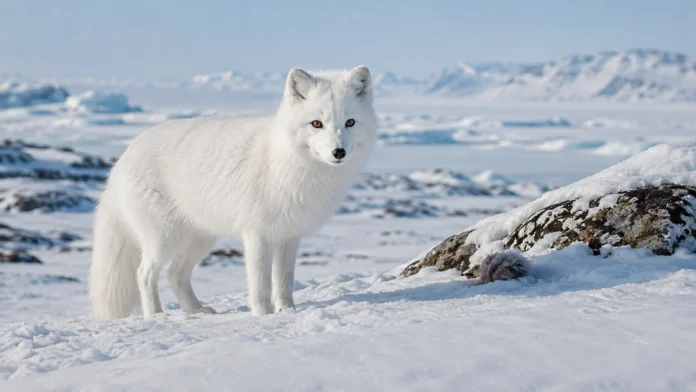

Arctic Fox: Meet One of the Toughest Animals in the Frozen North
The Arctic fox is one of the most remarkable mammals living in the far north, surviving conditions that would challenge almost any other land animal. Scientifically known as Vulpes lagopus, this compact fox inhabits treeless tundra, exposed coastlines, icy islands and some of the coldest landscapes on Earth. Its dense fur, short ears, furry feet and compact body are all well suited to conserving heat. Yet its ability to survive is not based on insulation alone. Arctic foxes are flexible hunters, scavengers and travelers capable of adjusting rapidly to changes in food and weather.
Perhaps the Arctic fox’s most famous feature is its changing coat. Many individuals belonging to the white color morph wear a brilliant white winter coat that blends almost perfectly into snowy landscapes. During summer, the same animals develop shorter brown, gray or darker fur that provides better camouflage against tundra rocks and vegetation. A second color form, commonly called the blue morph, remains considerably darker throughout the year. This seasonal and genetic variation gives the species one of the most striking coats in the animal kingdom.
Food availability in the Arctic can change dramatically from one season or year to another, so Arctic foxes cannot afford to be picky eaters. Lemmings and voles are important prey across many inland tundra areas, while coastal foxes may depend heavily on seabirds, eggs, fish and marine carrion. During winter, some foxes travel onto sea ice and scavenge the remains of seals killed by polar bears. Others rely on food they cached during productive summer and autumn months. This opportunistic diet is one of the secrets behind their success.
Arctic fox behavior is equally fascinating. Although adults may spend much of winter alone, breeding pairs cooperate extensively during spring and summer. They raise pups in elaborate underground dens that may contain numerous entrances and can be reused by generations of foxes. When prey is abundant, Arctic fox litters can be unusually large compared with those of many other carnivores. Their reproduction can rise and fall dramatically with lemming populations, linking the fox closely to the wider Arctic food web.
Despite its impressive adaptations, the Arctic fox is not immune to environmental change. Warming temperatures are reshaping the tundra, altering snow and sea-ice conditions and allowing the larger red fox to expand farther north in some regions. Globally, Arctic foxes remain widespread, but certain regional populations have declined severely and require active conservation. Learning about their habitat, diet, behavior and survival strategies reveals not only an extraordinary animal but also how closely Arctic wildlife depends on a rapidly changing environment.
What Is an Arctic Fox?
The Arctic fox is a small member of the dog family, Canidae, which also includes wolves, coyotes and other fox species. Its scientific name, Vulpes lagopus, roughly reflects one of its most distinctive features: feet adapted for life in extreme cold. Unlike foxes from warmer environments, Arctic foxes have densely furred footpads that help protect their feet from frozen ground, ice and snow. Their entire body appears compact and rounded, reducing exposed surface area and helping them conserve heat during severe winter conditions.
Adult Arctic foxes are relatively small animals. Their body size varies according to sex, location and food availability, but adults commonly weigh only a few kilograms. Males are usually somewhat larger than females. Their bodies are supported by short legs, while their muzzle and ears are smaller and more rounded than those of the red fox. A thick, bushy tail adds considerable apparent size and can be wrapped around the body and face while resting in cold conditions.
Two major color morphs occur in the species. The white morph is by far the most common across much of the circumpolar Arctic and changes dramatically with the seasons. Its winter fur becomes almost entirely white before being replaced by brownish or grayish summer fur. The blue morph remains dark brown, charcoal or bluish gray throughout much of the year, although its shade can change somewhat between summer and winter. Dark morphs are particularly common in certain coastal and island populations.
The Arctic fox is considered a true specialist of tundra environments. Its range circles the northern parts of the planet, covering Arctic regions of North America, Greenland, Iceland, Scandinavia, Russia and many northern islands. It can live in places where trees are absent and winter temperatures remain below freezing for long periods. Few terrestrial predators have adapted so completely to this open, cold environment.
Although people often imagine Arctic foxes as permanently living in snow, their environment changes dramatically during summer. Snow melts across large areas, tundra plants grow quickly and millions of migratory birds arrive to reproduce. Foxes must therefore function in two very different seasonal worlds. Their coat, diet, movements and reproductive behavior all change in response, making them much more flexible than their familiar snowy appearance suggests.
Where Do Arctic Foxes Live?
The Arctic fox has a circumpolar distribution, meaning its natural range extends around the northern portion of the globe. Populations occur across Alaska, northern Canada, Greenland, Iceland, Scandinavia, Russia and numerous Arctic islands. This massive range does not mean foxes are evenly distributed everywhere. Their numbers depend heavily on prey abundance, suitable denning areas, competition and access to coastal or terrestrial food sources.
The classic Arctic fox habitat is open tundra. These landscapes are largely treeless because cold temperatures, short growing seasons and frozen soils limit forest development. Low shrubs, grasses, mosses, lichens and other hardy vegetation dominate the ground. Arctic foxes move across these open areas searching for rodents, birds, eggs and carrion. Their seasonal coat allows them to blend surprisingly well with both snowy winter tundra and darker summer ground.
Coastal habitats can be equally important. Foxes living near cliffs and bird colonies may rely heavily on seabirds and eggs during the breeding season. Shorelines may also provide fish, marine invertebrates and carcasses washed onto beaches. During colder months, sea ice can create access to additional feeding opportunities, particularly around seals and polar bears. As a result, some coastal Arctic fox populations function differently from foxes living in rodent-rich inland tundra.
Denning habitat has special requirements. Breeding foxes commonly choose raised, well-drained ground where they can excavate underground tunnels without constant flooding. Mounds, riverbanks, slopes and sandy areas are frequently used. Some den systems become extremely old and may be occupied repeatedly over many generations. The vegetation around long-used dens can even become greener because nutrients from prey remains and fox waste enrich the surrounding soil.
Arctic foxes can also survive on remote islands where food communities differ dramatically from mainland tundra. In Svalbard, for example, foxes cannot rely heavily on lemmings because small rodents are largely absent from much of the archipelago. Instead, they exploit seabirds, geese, ptarmigan, reindeer carcasses and marine food. This ability to switch between terrestrial and marine resources helps explain how the species occupies such a wide variety of Arctic environments.
How Arctic Foxes Survive Extreme Cold
The Arctic fox’s winter fur is one of its most important survival adaptations. Its coat becomes extraordinarily dense, trapping layers of air close to the body and reducing heat loss. A thick undercoat provides insulation while longer outer hairs add protection from snow and wind. Unlike humans, who require several layers of clothing in severe Arctic weather, the fox carries its insulation everywhere. This allows it to remain active outdoors throughout winter rather than depending on hibernation.
Its body shape also reduces heat loss. Arctic foxes have shorter legs, smaller ears and a shorter muzzle than many foxes from warmer climates. These compact features reduce the amount of body surface exposed to cold air. The animal’s rounded appearance is therefore not simply cute—it reflects an efficient cold-weather design. Red foxes, by comparison, have longer legs and larger ears that are better suited to less extreme environments.
Even the paws are protected. Thick fur covers the footpads, providing insulation from snow and frozen ground while improving traction. This feature contributes to the scientific name lagopus, which is associated with the idea of a furry or hare-like foot. The paws must cope with long-distance travel over snow, ice, rock and frozen tundra throughout winter. Without this insulation, heat could be lost rapidly through continuous contact with frozen surfaces.
The bushy tail has several functions as well. It contributes to balance while running and turning, but during rest it can become a portable blanket. A curled fox may wrap its tail around the body and face, helping protect the nose and paws from wind. Combined with the compact resting posture, this reduces exposure when the fox is sleeping or sheltering during severe weather.
Arctic foxes also build up body fat when food is plentiful. These reserves provide energy when prey becomes scarce and can offer additional insulation. Winter remains an enormous energetic challenge, however, because the animals must continue hunting and traveling even when food is difficult to locate. Their survival therefore depends on a combination of physical insulation, efficient metabolism, food caching and flexible feeding behavior.
Why Does the Arctic Fox Change Color?
The seasonal coat change of the white Arctic fox is one of nature’s most effective examples of camouflage. During winter, its thick white fur allows it to nearly disappear against snow-covered tundra. This camouflage can help the fox approach prey while also making it less visible to larger predators. In a landscape dominated by white snow and ice, even a small patch of dark fur would make an animal considerably easier to spot.
When spring arrives and snow begins melting, white fur becomes less useful. The fox sheds its dense winter coat and develops shorter brownish, gray or yellow-brown summer fur. These colors blend with exposed rocks, soil and tundra vegetation. The change is therefore not simply about staying warm or cool; it also keeps the fox visually suited to a landscape that completely changes appearance between seasons.
The transformation does not happen instantly. Molting takes place over several weeks, which means Arctic foxes can look patchy during spring and autumn. Sections of old winter fur may remain while new seasonal fur appears beneath them. By early summer, the coat has usually become much shorter and darker. As autumn progresses and daylight decreases, the dense winter coat grows back.
Not every Arctic fox turns white. The blue color morph is controlled genetically and retains dark coloration throughout the year. Blue foxes may appear dark charcoal, gray-brown or nearly black depending on season and individual variation. This color form occurs more frequently in some coastal and island populations, where dark rocky backgrounds may provide effective camouflage for much of the year.
Color morph frequency can also reflect local environmental conditions and evolutionary pressures. In heavily snow-covered inland environments, white winter camouflage provides a clear advantage. Along exposed coasts, darker coloration may work well around cliffs, rocks and shorelines. This variation demonstrates that Arctic foxes are not all visually identical despite belonging to the same species.
What Do Arctic Foxes Eat?
Arctic foxes are opportunistic omnivores, meaning they eat both animal and plant foods depending on what is available. Across much of the mainland tundra, lemmings are among their most important prey. These small rodents can occur in enormous numbers during population peaks, providing foxes with abundant food. When lemmings are plentiful, Arctic fox reproduction can increase dramatically because adults are better able to feed large numbers of pups.
Voles and other small mammals are also important where they occur. Arctic foxes use their sharp hearing and sense of smell to locate prey moving beneath vegetation or snow. They may pause, tilt their heads and then leap into the air before diving downward toward hidden rodents. This behavior resembles the characteristic hunting pounce seen in red foxes, although the snowy Arctic environment can make finding prey especially challenging.
Birds become extremely important during spring and summer. Migratory geese, ducks, shorebirds and seabirds arrive in Arctic breeding areas in huge numbers, producing eggs and young that foxes can exploit. Foxes living close to seabird cliffs may feed on eggs, chicks and adult birds. A successful nesting colony can provide enough food to support breeding foxes even in areas where rodents are scarce.
Carrion becomes especially valuable during winter. Arctic foxes may consume the remains of reindeer, caribou, seals and other large animals. Some individuals follow polar bears or search areas where bears have fed on seals, taking advantage of scraps left behind. This scavenging strategy provides access to calorie-rich food at a time when small prey may be hidden beneath deep snow or otherwise difficult to catch.
The diet can also include fish, marine invertebrates, insects, berries and other plant material. Foxes may cache excess food when supplies are abundant by burying or hiding it for later use. Eggs and meat collected during summer can become important reserves when hunting conditions deteriorate. This flexible diet makes the Arctic fox one of the most adaptable feeders in a highly seasonal ecosystem.
How Arctic Foxes Hunt for Food
Hunting on the tundra requires exceptional sensory awareness because prey is often small, hidden and widely scattered. Arctic foxes have sensitive hearing that helps them detect rodents moving underneath snow or vegetation. Once a fox hears something, it may stand almost motionless while adjusting the position of its head. This allows it to narrow down the sound before launching an attack.
The classic Arctic fox pounce is both dramatic and highly practical. The fox leaps upward and forward, then dives headfirst toward the location of concealed prey. Snow can hide the rodent completely, so the attack must rely largely on sound. If successful, the fox breaks through the surface and captures the animal before it escapes through tunnels beneath the snow.
Bird hunting requires a different strategy. Near nesting colonies, foxes patrol shorelines, cliffs and tundra nesting areas looking for eggs and unattended young. Adult birds may mob or attack foxes to defend their nests, creating noisy confrontations during the short Arctic summer. The fox may still succeed because bird colonies can contain thousands of potential feeding opportunities.
Scavenging involves yet another set of behaviors. Arctic foxes travel widely in search of carcasses and can detect food from considerable distances. Marine mammal remains, reindeer carcasses and leftovers from larger predators may provide large quantities of meat. When too much food is available to eat immediately, foxes often hide portions for later. Food caching helps smooth out the dramatic difference between abundance and scarcity.
Hunting success strongly influences reproduction. During years when rodents are abundant, adults can repeatedly return to the den carrying prey for growing pups. When lemming numbers crash, inland foxes may struggle to reproduce successfully. Their hunting behavior is therefore closely tied not only to individual survival but also to the rise and fall of entire Arctic fox populations.
Arctic Fox Behavior and Daily Life
Arctic foxes can be active during both daytime and nighttime. In the far north, normal day-night cycles are unusual because summer can bring continuous daylight while winter brings long periods of darkness. As a result, behavior is often influenced more strongly by food availability, weather and reproductive demands than by a strict daytime schedule. A hungry fox may travel or hunt whenever conditions provide an opportunity.
Outside the breeding season, many Arctic foxes spend substantial periods alone. Individuals may roam widely through tundra or coastal areas searching for food. Their territories and movements can vary depending on local food resources. Where carcasses provide concentrated food, several foxes may gather in the same location even though they normally forage independently.
During breeding season, behavior becomes much more social. Mated pairs cooperate to defend denning areas and provide food for pups. Both parents may bring prey back to the den, allowing the young to grow rapidly during the short Arctic summer. In some populations, additional adults may occasionally contribute to pup care, although the typical family unit centers on the breeding pair and their offspring.
Communication involves scent, posture and vocalization. Like other canids, Arctic foxes use scent marking to communicate information about territory and reproductive status. They may bark, yelp or produce other calls during social interactions. Body posture and tail position can also signal fear, confidence, aggression or submission when foxes encounter one another.
Curiosity is another noticeable part of Arctic fox behavior. In remote areas where foxes encounter humans infrequently, individuals may approach camps, vehicles or equipment while investigating unfamiliar smells. This should not be interpreted as domestication or an invitation to feed them. Human food can change natural behavior, increase dependence on settlements and create conflict between wildlife and people.
Arctic Fox Dens and Reproduction
Breeding generally begins toward the end of winter or early spring. Pairs establish or return to suitable denning territories before pups are born. Arctic foxes are commonly described as socially monogamous during breeding, with a male and female cooperating to raise offspring. The exact timing varies according to latitude and local environmental conditions.
Dens are among the most impressive structures associated with the species. Foxes excavate tunnel systems in well-drained soil, often choosing elevated ground that will not flood as snow melts. A large den may contain many entrances and spread over a substantial area. Because suitable denning ground can be limited in permafrost landscapes, established dens may be used for decades or even centuries by successive generations.
Pregnancy lasts approximately seven to eight weeks. Litter size varies enormously depending on food conditions. Around half a dozen pups may be typical in many circumstances, but significantly larger litters can occur when rodent populations are exceptionally high. Arctic foxes are capable of producing some of the largest litters among wild canids, an adaptation that allows populations to take rapid advantage of years when prey is abundant.
Pups are born inside the den and depend completely on their parents. As they grow, they begin emerging from underground entrances to explore, play and interact with siblings. Adults continually bring food to the den, and pups gradually transition from milk to meat. Play behavior helps develop coordination, hunting skills and social abilities that will become essential after they leave their family territory.
By late summer and autumn, young foxes become increasingly independent. Family groups eventually break apart as juveniles disperse in search of their own opportunities. Some may remain relatively close to their birth area, while others undertake remarkable journeys across tundra and sea ice. This ability to disperse allows Arctic fox populations to remain connected across enormous northern landscapes.
How Far Can Arctic Foxes Travel?
Despite their small size, Arctic foxes can cover extraordinary distances. Individuals may travel across huge areas during winter when searching for food. Snow-covered tundra, frozen coastlines and sea ice can create relatively continuous travel routes across landscapes that would be separated by open water during summer. These movements allow foxes to exploit food resources that may appear unpredictably across the Arctic.
Sea ice is particularly important for some populations. Foxes can venture away from land and move across frozen ocean surfaces while searching for marine food. Seal carcasses and remains left by polar bears provide valuable feeding opportunities. Sea ice can also function as a bridge between islands and continents, helping maintain genetic connections among otherwise distant populations.
Satellite tracking has revealed just how capable these animals are. Some individuals travel hundreds or even thousands of kilometers, and exceptional journeys have carried foxes across major sections of the Arctic. These movements are remarkable because the animals must continuously locate enough food to survive while traveling through exposed, freezing environments.
Not every fox is a long-distance explorer. Some remain relatively close to familiar feeding grounds when local resources are dependable. Coastal areas with abundant birds or carcasses can support much smaller home ranges than environments where prey is scarce. Movement patterns therefore reflect both individual behavior and the distribution of food.
Loss of sea ice could change these patterns. If frozen ocean routes become less available, some Arctic fox populations may lose access to marine feeding grounds or natural dispersal corridors. The consequences could include altered diets, reduced movement between populations and greater dependence on land-based resources. Understanding Arctic fox movement has therefore become increasingly important for conservation research.
Arctic Fox Predators and Competition
Adult Arctic foxes face relatively few predators in some parts of their range, but they are not completely safe. Wolves, wolverines, golden eagles and other large predators may occasionally kill foxes, while birds of prey can threaten young pups. The level of predation differs by region because Arctic predator communities are not the same everywhere.
The red fox is particularly important because it can act as both a competitor and a direct threat. Red foxes are larger and physically dominant, allowing them to take over food resources or den sites. In areas where both species occur, red foxes can exclude Arctic foxes from favorable habitat and may sometimes kill them. Competition is especially significant along the southern edge of the Arctic fox’s range.
Climate warming can intensify this problem. As northern environments become more productive and winters become milder, red foxes can expand farther into tundra areas that historically favored Arctic foxes. Human settlements and infrastructure may also provide food subsidies such as garbage or carcasses that help larger red foxes survive in northern landscapes. The smaller Arctic fox then faces competition it is poorly equipped to win physically.
Food shortages can create another indirect threat. In mainland areas dependent on lemmings, years with very few rodents can dramatically reduce breeding success. Adults may survive by scavenging or moving elsewhere, but raising a large litter becomes difficult without dependable prey. Population size can therefore fluctuate strongly according to cycles in small-mammal abundance.
Humans have historically influenced Arctic fox populations through trapping and the fur trade. Harvest remains legal and regulated in some regions where populations are healthy, while foxes are strictly protected in areas where numbers have declined. Conservation decisions therefore differ greatly across the Arctic and depend on local population status rather than one rule applied everywhere.
Arctic Fox Conservation and Climate Change
At the global level, the Arctic fox remains widespread and is generally classified as Least Concern. Large populations continue to inhabit substantial areas of Russia, Canada, Greenland, Alaska and other northern regions. However, a global category can hide important regional problems. Some populations, particularly in Fennoscandia, experienced major historical declines and remain dependent on conservation programs.
The Arctic fox’s close relationship with cold tundra makes climate change a major long-term concern. Rising temperatures are altering snow cover, vegetation, prey populations and winter conditions. These changes can influence everything from where foxes hunt to whether rodents experience predictable population cycles. Climate impacts often operate indirectly through the wider food web rather than simply making the fox physically too warm.
Red fox expansion is one of the clearest examples. Warmer and more productive northern ecosystems can favor the larger red fox, increasing competition for den sites and food. In parts of Scandinavia, conservation programs have used measures such as supplemental feeding, captive breeding, reintroduction and management of red fox populations to support Arctic fox recovery.
Sea-ice decline presents another challenge for foxes that use frozen ocean surfaces. Less predictable ice can reduce access to marine carrion and limit long-distance movement between Arctic landmasses. Coastal populations that rely partly on seals or polar bear leftovers may therefore need to adjust their feeding strategies. Scientists continue to study how flexible these foxes can be as marine conditions change.
Conservation of the Arctic fox ultimately depends on preserving functioning Arctic ecosystems rather than focusing only on the fox itself. Lemmings, seabirds, geese, reindeer, marine mammals and even competing predators influence its survival. Protecting healthy tundra food webs, limiting harmful human subsidies and monitoring climate impacts will remain central to understanding the species’ future.
Amazing Arctic Fox Facts You May Not Know
One amazing Arctic fox fact is that its paws are covered with fur. This unusual adaptation helps insulate the feet while the animal walks across frozen ground. The feature is so characteristic that it influenced the species’ scientific naming. Furry footpads also provide better grip on snow and ice, making them useful for hunting and long-distance movement.
Another remarkable fact is that Arctic fox dens can be extremely old. Because good denning locations are valuable and difficult to create in frozen landscapes, generations of foxes may reuse the same systems. Over many years, repeated digging can produce extensive networks of tunnels and entrances. Vegetation around these dens can become unusually lush because foxes bring nutrients into otherwise nutrient-poor tundra soils.
Arctic foxes are also expert food hoarders. When birds, rodents or other prey are abundant, they may collect more food than they can immediately eat and hide the surplus. Cached eggs and meat can later be recovered when food becomes scarce. This behavior acts almost like a natural pantry and is especially valuable in an environment where abundance can disappear quickly.
Their population can rise and fall with lemming numbers. During major lemming peaks, breeding foxes may have access to enormous quantities of prey and successfully raise large litters. When rodent numbers crash, reproduction can decline sharply. Few predators show such an obvious connection between their breeding output and the population cycles of one small prey group.
Perhaps most impressive is the species’ ability to move through one of Earth’s harshest environments despite weighing only a few kilograms. Individual Arctic foxes can cross vast areas of tundra and travel over sea ice between distant regions. Their combination of endurance, insulation, opportunistic feeding and navigational ability makes them one of the most extraordinary small carnivores on the planet.
Arctic Fox vs Red Fox: How Are They Different?
Arctic foxes and red foxes belong to the same broader family but are adapted to very different environments. The Arctic fox has a compact body, short legs, small rounded ears and a short muzzle that help reduce heat loss. The red fox has longer legs, a slimmer body and larger ears. These differences reflect the colder environment in which Arctic foxes evolved.
Coat color also differs significantly. Many Arctic foxes become white during winter and brownish during summer, while the familiar red fox generally maintains reddish, orange or darker coloration throughout the year. Red foxes can show several color variations, but they do not undergo the dramatic white winter transformation characteristic of the white Arctic fox morph.
Arctic fox fur is exceptionally dense and suited to very low temperatures. Red foxes develop winter coats too, but they are not as specialized for extreme polar conditions. Arctic fox footpads are heavily furred, while their overall compact body further conserves warmth. These physical differences give Arctic foxes a strong advantage in severe cold.
Red foxes are usually larger and dominate direct encounters between the species. Where their ranges overlap, red foxes can claim food and dens that Arctic foxes might otherwise use. This competitive imbalance is important because warming climates are enabling red foxes to move farther into some Arctic landscapes.
Diet overlaps as well. Both species eat rodents, birds, eggs, carrion and plant material, meaning they compete for similar resources. The red fox’s larger size gives it an advantage where conditions allow both species to thrive. The future distribution of the Arctic fox may therefore depend partly on whether extremely cold tundra continues providing environments where its specialized adaptations remain advantageous.
Why Arctic Foxes Matter to the Tundra Ecosystem
Arctic foxes are important predators of small mammals. By hunting lemmings and voles, they participate in the complex population cycles that shape tundra ecosystems. Predator numbers respond to prey abundance, while prey availability influences breeding success among foxes and other animals. These relationships make the Arctic fox an important part of northern food-web dynamics.
Foxes also influence bird populations. During nesting season, they consume eggs, chicks and sometimes adult birds. In large bird colonies, this predation can be substantial. Yet it is part of a natural ecological relationship that has developed over thousands of years. Birds use defensive behavior, nesting location and synchronized breeding to reduce the chances that predators will take all available offspring.
Scavenging gives the fox another ecological role. By feeding on carcasses, it helps redistribute nutrients and consume organic material that would otherwise remain on the tundra. Foxes may carry portions of carcasses back toward dens or caches, moving nutrients from coastal areas and large-animal remains into surrounding soils.
Long-used dens can become ecological hotspots. Food scraps, feces and other organic material enrich the soil around den systems, encouraging more productive plant growth than in surrounding tundra. The greener vegetation can then influence insects and other animals. A fox den is therefore not merely a shelter; over time, it can alter the small ecosystem around it.
Because Arctic fox populations respond to changes in rodents, carrion, sea ice, competing predators and climate, they can also provide scientists with information about wider ecosystem health. Monitoring their breeding success and movement helps researchers understand how rapidly the Arctic environment is changing. Protecting them contributes to preserving the interconnected tundra systems on which many northern species depend.
Conclusion: The Arctic Fox Is Built for a World of Extremes
The Arctic fox is one of the clearest examples of how evolution can shape an animal for survival in an extreme environment. Dense insulating fur, furry footpads, small ears, a compact body and seasonal camouflage allow it to remain active through bitterly cold winters. These physical features work alongside equally impressive behavioral adaptations such as food caching, scavenging and long-distance movement.
Its diet demonstrates remarkable flexibility. Lemmings may dominate the menu across much of the mainland tundra, while coastal foxes can rely heavily on birds, eggs, fish and marine carrion. During lean winter months, cached food and leftovers from larger predators may become essential. The ability to use whatever the Arctic provides helps the species survive dramatic seasonal changes.
Arctic fox family life is equally fascinating. Breeding pairs raise pups in elaborate underground dens, some of which may be used for generations. When prey is abundant, the foxes can produce unusually large litters and rapidly increase their population. In poor prey years, reproduction may fall sharply, connecting fox numbers closely with the changing abundance of small mammals.
The species remains globally widespread, but that does not mean every Arctic fox population is secure. Climate-driven changes in food webs, reduced sea ice and increasing competition from red foxes create serious challenges in some regions. Fennoscandian populations in particular demonstrate how quickly a cold-adapted predator can struggle when ecological conditions shift.
For anyone interested in Arctic wildlife, the Arctic fox offers an extraordinary story of survival, adaptability and ecological connection. It is small enough to disappear into a snowdrift yet tough enough to cross immense frozen landscapes. Understanding how it hunts, breeds, changes color and responds to the Arctic environment makes it easy to see why Vulpes lagopus remains one of the most fascinating animals of the far north.
Frequently Asked Questions
What do Arctic foxes eat?
Arctic foxes eat lemmings, voles, birds, eggs, fish, insects, berries and carrion. Coastal foxes may also feed on marine animal remains and scraps left by polar bears.
Where do Arctic foxes live?
Arctic foxes live across circumpolar tundra regions including Alaska, Canada, Greenland, Iceland, Scandinavia, Russia and many northern islands.
Why do Arctic foxes turn white?
Many Arctic foxes grow white winter fur for camouflage against snow. During summer, the same foxes develop shorter brown or gray fur that blends with exposed tundra.
How do Arctic foxes survive extreme cold?
They survive with exceptionally dense fur, furry footpads, small ears, short legs, body fat and a compact body shape that reduces heat loss.
Are Arctic foxes endangered?
Arctic foxes are globally classified as Least Concern, but some regional populations, especially in parts of Fennoscandia, remain threatened and receive intensive conservation support.