
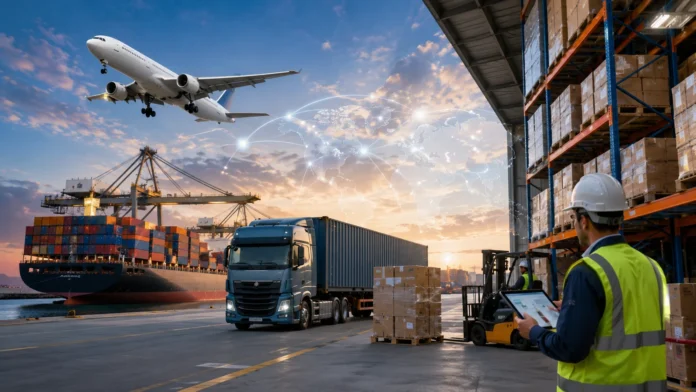

What Is 3PL Logistics? Benefits, Process & Examples
3PL logistics, short for third-party logistics, is a business model in which a company outsources some or all of its logistics operations to an external provider. A 3PL company may store inventory, process orders, pick and pack products, arrange transportation, manage returns, and handle other supply chain activities on behalf of its clients. Instead of building warehouses, hiring fulfillment teams, and managing shipping relationships internally, businesses can use a specialized logistics partner with existing infrastructure and expertise. This approach is widely used by ecommerce companies, retailers, manufacturers, wholesalers, subscription brands, and growing businesses that need scalable fulfillment without creating an entire logistics organization from scratch.
The value of 3PL logistics comes from combining warehousing, technology, transportation, labor, and operational expertise within one service relationship. A growing online brand might send inventory to a 3PL warehouse, connect its ecommerce store with the provider’s software, and allow the 3PL to fulfill customer orders automatically. As orders arrive, warehouse employees pick the products, pack them, generate shipping labels, and hand parcels to carriers. The business can then focus more heavily on marketing, product development, and customer growth. This guide explains what 3PL logistics means, how the process works, the services providers offer, the main benefits and challenges, practical examples, typical costs, and how to choose the right 3PL partner.
What Is 3PL Logistics?
Third-party logistics means outsourcing logistics activities to a specialist company that performs those operations on behalf of another business. The client still owns the products and customer relationship, but the 3PL manages selected parts of moving and storing those products. Services can include inbound freight, warehousing, inventory storage, order processing, picking, packing, shipping, returns, and transportation management. Some 3PL providers specialize in one area, while others offer an end-to-end fulfillment service. The arrangement allows businesses to access professional logistics capabilities without owning every warehouse, vehicle, software system, or operational process themselves.
The term “third party” reflects the relationship between the seller, the customer, and the logistics provider. The company selling the product is one party, the customer receiving it is another, and the logistics company operates between them as an external service provider. A consumer may never realize that a third-party warehouse processed the order because the package still carries the brand’s name and packaging. Behind the scenes, however, the 3PL may have stored the inventory, prepared the parcel, and selected the shipping carrier. This invisible operational support is a major part of modern ecommerce and retail logistics.
Businesses can outsource different amounts of their supply chain depending on their needs. One company may use a 3PL only for warehousing because it still manages transportation internally. Another may outsource nearly everything from receiving inventory to delivering customer orders and processing returns. The relationship can also evolve over time as the company grows. A small brand may initially handle fulfillment from its own office before moving to a 3PL when order volume becomes difficult to manage. The flexibility to outsource gradually is one reason 3PL services appeal to fast-growing businesses.
3PL should not be confused with a simple shipping carrier. A parcel carrier primarily transports packages from one location to another, while a 3PL can manage a broader range of supply chain activities before the carrier becomes involved. The 3PL may determine where inventory should be stored, prepare orders, select carriers, manage shipping labels, and track delivery performance. Some providers also coordinate freight between suppliers and warehouses. The service therefore sits between basic transportation and a company’s complete internal supply chain operation.
A useful way to understand 3PL logistics is to think of the provider as an outsourced logistics department. The business continues deciding what to sell, how much inventory to purchase, and how customers should be served, while the 3PL handles the physical processes required to get products where they need to go. The provider’s value depends on operational accuracy, speed, geographic reach, technology, carrier relationships, and the ability to scale. When the partnership works well, logistics becomes less of a daily operational burden for the client.
How the 3PL Logistics Process Works
The 3PL process usually begins with inventory being sent from a manufacturer, supplier, or existing storage location to the logistics provider’s warehouse. The provider receives the shipment, checks quantities, records the products in its warehouse management system, and stores them in designated locations. Receiving accuracy is important because incorrect inventory counts create fulfillment problems later. Products may be stored on pallets, shelves, racks, bins, or specialized storage systems depending on their size and handling requirements. Some goods also require temperature control, secure storage, or special compliance procedures.
Once inventory is stored, the 3PL’s technology connects with the client’s sales channels or order-management system. Ecommerce stores, marketplaces, retail systems, and enterprise platforms can send order information electronically to the warehouse. When a customer places an order, the 3PL receives the details automatically rather than waiting for someone at the brand to email instructions manually. Integration reduces delays and data-entry errors. The system can also send inventory updates back to the sales channel so customers do not purchase products that are no longer available.
Warehouse employees or automation systems then begin picking the order. Picking means locating the required products in storage and moving them toward the packing area. The warehouse can use several picking strategies depending on order volume, product range, and facility design. Workers may pick one order at a time, combine several orders into batches, or use zones where different employees handle different parts of the warehouse. Efficient picking is important because unnecessary walking and searching can significantly increase fulfillment cost. Warehouse software directs employees toward the correct locations and helps verify item accuracy.
After picking, the order moves to packing. Workers select appropriate packaging, confirm the items, add any required documents or branded materials, and protect products from damage during transport. Shipping software then determines available carrier services and generates a label. The 3PL may choose the carrier according to cost, destination, delivery promise, package dimensions, or client rules. Large logistics providers often negotiate discounted shipping rates because they send high volumes across several customers. Packages are then collected by carriers and moved through the delivery network toward the final customer.
The process continues after shipment because tracking, customer delivery, returns, and inventory reconciliation still need management. Tracking numbers can be sent automatically to the ecommerce platform and customer. If the buyer returns an item, the 3PL may receive the product, inspect it, restock it when appropriate, or route it for disposal or refurbishment. Inventory systems update throughout these steps so the client maintains visibility. The complete 3PL process therefore covers much more than putting products in boxes; it connects inbound inventory, warehouse operations, outbound shipping, and reverse logistics into one coordinated workflow.
Core Services Offered by 3PL Providers
Warehousing is one of the foundational 3PL services. Providers operate storage facilities where clients can keep inventory without leasing and managing their own warehouses. Businesses typically pay according to the amount of space used, the number of pallets or bins stored, or another capacity measure. Warehousing can include ordinary dry storage as well as specialized environments for products requiring temperature control, higher security, or special handling. Outsourcing storage can be particularly attractive for growing brands because they avoid committing to a large warehouse before knowing exactly how much space future demand will require.
Inventory management helps businesses understand how much stock they have and where it is located. A 3PL warehouse management system tracks products as they arrive, move between locations, enter orders, and leave the facility. Clients can often view inventory levels through an online dashboard or integration with their own systems. Accurate inventory records support purchasing decisions and help prevent overselling. Some providers also offer cycle counting, stock audits, lot tracking, serial-number tracking, expiration-date management, and other advanced capabilities depending on the product category.
Order fulfillment covers picking, packing, and preparing customer orders for shipment. This is one of the most visible 3PL activities because mistakes directly affect customers. The provider needs to send the correct product, quantity, packaging, and shipping service for every order. Fulfillment operations may support direct-to-consumer ecommerce, business-to-business shipments, retail replenishment, subscription boxes, or marketplace orders. Different order types can require different workflows. A good 3PL designs processes around the client’s sales model rather than forcing every business into exactly the same warehouse routine.
Transportation management extends beyond parcel fulfillment. A 3PL may coordinate freight between manufacturers, distribution centers, stores, and customers using truckload, less-than-truckload, air, ocean, rail, or other transportation methods. Some providers negotiate rates with carriers and select routes based on delivery requirements. Transportation management software can consolidate shipments, track freight, and analyze carrier performance. Companies with complex supply chains may use a 3PL primarily for this coordination even if they operate their own warehouses. Transportation expertise can reduce administrative burden and improve visibility across several carriers.
Returns management, commonly called reverse logistics, is another important service. Ecommerce businesses need processes for receiving unwanted or defective products, identifying why they were returned, inspecting their condition, and deciding what should happen next. A 3PL can restock sellable merchandise, separate damaged inventory, trigger refunds through integrated systems, or send products for refurbishment. Efficient returns can improve customer satisfaction while reducing inventory losses. As online shopping grows, reverse logistics has become an increasingly important part of evaluating a fulfillment provider.
Benefits of Using a 3PL Provider
Scalability is one of the strongest benefits of 3PL logistics. A company fulfilling orders internally may need to lease larger warehouse space, buy equipment, and hire employees whenever sales increase. If demand later falls, those fixed costs remain. A 3PL spreads infrastructure across several clients and can often provide additional space and labor as individual businesses grow. This allows companies to respond to seasonal peaks, promotional events, and long-term expansion without repeatedly redesigning their internal logistics operation. Flexible capacity can be especially valuable for ecommerce brands with highly variable demand.
Lower operational complexity provides another major advantage. Warehouse operations involve recruitment, training, safety, equipment maintenance, inventory systems, shipping software, carrier relationships, packaging materials, and countless daily exceptions. Outsourcing these responsibilities allows the brand’s internal team to focus on activities where it creates greater competitive value. A startup might decide that developing products and acquiring customers deserves more attention than learning warehouse engineering. The logistics work still needs to happen, but the provider takes responsibility for executing much of it. This can reduce management burden as the company grows.
Shipping costs can sometimes improve because 3PL providers combine volume from many customers. Higher shipping volume can give the provider stronger negotiating power with parcel carriers and freight companies than a small individual brand would have alone. The provider may also use rate-shopping software to compare services automatically for each shipment. Savings are not guaranteed because 3PL fees must still be included in the economics. However, access to negotiated transportation rates can offset part of the fulfillment cost, particularly for businesses that previously shipped relatively low volumes independently.
Geographic distribution can improve delivery speed. A brand operating from one warehouse may need to ship packages across an entire country from a single origin. A 3PL with several fulfillment centers can position inventory closer to major customer populations. Orders then travel shorter distances, potentially reducing shipping cost and delivery time. Distributed inventory becomes particularly useful when customers expect fast delivery. The tradeoff is that inventory must be divided intelligently across several locations so one warehouse does not run out while another holds excess stock.
Logistics expertise is another important benefit. Experienced providers understand warehouse layout, labor planning, carrier performance, packaging, inventory control, peak-season preparation, and operational metrics. Businesses can access this knowledge without building every capability internally. A strong 3PL may identify packaging changes that reduce dimensional shipping charges or recommend inventory placement that improves delivery times. This expertise becomes more valuable as order volume and supply chain complexity increase. The partnership can therefore provide operational knowledge in addition to physical infrastructure.
3PL Examples and Real-World Use Cases
An ecommerce clothing brand provides a straightforward 3PL example. The company manufactures products overseas and sends bulk inventory to a fulfillment provider. Its online store is integrated with the 3PL warehouse management system, so customer orders appear automatically. Warehouse employees pick the correct sizes and colors, pack them according to brand instructions, and ship them directly to buyers. The brand avoids operating its own warehouse and can focus more heavily on product design, merchandising, and marketing. Returns can also go back to the 3PL for inspection and restocking.
A subscription-box business offers another useful example because it may need to process thousands of similar orders within a short monthly window. The 3PL receives products from several suppliers, assembles them into predefined box configurations, adds promotional materials, and ships the finished boxes according to the subscription schedule. This process requires kitting, inventory coordination, and accurate timing. Building an internal warehouse for a workload that spikes dramatically once each month may be inefficient. A 3PL can combine this seasonal labor requirement with work from other customers.
Manufacturers can use third-party logistics even when they do not sell directly to consumers. A manufacturer might send finished goods to regional 3PL distribution centers that supply retailers, wholesalers, or business customers. The provider receives bulk inventory, maintains stock records, prepares pallet or carton shipments, and arranges freight. This gives the manufacturer regional distribution capability without owning warehouses in every market. Some 3PLs also manage inbound materials or components, helping manufacturers coordinate supply before finished products are created.
International companies can use 3PL providers to enter new markets. A business based in one country may want to sell locally in another region without immediately establishing its own logistics subsidiary. A 3PL with local facilities can receive imported inventory and fulfill domestic orders. This can shorten final delivery distances and provide access to local carrier networks. International expansion still involves customs, taxes, regulatory requirements, and inventory planning, but the logistics provider can simplify the physical distribution component. Local expertise becomes particularly valuable when transportation practices differ from the company’s home market.
Retailers also use 3PL networks for omnichannel fulfillment. Inventory can support ecommerce orders, store replenishment, wholesale shipments, and sometimes store pickup from the same broader logistics system. The provider may route orders according to inventory availability and customer location. This creates flexibility but requires accurate systems because several sales channels compete for the same products. A sophisticated 3PL can help coordinate those flows. Retail logistics therefore demonstrates how third-party logistics can support complex distribution rather than only basic ecommerce parcel shipping.
3PL vs 4PL, Freight Forwarder and Fulfillment Center
A 3PL manages selected logistics activities such as transportation, warehousing, and fulfillment, while a 4PL generally operates at a broader strategic level across several logistics providers and supply chain partners. A 4PL may coordinate multiple warehouses, carriers, freight forwarders, and technology systems on behalf of a client. Instead of physically operating every logistics asset itself, it acts as an integrator overseeing the wider supply chain. The distinction is not always perfectly consistent because providers use terminology differently. However, 3PL typically emphasizes operational execution, while 4PL often emphasizes orchestration and strategic management.
A freight forwarder specializes primarily in arranging transportation, particularly complex domestic or international freight. Forwarders can coordinate ocean shipping, air freight, customs processes, documentation, and movement between ports, suppliers, and warehouses. They may not operate the warehouse that eventually fulfills consumer orders. A 3PL can provide transportation management as part of a broader service, and some companies perform both roles. Businesses importing products may therefore use a freight forwarder to move goods internationally before a 3PL receives and distributes the inventory domestically.
A fulfillment center focuses heavily on storing inventory and processing orders, particularly for ecommerce and direct-to-consumer brands. In practice, many fulfillment centers describe themselves as 3PL providers because they perform outsourced logistics functions. A pure fulfillment service may concentrate mainly on pick, pack, and shipping, while a broader 3PL could also manage freight, multiple distribution facilities, retail replenishment, and transportation strategy. The distinction depends more on scope than on a completely separate business category. Companies should examine actual services rather than relying only on labels.
A carrier such as a parcel or freight company physically transports shipments between locations. The carrier may pick up completed packages from the 3PL warehouse and deliver them to customers. The 3PL coordinates fulfillment and can choose between several carriers, while the carrier provides the transportation network itself. Some large logistics organizations offer both warehouse and transportation services, which can blur the distinction. Businesses should understand which company controls each stage because responsibility for delays, damages, and claims can differ across the supply chain.
Choosing among these service types depends on the operational problem the business needs to solve. A company that already operates warehouses but struggles with international freight may need a forwarder rather than a full fulfillment 3PL. A fast-growing online store may need warehouse and order-processing support. A multinational enterprise with several logistics partners may benefit from broader 4PL coordination. Understanding the scope prevents companies from paying for services they do not need or selecting a partner that cannot support the complexity of their supply chain.
3PL Technology and Inventory Management
Warehouse Management Systems, commonly called WMS platforms, are central to modern 3PL operations. The system records where inventory is stored, which items belong to each order, what employees should pick, and when products enter or leave the facility. Barcodes or other identification technologies help workers confirm items during receiving and fulfillment. Accurate digital records reduce reliance on memory and manual spreadsheets. The WMS also provides the information needed for clients to understand current stock levels. Strong warehouse technology becomes increasingly important as product counts and order volume rise.
Integrations connect the 3PL with ecommerce platforms, marketplaces, enterprise resource planning systems, and other client technology. Orders can flow automatically from the selling platform into the warehouse, while shipment tracking and inventory updates move back in the opposite direction. Good integrations reduce manual data entry and shorten processing time. Businesses operating across several sales channels need particularly reliable synchronization. If one channel shows outdated inventory, customers can purchase products that no longer exist physically, creating cancellations and poor experiences.
Order Management Systems can add another layer by deciding where orders should be fulfilled when inventory exists in several locations. The system might route a customer order toward the nearest warehouse with available stock or choose a facility according to cost and delivery promise. Distributed inventory makes these decisions more complex because stock must be balanced across locations. Technology can help automate routing rather than requiring employees to make thousands of individual decisions. This is especially useful for businesses operating national or international fulfillment networks.
Data analytics help businesses evaluate logistics performance. Dashboards can show order volume, fulfillment time, inventory accuracy, shipping cost, return rates, carrier performance, and stock levels. Clients can use this information to identify slow-moving inventory or understand whether certain warehouses perform better than others. The 3PL can also monitor warehouse productivity and forecast staffing requirements. Visibility is essential because outsourcing logistics should not mean losing understanding of what is happening. A good provider gives clients enough data to manage the business intelligently even though physical operations happen elsewhere.
Automation is increasingly used within larger 3PL facilities. Conveyor systems, automated storage, mobile robots, sorting equipment, dimensioning systems, and other technologies can reduce repetitive movement and improve throughput. Automation can be especially valuable during peak periods when warehouse labor becomes difficult to scale quickly. Not every facility needs sophisticated robotics because implementation costs must match order volume and product characteristics. The best logistics technology solves real bottlenecks rather than existing simply to make the warehouse appear advanced. Operational design should come before automation selection.
3PL Costs and Pricing Models
Storage fees are one of the most common components of 3PL pricing. Clients may pay per pallet, shelf, bin, cubic foot, or another space-based measure. Costs can vary according to warehouse location, storage density, product characteristics, and how long inventory remains in the facility. Products requiring refrigeration, secure cages, hazardous-material handling, or unusual dimensions can cost more. Businesses should understand whether rates change during peak seasons or when inventory ages. Slow-moving stock can become expensive if it occupies warehouse space for long periods.
Receiving fees cover the work required when inventory arrives at the warehouse. The provider must unload shipments, count products, inspect packaging, record quantities, label units when necessary, and place stock into storage. Pricing may be calculated by pallet, carton, unit, container, or labor hour. Poorly organized inbound shipments can create additional charges because warehouse workers spend more time sorting and identifying products. Businesses can reduce receiving problems by following the provider’s inbound preparation guidelines carefully. Good supplier coordination therefore influences 3PL cost before any customer order has even been fulfilled.
Pick-and-pack fees apply when the warehouse processes individual orders. A basic fee may cover the first item, with additional charges for each extra unit included in the shipment. Special packaging, inserts, kitting, gift wrapping, or customized assembly can create additional costs. Order complexity strongly influences labor requirements, so a company shipping one standardized product will have different economics from a retailer with thousands of SKUs and complex bundles. Businesses should model fees using realistic average order composition rather than only looking at the lowest advertised base rate.
Shipping charges usually represent one of the largest overall fulfillment expenses. The final amount depends on carrier, service level, destination, weight, dimensions, residential surcharges, fuel adjustments, and other transportation factors. A 3PL may pass through negotiated carrier rates with or without an additional markup depending on the contract. Businesses should compare actual landed shipping cost rather than focusing only on the provider’s warehouse fees. A slightly more expensive fulfillment partner can still be cheaper overall if its locations and carrier discounts reduce transportation costs significantly.
Additional fees can include returns processing, account management, software access, special projects, minimum monthly charges, packaging materials, inventory counts, disposal, and long-term storage. These charges are not automatically unreasonable because they reflect real operational work, but they need to be understood before signing a contract. Companies should request a complete pricing schedule and model several order scenarios. The lowest per-order price can become misleading if numerous extra charges apply. Transparent pricing makes it easier to compare providers fairly and forecast fulfillment margins accurately.
Challenges and Risks of 3PL Logistics
Loss of direct operational control is one of the biggest concerns when outsourcing fulfillment. The business no longer manages every warehouse worker or packing decision directly, yet customers still hold the brand responsible when something goes wrong. A late shipment, damaged package, or incorrect product can affect customer loyalty regardless of whether the error occurred at a third-party facility. Companies therefore need clear service expectations and performance visibility. Outsourcing responsibility for execution does not mean outsourcing responsibility for the customer experience.
Integration problems can create significant operational disruption. If orders fail to move from the ecommerce platform into the warehouse, customers can wait without anyone realizing fulfillment has stopped. Incorrect inventory synchronization can lead to overselling, while poor tracking integration creates support requests. Businesses should test integrations thoroughly before moving large volumes. They should also understand what happens when an API or software connection fails. Manual contingency procedures may be necessary so critical orders can continue processing while technical teams restore normal synchronization.
Inventory distribution can become complicated when using several fulfillment centers. Splitting stock across locations improves delivery speed but increases forecasting difficulty. One warehouse may run out of a popular SKU while another holds excess units that are far from current demand. Moving inventory between facilities creates additional transportation cost. Businesses need sufficient sales data and planning capability before aggressively distributing every product. Slow-moving items may be better stored centrally, while high-volume products can justify placement across several regions.
Provider dependency is another risk. Once a company integrates systems, moves inventory, and builds customer promises around one 3PL, switching partners can be disruptive. Inventory needs to move physically, integrations must change, and new operational processes require testing. Businesses should therefore evaluate the provider’s financial stability, service quality, technology roadmap, capacity, and contract terms carefully. Exit provisions and access to data also matter. A strong relationship can last many years, making provider selection a strategic decision rather than a simple purchasing exercise.
Service inconsistency during peak seasons can create additional challenges. Holiday periods, major promotions, product launches, and unexpected viral demand can cause order volume to rise dramatically. A 3PL serving many brands may experience pressure across the entire warehouse at the same time. Businesses should understand how the provider forecasts labor, allocates capacity, and communicates potential delays. Peak planning should begin well before the busiest period. Growth is beneficial only when the logistics network can continue meeting customer expectations as volume increases.
How to Choose the Right 3PL Provider
Start by defining your actual logistics requirements. Consider monthly order volume, number of SKUs, average package size, customer locations, sales channels, return volume, storage needs, and growth projections. Businesses should also identify special requirements such as temperature control, lot tracking, subscription-box assembly, fragile products, oversized items, or retail compliance. A provider that performs extremely well for simple apparel orders may not be appropriate for medical equipment or bulky furniture. Clear requirements make vendor comparison much more objective.
Warehouse locations should match where your customers actually live. A provider with ten facilities is not automatically better if most locations are far from your demand. Analyze historical order destinations and determine which fulfillment regions could improve delivery speed economically. Ask whether you can start with one warehouse and expand gradually as volume grows. Distributing inventory too early can create complexity without enough shipping savings. The right footprint balances transportation cost, delivery expectations, and inventory efficiency.
Technology compatibility is equally important. The provider should integrate reliably with the ecommerce platforms, marketplaces, ERP systems, and other software your business uses. Ask how quickly orders synchronize, how inventory updates are handled, and whether APIs are available for custom workflows. The client dashboard should provide enough visibility into inventory, shipments, returns, and performance. Businesses should also understand the provider’s support process when technical problems occur. Logistics increasingly depends on software, making technology quality almost as important as warehouse quality.
Service performance should be evaluated through measurable standards. Ask about order accuracy, same-day fulfillment cutoffs, receiving timelines, inventory accuracy, return processing, and peak-season performance. Service-level agreements can formalize expectations for important operations. References from customers with similar products and order profiles can provide additional insight. A provider’s largest famous client may have completely different requirements from your business, so comparable customer experience matters more. Companies should understand how the 3PL responds when performance falls below agreed levels.
Finally, evaluate cultural and communication fit. Logistics problems will eventually occur even with a strong provider, so the quality of communication during those moments matters greatly. Determine who will manage your account, how quickly issues are escalated, and whether operations teams provide transparent explanations. A provider that hides mistakes can create more risk than one that identifies problems quickly and solves them collaboratively. The best 3PL relationship combines operational capability, technology, economics, and trust. Businesses should select a long-term partner rather than simply choosing the lowest quoted price.
Conclusion
3PL logistics means outsourcing logistics operations to a third-party provider that can store inventory, fulfill orders, manage transportation, process returns, and perform other supply chain activities. Instead of building every warehouse and logistics capability internally, businesses gain access to existing infrastructure, technology, labor, and expertise. This model is widely used across ecommerce, retail, manufacturing, wholesale distribution, and subscription businesses. The amount of responsibility outsourced can range from one function to nearly the entire physical fulfillment operation.
The 3PL process typically begins when inventory arrives at the provider’s warehouse and is entered into its management system. Customer orders then flow into the warehouse through software integrations, products are picked and packed, shipping labels are created, and carriers deliver parcels to customers. Inventory levels update as products move through the system. Returns can follow the opposite path through reverse logistics. The provider therefore connects multiple physical and digital processes into one coordinated fulfillment workflow.
Major benefits include scalability, reduced operational complexity, access to logistics expertise, stronger shipping rates, and the ability to position inventory closer to customers. These advantages can help growing companies improve delivery performance without making large investments in warehouse facilities and staff. However, outsourcing introduces dependencies and reduces direct control over some customer-facing operations. Technology integration, inventory planning, service quality, and peak-season capacity need careful management. A 3PL creates the most value when its capabilities match the client’s specific business model.
Costs can include receiving, storage, picking, packing, shipping, returns, software, special projects, and other services. Companies should evaluate the complete fulfillment cost rather than comparing one headline fee. Warehouse geography can influence transportation cost significantly, while operational complexity affects labor charges. Accurate modeling requires using real order data and realistic growth expectations. Transparent contracts make it easier to understand how costs will change as the business expands.
Ultimately, the right 3PL acts as an extension of the business rather than simply a warehouse vendor. It should provide accurate fulfillment, dependable technology, useful visibility, responsive communication, and enough capacity to support growth. Businesses should define their requirements carefully, evaluate provider capabilities, test integrations, examine pricing, and understand performance commitments before making a decision. When the partnership is well matched, third-party logistics can turn fulfillment from a growth constraint into a scalable operational advantage.
Frequently Asked Questions About 3PL Logistics
What does 3PL mean in logistics?
3PL stands for third-party logistics. It refers to outsourcing logistics activities such as warehousing, inventory management, order fulfillment, transportation, and returns to an external provider.
What does a 3PL company do?
A 3PL company can receive and store inventory, process orders, pick and pack products, arrange shipping, manage transportation, track stock, and handle returns. The exact services depend on the provider and the client’s supply chain requirements.
What is an example of 3PL logistics?
An ecommerce brand can send its products to a 3PL warehouse and connect its online store to the provider’s system. When a customer places an order, the 3PL picks, packs, and ships the product directly to that customer.
What are the main benefits of using a 3PL?
Key benefits include scalable warehouse capacity, reduced logistics complexity, access to fulfillment expertise, potential shipping savings, faster regional delivery, and the ability to focus internal resources on product development, sales, and customer growth.
What is the difference between 3PL and 4PL?
A 3PL typically performs logistics operations such as warehousing, fulfillment, and transportation. A 4PL generally takes a broader coordination role by managing several logistics providers and supply chain activities on behalf of the client.