
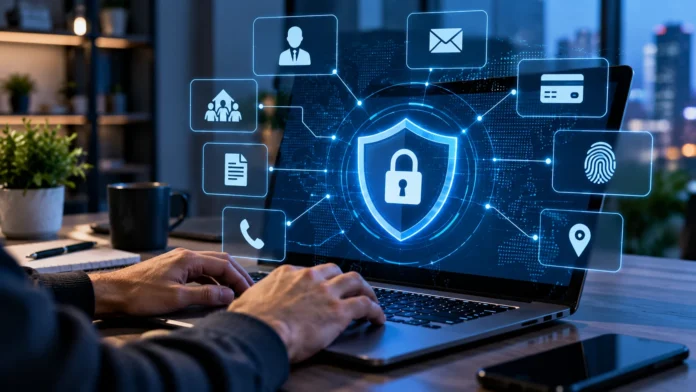

What Does PII Stand for in Cyber Security?
PII stands for Personally Identifiable Information in cyber security. It refers to information that can identify a specific individual either on its own or when combined with other data. Common examples include a person’s full name, home address, email address, phone number, government identification number, and other details connected to their identity.
Cybersecurity teams pay close attention to PII because criminals can use stolen personal information for identity theft, fraud, account takeover, phishing, and social engineering. Even information that appears harmless can become sensitive when combined with other records. Protecting personally identifiable information is therefore an important part of data security, privacy management, and organizational risk reduction.
Businesses, government agencies, healthcare providers, educational institutions, and online services may all collect PII during normal operations. Whenever organizations store personal information, they need appropriate security controls to prevent unauthorized access, accidental exposure, or theft. Understanding what qualifies as PII is the first step toward protecting it effectively throughout its entire lifecycle.
What Information Is Considered PII?
PII can include information that directly identifies someone, such as a full name, passport number, driver’s license number, or national identification number. These details can often be connected to a specific person without needing much additional information. Financial account numbers, personal email addresses, telephone numbers, and home addresses may also be classified as personally identifiable information.
Other information may become identifying only when combined with additional data. A person’s date of birth, gender, workplace, location, or job title may not always uniquely identify them by itself. However, several of these details together can sometimes make it possible to determine exactly who the individual is.
Organizations should therefore avoid protecting only obvious identifiers. Security teams need to consider how multiple pieces of information could be linked together and what harm could occur if those records were exposed. Effective PII protection looks at the complete data environment instead of treating each data field as an isolated piece of information.
Sensitive PII vs. Non-Sensitive PII
Not all personally identifiable information carries the same level of risk. Sensitive PII generally includes information that could cause serious harm if exposed, such as government identification numbers, financial information, authentication credentials, medical details, biometric records, or highly confidential personal data. Organizations typically apply stronger security controls to these types of records.
Non-sensitive PII can include information that may already be publicly available or creates less immediate harm when disclosed. Examples might include a person’s publicly listed name, business phone number, professional job title, or work email address. However, even non-sensitive information can become risky when attackers combine it with other data for targeted scams.
The distinction matters because organizations need to prioritize security based on potential impact. Highly sensitive information may require encryption, restricted access, stronger authentication, detailed monitoring, and tighter retention rules. Less sensitive records still need protection, but security controls can be adjusted according to the likelihood and consequences of unauthorized disclosure.
Why PII Matters in Cyber Security
PII is valuable to cybercriminals because personal information can be used to impersonate individuals or gain access to their accounts. An attacker may combine names, email addresses, phone numbers, and dates of birth to create convincing fraudulent requests. More sensitive information can be used for identity theft, financial fraud, or unauthorized account recovery.
Protecting PII is therefore one of the many responsibilities involved in understanding what cyber security does. Cybersecurity professionals protect systems and networks, but they also protect the sensitive information stored inside them. Preventing personal data from being stolen, altered, or exposed is a fundamental part of reducing digital risk.
A PII breach can also damage trust between an organization and its customers, employees, or partners. People expect businesses to handle their personal information responsibly. When that information is exposed, organizations may face financial losses, operational disruption, legal obligations, reputational damage, and significant costs associated with investigating and resolving the incident.
How Cybercriminals Steal PII
Phishing is one of the most common methods attackers use to collect personal information. Criminals may impersonate banks, employers, government agencies, or online services and ask victims to confirm account details. Fake websites can capture names, passwords, payment information, addresses, and other sensitive data entered by unsuspecting users.
Malware provides another way to steal PII. Spyware, keyloggers, information-stealing malware, and remote-access tools can collect data directly from infected devices. Attackers may obtain saved browser passwords, personal documents, financial records, login information, or other sensitive files without the victim realizing that their device has been compromised.
Data breaches can expose PII on a much larger scale. Attackers may exploit software vulnerabilities, weak passwords, cloud misconfigurations, or stolen credentials to access company databases. Once inside, they can copy large amounts of customer or employee information and potentially sell, leak, or use the stolen data for additional cyberattacks.
Common Cybersecurity Risks Associated With PII
Identity theft is one of the biggest risks associated with exposed PII. Criminals can use stolen personal details to impersonate victims, open fraudulent accounts, request financial services, or bypass identity-verification processes. The more accurate information an attacker possesses, the easier it may become to make fraudulent activity appear legitimate.
Account takeover is another serious threat. Personal information can help attackers answer security questions, reset passwords, or create believable support requests. If login credentials are also exposed, criminals may access email, financial services, cloud accounts, shopping platforms, or other systems connected to the victim’s digital identity.
PII can also support highly targeted social engineering. Attackers who know a person’s employer, phone number, job role, or recent activities can create more convincing phishing messages. Personalized scams are often harder to recognize because the attacker includes real information that makes the fraudulent communication appear trustworthy and relevant.
How Organizations Protect PII
Access control is one of the most important protections for personally identifiable information. Employees should only be able to access personal data that they genuinely need for their work. Applying the principle of least privilege reduces the number of people who can view sensitive records and limits the damage a compromised account can cause.
Encryption adds another important security layer. Organizations can encrypt PII when it is stored and while it is being transmitted between systems. Even if attackers obtain encrypted information, strong encryption can make the data significantly harder to read or use without the appropriate cryptographic keys.
Organizations should also maintain secure backups, monitor access logs, patch vulnerable software, and use endpoint protection and network security controls. Regular security assessments can identify weaknesses before attackers exploit them. Combining technical controls with strong policies creates multiple defensive layers rather than relying on one security measure to protect sensitive personal information.
The Role of Authentication and Access Management
Strong authentication helps prevent unauthorized users from accessing systems that contain PII. Passwords alone may not provide sufficient protection, especially when employees reuse credentials or fall victim to phishing attacks. Multi-factor authentication adds another verification step, making it more difficult for attackers to gain access even when they know a user’s password.
Identity and Access Management systems can help organizations control who has access to sensitive information. Permissions can be assigned according to job responsibilities and removed when they are no longer required. Automated account management also reduces the risk of former employees or inactive accounts retaining unnecessary access to personal data.
Privileged accounts deserve particular attention because administrators may have access to large amounts of sensitive information. Organizations should monitor these accounts carefully and restrict elevated permissions whenever possible. Strong identity controls help ensure that access to PII is based on legitimate business needs rather than broad or permanent privileges.
How Employees Can Help Protect PII
Employees are an important part of PII security because they regularly handle customer, employee, or business information. Security awareness training should teach people how to recognize phishing messages, suspicious attachments, fraudulent login pages, and unusual requests for personal data. Knowing when information should not be shared can stop many incidents before they begin.
Workers should also follow approved procedures for storing and transferring sensitive information. Personal data should not be copied into unapproved cloud services, personal email accounts, or unsecured documents simply for convenience. Using organization-approved systems reduces the chance that important information will be accidentally exposed outside established security controls.
Reporting mistakes quickly is equally important. If an employee sends PII to the wrong recipient, clicks a suspicious link, or believes credentials may have been stolen, the security team should be informed immediately. Early reporting gives organizations more time to contain the incident, investigate what happened, and reduce potential harm.
PII and Data Minimization
One effective way to reduce PII risk is to collect only the information that is genuinely necessary. Organizations sometimes gather large amounts of personal data without clearly defining why they need it. Every additional record creates another piece of information that must be stored, protected, managed, and eventually deleted securely.
Data minimization reduces the amount of information exposed if a breach occurs. If an organization does not store unnecessary identification numbers, personal addresses, or financial information, attackers cannot steal those records from its systems. Security therefore begins not only with protecting data but also with questioning whether the data needs to be collected at all.
Retention policies are equally important. Personal information should not remain in company databases indefinitely simply because deleting it requires additional work. Organizations should establish clear rules for how long different types of PII are kept and securely remove records when they are no longer needed for legitimate business purposes.
What Happens When PII Is Exposed?
When PII is exposed, the organization should first determine what information was involved and how the incident occurred. Security teams may need to identify affected accounts, compromised systems, exposed records, and the time period during which unauthorized access occurred. Understanding the scope helps determine which response actions should receive immediate priority.
Containment may involve disabling compromised accounts, resetting passwords, blocking malicious activity, fixing vulnerabilities, or isolating affected devices. If authentication information was exposed, affected users may also need to change credentials or enable stronger security measures. The organization should preserve relevant logs and evidence so investigators can understand the attack.
After containment, security teams should identify why existing controls failed and what needs to change. Improvements could include stronger authentication, better access controls, updated employee training, encryption, or improved monitoring. A useful incident response does more than restore systems; it also reduces the likelihood that the same security weakness will cause another breach.
Best Practices for Protecting PII
Start by identifying where personally identifiable information is stored and who can access it. Organizations cannot effectively protect data they do not know they possess. Maintaining an accurate inventory helps security teams locate sensitive databases, documents, applications, cloud services, and other systems that contain personal information.
Apply layered security controls based on the sensitivity of the information. Encryption, multi-factor authentication, least-privilege access, security monitoring, secure backups, software updates, and employee awareness all contribute to stronger protection. Sensitive PII should receive more restrictive controls because the consequences of exposure can be significantly greater.
Finally, review security practices regularly because data environments constantly change. New applications, employees, cloud services, vendors, and business processes can introduce additional risks. Ongoing access reviews, vulnerability assessments, data audits, and incident-response exercises help organizations find weaknesses early and maintain stronger protection as their technology environment evolves.
Conclusion
PII stands for Personally Identifiable Information in cyber security and includes data that can identify a specific person directly or indirectly. Names, addresses, phone numbers, financial details, identification numbers, login information, and other personal records can all fall within this category depending on the context.
Protecting PII matters because exposed personal information can lead to identity theft, fraud, phishing, account takeover, and other forms of cybercrime. Organizations should understand what information they collect, where it is stored, who can access it, and what security controls protect it throughout its lifecycle.
Strong PII security combines data minimization, encryption, multi-factor authentication, access management, monitoring, employee awareness, and clear retention policies. No single measure can eliminate every risk. Layered protection makes sensitive personal information harder to steal while reducing the potential impact when a security incident does occur.
Frequently Asked Questions
What does PII stand for in cyber security?
PII stands for Personally Identifiable Information. It refers to information that can identify an individual directly or when combined with other personal data.
What are examples of PII?
Examples include names, home addresses, phone numbers, email addresses, identification numbers, financial information, and account details. The exact classification can depend on how the information is used and combined.
Is an email address considered PII?
Yes, an email address can be considered PII when it identifies or can reasonably be connected to a specific individual. Personal email addresses are particularly likely to qualify.
Why do hackers want PII?
Hackers can use PII for identity theft, fraud, phishing, account takeover, and social engineering. More detailed personal information allows attackers to create more convincing impersonation attempts.
How can companies protect PII?
Companies can protect PII through encryption, multi-factor authentication, least-privilege access, security monitoring, employee training, secure backups, and data minimization. Regular security reviews also help identify weaknesses before attackers exploit them.