

CCTV Meaning: How It Works, Uses & Key Benefits
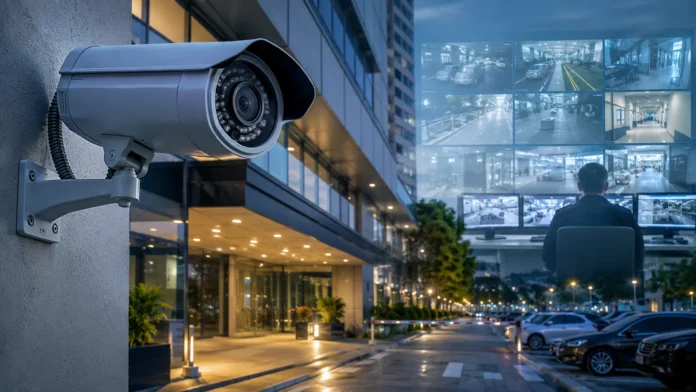
CCTV stands for Closed-Circuit Television, a video surveillance system in which cameras capture footage and transmit it to a limited group of monitors, recorders, or authorized users rather than broadcasting it publicly. CCTV systems are commonly installed in homes, offices, stores, warehouses, schools, parking areas, factories, transportation hubs, and many other locations where security or operational visibility is important. Depending on the setup, cameras may record continuously, activate when motion is detected, or stream live video to security personnel. Modern CCTV can also include internet-connected IP cameras, mobile alerts, cloud storage, night vision, and video analytics. These capabilities have made surveillance systems more flexible than traditional camera-and-monitor setups.
The main purpose of CCTV is to provide visual awareness of what is happening in a particular area and preserve footage that may be useful later. Businesses use surveillance cameras to monitor entrances, protect assets, investigate incidents, and support employee or customer safety. Homeowners may use CCTV around doors, driveways, garages, and gardens to watch property remotely. Industrial organizations can monitor equipment or restricted areas where continuous human observation would be impractical. However, CCTV needs thoughtful placement, secure access, sufficient storage, and appropriate privacy practices to work effectively. This guide explains CCTV meaning, how surveillance cameras work, major system types, components, uses, advantages, installation considerations, storage methods, and common mistakes.
What Does CCTV Mean?
CCTV means Closed-Circuit Television because video is transmitted within a restricted system rather than being openly broadcast for anyone to receive. Traditional television broadcasting distributes content to a large public audience, while CCTV sends footage only to selected monitors, recording devices, networks, or authorized viewers. The “closed-circuit” part of the name refers to this controlled distribution. Modern systems may use internet connections and cloud services, but access can still remain limited through accounts, encryption, passwords, and permissions. The technology has evolved considerably, yet the core purpose remains controlled video surveillance.
A CCTV system can be extremely simple or highly complex. A small property might use two cameras connected to one recorder, while a large commercial site can operate hundreds of cameras across multiple buildings. Organizations may place cameras at entrances, corridors, loading areas, cash-handling points, parking facilities, server rooms, or other locations where visibility is useful. Security teams can watch live feeds or review stored footage after an incident occurs. Some systems automatically notify staff when movement, unusual activity, or another configured event is detected.
The term CCTV is sometimes used interchangeably with video surveillance, although modern surveillance technology can include capabilities that go beyond traditional closed-circuit television. Networked cameras may send encrypted video through local networks or the internet, while cloud platforms allow authorized users to access footage from remote locations. Artificial intelligence can help detect people, vehicles, movement patterns, or other predefined events. Despite these advances, people commonly continue using CCTV as a general term for security-camera systems. Context usually makes it clear whether the discussion concerns older analog equipment or modern IP surveillance.
CCTV should also be distinguished from ordinary webcams or video conferencing cameras. A webcam is primarily intended for communication, streaming, or content creation, while a CCTV camera is normally designed for monitoring and security. Surveillance cameras may include weather-resistant housings, infrared night vision, wider operating temperature ranges, vandal resistance, continuous recording capability, and integration with dedicated video management systems. They can also operate for long periods without direct user interaction. These specialized features make CCTV more suitable for continuous observation than ordinary consumer cameras.
The value of CCTV comes from visibility rather than from the camera alone. A poorly positioned camera, unreliable recorder, weak network, or inaccessible storage can make even expensive equipment ineffective. A useful system needs the right camera coverage, sufficient image quality, dependable recording, accurate timestamps, secure access, and a process for reviewing incidents. Businesses should therefore treat CCTV as a complete system rather than a collection of cameras. Good surveillance design connects hardware, software, storage, networking, and operating procedures around clear security objectives.
How Does CCTV Work?
A CCTV system begins when a camera captures light through its lens and converts the scene into a video signal. In modern digital cameras, an image sensor processes incoming light into electronic data that can be encoded and transmitted. The camera may continuously capture footage or begin recording when motion or another event triggers it. Resolution, lens quality, lighting, frame rate, and image processing all influence how useful the resulting video will be. A high-resolution camera can provide more detail, but only when the scene, lens, and lighting allow that detail to be captured clearly.
The video then travels from the camera to a recorder, server, cloud platform, or viewing device. Traditional analog cameras send video through dedicated coaxial cabling, while IP cameras transmit digital data across Ethernet or wireless networks. Many network cameras can use Power over Ethernet, commonly called PoE, so one Ethernet cable carries both electrical power and network data. This simplifies installation because a separate power connection may not be needed at each camera. Wireless cameras provide another option, although they still require reliable power and network coverage.
Recording equipment stores video so authorized users can review previous events. Analog and digital systems traditionally use DVRs or NVRs containing hard drives designed for continuous recording workloads. Modern installations may also store footage on network servers, local memory cards, cloud platforms, or combinations of several locations. Retention time depends on storage capacity, camera count, resolution, frame rate, compression, and recording schedule. A system recording twenty-four hours per day naturally requires more storage than one recording only when activity occurs.
Users can view CCTV footage through dedicated monitors, desktop applications, web interfaces, or mobile apps depending on the system. Security personnel may watch several cameras simultaneously from a control room, while homeowners might check one camera remotely when they receive an alert. Permissions can restrict which users are allowed to see specific cameras or export recordings. Remote access creates significant convenience but also introduces cybersecurity responsibilities. Strong passwords, current software, secure network configuration, and controlled accounts help prevent unauthorized viewing.
Modern CCTV can also analyze video automatically instead of relying entirely on humans to watch screens. Software may detect motion, identify when a person enters a defined zone, distinguish vehicles from other objects, or alert operators about unusual activity. More advanced systems can search recorded video according to time, location, or detected events, making investigation faster. Analytics can reduce the amount of footage people need to watch manually. However, automated detection is not perfect, so organizations should configure thresholds carefully and review important events rather than assuming every alert is correct.
Types of CCTV Cameras and Systems
Analog CCTV is one of the traditional forms of video surveillance. Analog cameras capture video and transmit it through coaxial cables toward a digital video recorder, commonly called a DVR. The DVR converts or processes the incoming signals and stores video on internal drives. Modern high-definition analog technologies can provide much better image quality than older analog CCTV systems, allowing organizations to upgrade cameras while sometimes reusing existing coaxial cabling. Analog systems can be cost-effective for straightforward installations, although they may offer fewer networking and analytics capabilities than modern IP surveillance.
IP CCTV systems use digital network cameras connected through Ethernet, Wi-Fi, or other network infrastructure. Each IP camera functions as a network device and can encode its own video before transmitting it. The footage may be stored on a network video recorder, commonly called an NVR, or sent to another server or cloud platform. IP cameras often provide higher resolutions, remote configuration, advanced analytics, and flexible network integration. They are common in new commercial installations because existing data-network technologies can support large, scalable surveillance systems.
Bullet cameras are named for their elongated shape and are frequently used for visible outdoor monitoring. Their design makes it relatively obvious which direction the camera is facing, which can itself provide a deterrent effect. Dome cameras use rounded housings that can be more discreet and resistant to tampering, making them popular in retail stores, offices, schools, and commercial interiors. Turret cameras provide another compact shape that is widely used in modern installations. Camera shape alone does not determine image quality, so organizations should choose housing according to mounting, environment, and security needs.
PTZ cameras, short for pan-tilt-zoom cameras, can change their viewing direction and zoom level using motors controlled by an operator or software. They are valuable for monitoring large open areas such as parking lots, transportation facilities, industrial sites, or public venues. Some systems can automatically move a PTZ camera according to predefined tours or detected events. The advantage is flexible coverage, but a PTZ camera cannot view every direction at the same moment unless supplemented with fixed cameras. Organizations often combine PTZ and fixed cameras to balance broad awareness with consistent evidence coverage.
Specialized CCTV cameras are designed for particular environments and requirements. Thermal cameras detect heat patterns rather than relying entirely on visible light, while low-light and infrared cameras support nighttime surveillance. License plate recognition cameras use optics and processing optimized for capturing vehicle plates under challenging movement and lighting conditions. Fisheye cameras provide extremely wide fields of view, and explosion-protected or rugged industrial cameras can operate in demanding facilities. Selecting the correct type begins with understanding the surveillance problem rather than choosing cameras solely according to the highest resolution specification.
Main Components of a CCTV System
Cameras are the most visible CCTV components, but they represent only the first stage of the system. Each camera needs an appropriate lens, sensor, housing, power source, mounting location, and communication path. Resolution should be matched with the level of detail required, such as general observation, facial recognition, or vehicle identification. Wider fields of view cover more space but can reduce the number of pixels available for each object. Camera selection should therefore consider viewing distance and identification requirements instead of assuming one model fits every position.
The recorder is another central component because it determines how footage is stored and accessed. DVRs are generally associated with analog camera systems, while NVRs are commonly used with IP cameras. Both can contain surveillance-grade hard drives designed for continuous video workloads. Recorder capacity should support the number of cameras, required resolution, recording schedule, and desired retention period. Businesses may also need redundant storage or backup strategies when footage is particularly important. A recorder with insufficient capacity can overwrite useful evidence sooner than expected.
Network infrastructure becomes critical in IP surveillance. Cameras may connect to Ethernet switches, routers, wireless access points, firewalls, servers, and internet connections depending on the architecture. PoE switches can simplify camera deployment by providing both power and data through network cables. However, switches need enough power capacity and network bandwidth for every connected camera. Large surveillance networks may be segmented from ordinary business traffic to improve performance and security. Proper network design prevents video streams from overwhelming other applications and limits unnecessary exposure of cameras to external networks.
Storage capacity can significantly influence the cost of CCTV. Higher resolution, faster frame rates, longer retention, and more cameras all increase data requirements. Video compression technologies reduce storage usage by encoding footage efficiently while attempting to preserve useful detail. Motion-based recording can also reduce storage when environments remain inactive for long periods. Organizations should calculate expected capacity before installation rather than adding cameras first and discovering later that available storage is inadequate. Retention policies should reflect operational, legal, security, and privacy requirements rather than saving everything indefinitely without purpose.
Monitoring and management software completes the system by giving users access to live and recorded video. A Video Management System, often called a VMS, can organize cameras, user permissions, layouts, alarms, recordings, analytics, and exports within one interface. Enterprise platforms may integrate CCTV with access control, intrusion detection, intercoms, or other security systems. Smaller installations may rely entirely on the recorder’s built-in software or a mobile application. Ease of use matters because security footage provides little value if employees cannot quickly find, review, and export the relevant event when an incident occurs.
Common Uses of CCTV
Crime prevention and property protection are among the most familiar CCTV uses. Cameras placed around entrances, parking areas, gates, and vulnerable locations can discourage certain forms of theft, trespassing, or vandalism by increasing the likelihood that activity will be recorded. CCTV cannot guarantee that crime will not happen, but visible surveillance may change behavior and provide additional evidence after an incident. Businesses often combine cameras with lighting, locks, alarms, access control, and security personnel rather than relying on CCTV alone. Layered security provides stronger protection because each measure addresses different risks.
Retail businesses use CCTV to monitor sales floors, checkout areas, stockrooms, entrances, and loading points. Cameras can support investigations involving theft, fraud, customer disputes, damaged goods, or unusual transactions. Managers may also use footage to understand congestion, queue patterns, or operational problems, provided such use follows appropriate policies. Video analytics can identify occupancy or movement trends without requiring someone to watch every recording manually. Surveillance should still be positioned carefully so monitoring remains proportionate and respects areas where people reasonably expect privacy.
Offices and corporate facilities use CCTV around reception areas, building entrances, parking facilities, server rooms, loading zones, and other controlled areas. Surveillance can support access control by showing who approached or entered a location around the time of an event. Security teams may combine camera footage with badge-access records to investigate unusual activity. Large organizations may operate centralized monitoring centers that receive video from several sites. Clear access permissions are important because surveillance recordings can contain sensitive information about employees, visitors, and business activities.
Industrial and logistics facilities use CCTV for both security and operational visibility. Cameras can monitor warehouses, loading docks, production lines, restricted zones, machinery areas, and storage locations. Managers may review footage after an accident or equipment problem to understand what occurred before the event. Remote observation can also reduce the need for people to enter hazardous areas simply to check whether a process is operating normally. Industrial camera placement requires special attention to lighting, vibration, temperature, dust, moisture, and other environmental conditions that could affect equipment reliability.
Residential CCTV has expanded because internet-connected security cameras and video doorbells have made installation easier. Homeowners may monitor entrances, driveways, garages, gardens, or other exterior areas from smartphones. Motion detection can send alerts when someone approaches, while two-way audio may allow communication through certain devices. Local or cloud recording can preserve footage if an incident occurs. Home users should still secure accounts carefully, position cameras responsibly, and understand the privacy implications of recording areas beyond their own property.
Key Benefits of CCTV Surveillance
One important CCTV benefit is improved situational awareness. Security staff cannot physically remain in every part of a building or property simultaneously, but cameras can provide views across many locations from one monitoring point. This becomes particularly useful for large warehouses, campuses, parking facilities, stores, and industrial sites. Live video can help operators understand what is happening before deciding how to respond. Cameras can also show whether an alarm appears to represent a genuine security event or a less serious situation. Better information can support faster and more proportionate decisions.
Recorded evidence is another major advantage. When theft, property damage, workplace incidents, disputes, or unauthorized access occurs, footage can help establish the sequence of events. Accurate timestamps and clear images make recordings more useful during internal investigations or when information needs to be shared with authorized third parties. Camera placement matters because footage that only shows the top of someone’s head or an overexposed doorway may provide limited evidence. Maintaining correct system time is equally important. Reliable video depends on careful design before an incident occurs.
CCTV can help protect employees and customers by improving visibility around potentially risky environments. Staff working late may benefit from monitored entrances and parking areas, while security teams can observe aggressive behavior or emergencies in public-facing facilities. Industrial CCTV can allow managers to review dangerous locations remotely. Cameras should not replace appropriate staffing, safety procedures, or emergency systems, but they can add useful information. The strongest benefit comes when CCTV supports an existing safety and security program rather than being treated as the entire program itself.
Operational efficiency can also improve when organizations use cameras responsibly to investigate process problems. A warehouse manager might review a loading area after repeated shipment delays, while a factory can examine video around equipment stoppages. Retailers may analyze customer movement or queue length using aggregated analytics. These applications can reveal bottlenecks that are difficult to identify through reports alone. Organizations should still define clear purposes and privacy boundaries before expanding surveillance from security into productivity analysis. Transparency helps maintain trust when monitoring affects employees or customers.
Remote monitoring provides another valuable benefit because authorized users can view selected locations without physically traveling there. A business owner can check a site after receiving an alarm, while a central security team can monitor several branches from one control center. Managed security providers may also supervise customer systems according to contractual arrangements. Remote access can reduce response times and staffing requirements, but it increases cybersecurity exposure if configured poorly. Secure accounts, encryption, network protection, and timely software updates are therefore essential parts of gaining the remote-monitoring benefit safely.
CCTV Storage, Remote Access and Security
Video storage requirements should be planned according to how long footage genuinely needs to remain available. A small home installation may require only several days of event recordings, while a commercial facility could need weeks or longer depending on policy and operational requirements. Higher camera resolutions can consume substantial capacity, especially when many cameras record continuously. Increasing compression or reducing frame rate can save space but may affect evidence quality. Storage planning should therefore balance visual detail, retention, camera quantity, and budget. Testing sample footage before finalizing settings can help determine whether the selected quality remains adequate.
Local storage keeps recordings on a DVR, NVR, server, memory card, or network storage system physically controlled by the organization. This approach can provide strong performance and avoid recurring cloud-storage fees. It can also continue recording even when the external internet connection fails, depending on system design. The drawback is that recordings may be lost if the recorder is stolen, damaged, or destroyed without backup. Secure physical placement and redundant storage can reduce this risk. Critical environments may replicate important footage to another location.
Cloud CCTV stores or manages video through remote infrastructure provided by a service. Users can often access recordings easily through web interfaces or mobile applications without operating their own video servers. Cloud platforms may also provide automatic software updates, analytics, and off-site protection against local recorder damage. Costs can increase with camera quantity, recording duration, and storage requirements. Internet bandwidth also matters because video must travel to the cloud reliably. Hybrid systems can combine local recording with selected cloud features to balance resilience, cost, and convenience.
Remote access should never depend on weak default credentials. Internet-connected surveillance devices can become targets when users leave manufacturer passwords unchanged, expose cameras directly to the internet, or fail to install security updates. Organizations should use unique strong passwords, multifactor authentication where available, restricted user roles, and secure remote-access methods. Cameras and recorders should be kept on supported firmware versions. Business networks can also isolate surveillance equipment into dedicated network segments so a compromised camera has limited access to other systems.
Access logs and permissions help organizations control who can view, manage, or export surveillance footage. A receptionist may need live views of entrances without permission to delete recordings, while a security administrator may require broader capabilities. Shared administrator accounts make accountability difficult because several people appear as one user. Individual accounts with appropriate roles provide stronger control. Organizations should remove access promptly when employees change roles or leave. CCTV recordings can contain sensitive personal and operational information, so protecting the system is just as important as protecting any other valuable business data.
CCTV Installation, Privacy and Best Practices
Good CCTV installation begins by defining the reason each camera is needed. A camera should answer a specific security or operational question, such as who enters a doorway, what happens at a loading dock, or whether vehicles enter a restricted area. Installing cameras everywhere without clear objectives can increase cost while producing large quantities of footage nobody uses. A site assessment helps identify entrances, blind spots, lighting conditions, cable routes, and critical assets. Camera placement should reflect the level of detail required rather than simply maximizing the number of areas visible.
Lighting should be evaluated during both day and night. A camera that looks excellent at noon may become nearly useless after sunset if the area lacks suitable illumination. Strong backlighting from doorways or windows can also make faces appear too dark. Cameras with wide dynamic range, infrared illumination, or other low-light features can help, but physical lighting improvements may provide better results. Testing actual footage under realistic conditions is more reliable than assuming specifications guarantee image quality. Security incidents do not conveniently occur only under perfect lighting.
Privacy needs to be considered whenever CCTV records people. Cameras should generally avoid private spaces where surveillance would be inappropriate and should be positioned according to legitimate security needs. Local requirements can affect signage, recording, audio capture, retention, employee monitoring, and access to footage. Organizations should establish clear policies explaining why surveillance exists and who can use the recordings. Collecting more video than necessary can create additional privacy and security responsibilities. Purpose-driven monitoring is usually easier to govern than widespread surveillance without clear boundaries.
Maintenance is essential because cameras can gradually become ineffective without anyone noticing. Lenses become dirty, vegetation grows into outdoor views, cameras move after impacts, hard drives fail, and timestamps drift. Organizations should test playback periodically rather than checking only whether live images appear on the monitor. Storage capacity, recording status, network connectivity, infrared lighting, and software updates also need regular review. Automatic health monitoring can alert administrators when a camera or storage device stops functioning. Maintenance ensures the system is actually available when footage is needed.
A common mistake is focusing entirely on camera resolution while ignoring the broader system. A high-resolution camera connected through poor cabling, limited storage, weak lighting, or an overloaded network may perform worse than a balanced lower-resolution setup. Another mistake is failing to secure remote access, which can create serious cybersecurity and privacy risks. Businesses should also avoid keeping footage forever without a defined reason. Effective CCTV combines suitable cameras with reliable storage, secure networking, proper placement, practical retention policies, maintenance, and trained users who know how to retrieve footage quickly.
Conclusion
CCTV stands for Closed-Circuit Television and describes a video surveillance system in which camera footage is distributed to a controlled group of monitors, recorders, networks, or authorized users. The technology can range from a few cameras protecting a home to large enterprise systems monitoring hundreds of locations. Modern CCTV increasingly uses IP networking, cloud services, remote mobile access, and automated video analytics. Despite these advances, the underlying purpose remains simple: provide visual awareness and preserve footage that can help protect people, property, and operations.
A CCTV system works by capturing video through cameras, transmitting that footage, storing it, and making it available for live monitoring or later review. Analog cameras commonly connect to DVRs, while digital IP cameras typically work with NVRs, servers, or cloud platforms. Network infrastructure, power, storage, software, and user permissions all influence how effectively the system operates. Cameras alone do not create good surveillance. The entire system needs to be designed around the environment and the information users need to see.
CCTV is widely used in retail, offices, industrial sites, warehouses, transportation, public facilities, and residential properties. It can support deterrence, incident investigation, employee and customer safety, access monitoring, remote oversight, and selected operational analysis. Recorded evidence can be particularly valuable when organizations need to reconstruct what happened before or during an incident. However, CCTV should normally complement other controls such as lighting, locks, alarms, security procedures, and trained personnel. No single technology can eliminate every security risk.
Storage and cybersecurity have become increasingly important as surveillance systems move onto networks and the internet. Organizations need enough storage for their required retention periods while ensuring recordings remain protected from unauthorized access. Strong credentials, secure remote connectivity, updated firmware, network segmentation, and individual user accounts can reduce cyber risk. Cloud services provide convenient remote access and off-site storage, while local systems can provide greater control and continued operation during internet outages. Hybrid approaches can combine advantages from both models.
Ultimately, CCTV provides the greatest value when it is designed with a specific purpose rather than installed simply because cameras are available. Clear objectives determine camera placement, image quality, retention, monitoring, and security requirements. Regular maintenance keeps the system reliable, while privacy-conscious policies help organizations use surveillance responsibly. A well-designed CCTV system can improve awareness, support investigations, protect important locations, and help organizations respond more effectively when unusual events occur. The best results come from treating CCTV as part of a complete security strategy rather than as a collection of standalone cameras.
Frequently Asked Questions About CCTV
What does CCTV stand for?
CCTV stands for Closed-Circuit Television. It refers to a video surveillance system where camera footage is transmitted to selected monitors, recorders, networks, or authorized users rather than being broadcast publicly.
How does CCTV work?
CCTV cameras capture video and send it to a DVR, NVR, server, cloud service, or monitoring device. The footage can be viewed live, stored for later review, or analyzed automatically for events such as motion or activity in defined areas.
What is the difference between CCTV and an IP camera?
CCTV is the broader concept of controlled video surveillance, while an IP camera is a specific type of digital camera that transmits video through a computer network. A modern CCTV system can therefore be built entirely from IP cameras.
What are the main benefits of CCTV?
CCTV can improve security awareness, discourage certain unwanted activities, provide evidence after incidents, support remote monitoring, and help protect employees, customers, property, and operational areas. Its effectiveness depends heavily on camera placement, recording quality, maintenance, and secure system design.
Can CCTV work without the internet?
Yes. Many CCTV systems can record and display footage entirely through local cables, networks, and DVR or NVR storage without an internet connection. Internet access is mainly required for remote viewing, cloud storage, remote alerts, or other online features.