
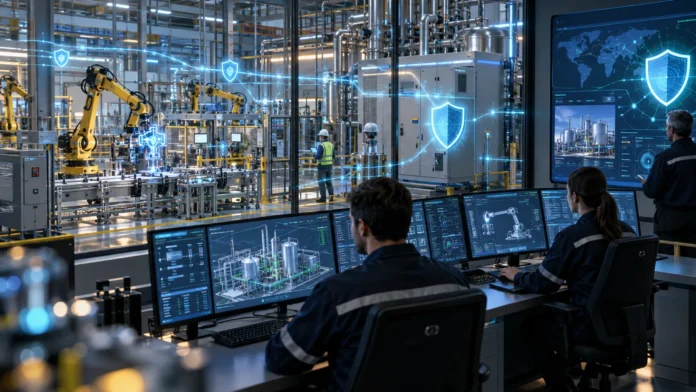

Operational Technology, commonly called OT, plays a critical role in industries where computers and connected systems control physical equipment and processes. Factories, power plants, water facilities, transportation networks, oil and gas operations, and building systems all rely on OT to keep essential machinery running safely and efficiently.
Because OT systems directly interact with the physical world, cyberattacks against them can create consequences far beyond stolen data. A successful attack may interrupt production, damage equipment, affect public services, or create safety risks for workers and communities. This makes OT cyber security an increasingly important part of modern security planning.
Understanding what OT is in cyber security begins with learning how these systems differ from traditional IT environments. This guide explains OT systems, common technologies, cyber risks, security challenges, threats, protective controls, and practical best practices organizations can use to improve operational resilience.
What Is OT in Cyber Security?
OT, or Operational Technology, refers to hardware and software used to monitor, control, and manage physical processes, equipment, and industrial operations. Unlike traditional business technology that mainly handles information, OT systems interact directly with machines, sensors, production lines, valves, motors, generators, and other physical assets.
OT environments often operate continuously because shutting them down can disrupt production or essential services. Industrial organizations may depend on these systems to maintain precise temperatures, pressures, speeds, or other operating conditions. Reliability and safety therefore become major priorities alongside traditional cyber security objectives such as confidentiality and access control.
In cyber security, OT security focuses on protecting these operational systems from unauthorized access, malware, manipulation, disruption, and other digital threats. The goal is not simply preventing data theft. Security teams must also protect human safety, equipment availability, production continuity, environmental controls, and the integrity of physical processes.
What Is the Difference Between OT and IT?
Information Technology, or IT, usually focuses on business data, applications, computers, servers, email systems, databases, and communication platforms. IT security frequently prioritizes confidentiality, integrity, and availability of information. Common security measures include endpoint protection, identity management, encryption, firewalls, patching, and data-loss prevention.
OT environments have different priorities because physical processes may depend on continuous operation. A manufacturing system cannot always be restarted as easily as an office computer. Unexpected downtime could stop production, damage equipment, affect product quality, or interrupt essential services, so availability and operational safety are often extremely important.
IT and OT are increasingly connected, which creates both advantages and new security risks. Business systems may exchange information with industrial environments for analytics, maintenance, reporting, or remote management. This convergence makes collaboration between IT and OT teams essential because a weakness in one environment can potentially affect the other.
Common OT Systems and Technologies
Industrial Control Systems, commonly called ICS, are among the most important technologies found in OT environments. ICS is a broad category that includes systems used to monitor and control industrial processes. These technologies help organizations manage production equipment, utility operations, transportation infrastructure, and other physical systems.
Supervisory Control and Data Acquisition systems, or SCADA, allow operators to monitor large or geographically distributed industrial environments. They may collect information from remote equipment and provide centralized visibility. Programmable Logic Controllers, known as PLCs, are another important component because they can directly control machinery, motors, pumps, and automated production processes.
Other OT technologies include Distributed Control Systems, Human-Machine Interfaces, Remote Terminal Units, industrial sensors, safety systems, and specialized networking equipment. These technologies often work together. Understanding how they connect is important because attackers may target individual devices or exploit communication between different components to reach sensitive operational systems.
Why Is OT Cyber Security Important?
OT cyber security is important because operational systems often control processes that affect people, businesses, and public infrastructure. An attack against a normal office computer may cause inconvenience or data loss, while an attack against industrial equipment could potentially stop production or disrupt important physical operations.
Many industries cannot tolerate long periods of downtime. Manufacturing plants may lose significant revenue when production lines stop, while utility providers may face major consequences if essential services become unavailable. Security therefore supports business continuity by reducing the likelihood that digital attacks will interrupt important operational processes.
Safety is another major consideration. If attackers manipulate industrial equipment or interfere with monitoring systems, operators may receive incorrect information or lose control of critical processes. Strong OT security helps organizations maintain safe operating conditions while also protecting equipment, production quality, environmental systems, and overall operational reliability.
Common Cyber Threats Against OT Systems
OT environments can face many of the same threats that affect traditional computer networks. Phishing, stolen credentials, malicious insiders, remote-access abuse, ransomware, and vulnerable software can all create security problems. However, the consequences may be more serious because compromised systems can directly influence physical equipment and operations.
Attackers may target OT environments for different reasons. Some are financially motivated and use ransomware or extortion, while others may seek disruption, espionage, competitive intelligence, or access to critical infrastructure. Threat actors may also enter through IT systems before moving toward industrial networks that were not originally exposed directly to the internet.
Malicious software remains an important concern because infected devices can interrupt operations or provide attackers with unauthorized access. Understanding malware helps explain how harmful software can steal information, disrupt systems, or create persistent access. OT organizations therefore need both prevention and detection strategies designed for industrial environments.
Why OT Systems Can Be Difficult to Secure
Many OT systems were originally designed for reliability and long operational lifetimes rather than modern cyber security. Industrial devices may remain in service for decades, especially when replacing them would require expensive production shutdowns. As a result, organizations may operate older equipment that lacks advanced security features.
Patching can also be difficult in operational environments. Updating software on an office laptop is usually straightforward, but updating industrial equipment may require testing, planned downtime, vendor approval, or coordination with production teams. A poorly tested update could potentially interrupt important processes, so organizations must balance security improvements with operational stability.
Limited visibility creates another challenge. Some organizations do not have complete inventories of every connected industrial asset, software version, or communication pathway. Without accurate asset information, security teams may struggle to identify outdated devices, unnecessary connections, or unusual behavior that could indicate a developing cyber incident.
How Attackers Gain Access to OT Environments
Attackers may enter OT networks through compromised employee credentials, insecure remote access, phishing emails, exposed systems, or vulnerable software. If IT and OT networks are poorly separated, an attacker who compromises a business system may eventually find pathways into more sensitive operational environments.
Third-party connections can create additional risks. Industrial organizations often rely on vendors, contractors, equipment manufacturers, and maintenance providers that need remote access to specialized systems. These connections are useful, but poorly controlled accounts or insecure remote tools may give attackers another way to reach operational equipment.
Portable devices can also introduce threats. USB drives, engineering laptops, and maintenance equipment may move between different environments and potentially carry malicious software. Strong access controls, device management, network segmentation, and monitoring help reduce the likelihood that one compromised endpoint will provide uncontrolled access to critical OT systems.
How OT Security Works
OT security usually begins with understanding what assets exist and how they communicate. Organizations need visibility into controllers, servers, workstations, sensors, network devices, and other connected equipment. Accurate inventories make it easier to identify vulnerabilities, understand dependencies, and prioritize protection for systems that are essential to operations.
Network segmentation is another important control. Separating business IT networks from critical OT systems can reduce unnecessary communication and limit how far an attacker can move after gaining access. Organizations may create several security zones based on risk, function, and operational requirements instead of allowing every device to communicate freely.
Continuous monitoring helps security teams identify unusual behavior without interfering with industrial operations. Analysts can watch for unexpected network connections, configuration changes, new devices, or unusual traffic patterns. OT-focused monitoring is particularly important because traditional security tools designed for office environments may not understand specialized industrial protocols and devices.
Best Practices for OT Cyber Security
Organizations should begin by maintaining a complete inventory of OT assets, including hardware, software, network connections, and responsible owners. Knowing what exists makes vulnerability management and incident response much easier. Asset inventories should be updated regularly because undocumented equipment can create security blind spots that attackers may exploit.
Access to critical systems should follow the principle of least privilege. Employees, vendors, and contractors should receive only the permissions necessary for their responsibilities. Multi-factor authentication, secure remote access, strong account management, and regular reviews of inactive users can further reduce the risk of unauthorized access.
Organizations should also combine network segmentation, backups, patch management, monitoring, and security awareness training. No single control can protect an entire OT environment. Layered security creates multiple barriers, making it harder for one stolen password, infected device, or vulnerable application to compromise critical industrial systems.
OT Incident Response and Recovery
OT incident response requires careful planning because aggressive actions can accidentally interrupt physical operations. Immediately shutting down systems may sometimes create more risk than allowing controlled operation to continue. Security teams therefore need response procedures that consider both cyber security and operational safety before an incident occurs.
A strong incident response plan should define responsibilities for security teams, engineers, operators, leadership, vendors, and other relevant personnel. Organizations should know how to isolate affected systems, preserve evidence, maintain essential operations, and communicate during an emergency. Regular exercises can help reveal gaps before a real attack happens.
Recovery planning should also include secure backups, tested restoration procedures, and documentation for important configurations. Restoring an industrial system is not always as simple as reinstalling software. Organizations must confirm that recovered equipment operates safely and accurately before returning it to normal production.
The Role of Network Segmentation in OT Security
Network segmentation divides an environment into smaller zones so devices communicate only when necessary. In OT security, this can help separate corporate systems, engineering workstations, industrial controllers, safety systems, and external connections. Clear boundaries reduce the number of pathways attackers can use to move through an environment.
Segmentation also makes monitoring easier because security teams can define what normal communication should look like between different zones. If a device suddenly communicates with a system it normally never contacts, that behavior may require investigation. Firewalls and access rules can restrict unnecessary protocols, destinations, and services.
Effective segmentation should be designed around operational requirements rather than applied blindly. Industrial systems often depend on specific communication patterns, so changes must be carefully tested. Collaboration between network engineers, security professionals, and operational teams helps ensure protection improves without disrupting legitimate production processes.
The Future of OT Cyber Security
OT environments are becoming more connected as organizations adopt industrial internet technologies, cloud analytics, remote monitoring, smart sensors, and automation. These capabilities can improve efficiency and visibility, but they also increase the number of digital connections that organizations need to protect.
Security teams are responding with better asset discovery, industrial threat monitoring, secure remote access, and stronger IT-OT coordination. Organizations are also paying greater attention to supply-chain risk and third-party access. As industrial networks become more connected, protecting them requires understanding both cyber security and real-world operational processes.
The future of OT security will depend heavily on collaboration. Cyber security specialists cannot protect industrial environments effectively without input from engineers and operators who understand how equipment behaves. Organizations that combine technical security knowledge with operational expertise are better positioned to reduce risk while maintaining reliable and safe operations.
Conclusion
OT in cyber security refers to the protection of systems that monitor and control physical equipment, industrial processes, and critical infrastructure. These environments include technologies such as ICS, SCADA, PLCs, sensors, and industrial networks that support manufacturing, utilities, transportation, and many other essential industries.
Protecting OT is challenging because systems may be old, difficult to patch, highly specialized, or expected to operate continuously. Threats such as ransomware, stolen credentials, malware, insecure remote access, and poorly segmented networks can create serious operational and safety risks when they reach industrial environments.
Effective OT security requires asset visibility, network segmentation, access control, continuous monitoring, backups, incident response, and collaboration between security and operational teams. As industrial technology becomes more connected, organizations must treat OT cyber security as an essential part of both digital defense and operational resilience.
FAQs
What does OT stand for in cyber security?
OT stands for Operational Technology. It includes hardware and software used to monitor, control, and manage physical equipment, industrial processes, and infrastructure such as factories, power systems, and transportation networks.
What is the difference between IT and OT security?
IT security mainly protects data, applications, and business systems, while OT security protects physical processes and industrial equipment. OT environments often place especially high importance on availability, reliability, and safety.
What are examples of OT systems?
Common OT systems include SCADA platforms, Programmable Logic Controllers, Distributed Control Systems, Human-Machine Interfaces, industrial sensors, Remote Terminal Units, and specialized networks used to manage physical operations.
Why is OT security important?
OT security helps prevent cyberattacks from disrupting production, damaging equipment, affecting essential services, or creating safety risks. Strong protection also supports business continuity and reliable industrial operations.
Can malware affect OT systems?
Yes. Malware can infect industrial workstations, servers, controllers, or connected devices and may interrupt operations or give attackers unauthorized access. OT environments therefore need layered prevention, monitoring, and incident response controls.