
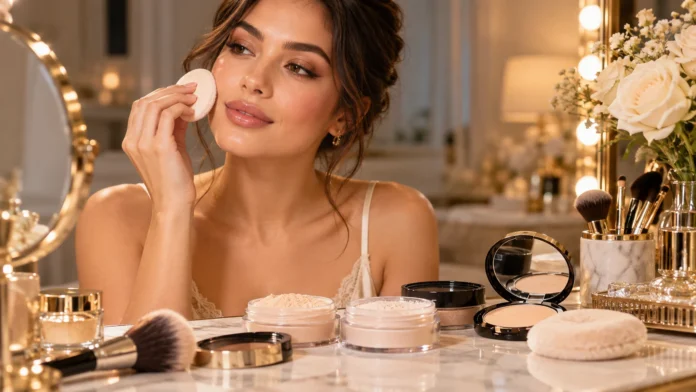

What Makes a Setting Powder Look Smooth?
A good setting powder should help reduce shine, improve makeup wear, and create a more refined finish without making the skin look dry or heavy. The best formulas usually feel finely milled and blend easily into foundation and concealer. A smooth result depends on both the powder itself and how lightly it is applied across different areas of the face.
Texture is especially important because coarse or overly dry powders can sit visibly on top of the skin. Finely milled formulas tend to distribute more evenly and are easier to press into the complexion. They can soften the appearance of excess shine while keeping makeup looking polished rather than creating a thick, dusty layer.
The finish also matters. Some setting powders are very matte, while others provide a natural or soft-focus effect. Your ideal option depends on skin type, climate, and makeup style. A powder that works beautifully on oily skin may feel too dry on mature or dehydrated skin, so choosing the right formula is essential.
Choose Powder Based on Your Skin Type
Skin type should guide your setting powder choice because different formulas control oil and texture in different ways. Oily skin often benefits from a more mattifying powder that helps manage shine, especially around the forehead, nose, and chin. Dry skin generally looks better with a softer, lightweight powder used only where makeup needs extra support.
Combination skin usually requires a more targeted approach. You can use slightly more powder in oily areas while keeping the cheeks and under-eye area lightly set. This prevents the entire face from looking flat. Selective application often creates a more natural finish than applying the same amount everywhere regardless of how each area behaves.
Normal skin has greater flexibility and can work with matte, natural, or radiant-leaning setting powders depending on preference. Focus on texture and wear rather than strong oil control. A balanced formula can keep makeup in place while preserving the natural finish of your foundation and concealer instead of changing it completely.
Best Setting Powders for Oily Skin
Oily skin usually benefits from powders designed to absorb excess oil and maintain a matte or soft-matte finish. Look for lightweight formulas that control shine without becoming thick after repeated touch-ups. A smooth setting powder should help the complexion stay more balanced while still allowing the makeup underneath to look natural.
The T-zone is often where oil becomes most visible, so concentrate powder in those areas instead of heavily setting the entire face. Pressing the product into the skin with a puff can provide better oil control than quickly sweeping it with a large brush. This method also helps the powder sit more evenly over foundation.
During the day, blot excess oil before applying more powder. Adding fresh powder directly over a shiny surface can create buildup and make the makeup look cakey. A small touch-up after blotting is usually enough. Oily skin tends to look smoother when shine is managed gradually rather than covered repeatedly with thick layers.
Best Setting Powders for Dry Skin
Dry skin needs a setting powder that feels lightweight and does not emphasize flaky areas or fine texture. Very strong mattifying formulas can sometimes remove too much surface softness and make the complexion look flat. Finely milled powders with a more natural finish are often easier to wear, especially when applied sparingly.
Preparation matters just as much as powder choice. Moisturize the skin and allow skincare to absorb before applying makeup. Foundation and concealer should already look smooth before you set them. If the base appears dry before powder is added, applying more product on top will usually make the texture even more noticeable.
Use powder mainly where it is needed, such as around the nose, under the eyes, or anywhere makeup tends to move. The cheeks may require very little or none at all. This selective technique can improve longevity without removing the natural softness of the complexion, giving dry skin a more comfortable and polished appearance.
Best Setting Powders for Combination Skin
Combination skin needs a flexible setting approach because the face may include both oily and dry areas. The forehead, nose, and chin can become shiny while the cheeks or under-eyes remain normal or dry. A lightweight powder with moderate oil control often works better than an extremely mattifying formula used across the entire face.
Apply the powder in layers according to need. Use a puff or denser brush on the T-zone and a softer brush everywhere else. This allows you to create stronger control where oil appears without making drier areas look heavy. The goal is to balance the complexion rather than force every area into the same finish.
You can also use different powders in different areas if necessary. A stronger mattifying formula can handle the T-zone, while a softer powder can set the under-eyes. This is not required for everyone, but it can work well when one product never seems to suit the entire face consistently.
Loose Powder vs Pressed Powder
Loose setting powder is popular because it can provide a lightweight, even layer and is easy to control with brushes or puffs. It is especially useful for setting foundation, concealer, and larger areas of the face. Loose formulas are also commonly used for baking, although heavy baking is not necessary for a smooth everyday makeup look.
Pressed powder is more convenient for travel and quick touch-ups because it creates less mess. It can provide similar setting benefits while being easier to carry in a makeup bag. Pressed formulas are particularly useful for reducing shine during the day without needing to open a loose powder container or use a large amount of product.
Neither type is automatically better. Loose powder may provide more flexibility during initial makeup application, while pressed powder is often easier for maintenance. Some people use loose powder at home and carry pressed powder for touch-ups. Choose whichever format fits your routine and allows you to apply the product with control.
Translucent vs Tinted Setting Powder
Translucent setting powder is designed to set makeup without adding significant color coverage. It can be useful when your foundation already matches well and you do not want to change the shade. These formulas are often versatile, but the finish can vary depending on skin tone, application amount, and how finely the powder is milled.
Tinted powders add a small amount of color and can help even the complexion further. They may be useful when you want extra coverage or when translucent formulas appear too pale on your skin. Choosing a tint close to your foundation shade helps maintain consistency instead of creating a visible difference between powdered and unpowdered areas.
Deeper skin tones may benefit from powders designed with appropriate undertones rather than relying on one universal translucent shade. Testing the product in natural-looking light can help reveal whether it leaves a cast. The right powder should blend into the complexion rather than making the skin look gray, white, or unusually flat.
Setting Powder for the Under-Eye Area
The under-eye area needs less powder than most people expect. Because the skin is thinner and moves constantly, excessive powder can settle into fine lines and make the area look dry. A finely milled formula applied in a very thin layer usually provides enough setting without creating a heavy finish.
Before powdering, smooth out any visible concealer creases with a fingertip or sponge. Setting creased concealer can lock those lines into place. Once the area looks even, use a small brush or puff to apply powder only where the concealer tends to move. This keeps the finish more flexible and natural.
If your under-eyes are dry, avoid repeatedly adding powder throughout the day. Instead, gently press the area with a clean sponge or fingertip to refresh the concealer. A small amount of powder may be added only if necessary. Minimal product usually creates the smoothest result around delicate eye texture.
Setting Powder for Mature Skin
Mature skin often benefits from lightweight setting powders that do not emphasize fine lines or dryness. Heavy matte formulas can sometimes make texture more visible, especially around the eyes and mouth. A soft, finely milled powder used strategically can help control movement while maintaining a more natural appearance.
Apply less product in areas with deeper expression lines. You may need more setting around the nose or forehead and almost none on the outer cheeks. This selective approach allows the skin to retain some natural dimension. Avoid assuming that mature skin needs heavy powder simply to keep foundation in place.
A setting spray can also help soften the final finish after powder application. A light mist may help makeup look more integrated with the skin. The goal is not to erase every line but to prevent excess product from settling into them. Thin layers and flexible formulas generally create a fresher result.
How to Apply Setting Powder Correctly
Start by making sure your foundation and concealer are fully blended. Powder should enhance the base rather than fix uneven application underneath. Pick up a small amount and remove the excess before placing it on the face. Applying too much immediately is one of the easiest ways to create a dry or cakey appearance.
Use a powder puff when you want stronger setting or oil control. Press the product into the skin rather than rubbing it back and forth. A fluffy brush works well when you prefer a lighter finish. Different tools create different levels of coverage, so choose the one that matches the area you are setting.
Work in sections and check the finish as you go. You do not need to powder every part of the face equally. Stop once the makeup feels secure and excess shine has been reduced. A smooth makeup look usually comes from using the minimum amount of powder needed rather than trying to create a completely matte surface.
How to Avoid Flashback With Setting Powder
Flashback can occur when certain powders appear lighter in flash photography than they do in normal lighting. This effect can make the under-eye area or face look unusually pale in photos. Applying excessive powder increases the risk because more product remains visibly on the surface instead of blending naturally into the complexion.
Choose a powder that works with your skin tone and test it before an important event if you expect flash photography. Take a few photos in low light using a flash and check whether any areas look noticeably lighter. This simple test can reveal problems that are difficult to see in normal indoor lighting.
Using less powder also helps reduce the chance of flashback. Avoid leaving thick layers under the eyes or around the center of the face unless you know the formula photographs well. A thin, blended layer is usually safer and creates a more natural appearance both in person and in pictures.
How to Set Makeup Without Looking Dry
Dry-looking makeup often comes from applying powder over a base that is already lacking moisture. Make sure the skin is properly prepared and that foundation looks comfortable before setting. If the base already appears tight or flaky, powder is unlikely to improve it. Address the texture before continuing with the makeup.
Use powder selectively instead of applying it everywhere. Areas that naturally remain dry may not need any setting at all. Focus on the nose, forehead, chin, or other places where makeup tends to move. This preserves a more natural finish and prevents the face from looking uniformly flat.
A light setting spray can help powder blend into the rest of the makeup. Mist the face gently and allow it to dry without touching. If one area remains too dry, press it lightly with a damp sponge. This can soften visible powder without requiring you to remove and restart the entire base.
Common Setting Powder Mistakes to Avoid
Using too much product is the most common setting powder mistake. Large amounts can emphasize pores, dryness, and fine lines while making the base look heavy. Start with a small amount and add more only where necessary. Powder should support the makeup rather than become one of the most visible layers on the face.
Another mistake is choosing a powder that does not suit your skin type. A strong oil-control formula can be uncomfortable on dry skin, while an extremely lightweight powder may not provide enough control for very oily areas. Matching the formula to your skin makes it easier to achieve both longevity and a smooth finish.
Poor shade selection can also affect the final result. A powder that is too light, too dark, or mismatched in undertone may change the appearance of your foundation. Test the powder over your actual makeup whenever possible. A good setting product should blend seamlessly rather than creating a noticeable layer of separate color.
How to Make Setting Powder Last Longer
Long-lasting powder starts with a well-prepared and properly layered base. If foundation and concealer are too thick or unstable, powder may not keep them looking smooth throughout the day. Apply makeup in thin layers and allow each product to settle before setting. This creates a stronger foundation for longer wear.
Press powder into areas that become oily instead of lightly dusting everything if durability is your main goal. A controlled pressing technique can help the product stay in place longer. Follow with a setting spray if it works well with your makeup routine. This can help the layers feel more unified.
For touch-ups, blot excess oil first instead of immediately adding more powder. Once the shine is removed, apply a small amount only where needed. This prevents thick buildup as the day continues. Thoughtful touch-ups can keep makeup looking smoother for longer than repeatedly layering powder over oil and existing product.
Conclusion
The best setting powders for a smooth makeup look are finely milled, easy to blend, and suited to your skin type. Oily skin may need stronger shine control, while dry and mature skin often benefits from lighter formulas and selective application. Combination skin can use different amounts across the face to maintain balance.
Application technique matters just as much as the formula. Use thin layers, press powder where greater setting is needed, and avoid heavily covering areas that already look dry. Under the eyes, a small amount is usually enough. The goal is to secure makeup while maintaining natural skin texture rather than creating a visibly powdered finish.
A smooth complexion comes from balancing skincare, foundation, concealer, powder, and setting spray carefully. No single product can compensate for excessive layering underneath. By choosing the right powder and using only what your skin needs, you can improve makeup longevity while keeping the final result polished, soft, and natural-looking.
FAQs
What type of setting powder is best for a smooth finish?
A finely milled powder with a lightweight texture usually creates the smoothest appearance. Choose the finish according to your skin type, using stronger mattifying formulas for oily areas and softer powders for dry skin.
Is loose or pressed setting powder better?
Both can work well. Loose powder offers flexible application during makeup, while pressed powder is convenient for touch-ups. The better option depends on your routine and how much control you want.
How much setting powder should I use?
Use a small amount and build only where needed. Apply more to oily areas and less to dry or textured areas. Excess powder can make makeup look heavy, dry, or cakey.
Can setting powder make mature skin look older?
Heavy or very dry powder can emphasize fine lines and texture. Mature skin usually looks better with a finely milled formula applied sparingly, especially around the under-eyes and expression lines.
How do I stop setting powder from looking cakey?
Prepare the skin properly, apply foundation in thin layers, use less powder, and set only the areas that need it. A light setting spray can also help the makeup look more blended and natural.