
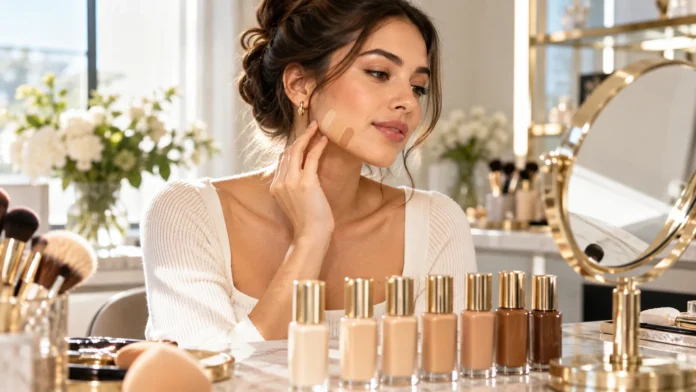

Choosing the right foundation shade can make the difference between makeup that looks seamless and makeup that appears noticeably separate from your natural skin. The ideal match should blend into your complexion without creating an obvious line around your jaw, neck, or hairline. Getting that match right requires more than simply choosing a shade labeled light, medium, or deep.
Skin tone, undertone, lighting, foundation formula, and even seasonal changes can influence how a shade appears on your face. A foundation that looks perfect in the bottle may turn orange, pink, gray, or overly pale once applied. Understanding these factors helps you shop more confidently and avoid wasting money on products that do not suit your complexion.
Whether you are buying foundation for the first time or replacing a shade that no longer seems right, a simple matching process can make the decision easier. The following steps explain how to choose the right foundation shade while keeping your makeup natural, balanced, and flattering in different lighting conditions.
Understand the Difference Between Skin Tone and Undertone
Skin tone refers to the visible depth of your complexion, such as fair, light, medium, tan, deep, or rich. Undertone describes the subtle color underneath the surface of your skin. Two people can have the same visible skin depth but require completely different foundation shades because one may have warm undertones while the other has cool or neutral undertones.
Your undertone usually remains relatively consistent even when your visible skin tone becomes lighter or darker. Common undertone categories include warm, cool, neutral, and olive. Warm undertones may appear golden, peachy, or yellow, while cool undertones can look pink, reddish, or bluish. Neutral complexions contain a balance of warm and cool tones, while olive skin often has greenish or muted golden characteristics.
Understanding this distinction prevents one of the most common foundation mistakes. Choosing the correct depth but the wrong undertone can still make foundation look unnatural. Once you identify both your skin depth and undertone, narrowing down potential foundation shades becomes much easier because you can eliminate colors that are too pink, yellow, golden, or muted for your complexion.
Identify Your Skin Undertone
One simple way to estimate your undertone is to examine the veins around your wrist in natural daylight. Veins that appear mostly blue or purple may suggest cool undertones, while green-looking veins can indicate warmer undertones. If your veins appear like a combination of blue and green, you may have neutral or olive characteristics rather than fitting neatly into one category.
Jewelry can provide another clue, although it should not be treated as an absolute test. People with warm undertones often feel that gold jewelry complements their complexion, while silver may appear especially flattering on cooler skin. If both metals look equally harmonious, your undertone may be neutral. Olive complexions can also wear both metals well depending on their overall depth.
You can also consider how your skin reacts visually beside pure white and cream-colored clothing. Cool undertones may look brighter beside crisp white, while warm undertones can appear more balanced beside ivory or cream. Use several observations together rather than relying on one test, because lighting, redness, and personal preference can influence how your skin appears.
Match Foundation to Your Jawline
Testing foundation on your hand or wrist is convenient, but these areas often differ noticeably from your face and neck. Hands may receive more sun exposure or have a different natural pigmentation. The jawline is usually a better testing area because it allows you to compare the foundation directly with both your face and neck at the same time.
Apply two or three promising shades in small vertical stripes from your lower cheek toward your jaw. Avoid blending them completely at first because seeing each shade separately helps you compare depth and undertone. The strongest match should appear to disappear naturally into the skin without looking noticeably lighter, darker, pinker, or more yellow than the surrounding complexion.
Once you identify the closest shade, blend a small amount around the jaw and lower cheek. Step back from the mirror instead of judging the color from only a few inches away. A foundation match should look harmonious across your entire complexion rather than perfect only in one tiny area, so evaluate the overall transition between your face and neck.
Test Foundation in Natural Lighting
Store lighting can dramatically change how foundation appears. Bright fluorescent lights may make your complexion look cooler, while warm indoor lighting can hide yellow or orange tones. Whenever possible, check your foundation shade near a window or step into natural daylight before making a final decision, especially when choosing between two very similar colors.
Allow the foundation to remain on your skin for several minutes before judging it. Some formulas slightly change color after interacting with air, skincare, or natural facial oils. This process is often described as oxidation, and it can make certain foundations appear darker or warmer than they looked immediately after application.
Take a photo in natural light as another useful check, but do not rely on camera results alone. Phone cameras can automatically adjust exposure, contrast, and skin tone, which may change how the shade appears. Compare the foundation with your neck in person first, then use photographs only as an additional way to identify obvious mismatching or unusual color changes.
Consider Your Neck and Chest When Matching
Your face is not always the best reference point because redness, acne, pigmentation, skincare treatments, or sun exposure can change its visible color. If your face appears noticeably different from your neck, choosing foundation solely to match your cheeks may create an obvious contrast. Instead, aim for a shade that creates a natural transition between your face, neck, and upper chest.
Someone with facial redness, for example, may accidentally choose a foundation that is too pink because the cheeks influence their judgment. Matching more closely to the neck can help balance that redness without making the entire complexion appear flushed. Foundation should generally unify your skin rather than duplicate temporary discoloration or surface irritation.
If your neck is significantly lighter than your chest, use your overall appearance as the deciding factor. The goal is visual balance, especially when wearing clothing that exposes the neckline. You do not need an absolutely identical match across every area, but avoiding a noticeable color division between the face and body will make your finished makeup look considerably more natural.
Choose the Right Foundation Depth
Foundation depth describes how light or dark the shade is, separate from its undertone. If foundation looks chalky, pale, or gray, the shade may be too light. If it creates a visible shadow or makes your complexion look unusually tanned, it may be too deep even if the undertone itself appears reasonably accurate.
When you are choosing between two neighboring shades, test both along your jawline rather than guessing from the bottle. Foundation packaging can distort color, particularly when the bottle is frosted or the formula dries differently on skin. A shade that initially looks too deep in its container may become nearly invisible once blended across your natural complexion.
Avoid intentionally selecting a darker foundation to create a bronzed effect. Bronzer is designed to add warmth and dimension after the base has been matched correctly. Using foundation that is too dark can create an unnatural difference between your face and neck and make blending considerably more difficult, especially around the ears, jawline, and hairline.
Understand Foundation Shade Names
Shade names can provide useful guidance, but they are not standardized across makeup brands. One company may use “warm beige” for a medium golden shade, while another uses the same name for something significantly lighter or more neutral. Always treat shade descriptions as a starting point rather than assuming identical names will match across different product ranges.
Letters or numbers may indicate depth and undertone in some foundation systems. Labels such as W, C, N, or O may represent warm, cool, neutral, or olive, while numbers often indicate shade depth. However, every brand organizes its range differently, so check the brand’s specific shade system before using these codes to make a decision.
If you already have one foundation that matches well, use its depth and undertone as a reference when shopping for another formula. You still need to test the new product because shades vary between brands. Comparing a known match can nevertheless narrow your options and prevent you from starting from the entire foundation range each time.
Consider Your Skin Type as Well as Shade
A perfect shade can still produce disappointing results if the foundation formula does not suit your skin type. Oily skin may prefer lightweight matte or natural-finish formulas that resist excessive shine. Dry skin often looks smoother with hydrating or luminous foundations because very matte products can cling to flaky areas and make texture appear more noticeable.
Combination skin may require a balanced formula or different preparation across the face. You might use extra hydration on dry cheeks while controlling oil around your forehead, nose, and chin. The correct shade should remain consistent, but changing your primer or setting technique allows you to adapt one foundation formula to different areas more effectively.
Beginners should avoid choosing products based only on trends or packaging. Learning a few basic makeup tips can make it easier to understand how foundation, concealer, powder, and other products work together. Matching both the shade and formula to your skin gives you a much better foundation for the rest of your makeup routine.
Account for Seasonal Changes in Your Skin Tone
Your foundation match can change throughout the year, particularly if your skin becomes more tanned during warmer months. A shade that blends perfectly in winter may look too pale by summer. Similarly, a foundation purchased during a period of significant sun exposure may appear too deep once your complexion returns to its usual lighter tone.
Some people benefit from keeping two foundation shades available. One can match their lighter complexion, while the other works when their skin becomes deeper. During transitional months, mixing a small amount of each can create a customized shade that matches more closely than either foundation would when worn alone.
Whenever your existing foundation begins creating a visible line around your jaw, reassess the color before assuming the formula has stopped working. Seasonal changes may simply mean you need a slightly different depth. Your undertone usually stays similar, so once you know whether you are warm, cool, neutral, or olive, adjusting the depth becomes much simpler.
Watch for Foundation Oxidation
Oxidation happens when a foundation changes color after being exposed to air or interacting with your skin. Some formulas become slightly darker or warmer after several minutes. If you choose a foundation based only on how it looks immediately after application, you may discover later that your face appears noticeably deeper or more orange than expected.
To test oxidation, apply a small stripe of foundation along your jaw and leave it for at least several minutes. Place a fresh stripe beside it afterward and compare the two. If the older application looks significantly different, you know the formula changes after settling and should take that shift into account before choosing your final shade.
Skincare products, facial oils, and certain primers can also affect how a foundation wears. Test the product over the skincare routine you normally use rather than on completely bare skin whenever possible. This gives you a more realistic impression of how the foundation will look several hours into an ordinary day rather than immediately after swatching.
Avoid Common Foundation Matching Mistakes
One frequent mistake is choosing foundation while wearing fake tan without considering how often you use it. If you regularly change the depth of your body color, your foundation may need to change as well. Matching your natural face while the rest of your visible skin is much deeper can create a noticeable contrast around your jaw and neckline.
Another mistake is trying to correct the wrong shade with excessive bronzer, concealer, or powder. Minor differences can sometimes be balanced, but a clearly incorrect foundation shade usually remains visible. Starting with a close match is easier than attempting to transform a foundation that is several shades too light, dark, warm, or cool.
Do not assume expensive foundation automatically provides a better color match. Shade suitability depends on the range and your individual complexion, not the product’s price. An affordable formula in the correct depth and undertone can look considerably more polished than a luxury foundation that does not blend naturally with your skin.
Know What to Do if Your Foundation Shade Is Wrong
If a foundation is only slightly too light, a small amount of bronzer around the perimeter of your face may help create better balance. If it is slightly too deep, mixing it with a lighter foundation from the same or a compatible formula can sometimes improve the match. Make small adjustments instead of adding large quantities immediately.
When the undertone is wrong, correcting the shade becomes more difficult. A very pink foundation on warm skin or an extremely yellow foundation on cool skin may continue looking unnatural even after other makeup is applied. In these cases, exchanging the product for a more suitable undertone is usually easier than repeatedly trying to correct it with additional products.
Foundation mixing pigments are another option for people who regularly struggle to find an exact match. These products can adjust depth or undertone without requiring several full foundation bottles. However, beginners may find it simpler to start with a shade that is already close and only use customization when their complexion falls between available options.
Conclusion
Choosing the right foundation shade becomes much easier when you understand your skin depth and undertone. Test potential shades along your jawline, compare them with your neck, and check the result in natural daylight. These simple steps provide a more reliable match than choosing a color based only on the bottle, your hand, or indoor store lighting.
Give the foundation time to settle before making your final decision because some formulas can oxidize. Remember that seasonal changes may also affect your ideal shade, while your undertone usually remains relatively consistent. Keeping track of successful shade matches makes future foundation shopping faster and reduces the chance of repeatedly choosing unsuitable colors.
The best foundation is one that becomes difficult to distinguish from your natural skin once blended. It should create an even complexion without producing an obvious mask-like line around your face. By testing carefully and considering both color and formula, you can create a smoother, more natural-looking base for the rest of your makeup.
FAQs
Where should I test foundation for the best shade match?
Test foundation along your jawline so you can compare it with both your face and neck. Apply several nearby shades and choose the one that appears to disappear most naturally into your skin.
How do I know whether my undertone is warm or cool?
Warm undertones often appear golden, peachy, or yellow, while cool undertones can look pink, red, or bluish. Vein color, jewelry preferences, and comparisons with white clothing can provide additional clues.
Should foundation match my face or my neck?
Aim for a shade that creates a smooth transition between your face and neck. If your face has redness or discoloration, matching closer to your neck often creates a more balanced overall appearance.
Why does my foundation turn orange after a few hours?
Your foundation may be oxidizing after interacting with air, facial oils, or skincare products. Test the formula for several minutes before purchasing and compare the settled color with a freshly applied swatch.
Can I mix two foundation shades together?
Yes. Mixing neighboring shades can help you create a closer match, particularly during seasonal changes. Use compatible formulas and adjust the proportions gradually until the mixture blends naturally into your complexion.