

Skincare in 2026 is becoming less about chasing every viral ingredient and more about supporting healthier, stronger skin over time. Consumers are paying closer attention to clinical evidence, barrier health, ingredient delivery, and products that perform multiple functions without creating unnecessarily complicated routines.
Many of the biggest skincare trends to watch in 2026 build on familiar concepts rather than replacing them completely. Peptides, retinoids, antioxidants, sunscreen, and barrier-supporting ingredients remain important, but brands are using improved formulas, biotechnology, and smarter delivery systems to make established approaches more sophisticated.
At the same time, ideas such as skin longevity, microbiome care, regenerative skincare, and technology-assisted routines are becoming increasingly visible. Understanding these trends can help you separate meaningful developments from temporary beauty hype and build a skincare routine that fits your actual needs.
Skin Longevity Is Replacing Quick-Fix Anti-Aging
One of the biggest skincare trends in 2026 is the growing focus on skin longevity. Instead of promising to erase every visible sign of aging, longevity-focused skincare aims to maintain hydration, elasticity, barrier function, and resilience so the skin continues functioning well as it naturally changes over time.
This approach places prevention and maintenance ahead of dramatic correction. Sunscreen, antioxidants, peptides, retinoids, moisturizers, and ingredients that support the skin barrier can all fit into a longevity-focused routine because they address everyday factors that contribute to dryness, uneven texture, environmental damage, and visible aging.
The concept is also changing the language brands use around mature skin. Rather than treating aging as something that must be completely reversed, more skincare conversations emphasize supporting healthy-looking skin at every stage of life, although newer longevity ingredients still require stronger evidence before their benefits can be treated as established.
Barrier Repair Is Becoming More Advanced
Skin barrier care has been popular for several years, but it continues to evolve in 2026. Consumers are moving beyond simply applying thick creams after irritation and becoming more interested in preventing barrier disruption through gentle cleansing, balanced exfoliation, effective moisturization, and formulas specifically designed to support skin resilience.
Ceramides, fatty acids, cholesterol, glycerin, panthenol, squalane, and other barrier-supporting ingredients remain widely used. Newer formulations increasingly combine several supportive ingredients within one product so users can improve hydration and comfort without layering numerous serums, oils, creams, and treatments throughout the day.
This trend also reflects a broader movement away from aggressive skincare routines. Overusing exfoliating acids, harsh cleansers, strong treatments, and frequent peels can leave skin feeling tight or sensitive, so 2026 routines increasingly prioritize maintaining a comfortable barrier before adding powerful active ingredients.
Peptides Are Becoming Smarter and More Targeted
Peptides remain one of the most discussed skincare ingredients in 2026, but the conversation is becoming more sophisticated. These short chains of amino acids are commonly incorporated into formulas designed to support firmness, hydration, smoother-looking texture, and the appearance of healthier skin as part of a consistent routine.
Rather than simply advertising products as containing peptides, brands are increasingly focusing on specific peptide combinations and improved delivery systems. Copper peptides, signaling peptides, and other targeted formulations are appearing in products positioned around skin recovery, visible firmness, and long-term maintenance instead of offering only temporary cosmetic effects.
Consumers should still look beyond impressive ingredient names when evaluating peptide skincare. Concentration, formula stability, supporting ingredients, packaging, and clinical testing can all influence performance, making a well-formulated product more important than choosing something simply because the word “peptide” appears prominently on the label.
Regenerative Skincare and Biotechnology Are Growing
Biotechnology is becoming increasingly visible within premium and clinical-inspired skincare. Ingredients and technologies associated with cellular communication, fermentation, growth factors, PDRN, and regenerative treatments are attracting attention as beauty brands search for more advanced approaches to improving texture, hydration, resilience, and visible signs of aging.
PDRN, in particular, has received attention through Korean beauty and aesthetic treatments. Exosome-related products and professional procedures are also frequently discussed within regenerative beauty, although consumers should understand that evidence, formulation quality, regulations, and effectiveness can differ significantly between topical cosmetics and procedures performed in professional settings.
The important trend is not that every biotechnology ingredient should immediately become part of your routine. Instead, 2026 skincare is increasingly borrowing concepts from dermatology, biotechnology, and regenerative science, encouraging consumers to ask whether sophisticated claims are supported by meaningful research rather than relying on futuristic terminology alone.
Microbiome-Friendly Skincare Continues to Expand
The skin microbiome refers to the community of microorganisms naturally living on the skin’s surface. Interest in maintaining this ecosystem has encouraged more brands to develop gentle cleansers, moisturizers, and treatments that aim to support the skin’s natural environment rather than repeatedly stripping it with overly aggressive products.
Prebiotics, postbiotics, fermented ingredients, and microbiome-focused formulations are appearing across different skincare categories. While the science surrounding cosmetic microbiome manipulation is still developing, the broader principle of avoiding unnecessary irritation and supporting a healthy skin barrier aligns well with established approaches to maintaining comfortable, balanced skin.
For everyday consumers, microbiome-friendly skincare does not necessarily require purchasing a completely separate routine. Gentle cleansing, sensible exfoliation, appropriate moisturization, and avoiding unnecessary product overload may already help create a more supportive environment for skin while researchers continue exploring how targeted microbiome technology can be used effectively.
Retinoids and Vitamin C Are Getting Smarter Formulas
Some of the biggest skincare developments in 2026 involve improving ingredients people already know rather than constantly introducing new ones. Retinoids and vitamin C remain major examples, with cosmetic formulators exploring better stabilization, encapsulation, delivery systems, and supporting ingredients designed to improve effectiveness while reducing common usability problems.
Retinoids are highly valued for concerns involving skin texture, breakouts, pigmentation, and visible aging, but irritation can make consistent use difficult for some people. Gentler derivatives, controlled-release technologies, and moisturizing formulations are therefore becoming particularly appealing to consumers who want long-term benefits without repeatedly compromising their skin barrier.
Vitamin C formulas are also becoming more sophisticated because stability has always been an important formulation challenge. Improved packaging, derivative forms, and combinations with complementary antioxidants are helping brands rethink classic antioxidant skincare, showing that innovation does not always require abandoning ingredients that already have established roles in modern routines.
Skinimalism Is Making Routines More Practical
Complex skincare routines containing eight, ten, or even twelve daily steps are losing some of their appeal. Skinimalism continues gaining momentum in 2026 as consumers look for shorter routines that provide meaningful results without requiring excessive spending, constant layering, or a bathroom shelf filled with products serving nearly identical purposes.
Multifunctional formulas fit naturally into this trend. A moisturizer might contain ceramides, peptides, niacinamide, and humectants, while a sunscreen may offer hydration and antioxidant support alongside UV protection, allowing consumers to address multiple needs without introducing separate products for every individual ingredient.
A simplified routine can also make it easier to identify which products actually work for your skin. When fewer formulas are introduced at once, irritation, breakouts, dryness, or improvement become easier to trace, making skinimalism both a beauty trend and a practical strategy for building a sustainable skincare routine.
Sunscreen Is Becoming a True Skincare Product
Sun protection is becoming increasingly integrated with everyday skincare rather than treated as a separate beach product. Modern sunscreens are being designed with lightweight textures, hydrating ingredients, elegant finishes, tint options, and formulas that work more comfortably under makeup, making daily SPF easier to incorporate into regular routines.
Many new sunscreen formulas combine UV protection with ingredients commonly associated with serums and moisturizers. Niacinamide, hyaluronic acid, antioxidants, ceramides, and peptides can now appear alongside sunscreen filters, helping brands create products that feel closer to a complete morning skincare step than traditional heavy sunblock.
Texture and inclusivity are also becoming more important. Consumers increasingly expect sunscreens that blend well across different skin tones, avoid uncomfortable residue, and offer finishes ranging from matte to radiant, making product experience almost as important as high-level protection when encouraging consistent daily use.
At-Home Skincare Devices Are Becoming More Popular
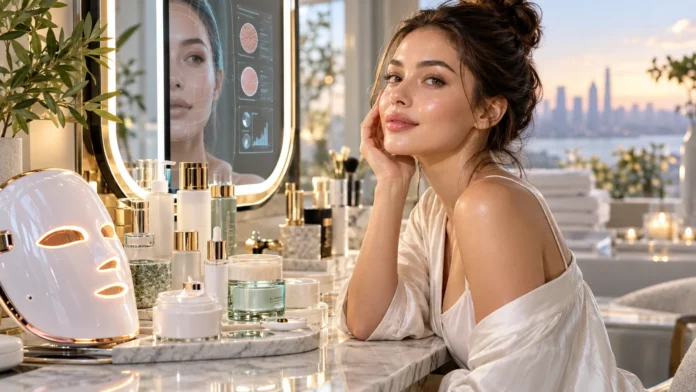
Beauty technology is moving beyond professional clinics as consumers become more interested in devices they can use at home. LED masks, red-light devices, microcurrent tools, cleansing technologies, and other beauty gadgets are becoming increasingly visible, especially among people interested in combining traditional topical skincare with technology-assisted routines.
Red and near-infrared light devices have attracted particular attention within the broader trend toward photobiomodulation. However, performance can vary depending on wavelength, power, treatment duration, device construction, and consistency, which means consumers should evaluate specifications and safety rather than assuming every visually similar device produces identical results.
The strongest approach is to view skincare devices as optional additions rather than replacements for fundamentals. A sophisticated tool will not make sunscreen, gentle cleansing, moisturization, or suitable treatments unnecessary, so basic skin health should remain the foundation before investing heavily in increasingly advanced beauty technology.
AI and Personalized Skincare Are Becoming More Accessible
Personalized skincare is another important trend shaping the beauty industry in 2026. Digital tools can increasingly evaluate questionnaires, lifestyle information, photographs, climate factors, and reported skin concerns to help consumers narrow down products instead of choosing randomly from thousands of nearly identical options.
Artificial intelligence is also being incorporated into virtual consultations, skin analysis applications, retail platforms, and recommendation engines. These systems may help users understand general concerns such as visible dryness, uneven tone, or routine complexity, although automated assessments should not be confused with diagnosis from a qualified dermatologist.
The broader benefit may be reducing unnecessary experimentation. If personalization tools become more accurate and transparent, shoppers could build routines around their actual priorities rather than repeatedly buying products because they are trending online, potentially creating a more focused and cost-conscious approach to skincare.
Natural-Looking Results Are Becoming More Important
Beauty trends are gradually moving away from obviously overtreated appearances toward skin that looks healthy, hydrated, and naturally expressive. The focus is increasingly on improving texture, tone, firmness, and overall skin quality without making the final result look artificial or dramatically altered.
This preference is also influencing professional aesthetics, where regenerative treatments, collagen-supporting approaches, skin boosters, lasers, and carefully planned procedures are receiving attention. The goal for many consumers is becoming subtle enhancement that preserves individual facial characteristics rather than chasing identical beauty standards or extremely dramatic transformations.
The same idea translates easily into home skincare. A successful routine should help your skin feel comfortable and look healthier rather than trying to eliminate every pore, line, or natural texture, creating more realistic expectations and reducing the pressure to pursue digitally perfected skin.
Evidence-Based Skincare Is Winning Over Viral Hype
Consumers are becoming more skeptical of dramatic before-and-after promises and ingredients that suddenly become viral without meaningful evidence. In 2026, brands are increasingly expected to explain why ingredients are included, how formulas were tested, and whether claims are supported by controlled research rather than marketing language alone.
This shift benefits established ingredients such as retinoids, sunscreen filters, niacinamide, ceramides, and certain antioxidants because consumers already have access to substantial information about their uses. At the same time, emerging ingredients can still succeed when companies provide transparent testing and realistic explanations instead of suggesting that one serum can transform every skin concern.
Social media will continue influencing skincare trends, but popularity does not automatically equal effectiveness. Learning to evaluate evidence, ingredient compatibility, skin type, formulation, and realistic outcomes can help consumers benefit from genuine innovation while avoiding unnecessary purchases created mainly by short-lived online excitement.
Conclusion
The biggest skincare trends to watch in 2026 reveal a clear movement toward stronger skin fundamentals, smarter formulations, and longer-term thinking. Skin longevity, advanced barrier support, peptides, biotechnology, microbiome care, sophisticated sunscreen, and personalized routines all reflect a growing interest in improving how skin functions rather than chasing instant perfection.
Technology will continue expanding what skincare can offer, from innovative ingredient delivery to AI-powered recommendations and at-home beauty devices. However, newer does not automatically mean better, and emerging concepts such as regenerative ingredients should still be evaluated according to evidence, safety, formulation quality, and individual skin needs.
Ultimately, the most valuable trend may be becoming more selective. Gentle cleansing, appropriate moisturizer, daily sun protection, targeted treatments, and consistency remain the backbone of effective skincare, while the best 2026 innovations are those that make these fundamentals easier, smarter, and more personalized.
FAQs
What is the biggest skincare trend in 2026?
Skin longevity is one of the strongest themes in 2026, focusing on maintaining barrier strength, hydration, resilience, and healthy-looking skin over time rather than relying only on quick anti-aging fixes.
Are peptides still popular in skincare in 2026?
Yes. Peptides remain highly visible, with growing interest in more targeted formulas, advanced delivery technologies, copper peptides, and products designed to support firmness, hydration, recovery, and smoother-looking skin.
Is skinimalism still trending in 2026?
Yes. Consumers continue moving toward shorter, more purposeful routines using multifunctional products. Skinimalism can reduce unnecessary layering while making it easier to identify which ingredients genuinely benefit individual skin concerns.
What skincare ingredients are trending in 2026?
Peptides, ceramides, postbiotics, advanced retinoids, antioxidants, PDRN, growth-factor technologies, and barrier-supporting ingredients are receiving attention. Evidence and formulation quality remain important when evaluating newer ingredients.
Will AI change skincare routines?
AI is increasingly being used for product recommendations, digital consultations, and personalized routine building. It can help narrow choices, but automated tools should complement rather than replace professional medical evaluation for persistent skin concerns.