
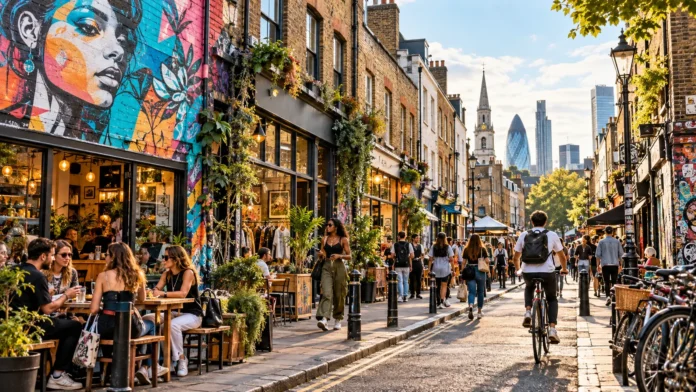

Why Visit Shoreditch in London?
Shoreditch is one of East London’s most distinctive neighborhoods, combining street art, independent shops, food markets, cafés, converted warehouses, and energetic nightlife. The area feels very different from traditional sightseeing districts around Westminster or Kensington. Visitors who enjoy contemporary culture, creative spaces, vintage fashion, photography, and casual food will find plenty to explore within a relatively compact area.
Part of Shoreditch’s appeal comes from its mixture of old and new. Historic brick buildings stand beside modern offices, design studios, restaurants, and colorful murals, while nearby streets lead naturally toward Brick Lane, Spitalfields, and Hoxton. This variety makes it easy to spend an entire day walking without following a strict attraction-by-attraction sightseeing schedule.
Shoreditch is especially enjoyable when you treat the neighborhood as an experience rather than a list of landmarks. Walk slowly, explore side streets, stop for coffee, browse markets, and notice how quickly the atmosphere changes from one block to another. A half-day provides a useful introduction, while a full day allows time for food, shopping, art, and nightlife.
Explore Shoreditch Street Art
Street art is one of the biggest reasons travelers visit Shoreditch. Murals, paste-ups, stencils, lettering, and large-scale pieces appear across walls, shutters, railway arches, and side streets. Because many works are temporary, the neighborhood can look different each time you visit, which makes exploring feel more like discovering a constantly changing outdoor gallery.
Brick Lane, Hanbury Street, Great Eastern Street, and smaller surrounding roads are useful areas to explore on foot. Instead of searching only for one famous piece, pay attention to doorways, narrow lanes, upper walls, and less obvious corners. New works can appear beside older layers of paint, creating a visual record of how the neighborhood continually changes.
A guided street-art walk can be useful if you want more context about artists, techniques, and the history behind individual works. Independent exploration is equally enjoyable when you prefer photography and a slower pace. Visit during daylight for the clearest views, and remember that street art is part of an active neighborhood rather than a formal museum.
Walk Down Brick Lane
Brick Lane is one of East London’s most recognizable streets and naturally forms part of most Shoreditch itineraries. The area combines restaurants, vintage stores, market spaces, street art, bakeries, and buildings connected with several waves of migration. Walking its full length reveals far more variety than visiting only the busiest section near the main market areas.
Food is a major part of the Brick Lane experience. The street has long been associated with Bangladeshi restaurants, while surrounding areas now offer bakeries, cafés, street-food vendors, and international dishes. Rather than deciding every meal in advance, explore first and choose somewhere that matches your appetite and the atmosphere you want.
Weekends can become particularly busy, especially when markets and shopping areas are active. Arriving earlier creates more space for photography and browsing, while later hours bring a livelier social atmosphere. Brick Lane also connects easily with Spitalfields, Shoreditch High Street, and several street-art routes, making it an ideal backbone for an East London walking day.
Browse Old Spitalfields Market
Old Spitalfields Market offers a more structured shopping and food experience within easy walking distance of Shoreditch. The covered market combines stalls, independent traders, food vendors, and permanent shops inside a historic setting. It works well when London weather becomes unpredictable because much of the experience can continue even when rain interrupts outdoor walking.
Shopping here can include clothing, accessories, art, homeware, gifts, and other independent products depending on the day. Give yourself time to browse rather than moving immediately toward the food area. Markets are most enjoyable when you allow space for unexpected discoveries instead of arriving with a rigid list of specific items you must purchase.
The market is easy to combine with Brick Lane because the two areas sit close together. One practical route is to explore Spitalfields first, continue toward Brick Lane, then head north into Shoreditch’s street-art and shopping streets. This keeps most of the day walkable and prevents unnecessary journeys across London between attractions that are already close to one another.
Shop for Vintage Fashion and Independent Design
Shoreditch is a strong destination for travelers interested in vintage clothing, independent fashion, sneakers, records, accessories, and design. Brick Lane and the surrounding streets contain a mixture of curated stores, market stalls, and smaller independent retailers. Prices vary widely, so browsing several places before buying can help you understand what represents good value.
Redchurch Street and nearby roads offer another side of local shopping, with boutiques, design-focused stores, beauty brands, and cafés mixed into relatively compact streets. The experience feels more polished than parts of Brick Lane but still fits the broader creative character of Shoreditch. Combining both areas provides greater variety within a single shopping route.
Vintage shopping is best approached without expecting to find one particular item immediately. Sizes, styles, and stock change constantly, which is part of the fun. Allow enough time to look carefully through racks, try things on, and compare quality, especially when buying older clothing where condition can vary considerably from one piece to another.
Eat Your Way Around Shoreditch
Food is one of the strongest reasons to spend a full day in Shoreditch. The neighborhood offers street food, casual restaurants, bakeries, cafés, pubs, international cuisine, and more refined dining within a relatively small area. You can easily build an itinerary where meals and snacks become part of the sightseeing rather than simply breaks between attractions.
Start with something simple during the morning, then keep lunch flexible if you plan to visit markets. Food halls and market areas allow groups to choose different cuisines without committing to one restaurant. Later, Shoreditch and nearby Spitalfields provide countless dinner options, from quick meals to places better suited to a longer evening.
Avoid eating only in the busiest visitor zones. Walking a few streets away can reveal quieter cafés and neighborhood restaurants with a more relaxed atmosphere. If you enjoy trying several foods, share dishes or choose smaller portions throughout the day so you can experience a bakery, market snack, café, and evening meal without feeling overwhelmed.
Experience Shoreditch Coffee Culture
Coffee shops are an important part of Shoreditch’s daytime atmosphere. Independent cafés sit among offices, studios, shops, and residential streets, making them natural stopping points during long walks. Whether you prefer specialty coffee, pastries, brunch, or simply somewhere to rest, it is easy to build a café stop into almost any Shoreditch itinerary.
Morning is an excellent time to experience this side of the neighborhood before nightlife and markets become the main focus. Start near Shoreditch High Street or Old Street, have breakfast, then begin exploring street art while the streets are relatively calm. This creates a relaxed beginning before shopping areas and food markets become busier.
Cafés are also useful when London weather changes unexpectedly. Rather than abandoning your walking plan because of a short shower, stop for coffee and continue once conditions improve. This flexible approach suits Shoreditch particularly well because interesting cafés, shops, galleries, and indoor spaces are usually never far from the streets you are already exploring.
Visit Columbia Road Flower Market
Columbia Road is one of the most colorful nearby additions to a Shoreditch weekend itinerary. The street is known for its flower market, when stalls fill the road with plants, flowers, greenery, and energetic crowds. Even travelers who have no intention of buying anything can enjoy the atmosphere, photography, and independent shops lining the surrounding street.
Visit earlier if you prefer more space, especially when the weather is pleasant and visitor numbers increase quickly. Comfortable shoes are useful because you may spend much of the morning standing or moving slowly through the crowd. Afterward, nearby side streets provide an easy route back toward Shoreditch, Brick Lane, or Hoxton.
The market is best treated as part of a wider East London morning rather than the only reason to visit the area. Pair it with breakfast, a walk through nearby residential streets, and later street-art exploration. This creates a more balanced experience combining local market culture, neighborhood architecture, shopping, and photography within a manageable walking route.
Discover Galleries, Creativity, and Design
Shoreditch’s creative reputation extends well beyond outdoor murals. Small galleries, design studios, pop-up spaces, exhibitions, and creative businesses appear throughout the wider neighborhood. What is available can change quickly, so part of the experience is seeing what is happening during your particular visit rather than expecting a permanent collection of identical attractions.
Visitors interested in design should pay attention to architecture as well as formal galleries. Former industrial buildings have been converted into offices, restaurants, studios, hotels, and retail spaces, creating a mixture of older brick structures and contemporary interiors. Walking between these spaces shows how dramatically East London has transformed while retaining visible traces of its industrial past.
Do not feel that you must enter every gallery or creative venue you encounter. Choose a few spaces that genuinely interest you and leave room for spontaneous stops. Shoreditch rewards curiosity, and a small exhibition discovered unexpectedly can sometimes feel more memorable than a heavily planned attraction included only because it appeared on a standard sightseeing list.
Enjoy Shoreditch Nightlife
Shoreditch changes significantly after dark as bars, pubs, music venues, restaurants, and late-night spaces become busier. The area attracts a wide mixture of Londoners and visitors, giving evenings a social atmosphere very different from daytime shopping and street-art walks. You can choose anything from a quiet pub to a much livelier night out.
Begin with dinner and move gradually into the evening rather than trying to visit several venues across different parts of London. Shoreditch, Hoxton, and nearby streets offer enough variety to keep most of the night within one area. This reduces transport time and allows you to change plans easily when a particular place feels too crowded.
Weekend evenings can be busy, so popular venues may require advance planning or queues. Keep personal belongings secure in crowded spaces and decide how you will return to your accommodation before staying out late. London’s public transportation and licensed ride options provide multiple choices, but late-night schedules can differ from daytime service.
Explore Hoxton and the Streets Nearby
Hoxton sits immediately beside Shoreditch and blends naturally into a wider East London walking itinerary. The neighborhood contains cafés, bars, residential streets, creative spaces, and public areas that generally feel less concentrated around visitors than the busiest parts of Brick Lane. Exploring both neighborhoods creates a fuller picture of this part of London.
Hoxton Square and surrounding streets can provide a useful place to pause between shopping, galleries, and evening activities. Rather than searching for major monuments, experience the area through everyday details such as architecture, small businesses, cafés, and local streets. This slower approach fits the character of Shoreditch and Hoxton better than conventional landmark-focused sightseeing.
Continue exploring toward Old Street if you have additional time. The wider area mixes technology companies, older urban architecture, restaurants, and creative industries, demonstrating another side of modern East London. Staying within this compact zone can easily fill an afternoon without requiring a complicated itinerary or repeated use of the Underground.
Plan the Perfect Shoreditch Day
Start your day with breakfast or coffee before exploring street art while the area is still relatively quiet. Walk through Great Eastern Street and smaller roads toward Brick Lane, taking time to photograph murals and browse independent stores. From there, continue south toward Spitalfields for lunch and market shopping before returning north later in the afternoon.
If visiting on a Sunday, consider adding Columbia Road earlier in the day before heading toward Brick Lane. Market days create more energy but also larger crowds, so building extra time into your schedule prevents the experience from becoming rushed. Weekdays can feel calmer and may suit travelers primarily interested in street photography, cafés, and design.
Finish with dinner and an evening around Shoreditch or Hoxton rather than traveling across London for nightlife. One full day is enough for the major experiences, but staying nearby can reveal a different atmosphere the following morning. Shoreditch works best when your itinerary leaves space for browsing, food stops, and discoveries you did not plan beforehand.
Conclusion
Shoreditch offers one of London’s strongest combinations of street art, markets, food, independent shopping, design, and nightlife. Brick Lane provides the most recognizable introduction, while Old Spitalfields Market, Redchurch Street, Hoxton, and nearby creative streets add variety. Most of these experiences are close enough to connect comfortably on foot.
The neighborhood is particularly rewarding for travelers who prefer exploring atmosphere over checking off famous monuments. Spend time looking at changing murals, browsing vintage clothing, trying different foods, and stopping in cafés between walks. A flexible itinerary helps you appreciate the details that make Shoreditch feel different from more formal sightseeing districts elsewhere in London.
Plan around the day of the week, especially if markets are important to you, but avoid over-scheduling every hour. Shoreditch’s appeal comes from wandering and discovering something unexpected around the next corner. Give the area a full day when possible, and you will experience a creative, energetic side of London that contrasts sharply with its traditional landmarks.
FAQs
How much time do you need in Shoreditch?
A half-day covers street art, Brick Lane, and some shopping, but a full day is better. This gives you time for markets, food, cafés, nearby Spitalfields, and an evening around Shoreditch or Hoxton.
What is Shoreditch best known for?
Shoreditch is best known for street art, vintage fashion, independent shops, food, creative businesses, markets, cafés, and nightlife. Its warehouse architecture and constantly changing visual culture also contribute strongly to its identity.
Is Brick Lane part of Shoreditch?
Brick Lane sits beside Shoreditch and is commonly included in Shoreditch itineraries because the areas connect naturally on foot. Together with Spitalfields and Hoxton, it forms part of the wider East London visitor experience.
What is the best day to visit Shoreditch?
Weekends are lively and particularly good for markets, while weekdays can be better for quieter street-art walks and cafés. Sunday is especially popular when several nearby East London market experiences are active.
Can you explore Shoreditch on foot?
Yes. Walking is one of the best ways to experience Shoreditch because street art, shops, cafés, Brick Lane, Spitalfields, and Hoxton are relatively close together and interesting details appear between major stops.