
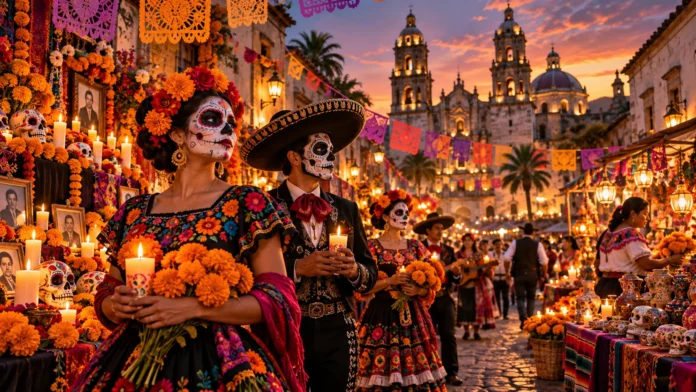

While photographs often emphasize painted faces and elaborate costumes, Día de los Muertos is much deeper than a colorful festival. Families remember relatives who have died by preparing offerings, sharing stories, visiting graves, and maintaining traditions passed through generations. Choosing where to experience the celebration can therefore shape your entire trip.
This Día de los Muertos Mexico travel guide covers some of the best places to visit, what you can expect, how to participate respectfully, and practical tips for planning your journey. Whether you prefer Oaxaca’s cultural atmosphere, Mexico City’s large public events, or the intimate traditions around Lake Pátzcuaro, Mexico offers unforgettable experiences.
Understanding Día de los Muertos in Mexico
Día de los Muertos, commonly translated as Day of the Dead, centers on remembering and honoring loved ones who have passed away. Families may create an ofrenda with photographs, candles, flowers, favorite foods, drinks, and meaningful personal objects. These offerings create a symbolic connection between family memories, spiritual traditions, and the people being remembered.
The main observances traditionally take place around November 1 and November 2, although activities in popular destinations often begin earlier. Different communities may follow their own customs, schedules, processions, vigils, and religious traditions. Travelers should therefore think of Día de los Muertos as a season of remembrance rather than expecting one identical nationwide event.
It is also important not to treat Día de los Muertos as the Mexican version of Halloween. Costumes, skeleton imagery, and face painting may appear in public celebrations, but remembrance remains at the heart of the tradition. Understanding this difference makes the experience more meaningful and helps visitors interact with ceremonies, cemeteries, and local communities respectfully.
Experience Día de los Muertos in Oaxaca
Oaxaca is one of the most popular places in Mexico for travelers hoping to experience Día de los Muertos traditions closely. During the celebration, neighborhoods, markets, homes, restaurants, public spaces, and cultural centers become filled with marigolds, candles, sand tapestries, papel picado, and elaborate altars. The city’s colonial streets provide a memorable setting for evening walks.
Comparsas, or community processions, are another memorable part of the experience in and around Oaxaca. Musicians, dancers, costumes, giant figures, and neighborhood groups may fill the streets as communities celebrate together. Some events feel energetic and festive, while cemetery visits and family observances can be much quieter and more personal.
Allow several days in Oaxaca rather than arriving only for November 2. Markets become particularly interesting as families shop for flowers, candles, fruit, chocolate, mole ingredients, bread, and altar decorations. Staying longer also gives you time to explore nearby communities where Día de los Muertos traditions may differ from those found within central Oaxaca City.
See the Grand Celebrations in Mexico City
Mexico City provides a very different Día de los Muertos travel experience. Instead of focusing on a single neighborhood, visitors can encounter large public installations, decorated plazas, museum exhibitions, cultural programs, street performances, and seasonal events across the enormous capital. The historic center often becomes one of the busiest areas during the celebration period.
Large processions and public spectacles attract enormous crowds and provide excellent opportunities to experience contemporary interpretations of Día de los Muertos. Giant skeleton figures, Catrina costumes, musicians, performers, flowers, and decorated floats can create an extraordinary visual experience. However, event dates and routes may change, so travelers should confirm the official schedule before finalizing daily plans.
Mexico City is especially convenient for first-time visitors because Día de los Muertos activities can be combined with museums, historic landmarks, neighborhoods, markets, and traditional food. Places such as the Centro Histórico and Xochimilco can add variety to the itinerary. Give yourself extra travel time because major events can cause crowded public transportation and temporary road closures.
Discover Pátzcuaro and Lake Michoacán Traditions
Pátzcuaro in Michoacán offers one of Mexico’s most atmospheric Día de los Muertos experiences. The historic town and surrounding Lake Pátzcuaro communities are known for candlelight, flowers, traditional crafts, family gatherings, and deeply rooted Indigenous customs. The atmosphere can feel quieter and more reflective than the large-scale public celebrations found in Mexico City.
Janitzio Island is particularly well known during the celebration period, drawing visitors interested in observing Purépecha traditions associated with remembrance. Boats cross Lake Pátzcuaro while communities prepare for nighttime ceremonies and cemetery gatherings. Because visitor numbers can become extremely high, transportation and accommodation should be organized well ahead of your intended visit.
Travelers should approach these communities with additional sensitivity because many ceremonies are primarily family and religious observances rather than performances. Avoid interrupting prayers, blocking cemetery paths, or photographing people at close range without permission. Watching quietly from an appropriate distance often produces a far more meaningful experience than trying to capture every moment through a camera.
Visit San Andrés Mixquic Near Mexico City
San Andrés Mixquic offers travelers another opportunity to experience Día de los Muertos traditions without traveling far from Mexico City. The community is especially associated with decorated graves, flowers, candles, processions, and family remembrance. Its cemetery becomes an important gathering place, creating a striking atmosphere when countless candles illuminate the graves during evening observances.
Mixquic can become extremely crowded during the main celebration period, so visiting requires patience and realistic expectations. Roads may be congested, public transportation can take longer than expected, and pedestrian areas fill quickly. Arriving earlier gives you time to understand the neighborhood before nighttime activities begin and reduces the pressure of navigating unfamiliar streets after dark.
Despite its growing popularity with visitors, Mixquic remains a living community rather than a tourism attraction created purely for entertainment. Respect barriers, family spaces, religious ceremonies, and instructions from local organizers. Travelers who observe calmly and avoid intrusive photography can experience the atmosphere while allowing residents to honor their loved ones without unnecessary disruption.
Explore Other Regional Día de los Muertos Traditions
Travelers willing to move beyond the most famous destinations can discover remarkable regional variations across Mexico. In Puebla, several towns and communities maintain distinctive altar traditions, while other central Mexican destinations organize public displays and cultural activities. Smaller celebrations can sometimes provide more opportunities to understand local customs without the enormous crowds found in major tourist centers.
The Yucatán Peninsula offers another fascinating perspective through Hanal Pixán, a Maya tradition honoring the dead. Families prepare special foods, create altars, and participate in customs that reflect regional history and cultural identity. Visiting Mérida and surrounding communities during this period demonstrates how remembrance traditions change as travelers move between different parts of Mexico.
Every destination has its own rhythm, meaning you should avoid assuming that one ceremony represents Día de los Muertos throughout the entire country. Foods, decorations, prayers, cemetery customs, music, and dates can vary between communities. Learning about the region you are visiting before arrival helps you appreciate these differences rather than simply searching for familiar images seen online.
What to Expect From Ofrendas, Flowers, and Cemeteries
Ofrendas are among the most recognizable elements visitors encounter during Día de los Muertos. Altars commonly incorporate photographs, candles, food, drinks, decorative paper, personal belongings, and other objects associated with the person being remembered. Public ofrendas can be elaborate artistic creations, while family altars often contain deeply personal details connected with specific memories.
Marigolds are another powerful visual symbol during the celebration. Their bright orange and yellow tones appear in markets, homes, cemeteries, streets, and public installations throughout many destinations. Travelers will also notice candles, incense, skull imagery, traditional crafts, and papel picado, all of which contribute to the distinctive appearance associated with Día de los Muertos.
Cemeteries require the greatest sensitivity because families may spend long periods cleaning graves, decorating them, sharing food, praying, or remembering relatives together. Some communities welcome respectful observers, while particular spaces or ceremonies may remain private. Follow local instructions and never assume that seeing other tourists photograph a family automatically means you have permission to do the same.
Taste Traditional Día de los Muertos Food
Food plays an important role in Día de los Muertos because favorite dishes and drinks may be placed on altars or shared among families. Pan de muerto is one of the most recognizable seasonal foods and can be found in bakeries throughout many parts of Mexico. Recipes, shapes, flavors, and decorations may differ considerably depending on the region.
Oaxaca gives food-focused travelers particularly memorable options during the celebration. Markets may be filled with chocolate, mole ingredients, tamales, bread, fruit, mezcal, and seasonal foods purchased by local families. Rather than visiting only fashionable restaurants, spend time exploring traditional markets and bakeries to understand how food connects daily life with holiday preparations.
Different parts of Mexico introduce additional specialties, making food another reason to experience regional celebrations. Try dishes gradually instead of attempting everything in one day, particularly when exploring busy markets and street stalls. Choosing vendors with good hygiene practices and steady customer turnover can also make your Día de los Muertos food experience more comfortable.
Plan Your Día de los Muertos Mexico Trip Early
Accommodation should be one of the first things you organize, particularly when planning to visit Oaxaca, Pátzcuaro, or another highly popular destination. Hotels in central areas can become difficult to find as the celebration approaches. Booking early also gives you greater flexibility when selecting neighborhoods that allow easy walking access to events and historic districts.
Ideally, arrive several days before the main observances instead of flying into your destination at the last possible moment. Earlier arrival gives you time to explore markets, watch decorations being prepared, learn your surroundings, and adjust your itinerary. It also reduces the risk of missing important activities because of delayed transportation or unexpectedly crowded streets.
Avoid creating an itinerary that depends on seeing several distant Día de los Muertos destinations within only a few days. Oaxaca, Mexico City, and Pátzcuaro each deserve enough time to experience properly. Choosing one primary base generally creates a richer trip because you can observe how celebrations develop instead of spending the most important days traveling between cities.
Follow Respectful Travel and Photography Etiquette
Respect should shape every part of your Día de los Muertos experience. Remember that the celebration involves real families remembering real people, even when public streets are colorful and festive. Avoid treating cemeteries like themed attractions, touching offerings, moving decorations, or entering spaces that appear private without first receiving permission from the people responsible for them.
Photography requires similar awareness. Public decorations, street processions, and large installations are generally easier subjects, but individual mourners and families deserve greater privacy. Ask before taking close portraits, avoid using bright flashes during nighttime cemetery gatherings, and never interrupt prayers or emotional moments simply to create a stronger photograph for social media.
Travelers can also show respect by supporting local businesses, artists, guides, markets, food vendors, and craftspeople. Buying locally produced items helps keep more tourism spending within the communities hosting visitors. Learning a few useful Spanish phrases and listening to explanations from residents can also transform the trip from simple sightseeing into a more thoughtful cultural experience.
What to Pack for Día de los Muertos in Mexico
Comfortable walking shoes should be near the top of your packing list because many Día de los Muertos activities involve long periods outdoors. Historic centers, cemetery paths, markets, and procession routes can require considerably more walking than expected. Choose footwear you have already worn comfortably rather than bringing new shoes specifically for photographs or special events.
Mexico’s weather varies significantly between destinations, while late-October and early-November evenings can feel cooler than daytime temperatures suggest in higher-elevation cities. Lightweight layers allow you to adjust throughout the day without carrying bulky clothing. A compact rain layer, reusable water bottle, portable phone charger, and small day bag can also be useful.
Bring a camera or smartphone, but avoid carrying excessive photography equipment if it prevents you from experiencing the celebration naturally. Crowded streets are easier to navigate with fewer belongings, and discreet photography is generally more respectful in sensitive environments. Keep important documents, money, and valuables secure, particularly when attending large public events or moving through crowded transportation areas.
Create the Perfect Día de los Muertos Itinerary
For a short three-to-four-day trip, choose one destination rather than attempting to combine several regions. Spend your first day exploring the historic center, markets, and cultural landmarks before the busiest celebrations begin. Use the following days for public ofrendas, neighborhood activities, food experiences, processions, and any cemetery visits that are appropriate for travelers.
With five to seven days, you can explore your main destination at a slower pace while including nearby communities. Travelers based in Oaxaca can discover surrounding towns, while visitors staying in Mexico City can consider cultural neighborhoods or Mixquic. Those choosing Michoacán can dedicate additional time to Pátzcuaro and communities around the lake.
Leave some empty space in your itinerary because schedules, weather, crowds, and local recommendations may change your plans. Some of the most memorable Día de los Muertos experiences happen unexpectedly while walking through markets or neighborhood streets. A flexible schedule allows you to stay longer when you discover something meaningful instead of constantly rushing toward the next planned attraction.
Conclusion
Día de los Muertos in Mexico offers travelers far more than beautiful decorations and colorful photographs. It provides an opportunity to experience traditions centered on memory, family, community, food, spirituality, and cultural identity. Understanding that deeper meaning can completely change how you experience the celebrations and the people who maintain them.
Oaxaca is ideal for exploring markets, neighborhood traditions, cultural activities, and surrounding communities, while Mexico City offers large public celebrations alongside countless other attractions. Pátzcuaro and nearby communities provide a more intimate perspective shaped by regional traditions. Mixquic and destinations across Puebla and Yucatán reveal even more diversity within Mexican remembrance customs.
Whichever destination you choose, plan early, slow down, and approach ceremonies with curiosity and respect. Ask before photographing personal moments, support local businesses, and allow families the space they need during private observances. With thoughtful preparation, a Día de los Muertos Mexico trip can become one of the most culturally meaningful travel experiences you have.
FAQs
When is Día de los Muertos celebrated in Mexico?
The main Día de los Muertos observances take place on November 1 and November 2. However, markets, decorations, processions, exhibitions, and public events often begin during the final days of October.
Where is the best place to experience Día de los Muertos in Mexico?
Oaxaca, Mexico City, Pátzcuaro, and Mixquic are among the most popular choices. Each offers a different atmosphere, ranging from large public celebrations to community traditions and intimate cemetery observances.
How many days should I spend in Mexico for Día de los Muertos?
Plan at least three or four days in your chosen destination. Five to seven days is better if you want to explore markets, surrounding communities, cultural attractions, and celebrations without rushing.
Can tourists visit cemeteries during Día de los Muertos?
Some communities welcome respectful visitors, but cemeteries remain deeply personal spaces for local families. Follow posted rules, keep appropriate distance, avoid blocking graves, and always ask before photographing individuals or private ceremonies.
What should I wear for Día de los Muertos?
Wear comfortable walking shoes and light layers suitable for changing temperatures. Colorful clothing is acceptable at many public events, but choose respectful attire when entering churches, cemeteries, or participating in more solemn community observances.