
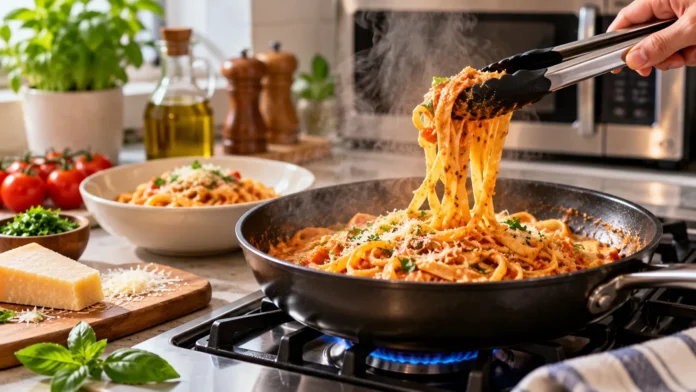

Leftover pasta can be just as enjoyable as a freshly cooked meal when reheated correctly. However, many people struggle with noodles becoming dry, sticky, rubbery, or unevenly heated after spending time in the refrigerator. Learning the best way to reheat pasta helps restore moisture, maintain its texture, and preserve the flavors of your favorite dishes.
Different pasta recipes require different reheating approaches because sauces, ingredients, and pasta shapes respond differently to heat. Creamy Alfredo, tomato-based spaghetti, baked lasagna, and plain noodles may need slightly different techniques. Fortunately, simple methods using a stovetop, microwave, or oven can help make leftover pasta taste delicious again.
This guide explains how to reheat pasta without drying it out, including practical methods for different pasta dishes. You will also learn how to add moisture, avoid common mistakes, store leftovers safely, and preserve the taste and texture of reheated pasta.
Why Does Pasta Dry Out When Reheated?
Pasta often becomes dry during reheating because moisture evaporates as the food warms up. Refrigeration also changes how starch behaves, causing cooked noodles to become firmer and sometimes stick together. When leftover pasta is reheated without additional moisture, these changes can create a texture that feels tougher than the original dish.
Sauces can also thicken during refrigeration, particularly when they contain cheese, cream, or starch. As pasta sits in the refrigerator, noodles may absorb some of the liquid from the sauce. This makes leftovers appear less saucy and can cause the dish to become sticky when reheated without adding a small amount of liquid.
Excessive heat creates another problem because pasta continues cooking during reheating. Long heating periods may make noodles overly soft while allowing sauces to dry out or separate. Using moderate heat, appropriate moisture, and shorter heating intervals helps maintain a more appealing texture while ensuring the pasta becomes thoroughly hot.
Best Way to Reheat Pasta on the Stovetop
The stovetop is one of the best methods for reheating pasta because it provides direct control over temperature and moisture. Place leftover pasta in a skillet or saucepan over medium-low heat. Add a small splash of water, broth, or suitable sauce to help loosen the noodles and prevent sticking.
Cover the pan briefly to trap steam and encourage even heating throughout the pasta. Stir gently every so often, separating noodles without breaking delicate shapes. If the mixture begins drying out, add another small amount of liquid rather than increasing the heat, which could cause the sauce to stick or burn.
Continue heating until the pasta is steaming hot throughout, reaching 165°F (74°C) when reheating refrigerated leftovers. The exact time depends on portion size, pasta shape, and sauce thickness. This method is particularly useful for spaghetti, penne, fettuccine, and other pasta dishes that benefit from gentle, consistent heating.
How to Reheat Pasta in the Microwave
The microwave provides a convenient option when you need to reheat pasta quickly without using additional cookware. Place the leftovers in a microwave-safe container and spread them into an even layer. Add a tablespoon or two of water for a typical serving, adjusting the amount according to the pasta and sauce.
Cover the container with a microwave-safe lid that allows steam to escape. Heat in short intervals at medium power, stirring between intervals to distribute warmth and prevent dry edges. This technique is especially helpful because microwave ovens can create hot and cold spots when food is heated continuously without stirring.
Check the pasta carefully before serving to ensure it is heated throughout and reaches 165°F (74°C). Add a little extra sauce if the texture appears too thick after reheating. With suitable moisture and careful timing, microwave reheating can produce satisfying leftovers without making the noodles excessively dry or rubbery.
How to Reheat Pasta in the Oven
The oven works particularly well for baked pasta dishes such as lasagna, baked ziti, and pasta casseroles. Preheat the oven to approximately 350°F (175°C) and place the leftovers in an oven-safe baking dish. Adding a small amount of sauce or water can help prevent the pasta from becoming dry during heating.
Cover the dish with aluminum foil to retain moisture and protect the surface from excessive browning. Larger portions generally require more time than individual servings because heat must reach the center of the dish. Check the food periodically and avoid relying solely on appearance to determine whether it is sufficiently heated.
Remove the pasta once the center reaches 165°F (74°C). If you prefer a slightly crisp cheese topping, uncover the dish briefly near the end while monitoring it carefully. Oven reheating is especially effective when you want to maintain the structure of layered pasta or prepare multiple servings together.
How to Reheat Pasta Without Sauce
Plain cooked pasta can become sticky after refrigeration because its surface starch changes as it cools. One convenient reheating method involves briefly placing the noodles in hot water. This helps restore warmth and separate pieces without requiring additional oil or lengthy cooking.
Bring a pot of water to a boil, then add the refrigerated pasta for a short period until it becomes thoroughly heated. Stir gently to separate the noodles and drain immediately afterward. Avoid leaving the pasta in hot water longer than necessary because excessive heating can make the noodles soft and overcooked.
Plain pasta can also be reheated in a covered skillet with a small amount of water. Once warmed, it can be combined with freshly heated sauce or other cooked ingredients. Whichever method you choose, ensure refrigerated leftovers reach a safe reheating temperature before serving.
Best Way to Reheat Spaghetti Without Drying It Out
Spaghetti tends to clump together after refrigeration, making even reheating more challenging. A skillet works particularly well because it allows you to separate the strands while controlling moisture. Add the spaghetti to a pan with a small splash of water and any remaining sauce.
Use medium-low heat and gently lift the noodles with tongs as they warm. This separates the strands and helps distribute sauce throughout the dish. Covering the skillet briefly can create steam that softens the refrigerated noodles without requiring large amounts of added liquid.
If your spaghetti contains tomato sauce, adding a little extra sauce can improve moisture and flavor. For plain spaghetti, a small amount of water may be sufficient before combining it with fresh sauce. Continue heating until the entire serving reaches 165°F (74°C), including any meat or other ingredients.
How to Reheat Creamy Alfredo Pasta
Creamy Alfredo pasta requires gentle reheating because cheese and cream-based sauces can separate when exposed to excessive heat. High temperatures may cause the sauce to become oily, grainy, or unusually thick. Reheating slowly on the stovetop generally provides better control over these changes.
Place the Alfredo pasta in a skillet over low heat and add a small splash of milk or water. Stir gently as the sauce warms, allowing the additional liquid to loosen its consistency. Avoid boiling the mixture because intense heat can affect the texture of the cream and cheese.
Continue warming the pasta gradually, checking that the entire portion reaches 165°F (74°C). If the sauce remains too thick, introduce a little additional liquid while stirring. Although reheated Alfredo may not perfectly match its freshly prepared texture, gentle heating can help preserve its creaminess and overall flavor.
How to Reheat Pasta With Tomato Sauce
Tomato-based pasta dishes are generally straightforward to reheat because their sauces tolerate moderate heating relatively well. However, noodles can absorb moisture during storage, leaving the sauce thicker than expected. Adding a small amount of water or extra tomato sauce can help restore the original consistency.
Transfer the leftovers to a skillet or saucepan and warm them over medium-low heat. Stir occasionally to prevent sticking and distribute heat through the pasta. Covering the pan for part of the heating process can reduce moisture loss while allowing the sauce to warm evenly.
Taste the pasta after it has been heated safely and adjust the seasoning if necessary. A little extra sauce or a small amount of olive oil may improve the finished texture. This technique works well for spaghetti marinara, penne arrabbiata, and many other tomato-based pasta recipes.
Can You Reheat Pasta in an Air Fryer?
An air fryer can reheat certain pasta dishes, particularly baked pasta portions with cheese or a lightly crisp surface. However, its circulating hot air removes moisture relatively quickly, making it less suitable for loose noodles or delicate creamy sauces. Selecting the right pasta dish is important for achieving acceptable results.
Place an appropriate portion in a small air-fryer-safe dish and add a little sauce or water if needed. Cover loosely with suitable foil when permitted by the appliance instructions, ensuring it cannot contact the heating element. Use a moderate temperature and check frequently to prevent the exposed surface from becoming excessively dry.
Always verify that the center of the pasta reaches 165°F (74°C), particularly when reheating dense baked dishes. Air fryer performance varies depending on the appliance and portion size. For ordinary spaghetti or creamy pasta, a covered skillet or microwave often provides more reliable moisture control.
How Much Water Should You Add When Reheating Pasta?
The amount of water required depends on the serving size, sauce consistency, and reheating method. For a typical single serving, one or two tablespoons may provide a useful starting point. Larger portions or particularly thick sauces may require additional moisture as heating progresses.
Begin with a small amount of liquid because adding too much can make the sauce watery. Stir the pasta and observe its consistency before deciding whether more moisture is necessary. The goal is to restore softness and help distribute heat rather than completely submerge the noodles.
Water is not always the best choice for every pasta dish. Milk may help loosen certain creamy sauces, while broth or additional tomato sauce may complement other recipes. Choosing a liquid that matches the original ingredients can improve the finished flavor while preventing unnecessary dilution.
How to Reheat Baked Pasta and Lasagna
Baked pasta dishes require careful reheating because their dense layers make it difficult for heat to reach the center quickly. Lasagna, baked macaroni, and stuffed shells often contain cheese, sauce, and other ingredients that respond differently to heat. The oven generally provides an effective approach for maintaining their structure.
Place the portion in an oven-safe dish and cover it with foil to help retain moisture. A spoonful of additional sauce around the edges can prevent exposed pasta from becoming excessively dry. Heat at approximately 350°F (175°C), allowing enough time for the center to warm thoroughly.
Use a food thermometer to confirm that the internal temperature reaches 165°F (74°C) before serving. Individual portions may heat more quickly than an entire casserole. Let the dish settle briefly after removing it from the oven so the layers remain easier to serve.
How to Reheat Pasta With Meat or Seafood
Pasta containing chicken, beef, shrimp, or other protein ingredients requires particular attention to safe storage and thorough reheating. These dishes may have different textures because proteins can become tough when heated repeatedly. Gentle methods can help preserve eating quality while ensuring the leftovers reach a safe temperature.
For pasta with chicken or beef, a covered skillet with a little sauce or water is often convenient. Stir carefully so the meat and noodles heat evenly without breaking apart. Seafood pasta may benefit from particularly gentle heating because shrimp and similar ingredients can become rubbery when exposed to excessive temperatures.
Regardless of the ingredients, refrigerated leftovers should reach 165°F (74°C) throughout before eating. Avoid judging safety only by whether the sauce feels hot or the pasta produces steam. A food thermometer provides a more reliable way to confirm that thicker pieces and the center of the dish are fully heated.
How to Store Cooked Pasta Before Reheating
Proper storage is essential for keeping leftover pasta safe and maintaining its quality. Refrigerate cooked pasta promptly in shallow, covered containers, ideally within two hours of cooking. When surrounding temperatures exceed 90°F (32°C), food should be refrigerated within one hour rather than left at room temperature.
Cooked pasta can generally be kept in the refrigerator for three to four days when stored safely at 40°F (4°C) or below. Plain pasta and pasta with sauce may have different texture changes during storage. Keeping pasta in well-sealed containers helps reduce moisture loss and prevents unnecessary exposure to other foods.
For longer storage, freezing is often more practical than extended refrigeration. Divide pasta into individual portions and use freezer-safe containers or bags to reduce air exposure. Label packages with the storage date so you can manage leftovers more easily and avoid forgetting how long they have been stored.
Can You Freeze Pasta and Reheat It Later?
Freezing cooked pasta can help preserve leftovers when you do not plan to eat them within a few days. Pasta dishes containing sufficient sauce often freeze more successfully than plain noodles because the sauce helps limit drying. However, texture changes can still occur, especially with delicate pasta shapes or creamy ingredients.
Allow cooked pasta to cool safely before portioning it into freezer-compatible containers. Refrigerate promptly rather than leaving large quantities at room temperature for extended periods. Removing excess air from packaging and sealing containers properly can reduce freezer burn and help maintain better eating quality.
Frozen pasta can be thawed in the refrigerator before reheating, although some dishes can be heated directly from frozen. The required cooking time depends on portion size and reheating equipment. Make sure the entire dish reaches 165°F (74°C), and avoid relying on surface warmth alone.
Common Mistakes When Reheating Leftover Pasta
One common mistake is reheating pasta over excessively high heat. This can cause noodles to become dry while sauces stick to the pan or separate. Using medium-low heat and adding moisture gradually provides better control over texture and reduces the risk of scorching.
Another mistake involves heating a large portion without stirring or checking the center. Microwaves and thick casseroles can develop uneven temperatures, leaving some areas hot and others insufficiently heated. Dividing food into smaller portions and checking the internal temperature can improve both heating consistency and food safety.
Leaving cooked pasta at room temperature for too long is another important mistake to avoid. Harmful bacteria may grow when food is stored improperly, and reheating does not necessarily eliminate every hazard caused by unsafe storage. Pasta that has been left out beyond recommended limits should be discarded rather than reheated.
Tips for Making Reheated Pasta Taste Fresh
Making leftover pasta taste better often begins with restoring the appropriate amount of moisture. Adding a small splash of water, broth, or complementary sauce helps loosen noodles and improve consistency. Gentle heating also allows flavors to distribute without unnecessarily overcooking the pasta.
Fresh finishing ingredients can improve the flavor and presentation of reheated pasta. Depending on the recipe, you might add chopped herbs, a little grated cheese, or freshly prepared sauce after heating. These additions can brighten the dish without requiring major changes to the original recipe.
Serving pasta immediately after reheating can help preserve its texture. Leaving it over heat for extended periods may cause additional moisture loss and make the noodles overly soft. Preparing only the portion you intend to eat also minimizes repeated temperature changes and helps maintain the quality of remaining leftovers.
Conclusion
The best way to reheat pasta without drying it out depends on the type of pasta, sauce, and available cooking equipment. Stovetop reheating provides excellent moisture control, while the microwave offers convenience for smaller servings. The oven works particularly well for baked pasta dishes that need gentle, even heating.
Adding a small amount of appropriate liquid, using moderate heat, and stirring carefully can help restore the texture of refrigerated noodles. Different sauces require different approaches, especially creamy recipes that may separate under high temperatures. Proper reheating should also ensure that leftovers reach 165°F (74°C) throughout.
Safe storage is just as important as choosing the right reheating method. Refrigerating pasta promptly, using sealed containers, and avoiding excessive storage times help maintain food quality and reduce safety risks. With a few practical techniques, leftover pasta can remain a convenient, flavorful, and enjoyable meal.
Frequently Asked Questions (FAQs)
What is the best way to reheat pasta without drying it out?
The stovetop is often the best option because it allows easy control over heat and moisture. Add a splash of water or sauce, cover briefly, and stir gently until thoroughly heated.
Can you reheat pasta in the microwave without making it rubbery?
Yes, add a little water, use a microwave-safe cover, and heat in short intervals. Stir between intervals to distribute moisture and heat evenly, avoiding excessively long heating periods.
Is it better to reheat pasta with water or oil?
Water generally works better for restoring moisture, while a little oil may improve texture in certain recipes. Choose the liquid based on the sauce and avoid adding excessive amounts.
How long can cooked pasta stay in the refrigerator?
Cooked pasta can generally remain refrigerated for three to four days when stored promptly at 40°F (4°C) or below. Discard leftovers that have been stored improperly or left unrefrigerated too long.
Can you reheat pasta more than once?
Repeated reheating can reduce quality and increase food safety risks if cooling and storage are mishandled. Reheat only the portion needed, ensure it reaches 165°F (74°C), and refrigerate remaining food promptly.




