
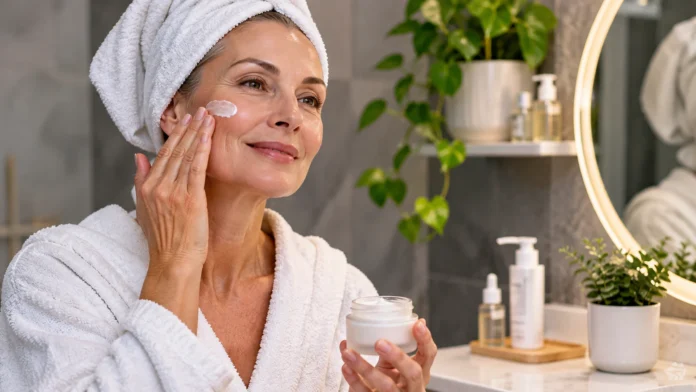

A good skincare routine for mature-looking skin focuses on hydration, gentle cleansing, sun protection, and maintaining a healthy skin barrier. As skin changes over time, it may become drier, feel less supple, or require different products than before. These changes are natural, and a simple routine can help maintain comfort and support overall skin health.
The best skincare approach does not require expensive products or complicated daily steps. Gentle cleansers, moisturizers, sunscreen, and carefully selected ingredients can help address concerns such as dryness, uneven texture, and sensitivity. Understanding your skin’s individual needs makes it easier to build a consistent routine that feels comfortable and manageable.
What Is Mature-Looking Skin?
Mature-looking skin is a general term used to describe skin showing natural changes commonly associated with aging. These changes may include reduced moisture retention, fine lines, uneven texture, and differences in skin firmness. However, skin appearance varies significantly between individuals, and there is no specific age when someone must begin using products labeled for mature skin.
Several factors influence how skin changes over time, including genetics, sunlight exposure, environmental conditions, and everyday skincare habits. Natural changes in collagen, elastin, and oil production also affect skin characteristics. These processes are normal parts of aging rather than problems that automatically require correction or intensive treatment.
Healthy skincare begins with recognizing what your skin needs rather than focusing exclusively on its appearance. Someone experiencing dryness may benefit from a richer moisturizer, while another person may prefer a lightweight formula. Choosing products based on comfort, sensitivity, and skin type often provides a more useful approach than relying on age-related marketing claims.
How Skin Changes With Age
Skin naturally changes throughout life as its structure, moisture balance, and protective functions evolve. Over time, collagen production and cellular renewal processes may gradually change, influencing skin texture and flexibility. The skin may also retain moisture differently, making dryness or tightness more noticeable for some individuals.
Sebum production can change with age, although the pattern varies depending on hormones, genetics, and other factors. When natural oil production decreases, skin may become more prone to dryness and irritation. Environmental exposure, frequent washing, and unsuitable skincare products can further affect the protective skin barrier.
Not every visible skin change indicates poor health or inadequate care. Fine lines, texture differences, and other characteristics are common and do not need to be eliminated. A well-designed skincare routine aims to support skin function, minimize unnecessary irritation, and help individuals feel comfortable with their everyday skincare habits.
Why a Gentle Skincare Routine Matters
A gentle skincare routine helps protect the skin barrier, which limits moisture loss and provides protection against environmental irritants. When this barrier becomes disrupted, skin may feel tight, uncomfortable, or unusually sensitive. Choosing mild products can help reduce unnecessary stress on skin that already experiences dryness or irritation.
Using too many products at once can make it difficult to identify what causes discomfort. Strong cleansers, frequent exfoliation, and multiple active ingredients may increase irritation, particularly when combined without a clear purpose. Starting with a few essential products makes the routine easier to maintain and adjust.
Consistency is generally more useful than frequently changing products in search of immediate results. A gentle cleanser, suitable moisturizer, and daily sunscreen provide a practical foundation for many skin types. Additional treatments can be considered when they address a specific concern and are tolerated comfortably.
Choosing the Right Cleanser for Mature-Looking Skin
Cleansing removes accumulated dirt, excess oil, sunscreen, and other substances from the skin’s surface. For mature-looking skin, a gentle cleanser can help maintain cleanliness without leaving the face excessively dry. Creamy, lotion-based, or mild gel formulas may be suitable depending on individual skin characteristics.
Look for cleansers that rinse comfortably and do not leave the skin feeling tight or irritated. Fragrance-free products may be preferable for people with sensitive skin or a history of reactions. Very hot water and vigorous scrubbing can contribute to dryness, so lukewarm water and gentle application are usually better choices.
Many people find that cleansing in the evening is sufficient to remove daily buildup, while others prefer washing morning and night. The appropriate frequency depends on skin type, activity, and personal comfort. If morning cleansing causes dryness, a gentle rinse may be enough before applying moisturizer and sunscreen.
The Importance of Moisturizing Every Day
Moisturizing is an essential part of a skincare routine for mature-looking skin because it helps maintain hydration and reduce moisture loss. Moisturizers support the skin barrier and can temporarily improve the appearance of dryness-related fine lines. They also help skin feel more comfortable when environmental conditions contribute to tightness.
Different moisturizer ingredients serve different purposes. Humectants attract water, emollients help smooth the skin’s surface, and occlusive ingredients reduce moisture evaporation. Products may combine these functions to provide balanced hydration without requiring several separate creams or lotions.
Apply moisturizer after cleansing, preferably while the skin is still slightly damp. Choose a texture that suits your skin, whether that means a lightweight lotion or a richer cream. If a product causes persistent stinging, redness, or discomfort, stop using it and consider a gentler alternative.
Hyaluronic Acid for Skin Hydration
Hyaluronic acid is a humectant commonly included in skincare products designed to support hydration. It helps attract and retain water within the skin’s outer layers, contributing to a smoother and more comfortable feel. The ingredient is available in many moisturizers, serums, and lotions suitable for different skin types.
Although hyaluronic acid is frequently marketed for mature skin, it can be useful for people of different ages. Its primary role in topical skincare is hydration rather than permanently changing facial structure. Products containing hyaluronic acid may help temporarily soften the appearance of fine lines caused by dryness.
Hyaluronic acid products generally work well when followed by a suitable moisturizer that helps reduce moisture loss. Some people prefer using a serum before applying cream, while others choose a moisturizer that already contains the ingredient. Both approaches can be reasonable, depending on personal preference and product formulation.
Ceramides and the Skin Barrier
Ceramides are naturally occurring lipids found within the outermost layer of the skin. They help maintain the protective barrier that limits water loss and protects against environmental exposure. When barrier function is weakened, skin may become dry, irritated, or more sensitive to ordinary skincare products.
Moisturizers containing ceramides can help support skin barrier function, particularly when dryness is a recurring concern. These products are often combined with ingredients such as glycerin and other moisturizing compounds. A well-formulated moisturizer can provide several benefits without requiring a complicated collection of separate treatments.
Ceramide-based creams may be particularly useful during colder weather or when frequent washing leaves skin uncomfortable. They can also complement a routine that includes other skincare ingredients. However, introducing multiple new products at once is unnecessary, especially when a basic moisturizer already provides adequate comfort.
Niacinamide for Supporting Healthy Skin
Niacinamide, a form of vitamin B3, is commonly included in skincare products because of its skin-supporting properties. It can help improve barrier function and may reduce the appearance of uneven skin tone in some individuals. The ingredient is available in moisturizers, serums, and other everyday skincare formulations.
Niacinamide is often well tolerated, although individual reactions can occur. Lower-concentration products may be a reasonable starting point for people with sensitive skin. Choosing a moisturizer that already contains niacinamide can simplify the routine instead of adding another separate step.
Results from cosmetic ingredients vary according to formulation, concentration, and individual skin characteristics. Niacinamide does not replace sunscreen, moisturizer, or professional assessment of persistent skin concerns. Its greatest practical value often comes from being part of a balanced routine that prioritizes comfort and barrier support.
Why Sunscreen Is Essential for Skin Health
Daily sun protection is one of the most important skincare habits at any age. Ultraviolet radiation can contribute to sunburn, uneven pigmentation, and long-term skin damage. Regular sunscreen use helps protect exposed skin and reduces the risk of certain harmful effects associated with repeated UV exposure.
Choose a broad-spectrum sunscreen with an SPF of at least 30 for everyday protection. Apply it to exposed skin before outdoor activities and follow the product’s directions for reapplication. Additional protection, including shade, hats, and suitable clothing, is useful during periods of strong sunlight.
Sunscreen should be selected according to skin comfort and personal preference. Creams, lotions, and other formulations can provide effective protection when used correctly. People with sensitive skin may prefer fragrance-free products, while those experiencing dryness may appreciate sunscreen formulas containing moisturizing ingredients.
Building a Simple Morning Skincare Routine
A practical morning skincare routine begins with gentle cleansing or rinsing, depending on your skin’s needs. Avoid using harsh products simply because they are marketed as deep-cleansing treatments. The goal is to prepare the skin comfortably for moisturizer and sun protection without disrupting its natural protective barrier.
Next, apply a suitable moisturizer to help maintain hydration throughout the day. Products containing glycerin, ceramides, or hyaluronic acid may provide useful moisturizing benefits. If your sunscreen already offers sufficient hydration, you may not need a separate moisturizing layer, especially in warm or humid conditions.
Finish with broad-spectrum SPF 30 or higher sunscreen on exposed skin. Apply it according to the label and remember that protection needs attention throughout the day when spending time outdoors. A consistent morning routine can remain simple while addressing the most important everyday skincare needs.
Creating a Comfortable Nighttime Skincare Routine
Evening skincare provides an opportunity to remove sunscreen, makeup, and environmental buildup accumulated during the day. Start with a gentle cleanser that leaves the skin comfortable after washing. Heavy makeup or water-resistant sunscreen may require additional cleansing, but avoid excessive rubbing or repeated washing that causes dryness.
After cleansing, apply a moisturizer suited to your skin type and current needs. A richer cream may feel helpful when indoor heating, cold weather, or other conditions contribute to dryness. The nighttime routine does not need numerous treatment products to provide meaningful support for skin comfort and hydration.
Some adults use targeted skincare ingredients as part of their evening routine, but these are optional rather than essential. Products should be introduced carefully because sensitivity varies considerably. If you have persistent irritation, a chronic skin condition, or questions about stronger treatments, seek guidance from a dermatologist.
Exfoliation and Mature-Looking Skin
Exfoliation removes some of the accumulated dead cells from the skin’s surface. It may improve the appearance of rough texture, but it is not necessary for everyone. Skin naturally sheds surface cells, and frequent exfoliation can sometimes cause more irritation than benefit, especially when the skin barrier is already sensitive.
Physical exfoliants use friction, while chemical exfoliants use ingredients that loosen connections between surface cells. Both approaches can irritate skin when used too aggressively. People experiencing dryness or sensitivity may prefer avoiding exfoliation until their skin feels comfortable and stable.
If you choose to exfoliate, follow the product instructions and begin cautiously rather than assuming more frequent use provides better results. Stop if the skin becomes unusually red, painful, or irritated. Gentle cleansing and moisturizing remain more important foundations of everyday skin care than frequent exfoliation.
Understanding Retinoids in Skincare
Retinoids are vitamin A derivatives used in some skincare treatments, particularly for acne and certain concerns related to sun-damaged skin. Different formulations have different strengths, purposes, and side-effect profiles. Some are available in cosmetic products, while others require professional medical guidance or a prescription.
These ingredients may cause dryness, irritation, or increased sensitivity, especially when first introduced. They are not necessary for maintaining healthy skin, and stronger formulations are not automatically better. People considering retinoids should understand the specific product’s instructions, precautions, and suitability for their skin.
Retinoids should not be used during pregnancy, and people who are pregnant or planning pregnancy should seek medical advice about their skincare products. Anyone managing sensitive skin or an existing dermatological condition may also benefit from professional guidance. A simple moisturizing and sun-protection routine remains a reasonable alternative.
Caring for Dry and Sensitive Skin
Dry and sensitive skin often benefits from a minimal routine built around gentle cleansing and consistent moisturizing. Products with fewer unnecessary fragrance ingredients may be easier to tolerate. Avoid frequent changes to skincare products when the skin already feels irritated, because this can make reactions difficult to identify.
Environmental conditions can also influence skin comfort. Cold weather, low humidity, hot showers, and frequent washing may contribute to dryness. Adjusting bathing habits and choosing suitable moisturizers can help reduce discomfort without requiring expensive or complicated treatments.
Persistent redness, itching, cracking, or burning may indicate a skin condition that needs medical evaluation. Symptoms should not automatically be attributed to age or ordinary dryness. A dermatologist can help identify possible causes and recommend appropriate treatment when routine skincare does not provide sufficient relief.
Caring for the Neck and Hands
The neck and hands are frequently exposed to environmental conditions but may receive less attention than the face. These areas can experience dryness, irritation, and sun exposure during everyday activities. Extending basic skincare habits to them can help support comfort and protect exposed skin.
Apply a suitable moisturizer to the neck and hands when needed, particularly after washing. Hand creams containing humectants and barrier-supporting ingredients can help reduce dryness associated with frequent handwashing. Gentle application is sufficient, and specialized products are not always necessary when an ordinary moisturizer works well.
Remember to protect exposed areas with sunscreen when spending time outdoors. The backs of the hands and neck can receive substantial sunlight during routine activities. Combining sun protection with comfortable clothing and moisturizing offers a practical approach to caring for these often-overlooked areas.
How Weather Affects Mature-Looking Skin
Weather conditions can influence how skin feels and how much moisture it retains. Cold temperatures and low humidity may contribute to dryness, while hot weather can increase sweating and affect product comfort. Adjusting your routine according to seasonal conditions can help maintain consistent skin comfort.
During colder months, some people prefer richer moisturizers that provide additional protection against moisture loss. Gentle cleansing becomes particularly important when skin is already dry. Avoiding unnecessarily hot water may also help reduce tightness after washing or bathing.
In warmer weather, lightweight moisturizers and comfortable sunscreen formulations may feel more practical. However, humidity does not eliminate the need for hydration or sun protection. Choose products according to your skin’s response rather than following a completely different routine simply because the season has changed.
Common Skincare Mistakes to Avoid
One common skincare mistake is using too many products without understanding their purposes. Combining several active ingredients can increase the risk of irritation and make it difficult to identify which product causes problems. A smaller routine with clearly chosen products is often easier to maintain and evaluate.
Another mistake is assuming that expensive skincare products always provide better results. Price does not reliably indicate whether a cleanser, moisturizer, or sunscreen will suit your skin. Ingredient formulation, comfort, and consistent use are more useful considerations than packaging or marketing promises.
Skipping sunscreen and relying exclusively on moisturizing treatments is another avoidable problem. Hydration supports skin comfort, but it does not provide the same protection against ultraviolet radiation. A balanced routine should address everyday needs without treating normal skin changes as flaws requiring aggressive correction.
How to Choose Skincare Products Wisely
Choosing skincare products begins with understanding your skin’s current needs. Consider whether you experience dryness, sensitivity, excess oil, or reactions to particular ingredients. Product labels can provide useful information, but claims such as age-defying or miracle treatment should not replace a careful review of actual ingredients.
Look for products from reputable manufacturers with clear instructions and appropriate labeling. Patch testing a new product on a small area can help identify potential irritation before applying it more widely. Introduce new products individually so that changes in comfort or sensitivity are easier to recognize.
A good skincare product should support your routine without creating unnecessary discomfort. If a cleanser, moisturizer, or sunscreen works well, there is usually no need to replace it simply because another product is being heavily advertised. Practical consistency is often more valuable than frequently purchasing new skincare items.
When to See a Dermatologist
A dermatologist can help when skin concerns persist despite gentle everyday care. Repeated irritation, significant itching, unexplained rashes, or painful dryness may require professional evaluation. These symptoms can have several possible causes, and identifying the underlying condition is more important than experimenting with multiple cosmetic products.
Seek medical advice for new or changing skin growths, unusual spots, or sores that do not heal. Changes in the size, shape, or color of a mole should also be assessed. These concerns require appropriate examination rather than relying on cosmetic treatments or online skincare recommendations.
Professional guidance can also be useful when selecting treatments for specific dermatological conditions. A dermatologist can explain potential benefits, limitations, and risks based on individual circumstances. This approach helps distinguish ordinary skincare needs from medical concerns that require targeted care.
Conclusion
A skincare routine for mature-looking skin should prioritize hydration, gentle cleansing, sun protection, and maintaining a healthy skin barrier. Natural changes in skin texture and moisture balance do not require complicated or aggressive treatments. Simple products selected according to individual needs can support everyday comfort and overall skin health.
Moisturizers containing ingredients such as glycerin, ceramides, and hyaluronic acid can help manage dryness. Broad-spectrum sunscreen provides important protection against ultraviolet radiation, while gentle cleansing helps maintain the skin’s protective barrier. Optional treatments should be considered carefully, particularly when sensitivity or existing skin conditions are present.
The most effective routine is one that feels comfortable, remains manageable, and supports your skin’s actual needs. Consistency and appropriate product selection matter more than expensive packaging or unrealistic cosmetic promises. Healthy skin care is about protection, comfort, and informed choices rather than trying to eliminate every natural sign of aging.
Frequently Asked Questions
What is the best skincare routine for mature-looking skin?
A simple routine includes gentle cleansing, moisturizing, and daily broad-spectrum SPF 30 or higher sunscreen. Additional products may be helpful for specific concerns, but they are not necessary for everyone.
Which ingredients are good for mature-looking skin?
Glycerin, hyaluronic acid, ceramides, and niacinamide can help support hydration and skin barrier function. The most suitable ingredients depend on individual skin needs and product tolerance.
Should mature-looking skin be moisturized twice a day?
Moisturizing morning and evening can be helpful, particularly for dry skin. However, frequency should depend on comfort, environmental conditions, and whether your other skincare products already provide sufficient hydration.
Is exfoliation necessary for mature-looking skin?
No, exfoliation is optional. Although it may improve the appearance of rough surface texture, excessive exfoliation can cause irritation, especially when skin is dry or sensitive.
Can a simple skincare routine be effective?
Yes, a consistent routine using a gentle cleanser, suitable moisturizer, and sunscreen can support healthy skin. Additional treatments should address specific needs rather than being included simply because they are marketed for mature skin.




