
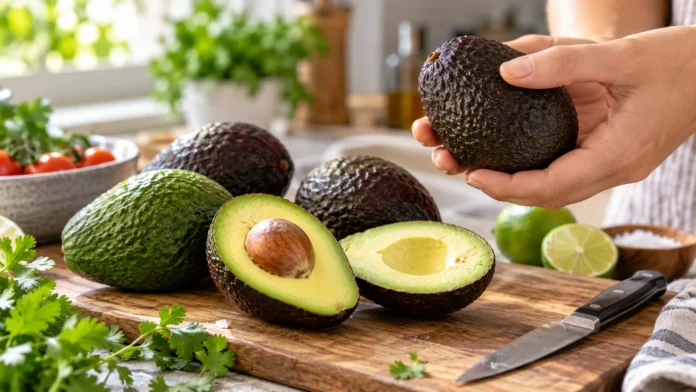

Avocados are delicious, creamy, and packed with nutrients, but choosing the perfect one can sometimes feel confusing. You might find an avocado that looks ready to eat, only to discover it is hard inside. Other times, a soft avocado turns out to be brown and overripe. Knowing how to tell if an avocado is ripe helps you avoid these common problems.
A perfectly ripe avocado has a smooth, creamy texture and a mild, slightly nutty flavor. It works beautifully in guacamole, salads, sandwiches, smoothies, and breakfast recipes. However, avocados do not always ripen at the same speed, and their color alone does not tell the whole story.
The good news is that checking avocado ripeness is simple once you understand the signs. By examining its firmness, skin color, stem area, and overall condition, you can choose a good avocado without cutting it open. This guide explains how to identify ripe avocados, avoid spoiled fruit, and store them properly.
How to Tell If an Avocado Is Ripe
The easiest way to tell if an avocado is ripe is to check its firmness. Hold the fruit gently in your palm and apply light pressure with your fingers. A ripe avocado should feel slightly soft but still maintain its shape. It should never feel extremely mushy or collapse under gentle pressure.
Skin color can also provide useful information, especially when selecting Hass avocados. These commonly sold avocados often change from green to dark green or nearly black as they ripen. However, some avocado varieties remain green even when completely ripe, so color should not be your only guide.
Another helpful sign is the condition of the avocado’s skin and surface. A good avocado should not have large sunken areas, major cracks, or obvious mold growth. Combining firmness, color, and appearance provides a more reliable way to determine ripeness than relying on one sign alone.
Check the Avocado’s Firmness With Gentle Pressure
Firmness is one of the most reliable indicators of avocado ripeness. Place the avocado in your palm and gently squeeze it using your whole hand rather than pressing with your fingertips. If the fruit gives slightly under pressure, it is usually ready to eat or very close to being ripe.
An unripe avocado typically feels hard and offers little resistance to pressure. These avocados need more time to soften before they develop their characteristic creamy texture. If you plan to prepare guacamole or avocado toast immediately, choosing a fruit that remains completely firm may lead to disappointing results.
An overripe avocado often feels excessively soft, with certain areas becoming noticeably mushy. These soft spots can indicate bruising or internal deterioration. Avoid squeezing multiple avocados aggressively while shopping, as unnecessary pressure can damage the flesh and cause brown patches before the fruit is ready to eat.
Look at the Avocado Skin Color
Avocado skin color can help you estimate ripeness, but its usefulness depends on the variety. Hass avocados generally start with green skin and gradually develop a darker appearance as they mature. A dark green or nearly black Hass avocado may be ready to eat if it also feels slightly soft.
Bright green Hass avocados are often still unripe and may require several days at room temperature. However, skin color changes do not happen at exactly the same speed in every fruit. Environmental conditions, handling, and individual differences can affect appearance, making it important to check firmness as well.
Other varieties, including some green-skinned avocados, may retain their green appearance when ripe. This means a green avocado is not automatically unripe. Learning which variety you are buying helps you interpret skin color correctly and prevents you from overlooking perfectly good fruit at the grocery store.
Examine the Stem Area for Ripeness
The small stem area at the top of an avocado can provide another clue about its condition. Some people check the color beneath the stem cap to estimate whether the flesh is healthy. However, this method is not completely reliable, and removing the cap unnecessarily can expose the fruit to damage.
If the stem cap has already fallen away naturally, examine the exposed area for obvious discoloration or mold. A relatively fresh-looking, greenish surface may be reassuring, while an unusually dark or deteriorating area can suggest possible problems. These observations should always be considered alongside firmness and overall fruit condition.
Avoid pulling off the stem cap from avocados while shopping. Removing it can expose the flesh and create an opening where microorganisms may enter. Checking the skin, gently testing firmness, and avoiding visible damage are better ways to select ripe avocados without affecting their quality.
Understand the Difference Between Ripe and Unripe Avocados
An unripe avocado feels firm and usually has a less developed flavor and texture. Its flesh can be difficult to mash or spread because it has not softened sufficiently. Although the fruit may look attractive from the outside, cutting it too early often results in a disappointing eating experience.
A ripe avocado has a creamy consistency that works well in many dishes. When sliced, its flesh should be tender enough to cut easily while remaining firm enough to hold its shape. This balance makes ripe avocados suitable for salads, sandwiches, dips, and recipes requiring a smooth texture.
Ripening happens naturally after an avocado is harvested. As the fruit matures, internal changes gradually soften its flesh and develop the texture people enjoy. Understanding this process helps you decide whether to eat an avocado immediately or leave it at room temperature until it reaches your preferred ripeness.
Signs That an Avocado Is Overripe
An overripe avocado usually feels noticeably softer than a perfectly ripe one. It may have areas that sink under gentle pressure or feel unusually loose beneath the skin. While softness alone does not always mean the fruit is spoiled, excessive mushiness can indicate declining quality and possible internal damage.
When cut open, an overripe avocado may contain widespread brown or grayish flesh. Small brown areas can sometimes develop from bruising or oxidation, but extensive discoloration may indicate significant deterioration. An unpleasant smell, visible mold, or unusual texture are stronger warning signs that the avocado should be discarded.
A fresh avocado generally has a mild, pleasant aroma rather than a sour or rotten smell. If the flesh appears slimy, moldy, or clearly spoiled, do not taste it to check whether it is safe. Recognizing these warning signs helps you avoid eating deteriorated fruit.
How to Choose the Best Avocado at the Grocery Store
Choosing the right avocado begins with deciding when you plan to eat it. If you need one for dinner, look for a fruit that gives slightly under gentle pressure. If you are shopping several days ahead, selecting a firmer avocado can provide enough time for natural ripening.
Inspect the entire fruit for visible damage before purchasing. Avoid avocados with large dents, broken skin, mold, or areas that feel unusually soft compared with the rest of the fruit. Minor surface marks may not affect the flesh, but significant damage can increase the likelihood of bruising and spoilage.
Consider buying avocados at different stages of ripeness if you use them throughout the week. A ripe avocado can be eaten immediately, while firmer ones can continue ripening on the counter. This simple shopping strategy helps reduce food waste and makes fresh avocados available for multiple meals.
How Long Does It Take for an Avocado to Ripen?
The time required for an avocado to ripen depends on its starting condition and storage temperature. A firm avocado may take several days to soften at room temperature. Some fruit ripens relatively quickly, while very hard avocados can require longer before they reach a creamy consistency.
Warmer indoor conditions generally speed up ripening, while cooler temperatures slow the process. However, exposing avocados to excessive heat can damage their quality. Keeping them on a kitchen counter away from direct sunlight is usually a practical way to encourage natural ripening.
Check the avocado once daily by gently testing its firmness. When it begins yielding slightly to pressure, it may be ready for use. Monitoring ripeness regularly is especially helpful because avocados can move from perfectly ripe to overly soft within a relatively short period.
How to Ripen an Avocado Faster at Home
If your avocado is too hard, leaving it at room temperature allows it to ripen naturally. Place the fruit on a clean kitchen counter where air can circulate around it. Avoid putting unripe avocados directly into the refrigerator if you want them to soften as quickly as possible.
One common method involves placing an avocado inside a paper bag with a banana or apple. These fruits release ethylene gas, which encourages ripening. The paper bag helps retain some of the gas around the fruit, potentially reducing the time needed for the avocado to soften.
Check the bag daily and remove the avocado once it reaches the desired firmness. Avoid using direct heat or high oven temperatures to force ripening. Heating may soften the flesh temporarily, but it does not reproduce the natural ripening process or develop the same flavor and texture.
Can You Ripen an Avocado in the Microwave?
Microwaving an avocado is sometimes suggested as a quick solution for hard fruit. Although heating may soften parts of the flesh, it does not truly ripen the avocado. Natural ripening involves biological changes that develop flavor and texture, and these cannot be properly recreated through microwave heating.
A microwaved avocado may become unevenly warm or develop an unpleasant texture. The flesh can lose some of its fresh qualities, making it less suitable for guacamole, salads, or avocado toast. This method is particularly disappointing when you want the smooth, buttery consistency associated with naturally ripe fruit.
For better results, use room-temperature ripening or the paper bag method. If you need ripe avocado immediately, purchasing one that already feels slightly soft is the most dependable choice. Planning ahead can help you avoid shortcuts that compromise the fruit’s quality.
How to Store Ripe Avocados Properly
Once an avocado becomes ripe, refrigeration can help slow further softening. Place the whole fruit in the refrigerator if you are not planning to eat it immediately. Cooler temperatures generally delay the ripening process and provide additional time before the avocado becomes excessively soft.
A whole ripe avocado may remain usable for several days in the refrigerator, depending on its condition when stored. Check firmness and appearance before eating because storage life varies between fruits. Refrigeration slows deterioration but cannot completely prevent an avocado from becoming overripe.
Keep unripe avocados at room temperature until they begin to soften, then move them to the refrigerator when appropriate. This approach gives you more control over ripeness and meal planning. Proper storage also helps reduce unnecessary food waste and keeps avocados available for everyday recipes.
How to Keep a Cut Avocado Fresh
Cut avocados tend to develop brown surfaces after exposure to air. This happens because natural compounds in the flesh react with oxygen, causing enzymatic browning. Although the discoloration is often harmless, it can make avocado slices look less appealing and gradually affect their quality.
To slow browning, apply a little lemon or lime juice to the exposed flesh. Cover the cut surface tightly with food-safe wrap or place the avocado in a suitable airtight container. Reducing contact with oxygen can help preserve its appearance and keep the remaining portion fresher.
Store cut avocado in the refrigerator promptly and use it as soon as practical, preferably within one or two days. Keep the flesh covered and check for unpleasant odors, mold, or unusual textures before eating. Leaving cut avocado at room temperature for extended periods increases food safety risks.
Why Does an Avocado Turn Brown Inside?
Brown avocado flesh can develop for several reasons, including bruising, oxidation, or overripening. Small brown patches often appear when the fruit has experienced pressure during transportation or storage. These changes affect appearance and texture but do not automatically mean the entire avocado is unsafe.
Oxidation becomes especially noticeable after cutting an avocado because the exposed flesh comes into contact with oxygen. The surface may gradually change from green to brown even when the fruit was fresh initially. Using citrus juice and limiting air exposure can slow this natural process.
However, widespread dark discoloration combined with unpleasant odors, mold, or sliminess suggests the fruit may be spoiled. Examine the overall condition rather than relying on color alone. If you notice clear signs of deterioration or cannot confidently assess its safety, discarding the avocado is the safest option.
Common Mistakes When Checking Avocado Ripeness
One common mistake is relying entirely on skin color. Although dark skin can indicate ripeness in Hass avocados, other varieties remain green even when ready to eat. Using color without checking firmness can lead to purchasing fruit that is either too hard or already overripe.
Another mistake involves squeezing avocados too firmly. Excessive pressure can damage the flesh and cause bruising, even when the skin remains intact. Instead, support the fruit in your palm and apply only light, even pressure. This method provides useful information without unnecessarily damaging the avocado.
People also sometimes refrigerate very firm avocados before they have ripened. Cold storage can significantly slow the process, leaving the fruit hard for longer than expected. Allowing avocados to soften naturally at room temperature before refrigeration generally produces better results for everyday use.
Best Ways to Use a Perfectly Ripe Avocado
A ripe avocado is extremely versatile and can be used in many simple meals. Its creamy texture works particularly well in guacamole, where the flesh can be mashed with lime juice, tomatoes, onions, and seasonings. Fresh avocado also adds a satisfying texture to homemade sandwiches and breakfast toast.
For salads, choose avocados that are ripe but still firm enough to hold their shape when sliced. They pair well with leafy greens, tomatoes, cucumbers, and various protein sources. Adding avocado to a meal also provides unsaturated fats, fiber, and nutrients that support a balanced eating pattern.
Very soft but still fresh avocados are often better suited to blended recipes than neat slices. They can be mixed into smoothies, spreads, or creamy dressings without requiring complicated preparation. Choosing recipes that match the fruit’s texture helps you enjoy avocados at different stages of ripeness.
How to Prevent Avocados From Going Bad Too Quickly
Preventing avocado waste begins with buying the right amount for your needs. Consider how many avocados you realistically plan to eat before your next grocery trip. Purchasing a mixture of ripe and unripe fruit allows you to spread their use across several days instead of having everything soften simultaneously.
Store your avocados according to their ripeness rather than keeping them all in the same location. Firm fruit can remain on the counter, while ripe avocados can be refrigerated to slow further softening. Checking them regularly helps you recognize when they are ready to use.
If you have more ripe avocados than you can eat, consider freezing mashed or pureed flesh in a suitable airtight container. Frozen avocado may lose its original texture after thawing, making it better for dips and blended dishes. This approach helps reduce waste while preserving usable fruit.
Conclusion
Learning how to tell if an avocado is ripe makes grocery shopping and meal preparation much easier. The most reliable approach is to gently check firmness while also observing skin color and overall condition. A ripe avocado should yield slightly to pressure without feeling mushy or showing obvious signs of deterioration.
Understanding how avocados ripen also helps you store them properly and avoid unnecessary waste. Firm avocados usually benefit from room-temperature ripening, while refrigeration can extend the usable life of ripe fruit. Simple storage habits can help maintain freshness and make avocados available when needed.
Whether you are preparing guacamole, avocado toast, salads, or homemade spreads, choosing the right avocado improves the final result. Remember to combine several ripeness indicators rather than relying on appearance alone. With a little practice, selecting perfectly ripe avocados becomes a quick and simple everyday skill.
Frequently Asked Questions
How do you tell if an avocado is ripe without cutting it?
Gently hold the avocado in your palm and apply light pressure. A ripe avocado should yield slightly without feeling mushy. Skin color may also help, particularly with Hass avocados.
Is a ripe avocado supposed to be soft or hard?
A ripe avocado should feel slightly soft but not mushy. Hard avocados generally need more time to ripen, while extremely soft fruit may be overripe or bruised.
Can you eat an avocado that is still hard?
Yes, an unripe avocado is generally edible, but its hard texture and less developed flavor may be unpleasant. Allowing it to ripen naturally usually makes it more enjoyable.
How can I ripen an avocado overnight?
Place the avocado in a paper bag with a ripe banana or apple to encourage ripening. However, overnight ripening is not guaranteed, especially if the avocado is very hard.
Should ripe avocados be stored in the refrigerator?
Yes, refrigerating a ripe avocado can slow further softening and help preserve its quality for several additional days. Check its condition before eating and use cut portions promptly.




