
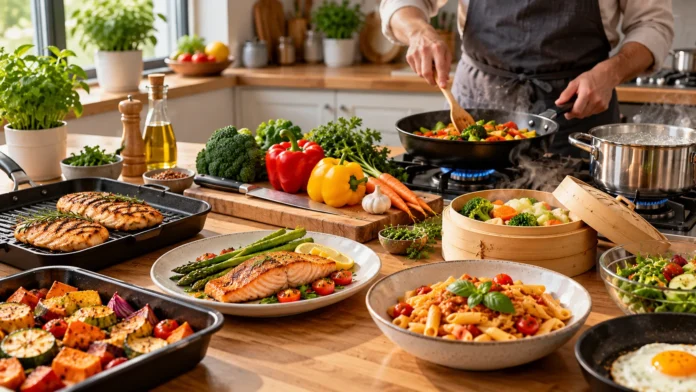

Cooking is an essential life skill that allows you to prepare delicious homemade meals, explore different flavors, and become more confident in the kitchen. However, learning how to cook can feel overwhelming when you encounter unfamiliar techniques, kitchen equipment, and recipes. Understanding the best cooking methods for beginners makes the process easier and helps you develop practical skills without unnecessary complications.
Different cooking techniques use heat, water, steam, or oil to transform raw ingredients into flavorful meals. Some methods, such as boiling and steaming, are simple to learn, while others, including sautéing and roasting, require a little more practice. Each technique offers unique benefits depending on the ingredients, desired texture, and type of dish.
Whether you want to prepare vegetables, rice, pasta, eggs, or everyday family meals, learning basic cooking methods provides a strong foundation. This guide explains beginner-friendly techniques, essential equipment, common mistakes, food safety practices, and practical tips for improving your cooking skills.
What Are Cooking Methods?
Cooking methods are techniques used to prepare food by applying heat in different ways. Heat changes the texture, flavor, appearance, and structure of ingredients, making many foods more enjoyable and easier to digest. Common examples include boiling, steaming, roasting, baking, grilling, sautéing, and simmering, each producing different cooking results.
These techniques generally fall into three categories: dry-heat cooking, moist-heat cooking, and combination cooking. Dry-heat methods use hot air, direct heat, or fat, while moist-heat methods rely on water or steam. Combination techniques bring both approaches together to develop flavor and tenderize certain ingredients.
Understanding these categories helps beginners choose suitable methods for different dishes. For example, steaming works well for vegetables, while roasting creates browned surfaces and deeper flavors. Learning how each technique affects food allows you to follow recipes more confidently and eventually experiment with your own meal ideas.
Why Beginners Should Learn Basic Cooking Techniques
Learning basic cooking techniques makes preparing everyday meals less complicated and more enjoyable. Instead of memorizing countless recipes, you begin understanding how ingredients respond to different temperatures and cooking conditions. This knowledge allows you to prepare familiar foods in several ways while developing confidence through regular kitchen practice.
Another advantage is gaining greater control over flavor, texture, and preparation methods. When you understand how to boil pasta, roast vegetables, or sauté ingredients, you can adapt meals to personal preferences. These skills also help you recognize when food needs additional cooking or when a different technique would produce better results.
Basic cooking knowledge can also support more organized meal preparation and reduce avoidable food waste. Understanding which ingredients cook quickly and which require longer helps you plan recipes efficiently. As your experience grows, you can prepare satisfying homemade meals using simple equipment and ingredients already available in your kitchen.
Boiling: One of the Easiest Cooking Methods
Boiling involves heating water or another cooking liquid until it reaches a vigorous bubbling state. This technique is commonly used for preparing pasta, potatoes, certain vegetables, and other ingredients that benefit from cooking in hot liquid. It requires minimal equipment, making it an accessible starting point for beginners learning kitchen fundamentals.
To boil food, place an appropriate amount of water in a suitable pot and heat it until bubbling steadily. Carefully add the ingredients while avoiding splashes, then follow the recommended cooking time. Different foods require different temperatures and durations, so checking tenderness or following reliable recipe instructions helps achieve better results.
One common mistake is boiling vegetables longer than necessary, which can make them overly soft and less appealing. Pasta can also become mushy when left in boiling water beyond its ideal cooking time. Paying attention to cooking duration and testing ingredients periodically helps maintain enjoyable textures and consistent results.
Steaming: A Simple Method for Cooking Vegetables
Steaming cooks food using hot water vapor rather than immersing ingredients directly in boiling water. This gentle technique works particularly well for vegetables, fish, and certain dumplings. Because ingredients are not submerged, steaming can help preserve their natural flavors, textures, and some water-soluble nutrients compared with prolonged boiling.
A basic steaming setup includes a pot, a small amount of water, and a suitable steamer basket. The food sits above the water while steam circulates around it during cooking. Keeping the lid closed helps maintain a consistent cooking environment, although beginners should open it carefully because escaping steam can cause burns.
Broccoli, carrots, green beans, and cauliflower are excellent ingredients for practicing this method. Cooking times vary according to vegetable size and desired tenderness. After steaming, adding herbs, a little olive oil, or a squeeze of lemon can provide extra flavor without requiring complicated preparation techniques.
Sautéing: A Quick and Flavorful Cooking Technique
Sautéing involves cooking ingredients in a relatively small amount of oil or another suitable fat over controlled heat. The technique is commonly used for onions, mushrooms, vegetables, and small pieces of food. It allows ingredients to develop appealing flavors and textures while keeping preparation times relatively short.
Begin by heating a suitable pan and adding a modest amount of cooking oil. Once the oil is ready, carefully add prepared ingredients and stir or turn them as needed. Avoid overcrowding the pan because excess ingredients can release moisture and prevent the food from browning effectively.
Heat control is one of the most important skills when learning to sauté. Excessively high temperatures can burn delicate ingredients, while insufficient heat may leave food soft without developing much flavor. Practicing with simple vegetables helps beginners understand how temperature, stirring, and cooking time influence the finished dish.
Roasting: An Easy Way to Develop Rich Flavors
Roasting uses dry heat inside an oven to cook food while encouraging browning on exposed surfaces. It is particularly effective for vegetables, potatoes, and various protein-rich ingredients. The method requires relatively little attention once the food is properly prepared, making it convenient for beginners who prefer straightforward cooking techniques.
To roast vegetables, cut them into reasonably similar pieces and arrange them on a suitable baking tray. Add a little cooking oil and preferred seasonings before placing the tray in a preheated oven. Leaving space between pieces encourages more even cooking and helps prevent ingredients from steaming excessively.
Roasting times depend on ingredient size, oven temperature, and the type of food being prepared. Dense vegetables usually need longer than softer varieties, so combining ingredients with similar cooking requirements can simplify preparation. Checking the food periodically helps prevent burning and ensures that the final texture matches your preference.
Baking: A Beginner-Friendly Dry-Heat Method
Baking uses the surrounding heat of an oven to cook food gradually and evenly. Although commonly associated with bread, cakes, and pastries, baking also works for casseroles, vegetables, and various savory dishes. This versatility makes it a valuable technique for beginners interested in expanding their everyday cooking skills.
Successful baking often depends on accurate measurements, suitable temperatures, and appropriate cooking times. Preheating the oven helps create the conditions expected by a recipe, particularly when preparing baked goods. Using the recommended baking dish and following ingredient instructions can also improve consistency while reducing common preparation problems.
Beginners may find simple muffins, baked potatoes, and basic casseroles useful practice dishes. These recipes introduce oven safety, timing, and ingredient preparation without requiring advanced equipment. As confidence develops, experimenting with different ingredients and recipes can make baking an enjoyable part of a regular cooking routine.
Simmering: Gentle Cooking for Soups and Sauces
Simmering involves cooking food in liquid at a temperature below a full boil. Small bubbles appear gently at the surface instead of the vigorous movement associated with boiling. This method is especially useful for soups, sauces, stews, and other dishes that benefit from gradual flavor development.
To simmer ingredients, first heat the liquid until it approaches boiling, then reduce the heat. The objective is to maintain gentle bubbling rather than allowing the mixture to boil aggressively. Stirring occasionally can prevent certain ingredients from sticking, particularly when preparing thicker sauces or dishes containing starch.
Simmering helps flavors combine while allowing ingredients to cook at a controlled pace. However, longer cooking is not always better because delicate foods can still become overcooked. Following appropriate cooking times and checking the consistency of the liquid will help beginners prepare more balanced and flavorful meals.
Pan-Frying: Creating Crispy and Delicious Meals
Pan-frying cooks food in a skillet using a moderate amount of oil or fat. It is commonly used for foods such as fish fillets, pancakes, and certain vegetable preparations. The technique can create an appealing browned surface while cooking the inside when the temperature and timing are properly controlled.
Selecting a suitable pan and using an appropriate amount of oil are important first steps. Ingredients should be placed carefully into the pan to reduce splashing. Allowing food to cook undisturbed briefly can encourage browning before turning it with a suitable utensil.
Beginners should avoid using excessively high heat because the outside may burn before the center is properly cooked. A food thermometer is particularly useful for checking the safe internal temperature of meat and poultry. Practicing with simple recipes helps develop better control over timing, turning, and heat adjustment.
Grilling: Cooking Food With Direct Heat
Grilling uses heat from below or above food to develop distinctive browned surfaces and flavors. Common ingredients include vegetables, seafood, and different cuts of meat. The technique can be performed using suitable indoor grilling equipment or an outdoor grill, depending on the available facilities.
For beginners, preparation is important because grilling often cooks exposed surfaces relatively quickly. Cutting vegetables evenly and preparing ingredients before starting helps prevent rushed decisions. Food should be turned using suitable utensils, and cooking times should reflect ingredient thickness and the intensity of the heat.
Outdoor grilling requires additional attention to fire safety, ventilation, and equipment instructions. Beginners should learn with an experienced adult when using equipment that involves open flames or high temperatures. Proper food handling and temperature checks are also essential when grilling poultry, meat, and seafood.
Stir-Frying: A Fast Method for Everyday Meals
Stir-frying is a cooking technique that uses relatively high heat and continuous movement to cook small pieces of food quickly. It is commonly associated with Asian-inspired dishes featuring vegetables, noodles, and proteins. Because ingredients cook rapidly, preparing everything before heating the pan is especially important.
A successful stir-fry begins with cutting ingredients into manageable, reasonably uniform pieces. Use a suitable pan and add ingredients in an order that reflects their cooking requirements. Firmer vegetables may need more time, while delicate greens and certain sauces are usually added later.
Beginners can practice stir-frying with vegetables and precooked ingredients before attempting more complicated dishes. Keeping portions manageable helps maintain control and reduces overcrowding. Once you understand the basic process, changing vegetables, seasonings, and sauces makes it easy to create different meals using the same technique.
Poaching: Gentle Cooking for Delicate Ingredients
Poaching cooks food in liquid maintained at a relatively low temperature, generally below a simmer. This technique is particularly useful for delicate ingredients that may become tough or break apart under aggressive cooking conditions. Eggs, fish, and some fruits are common examples of foods prepared through poaching.
The process involves heating water, broth, or another suitable liquid gently before adding the ingredients. Maintaining consistent temperature is important because rapid boiling can disturb delicate foods. The cooking liquid may also contain herbs or other seasonings that contribute subtle flavors during preparation.
Poached eggs are a familiar example of this cooking method, although achieving the desired texture may require practice. Beginners can also explore poached fruit or suitable fish recipes. Paying attention to timing and using an appropriate thermometer when necessary helps ensure safe, properly cooked results.
Braising: Combining Dry and Moist Heat
Braising is a combination cooking method that typically begins by browning ingredients before cooking them slowly with a modest amount of liquid. It is especially useful for certain tougher cuts of meat and hearty vegetable dishes. The technique allows flavors to develop while the ingredients become tender during gradual cooking.
A typical braising process starts with heating a suitable heavy pot and browning the main ingredient when the recipe calls for it. Liquid is then added, and the food cooks gently with a lid in place. Maintaining appropriate heat and following recommended cooking guidance helps produce consistent results without unnecessary attention.
Although braising takes longer than many beginner cooking methods, the basic process is relatively straightforward. The slow cooking period provides time for flavors to combine and tougher ingredients to soften. Beginners can start with simple vegetable braises before exploring more complex recipes involving different proteins and seasonings.
Essential Cooking Equipment for Beginners
Learning basic cooking methods becomes easier when you have a small collection of reliable kitchen tools. A suitable saucepan, frying pan, baking tray, cutting board, and cooking utensils can support many everyday recipes. Beginners do not need expensive professional equipment to prepare satisfying meals using common cooking techniques.
A comfortable kitchen knife, measuring tools, and a colander are also useful additions. A food thermometer is especially valuable for checking whether meat, poultry, and other temperature-sensitive foods are safely cooked. Choosing equipment that feels manageable and matches your regular cooking needs helps make kitchen preparation more comfortable.
Proper equipment care is just as important as purchasing suitable tools. Keeping knives maintained, cleaning cooking surfaces, and following manufacturer instructions can reduce common kitchen problems. Organizing frequently used equipment within easy reach also helps create a safer and more efficient cooking environment.
How to Choose the Right Cooking Method
Choosing the right cooking method depends on the ingredients, desired texture, available equipment, and amount of preparation time. For example, steaming can produce tender vegetables, while roasting encourages browning and deeper flavors. Understanding these differences helps beginners select techniques that suit the meal they want to prepare.
Ingredient characteristics are another important consideration because delicate foods often respond differently from dense or tougher ingredients. Fish may work well with poaching or baking, while potatoes can be boiled, roasted, or mashed after cooking. Following a reliable recipe provides useful guidance until you become more familiar with ingredient behavior.
Personal preferences also influence cooking method selection. Someone who enjoys crisp textures may prefer roasting or pan-frying, while another person might favor soups and gently simmered meals. Exploring different methods helps you discover which techniques suit your tastes, schedule, and everyday kitchen routine.
Common Cooking Mistakes Beginners Should Avoid
One common beginner mistake is cooking with unsuitable heat levels. Excessively high temperatures can burn the outside of food before the interior is ready, while very low heat may prevent proper browning. Learning to adjust heat gradually improves control and helps produce more consistent results across different recipes.
Another mistake is preparing ingredients only after cooking has already started. This can create unnecessary pressure, particularly when using quick techniques such as sautéing or stir-frying. Measuring ingredients, chopping vegetables, and organizing utensils beforehand makes the cooking process smoother and reduces the likelihood of missing important steps.
Food safety mistakes can also create problems when handling raw ingredients. Washing hands, avoiding cross-contamination, storing perishable foods correctly, and checking appropriate cooking temperatures are essential habits. Beginners should also avoid leaving active cooking unattended, especially when using hot oil, open flames, or high-temperature equipment.
Food Safety Tips Every Beginner Should Know
Food safety begins with keeping hands, utensils, and preparation surfaces clean. Wash hands thoroughly before handling ingredients and after touching raw meat, poultry, seafood, or eggs. Use separate equipment where practical to prevent raw animal products from contaminating foods that will not receive further cooking.
Cooking foods to appropriate internal temperatures is another essential step. Poultry should reach 165°F (74°C), while ground meats and whole cuts have different recommended temperatures and handling requirements. A reliable food thermometer provides a more dependable safety check than judging doneness solely by color or appearance.
Safe storage is equally important after preparing meals. Refrigerate perishable leftovers promptly and avoid leaving cooked food at room temperature for extended periods. Learning basic refrigeration, reheating, and ingredient storage practices helps reduce foodborne illness risks while making homemade cooking more dependable and enjoyable.
How to Improve Your Cooking Skills With Practice
Improving cooking skills begins with practicing simple recipes until common techniques feel familiar. Repeating dishes such as boiled pasta, roasted vegetables, or basic soups allows you to understand timing and ingredient behavior. Consistent practice builds confidence without requiring complicated recipes or expensive equipment.
Pay attention to how ingredients change throughout the cooking process. Notice when vegetables soften, when sauces thicken, and how different temperatures affect browning. These observations gradually develop practical judgment, helping you recognize when to adjust heat, add liquid, or remove food from the cooking surface.
Keeping a small cooking journal can also help beginners remember successful methods and avoid repeating mistakes. Record useful details such as ingredient quantities, cooking times, and flavor adjustments. Over time, this information creates a personal collection of reliable recipes and techniques that makes preparing everyday meals easier.
Conclusion
Learning the best cooking methods for beginners provides a practical foundation for preparing delicious homemade meals. Techniques such as boiling, steaming, sautéing, roasting, baking, and simmering offer different ways to cook everyday ingredients. Understanding how each method works makes it easier to choose suitable approaches and achieve enjoyable results.
Beginners benefit from starting with simple recipes, organizing ingredients, and practicing basic heat control. Using appropriate equipment and following food safety guidelines are equally important for developing confidence in the kitchen. As experience grows, combining familiar techniques can create more interesting meals without making cooking unnecessarily complicated.
Cooking is a skill that improves through regular practice, patience, and curiosity. Every recipe provides an opportunity to understand ingredients, experiment with flavors, and become more comfortable using different techniques. By focusing on fundamental cooking methods and gradually expanding your abilities, you can make home cooking a satisfying part of everyday life.
Frequently Asked Questions (FAQs)
What are the easiest cooking methods for beginners?
Boiling, steaming, baking, and simmering are among the easiest cooking methods to learn. They use relatively straightforward techniques and work well for preparing vegetables, pasta, soups, and everyday meals.
What are the five basic cooking methods?
Five common cooking methods include boiling, steaming, sautéing, roasting, and baking. Each uses heat differently and produces distinctive textures, flavors, and results depending on the ingredients.
Which cooking method is best for vegetables?
Steaming and roasting are excellent options for vegetables. Steaming produces tender results, while roasting develops browned surfaces and richer flavors. The best choice depends on personal preference.
How can beginners improve their cooking skills?
Beginners can improve by practicing simple recipes, learning heat control, preparing ingredients in advance, and following food safety practices. Repeating familiar dishes helps develop confidence and practical kitchen experience.
What cooking equipment should beginners buy first?
Useful beginner equipment includes a saucepan, frying pan, baking tray, cutting board, kitchen knife, measuring tools, and cooking utensils. A food thermometer is also important for preparing temperature-sensitive foods safely.




