
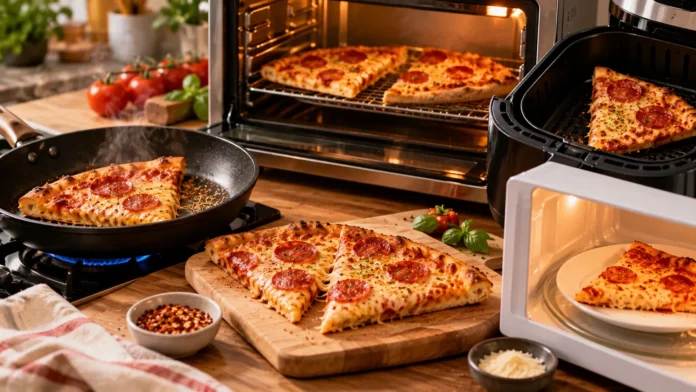

Why Does Pizza Dry Out When Reheated?
Reheating leftover pizza can be challenging because the crust, cheese, sauce, and toppings respond differently to heat. While the crust needs enough warmth to regain its texture, excessive heating can remove moisture from the cheese and toppings. Understanding how heat affects these ingredients helps you choose the best ways to reheat pizza without drying it out.
Pizza often becomes dry when reheated at excessively high temperatures or exposed to heat for too long. The moisture within the bread evaporates, while cheese can become tough and rubbery instead of melting smoothly. Thin crusts are especially vulnerable because they contain less moisture and can become hard before the toppings are completely heated.
The ideal reheating method balances gentle heat with enough warmth to restore the crust’s texture. Skillets, ovens, air fryers, and microwaves can all work when used correctly. The best choice depends on the pizza’s thickness, toppings, available equipment, and whether you prefer a crispy base or a softer, freshly baked texture.
Best Way to Reheat Pizza in a Skillet
Reheating pizza in a skillet is one of the most effective methods for restoring a crispy crust while keeping toppings moist. A nonstick or well-seasoned frying pan allows heat to reach the bottom of the pizza directly. This approach works especially well for individual slices and does not require preheating a large oven.
Place a cold pizza slice in a skillet over medium-low heat without adding cooking oil. Allow the bottom to warm for approximately three to five minutes, checking occasionally to prevent burning. When the crust begins to crisp, add a few drops of water to an empty area of the pan, keeping the water away from the pizza.
Cover the skillet briefly with a lid so the gentle steam helps melt the cheese without drying the toppings. Remove the lid after approximately one minute and continue heating if necessary until the pizza is thoroughly hot. This technique combines a crispy bottom with soft, melted cheese, making it an excellent choice for reheating leftover pizza.
How to Reheat Pizza in the Oven Without Drying It Out
The oven is an excellent option when reheating several pizza slices or an entire leftover pizza. It distributes heat throughout the food and can restore a texture similar to freshly baked pizza. However, using excessive temperatures or leaving slices uncovered for too long can make the crust hard and the toppings dry.
Preheat your oven to approximately 350°F (175°C) and place the pizza on a suitable baking tray. Heat the slices for around eight to twelve minutes, depending on their thickness and starting temperature. Check them frequently toward the end, because thin slices may heat faster than deep-dish pizza or portions containing several layers of toppings.
For softer pizza, loosely cover the slices with aluminum foil during the early stages of reheating. Remove the foil near the end if you want the crust to become slightly crisp. Using moderate heat helps warm the toppings without quickly drying the cheese, making the oven particularly convenient for family meals and larger portions.
How to Reheat Pizza in an Air Fryer
An air fryer provides a convenient way to reheat leftover pizza while restoring an appealing, crispy crust. Its circulating hot air warms the surface and bottom more evenly than many microwave methods. Because air fryers heat relatively quickly, they are particularly useful when preparing one or two slices without using a conventional oven.
Preheat the air fryer if recommended by the manufacturer, then set the temperature to approximately 320–350°F (160–175°C). Arrange the pizza slices in a single layer inside the basket without overlapping them. Heat for approximately three to five minutes, checking frequently because cooking times vary depending on the appliance, crust thickness, and toppings.
Lower temperatures are generally better for pizza with delicate cheese or toppings that dry out easily. If the crust becomes crispy before the center is hot, reduce the temperature and continue heating briefly. Avoid overcrowding the basket, since proper airflow helps warm the slices consistently and prevents some areas from becoming soggy or unevenly heated.
How to Reheat Pizza in the Microwave Without Making It Soggy
The microwave is the fastest option for reheating pizza, but it often produces a softer crust than other methods. Microwave energy heats moisture within the food, which can make the bread temporarily chewy or soggy. Using shorter heating intervals and avoiding unnecessary moisture can improve the results while keeping cheese and toppings from becoming excessively hot.
Place a slice on a microwave-safe plate and cover it loosely with a microwave-safe cover to reduce splattering. Heat in short intervals of approximately twenty to thirty seconds, checking the pizza between each interval. Continue until the entire slice is thoroughly heated, remembering that thicker portions and larger servings will require additional time.
For a crispier finish, transfer the warmed pizza to a dry skillet for a short period after microwaving. This combination allows the microwave to heat the toppings while the skillet improves the crust’s texture. Avoid relying on a cup of water beside the pizza as a guaranteed solution, because it cannot reliably prevent sogginess.
Reheating Pizza in a Toaster Oven
A toaster oven is a useful alternative to a conventional oven when reheating small portions of leftover pizza. It offers direct heating and typically requires less space than a full-sized appliance. This method works well for people who want a lightly crispy crust without using a frying pan or heating an entire kitchen oven.
Set the toaster oven to approximately 325–350°F (160–175°C) and allow it to preheat if necessary. Place the pizza on a suitable tray or rack according to the manufacturer’s instructions. Heat for approximately five to eight minutes, checking regularly because the smaller heating chamber can brown toppings and crust edges more quickly.
If the pizza contains toppings that are especially sensitive to drying, begin with a slightly lower temperature. A small piece of foil placed loosely over the pizza can help limit excessive browning, provided the appliance instructions allow foil use. Remove the pizza once the cheese is warm and the crust reaches your preferred texture.
How to Reheat Thin-Crust and Neapolitan Pizza
Thin-crust pizza requires careful reheating because its relatively delicate base can become hard when exposed to prolonged heat. Neapolitan-style pizza often has a soft center and airy outer crust that can lose moisture quickly. These characteristics make gentle reheating particularly important when trying to preserve the original texture of leftover slices.
A skillet over medium-low heat is often a suitable choice for thin-crust pizza because it provides direct control over the bottom surface. Heat the slice gently and cover it briefly if the cheese needs additional warmth. Check the crust frequently, since thin pizza may become crispy much faster than thicker varieties during reheating.
An air fryer can also work, but lower temperatures and shorter heating periods help avoid overly hard edges. When using an oven, remove thin slices as soon as they are thoroughly heated rather than waiting for additional browning. The goal is to restore some crispness while preserving enough softness to make each bite enjoyable.
Best Way to Reheat Thick-Crust and Deep-Dish Pizza
Thick-crust pizza contains more bread and often requires additional heating time to warm its center properly. Deep-dish and stuffed pizzas may also contain generous amounts of cheese, sauce, and other ingredients. These characteristics make gentle, consistent heating especially important because the outside can become dry before the middle reaches a suitable temperature.
The oven is generally a convenient choice for thick pizza because it allows heat to reach the center gradually. Preheat it to approximately 325–350°F (160–175°C) and place the pizza in an oven-safe dish. Loosely covering the portion with foil during early heating can reduce excessive browning while the thicker layers warm through.
Heating times vary considerably according to portion size, thickness, and whether the pizza starts cold or frozen. Large deep-dish slices may take longer than ordinary pizza, so checking the center is important. Use a food thermometer when needed to confirm leftover pizza reaches 165°F (74°C), especially when it contains meat or substantial fillings.
Can You Reheat Frozen Leftover Pizza?
Yes, previously cooked pizza can be reheated directly from frozen without thawing it first. This makes freezing a convenient option for preserving extra slices and preparing quick meals later. However, frozen pizza generally requires additional heating time because the center needs to warm completely before the crust and toppings are ready to eat.
For oven reheating, preheat to approximately 350–375°F (175–190°C) and place the frozen slices on a suitable baking tray. Start checking after about ten minutes, although thicker portions may require considerably longer. Covering the pizza loosely with foil can help protect the toppings if the crust begins browning before the center is heated.
An air fryer may also reheat small frozen slices successfully, especially when using moderate temperatures and checking regularly. Avoid beginning with excessive heat, which can harden the outer crust while leaving the middle cold. Regardless of the appliance, ensure reheated leftovers reach 165°F (74°C) throughout before serving them safely.
How to Store Leftover Pizza to Prevent Drying Out
Proper storage plays an important role in keeping leftover pizza enjoyable when reheated later. Leaving slices exposed to refrigerator air can gradually dry the crust and affect the texture of cheese and toppings. Storing pizza in airtight containers or wrapping individual portions carefully helps limit moisture loss and reduce unwanted refrigerator odors.
Refrigerate leftover pizza promptly rather than allowing it to remain on the counter for extended periods. Cooked leftovers should generally be refrigerated within two hours, or within one hour when surrounding temperatures exceed 90°F (32°C). Properly refrigerated pizza should normally be eaten within three to four days or frozen for longer storage.
For freezing, wrap individual slices securely and place them in freezer-safe bags or airtight containers. Removing excess air helps reduce freezer burn and protect the pizza’s texture. Labeling each package with the storage date makes meal planning easier, while maintaining a freezer temperature of 0°F (-18°C) or below supports safe long-term storage.
Common Mistakes That Make Reheated Pizza Dry or Soggy
One common mistake is using extremely high heat to reheat pizza as quickly as possible. While strong heat can crisp the crust, it may also dry out cheese and toppings before the center becomes hot. Starting with moderate temperatures and adjusting the heating time generally provides better control over the finished texture.
Another mistake is adding too much water when trying to prevent pizza from drying out. Excess moisture can soften the crust and create an unpleasant, soggy texture that resembles steamed bread. When reheating in a skillet, use only a small amount of water beside the pizza and cover the pan briefly to melt the cheese.
Overcrowding cooking equipment can also prevent pizza from reheating evenly. Stacked slices block proper heat circulation, especially inside ovens and air fryers, while thick layers may remain cold in the center. Heating portions separately and checking their temperature helps produce more consistent results without repeatedly exposing already-warm sections to additional heat.
How to Choose the Best Pizza Reheating Method
Choosing the right reheating method depends primarily on your preferred texture, available time, and portion size. A skillet works well for individual slices when you want a crispy bottom and melted cheese. The oven is generally more convenient for several slices, particularly when preparing food for multiple people during the same meal.
An air fryer offers a useful balance between convenience and crispness when reheating small amounts of pizza. The microwave is faster but usually produces a softer crust, making it suitable when speed matters more than texture. A toaster oven provides another practical option for small servings without requiring a full-sized oven or stovetop.
Pizza thickness and toppings should also influence your decision because different styles respond differently to heat. Thin pizza benefits from shorter heating, while deep-dish portions need more time for their centers to become hot. By adjusting temperature, heating time, and moisture carefully, you can enjoy leftover pizza with a texture closer to freshly prepared slices.
Conclusion
Reheating leftover pizza without drying it out requires the right combination of temperature, heating time, and moisture control. Skillets, ovens, air fryers, microwaves, and toaster ovens can all produce enjoyable results when used appropriately. The skillet is especially useful for individual slices, while the oven provides greater convenience for larger portions and thicker crusts.
Proper storage is equally important because pizza that has already lost moisture may be difficult to restore completely. Refrigerating leftovers promptly, using airtight containers, and avoiding unnecessary exposure to air help preserve their quality. Reheating pizza thoroughly while preventing excessive browning provides a better balance between food safety, flavor, and texture.
The best method ultimately depends on the type of pizza and the result you want to achieve. Experimenting with moderate heat and shorter cooking intervals can help you find an approach that works for your favorite slices. With a little care, leftover pizza can remain satisfying, convenient, and enjoyable long after its original meal.
Frequently Asked Questions
What is the best way to reheat pizza without drying it out?
Reheating pizza in a skillet over medium-low heat is one of the best methods. Briefly covering the pan helps melt the cheese while direct heat restores a crispy crust.
How do you reheat pizza in the oven and keep it soft?
Preheat the oven to approximately 350°F (175°C) and loosely cover the pizza with aluminum foil during early heating. Remove the foil briefly if you prefer a crispier crust.
Is it better to reheat pizza in an air fryer or microwave?
An air fryer usually produces a crispier crust, while a microwave offers faster reheating. Choose an air fryer for texture or a microwave for convenience, ensuring the pizza becomes thoroughly heated.
How many times can you safely reheat leftover pizza?
Reheating only the portion you intend to eat helps preserve quality and reduce unnecessary temperature changes. Store remaining pizza safely, and ensure each reheated portion reaches 165°F (74°C).
Can you eat leftover pizza after three days in the refrigerator?
Yes, properly refrigerated pizza is generally safe to eat within three to four days. It should have been refrigerated promptly, kept at 40°F (4°C) or below, and reheated thoroughly before serving.