
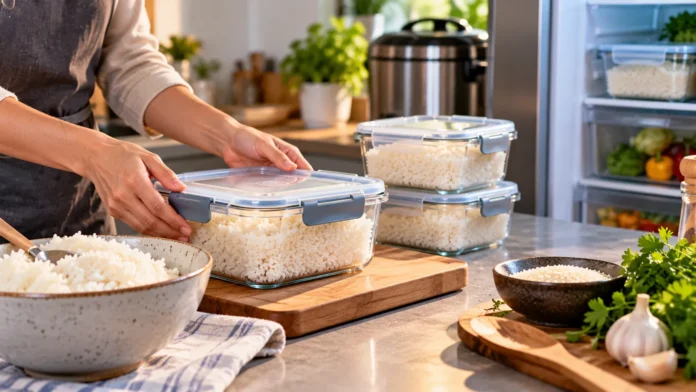

Cooked rice is a common part of everyday meals because it is affordable, versatile, and easy to prepare. Whether you enjoy plain white rice, brown rice, basmati rice, or homemade fried rice, storing leftovers correctly is essential for food safety. Improper storage can allow harmful bacteria to grow, increasing the risk of foodborne illness. Understanding how to store cooked rice safely helps protect your family while reducing unnecessary food waste.
Many people assume that cooked rice is safe as long as it looks fresh and smells normal. However, certain bacteria can develop without creating noticeable changes in appearance, taste, or smell. Cooling rice quickly, using suitable containers, and maintaining the correct refrigerator temperature are important precautions. This guide explains safe rice storage methods, refrigeration times, freezing techniques, and practical reheating tips.
Why Is Proper Storage of Cooked Rice Important?
Proper storage of cooked rice is important because cooked grains can support bacterial growth when left at unsafe temperatures. Rice contains moisture and nutrients that create favorable conditions for certain microorganisms. If cooked rice remains at room temperature for too long, harmful bacteria may multiply. Following safe cooling and refrigeration practices helps reduce the risk of food poisoning.
One particular concern is a bacterium called Bacillus cereus, which can be present in uncooked rice. Some bacterial spores can survive normal cooking temperatures and remain in the prepared food. When rice is left warm for extended periods, these spores may develop into active bacteria. Certain strains can produce toxins that may cause illness even after the rice is reheated.
Correct rice storage also helps preserve freshness, texture, and overall food quality. Refrigeration slows bacterial growth, while suitable containers limit moisture loss and exposure to other foods. Freezing provides another option when leftover rice will not be eaten soon. Combining these methods with careful food handling makes storing cooked rice safer and more convenient.
How to Cool Cooked Rice Safely Before Storage
Cooling cooked rice quickly is one of the most important steps in preventing bacterial growth. Instead of leaving a large pot of rice on the counter, transfer the food into smaller, shallow containers. This allows heat to escape more efficiently and helps the rice cool evenly. Aim to cool and refrigerate cooked rice within one hour whenever possible.
For large batches, spreading cooked rice across a clean, shallow tray can speed up cooling. Gently separating the grains allows trapped heat to escape rather than remain concentrated in the center. You can also place a suitable container in a cold-water bath while keeping water away from the food. Once the rice has cooled sufficiently, transfer it promptly into the refrigerator.
Avoid leaving cooked rice inside a switched-off rice cooker or covered cooking pot for extended periods. These containers can retain warmth and slow the cooling process, creating conditions where bacteria may grow. Small portions of warm rice can be placed directly into the refrigerator in shallow containers. The important point is to avoid unnecessary delays while cooling the rice safely.
How to Store Cooked Rice in the Refrigerator
The refrigerator is a convenient place to store cooked rice that you plan to eat soon. Transfer properly cooled rice into clean, food-safe containers with secure lids to protect it from contamination. Keep the refrigerator at 40°F (4°C) or below to slow bacterial growth. For a cautious approach, refrigerate rice within one hour of cooking.
Place containers on refrigerator shelves where cold air can circulate freely around them. Avoid packing large amounts of hot food into one deep container because the center may cool too slowly. Dividing rice into smaller portions makes storage easier and allows individual servings to be removed when needed. Keeping containers covered also protects rice from spills and contact with other foods.
Labeling stored rice with the cooking date and time can help prevent accidental use after the recommended storage period. This is particularly useful when preparing several meals or storing different rice dishes together. Keep cooked rice away from leaking raw meat or seafood packaging to avoid cross-contamination. Good refrigerator organization supports both food safety and convenient meal preparation.
How Long Does Cooked Rice Last in the Fridge?
The recommended storage period for cooked rice varies between food safety authorities. UK guidance recommends eating refrigerated cooked rice within 24 hours, provided it was cooled quickly and stored correctly. General US leftover guidance commonly allows three to four days under proper refrigeration. For a simple, conservative household rule, using cooked rice within 24 hours is a sensible choice.
Storage time depends on how quickly the rice was cooled and whether the refrigerator maintained a safe temperature. Rice left at room temperature for too long does not become safe simply because it is refrigerated afterward. In very hot conditions, bacteria can grow more quickly. Safe handling immediately after cooking is therefore just as important as the time spent inside the refrigerator.
If you do not expect to eat leftover rice within the recommended period, freezing it promptly is a practical alternative. Freezing slows microbial activity and allows rice to remain usable for longer when handled correctly. Avoid relying on appearance or smell to determine whether stored rice is safe. When storage conditions or timing are uncertain, discarding the rice is the safer decision.
How to Freeze Cooked Rice for Longer Storage
Freezing cooked rice is an effective way to preserve leftovers when immediate consumption is not planned. Begin by cooling freshly prepared rice quickly and dividing it into convenient meal-sized portions. Place each portion inside a freezer-safe container or resealable freezer bag. Freezing individual servings makes it easier to prepare future meals without defrosting more rice than necessary.
Before sealing freezer bags, remove excess air while leaving enough space for convenient storage. Flattening small portions can help the rice freeze and thaw more evenly. Label each container with the preparation date so older portions can be used first. For best texture and flavor, aim to use frozen cooked rice within approximately one to two months.
Maintain a freezer temperature of 0°F (-18°C) or below for safe frozen food storage. Rice kept continuously frozen at this temperature can remain safe beyond its best-quality period, although its texture may gradually deteriorate. Proper packaging helps prevent freezer burn and excessive moisture loss. Freeze rice promptly after cooling rather than waiting until it approaches the end of its refrigerated storage period.
How to Reheat Cooked Rice Safely
Reheating cooked rice safely begins with proper storage before the reheating process. Rice that was left at room temperature for too long should not be reheated and eaten. Certain bacterial toxins can remain even when the food becomes very hot. Always check that refrigerated or frozen rice was handled correctly before deciding to prepare it again.
When reheating rice, ensure that every portion becomes steaming hot throughout. A food thermometer can help confirm that reheated rice reaches 165°F (74°C). If using a microwave, stir the rice during heating to reduce cold spots and improve temperature distribution. Allow the food to stand briefly when appropriate, then check that the center is thoroughly heated.
Only reheat the amount of rice you intend to eat during that meal. Repeated cooling and reheating increase opportunities for unsafe handling and bacterial growth. A conservative food safety practice is to reheat cooked rice only once. If reheated rice is left over again, discarding it is preferable to storing it for another reheating cycle.
Can You Eat Cooked Rice Cold?
Cooked rice can be eaten cold when it has been cooled quickly and refrigerated correctly. Cold rice is commonly used in salads, lunch bowls, and other prepared meals. The main safety concern is not the serving temperature itself but the way the rice was handled after cooking. Proper refrigeration helps reduce bacterial growth before the rice is consumed.
When preparing a cold rice salad, remove the required portion from the refrigerator shortly before serving. Mix it with fresh vegetables, herbs, or other ingredients using clean utensils and preparation surfaces. Keep the completed dish refrigerated until needed, especially when it contains perishable ingredients. Avoid leaving cold rice dishes outdoors or on a dining table for extended periods.
Rice prepared for packed lunches requires additional care when refrigeration is not immediately available. An insulated lunch bag with properly frozen ice packs can help keep the food cold during transportation. If you cannot maintain safe temperatures, consider choosing a different meal. Cold rice should always be consumed within the recommended storage period and should never be used if its handling history is uncertain.
How to Store Different Types of Cooked Rice
White rice, brown rice, basmati rice, and jasmine rice all require similar food safety precautions after cooking. Each type can support bacterial growth when stored at unsafe temperatures. Regardless of the variety, cool the rice quickly and refrigerate it in clean containers. The differences in grain shape, aroma, or nutritional composition do not eliminate the need for careful storage.
Brown rice may develop noticeable changes in flavor or texture during storage because it contains natural oils in the bran layer. White rice often becomes firmer after refrigeration as its starch structure changes. These quality differences do not provide reliable evidence about bacterial safety. Both varieties should follow the same cautious cooling, refrigeration, and reheating practices used for other cooked grains.
Rice dishes containing vegetables, eggs, meat, or seafood require attention to the safety of every ingredient. Fried rice, pulao, biryani, and rice casseroles should be cooled and refrigerated promptly after preparation. Mixed dishes may contain additional perishable ingredients that increase food handling requirements. Follow the shortest applicable storage period and ensure that reheated portions become thoroughly hot before serving.
Common Mistakes When Storing Cooked Rice
One common mistake is leaving cooked rice on the kitchen counter until it reaches room temperature naturally. Large quantities can remain warm for several hours, especially when stored inside covered cooking pots. This delay creates opportunities for bacteria to multiply. Dividing rice into shallow portions and refrigerating it promptly is a safer approach than waiting for the entire batch to cool.
Another mistake is assuming that reheating makes improperly stored rice safe again. Although sufficient heating can destroy many active bacteria, some toxins associated with Bacillus cereus can resist heat. Therefore, reheating cannot reliably correct unsafe storage practices. Rice forgotten on the counter overnight should be discarded instead of reheated, regardless of its appearance or smell.
Storing rice in oversized containers, using unclean utensils, and repeatedly removing it from refrigeration are additional problems. These habits can cause temperature fluctuations or introduce microorganisms during handling. Keeping portions separate helps reduce unnecessary contact with stored food. Establishing simple routines for cooling, labeling, and reheating rice can prevent many common storage mistakes.
How to Tell if Cooked Rice Has Gone Bad
Cooked rice sometimes develops noticeable signs of spoilage, including an unusual odor, visible mold, or unexpected discoloration. Changes in texture, such as excessive sliminess, may also indicate that the food should be discarded. However, not every dangerous microorganism produces obvious warning signs. Rice can appear perfectly normal while containing harmful bacteria or toxins.
Because visual inspection is unreliable, the storage history of cooked rice matters more than its appearance. Consider when it was cooked, how quickly it was cooled, and whether it remained properly refrigerated. If the rice was left out overnight or stored under uncertain conditions, do not taste it to test freshness. Discarding questionable food helps avoid unnecessary exposure to foodborne illness.
Food safety is especially important when preparing meals for young children, older adults, pregnant people, and individuals with weakened immune systems. These groups may experience more serious consequences from certain foodborne infections. Using freshly prepared rice or properly handled refrigerated portions is a practical precaution. When uncertainty exists, preparing another batch is safer than taking chances with questionable leftovers.
Best Containers for Storing Cooked Rice
Choosing suitable storage containers helps keep cooked rice organized and protected from contamination. Food-grade plastic containers, glass storage dishes, and freezer-safe bags are common household options. Containers with secure lids help reduce exposure to other foods and prevent spills during transportation. Select shallow containers whenever possible because they allow freshly cooked rice to cool more efficiently.
Glass containers are useful for refrigerator storage and may also be suitable for reheating when labeled microwave-safe. Plastic containers are lightweight and convenient, but they should be designed for food contact and the intended temperature. Freezer bags can save space when storing small portions of rice. Regardless of the material, containers should be cleaned thoroughly between uses.
Container size matters because large, tightly packed portions of rice can retain heat for too long. Smaller containers make it easier to refrigerate food promptly and remove only the amount required for a meal. Clear labeling also helps identify preparation dates without repeatedly opening containers. Combining appropriate packaging with reliable temperature control supports safer everyday food storage.
Practical Tips for Meal Prepping With Cooked Rice
Rice meal preparation can save time during busy weekdays when food is handled and stored correctly. Instead of preparing one large batch for several days of refrigeration, consider cooking smaller amounts more frequently. Another option is to freeze freshly prepared portions after rapid cooling. These approaches help maintain food quality while reducing the time cooked rice spends in refrigerated storage.
When preparing rice bowls or mixed meals, organize ingredients according to their individual storage requirements. Cooked vegetables, proteins, sauces, and rice may have different recommended storage periods. Keeping certain ingredients separate can also preserve texture and simplify reheating. Label completed meals clearly and refrigerate or freeze them promptly rather than leaving assembled containers on the counter.
Plan how each stored portion will be used before preparing a large batch of rice. Refrigerate portions intended for the next day and freeze additional servings immediately after cooling. Thaw frozen rice safely in the refrigerator or use an appropriate microwave setting before thorough reheating. A consistent preparation routine can make everyday meals convenient without compromising essential food safety practices.
Conclusion
Knowing how to store cooked rice safely is an important part of everyday kitchen hygiene. Cooked rice can contain bacterial spores that survive cooking and multiply when food is left at unsafe temperatures. Cooling rice quickly, refrigerating it promptly, and using clean storage containers help reduce these risks. For a cautious approach, aim to refrigerate rice within one hour and consume refrigerated portions within 24 hours.
Freezing is a practical alternative when you want to preserve cooked rice for future meals. Dividing rice into small portions allows faster cooling, easier storage, and more convenient reheating. Always ensure reheated rice becomes steaming hot throughout and avoid reheating the same portion repeatedly. Proper handling remains essential because heating cannot reliably remove toxins that developed during unsafe storage.
The safest approach is to develop simple habits that make food storage easy to manage. Keep your refrigerator at the correct temperature, label leftovers, and monitor how long prepared food remains outside refrigeration. Never rely on smell or appearance alone to determine whether cooked rice is safe. By following these practical precautions, you can enjoy leftover rice with greater confidence while reducing avoidable food waste.
Frequently Asked Questions
How long can cooked rice stay at room temperature?
Aim to cool and refrigerate cooked rice within one hour. Never leave it out beyond two hours, or one hour in temperatures above 90°F (32°C). Discard rice left out overnight.
How long can cooked rice be stored in the refrigerator?
For a conservative approach, eat refrigerated cooked rice within 24 hours. Some US food safety guidance permits three to four days when properly refrigerated, but recommendations vary between authorities.
Can I freeze cooked rice after cooking?
Yes, cooked rice can be frozen after it has been cooled quickly. Divide it into portions, place them in freezer-safe containers, and freeze promptly. Use within one to two months for best quality.
Is it safe to reheat cooked rice in the microwave?
Yes, provided the rice was cooled and stored safely. Stir it during microwaving and heat it until steaming hot throughout, ideally reaching 165°F (74°C). Avoid reheating the same rice more than once.
Can cooked rice cause food poisoning?
Yes, improperly stored cooked rice can allow Bacillus cereus to grow and produce harmful toxins. Safe cooling, prompt refrigeration, appropriate storage temperatures, and careful reheating help reduce the risk of foodborne illness.




