
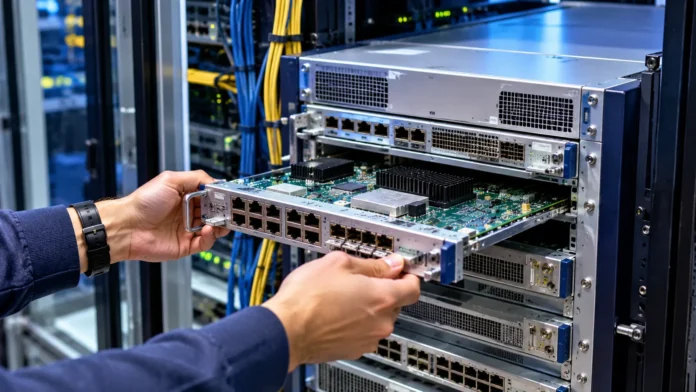

Modern computer networks depend on specialized hardware to move information quickly, securely, and reliably between connected devices. Large organizations, internet service providers, and data centers use powerful networking equipment to manage thousands of connections. One important component inside many modular routers and switches is the line card. It helps network devices handle traffic and communicate with other systems.
A line card is a hardware module installed inside a compatible network router or switch. It provides network interfaces and helps process incoming and outgoing data traffic. Depending on the equipment, line cards can support different connection speeds, interface types, and networking functions. They are especially useful in environments that require flexible expansion and high network capacity.
This guide explains how line cards work, their main components, types, benefits, and practical applications. You will also learn how they differ from other networking hardware and what to consider when choosing one. Understanding these concepts can help you make better decisions about network infrastructure, performance, and maintenance.
What Is a Line Card in Networking?
A line card is a removable hardware module used in certain modular routers, switches, and telecommunications systems. It provides physical network connections and supports the movement of information between connected devices. Line cards are installed into designated slots within compatible networking equipment. Their exact features depend on the manufacturer, system architecture, and supported networking technologies.
In a large network switch, a line card may contain multiple Ethernet ports used to connect servers or other networking devices. In a service provider router, it may support high-speed optical connections between network locations. These modules help organizations expand available interfaces without replacing the entire networking system. This flexibility is one reason modular network equipment remains useful.
Line cards usually operate alongside other components within the network chassis. These may include routing processors, switching fabrics, power supplies, and cooling systems. Each component performs a different function within the equipment. Together, they allow the router or switch to receive, process, and forward data according to its configuration.
How Does a Line Card Work?
A line card works by receiving network traffic through its physical interfaces and processing that information for forwarding. When a data packet arrives, the module identifies relevant details required for handling the traffic. Depending on the architecture, it may perform forwarding decisions using local hardware tables. The packet is then directed toward the appropriate destination interface.
In modular systems, traffic often moves through a switching fabric that connects different line cards. The switching fabric provides an internal pathway between the modules installed in the chassis. This allows information received on one card to reach a port on another card. The exact process varies between router and switch designs.
Line cards typically use specialized processors and forwarding hardware to handle network traffic efficiently. Many devices perform important packet-processing tasks directly on the module rather than sending every packet to a central processor. This distributed approach supports high throughput in large systems. However, actual performance depends on hardware capacity and the complete network architecture.
Main Components of a Network Line Card
A network line card contains several hardware components that work together to manage connectivity and traffic processing. These commonly include physical interfaces, forwarding chips, memory, and supporting electronic circuits. Some designs also contain specialized processing units for packet inspection or traffic classification. The combination depends on the intended application and device capabilities.
Network ports provide the physical connections used to transmit and receive information. Depending on the model, these interfaces may support copper Ethernet connections or optical transceivers. Specialized chips process traffic and interact with the chassis switching system. Memory stores information needed for forwarding decisions and other operational functions.
Additional components may support monitoring, error detection, and communication with the central system controller. Some cards include hardware designed to manage traffic queues and enforce quality-of-service policies. Modern line cards are carefully engineered to balance performance with power consumption. Reliable operation requires compatibility between all major components.
Different Types of Line Cards
Line cards are available in several types depending on their networking functions and supported interfaces. Ethernet line cards are commonly used in enterprise switches and data center equipment. They provide multiple network ports for connecting servers, switches, and other devices. Available speeds and port densities vary according to the hardware generation.
Optical line cards support fiber-based communication and are widely used in high-capacity networking environments. They may provide interfaces for long-distance connections or high-speed data center links. Some telecommunications systems use specialized cards for transport technologies and service delivery. Their design reflects the networking standards and connection requirements they support.
Other line cards include packet-processing modules and service-oriented designs for particular network platforms. Some equipment supports cards with different port speeds or combinations of interface types. However, not every module works with every chassis. Understanding the available categories helps network administrators select suitable hardware for specific infrastructure needs.
Line Cards in Routers and Switches
Line cards are important components in many enterprise and service provider routers. These devices move information between different networks using routing information and forwarding rules. A router line card provides interfaces through which traffic enters and leaves the system. It may also perform hardware-based packet forwarding using tables programmed by the routing system.
In modular switches, line cards provide ports used to connect devices within a network. They may support Ethernet switching, VLAN handling, and other functions depending on the platform. High-capacity switches can use multiple line cards to increase port availability. This allows administrators to connect more equipment without replacing the entire switching chassis.
Although routers and switches may use similar modular designs, their responsibilities are not always identical. Routers focus heavily on forwarding traffic between networks, while switches often connect devices within network environments. Modern equipment can combine both capabilities. The exact line card functions depend on the system’s hardware and software architecture.
Line Card vs. Network Interface Card
A line card and a network interface card both provide network connectivity, but they serve different purposes. A network interface card, commonly called a NIC, connects an individual computer or server to a network. A line card is generally installed inside modular networking equipment. It often provides multiple interfaces and specialized traffic-processing capabilities.
A typical server NIC handles communication between the host system and connected network infrastructure. It may support Ethernet speeds, offloading features, and other performance improvements. A line card operates as part of a larger router or switch architecture. Its functions can include forwarding traffic between many connected systems.
The distinction is important when planning network upgrades. Installing a faster NIC may improve a server’s available network connection. Adding a compatible line card can increase interface capacity or processing resources within a modular network device. Both technologies support connectivity, but they operate at different points within the network infrastructure.
Line Card vs. Supervisor Engine
A supervisor engine is another important component found in certain modular networking systems. It usually manages central control functions, system configuration, and communication with management software. Line cards primarily provide interfaces and handle forwarding tasks. The division of responsibilities helps large networking platforms operate efficiently.
For example, a supervisor engine may run routing protocols and calculate information used to build forwarding tables. Line cards can then use the resulting forwarding information to process traffic at high speed. This arrangement separates many control-plane functions from data-plane operations. However, some modern architectures distribute responsibilities differently.
Understanding this distinction helps administrators diagnose networking problems. A fault affecting one line card may disrupt particular ports while other modules continue operating. A supervisor-related failure can have broader consequences depending on redundancy and system design. Modular platforms often include features intended to improve resilience against component failures.
Benefits of Using Line Cards
One major advantage of line cards is the ability to expand network connectivity within a modular system. Organizations can add compatible modules when more interfaces are needed. This may reduce the need to replace an entire router or switch. Expansion flexibility is especially valuable in environments where network requirements change over time.
Line cards can also support high-performance traffic handling through specialized forwarding hardware. Modern modules may process substantial volumes of network data with low latency. This helps large networks support demanding applications and numerous connected devices. However, performance depends on the switching fabric, module capabilities, and overall system configuration.
Another benefit is improved serviceability in supported platforms. Some modular systems allow individual cards to be replaced without shutting down the entire chassis. This can simplify certain maintenance activities and reduce service interruptions. Nevertheless, hot-swapping capabilities and replacement procedures vary, so administrators must follow manufacturer instructions.
Line Card Performance and Port Density
Line card performance is influenced by interface speeds, forwarding capacity, and internal hardware resources. Different modules support different combinations of network port speeds. Some prioritize a high number of lower-speed interfaces, while others provide fewer high-speed connections. Selecting the correct design depends on the expected traffic and connectivity requirements.
Port density refers to the number of available interfaces on a particular module. Higher port density can be useful in data centers and large enterprise networks where many devices require connections. However, the total number of ports does not automatically determine forwarding performance. Administrators must also consider aggregate throughput and possible oversubscription.
A module’s connection to the switching fabric can influence how much traffic it processes simultaneously. If available bandwidth is lower than total potential port traffic, congestion may occur during demanding conditions. Quality-of-service controls can help manage certain traffic priorities. Understanding these limitations is important when designing reliable network infrastructure.
The Role of Line Cards in Data Centers
Data centers rely on high-speed network connections to support servers, storage systems, and digital applications. Modular switches with suitable line cards can provide the connectivity needed for large numbers of devices. These systems help move information between computing resources. Reliable network performance is important for maintaining application availability and efficient data processing.
High-capacity line cards may support fast Ethernet interfaces and advanced traffic-management features. They can help connect server racks, aggregation equipment, and other networking infrastructure. However, many modern data centers also use fixed-configuration switches for particular designs. The appropriate hardware depends on architecture, capacity requirements, and operational preferences.
Network administrators must consider bandwidth, latency, power consumption, and future expansion when selecting line cards. Higher-capacity modules may require additional cooling or compatible system upgrades. Monitoring traffic patterns helps identify where expansion is necessary. Careful planning supports efficient use of equipment while reducing unnecessary infrastructure expenses.
Line Cards in Telecommunications Networks
Telecommunications providers use specialized networking equipment to move large amounts of information across regional and global networks. Line cards provide interfaces for connecting different sections of this infrastructure. Depending on the platform, they may support Ethernet, optical transport, or other communication technologies. Their capabilities are important for maintaining reliable service delivery.
A telecommunications router may use high-speed line cards to connect network locations over fiber infrastructure. These modules can process large volumes of traffic while working with the system’s routing and forwarding components. Some telecommunications platforms also use specialized cards for access or transport services. Each design supports particular operational requirements.
Reliability is especially important because telecommunications equipment may serve large numbers of customers. Providers often use redundancy, monitoring, and structured maintenance procedures to reduce interruptions. Modular hardware can simplify certain expansion and replacement activities. However, compatibility and service availability must be carefully considered before changing equipment.
How to Choose the Right Line Card
Choosing the right line card begins with identifying the exact networking platform and its supported modules. Manufacturers design line cards for particular chassis models, hardware generations, and software versions. Physical compatibility alone does not guarantee proper operation. Administrators should confirm supported configurations before making a purchase.
Next, consider interface types, port speeds, and expected traffic demands. A module with many ports may be appropriate for connecting numerous devices, while a high-speed optical card may suit backbone connections. Power and cooling requirements are also important. Selecting capacity based on realistic workloads helps avoid unnecessary expenses.
Long-term support should also influence the decision. Check firmware compatibility, manufacturer support status, replacement availability, and warranty conditions. Used or refurbished modules may cost less but can introduce additional compatibility and reliability concerns. A well-planned purchase balances performance, cost, and future infrastructure requirements.
Installing and Maintaining Line Cards
Line card installation should follow the instructions provided for the specific networking platform. Depending on the system, installation may involve identifying a supported slot, checking module requirements, and following electrical safety precautions. Some platforms permit replacement while operating, while others require shutdown procedures. Administrators should never assume that every module supports hot swapping.
After installation, the networking system may need configuration before connected interfaces become operational. Administrators should verify that the chassis recognizes the card and reports appropriate status information. Interface settings, software compatibility, and transceiver requirements may also need attention. Testing connectivity helps confirm that the module operates as expected.
Routine maintenance includes monitoring hardware status, temperature, power consumption, and interface errors. Network management tools can provide information about traffic utilization and potential faults. Physical cleaning or replacement should follow manufacturer-approved procedures. Consistent monitoring helps identify problems early and supports dependable network operation.
Common Line Card Problems and Troubleshooting
Line card problems can appear as inactive interfaces, unexpected errors, reduced throughput, or module recognition failures. These symptoms may result from hardware faults, unsupported configurations, or connected equipment issues. Troubleshooting begins with reviewing system alerts and interface status information. Clear diagnostic information helps narrow down possible causes.
Compatibility problems are another common concern. A module may require a particular firmware version, chassis revision, or supported transceiver. Installing unsupported hardware can prevent correct operation or limit available features. Administrators should verify compatibility information before assuming that the line card itself is defective.
Thermal conditions and power limitations can also affect modular networking equipment. High-capacity cards may require sufficient airflow and power resources. Faulty cooling components or overloaded systems can produce unexpected behavior. Following structured troubleshooting procedures and manufacturer guidance helps reduce unnecessary replacements and service interruptions.
Limitations of Modular Line Card Systems
Although line cards offer flexibility, modular networking systems can be expensive to purchase and maintain. Chassis equipment, power supplies, switching fabrics, and individual modules may require substantial investment. This approach may not be suitable for smaller networks. Fixed-configuration switches can sometimes provide sufficient performance at a lower overall cost.
Compatibility restrictions can also limit flexibility. Line cards are often designed for specific product families and cannot be transferred freely between different platforms. Organizations may need compatible software versions or additional hardware upgrades. These limitations should be considered when evaluating long-term infrastructure investments.
Modular systems also require appropriate technical expertise for configuration and maintenance. Administrators must understand interface capacity, chassis resources, and fault management. Improper planning can create bottlenecks despite having expensive networking equipment. Selecting modular hardware makes the most sense when its expansion and serviceability benefits justify the added complexity.
Future Trends in Network Line Cards
Network line card technology continues evolving as organizations demand faster connectivity and greater bandwidth. Modern networking platforms increasingly support high-speed Ethernet and advanced optical connections. Improvements in semiconductor design help increase forwarding capacity and interface density. These developments support growing requirements across cloud services, data centers, and telecommunications networks.
Power efficiency is another important area of development. High-performance networking equipment can consume significant energy and produce substantial heat. Manufacturers work to improve hardware efficiency while increasing processing capability. Better thermal management and power-aware designs can help reduce operational challenges in large infrastructure environments.
Network architectures are also changing as organizations adopt automation and more flexible infrastructure designs. Software-defined networking and advanced management platforms influence how network devices are configured and monitored. Line cards will continue serving important roles in suitable modular systems. Their future development will depend on evolving performance, scalability, and operational requirements.
Conclusion
A line card is an important component of many modular routers, switches, and telecommunications systems. It provides network interfaces and supports the processing and forwarding of data traffic. By working with switching fabrics, control processors, and other hardware, line cards help large networking devices manage complex communication requirements.
Different line card designs support different connection speeds, interface types, and operational needs. Their main advantages include expansion flexibility, high-capacity connectivity, and improved serviceability in compatible systems. However, administrators must also consider equipment costs, compatibility restrictions, and overall network architecture.
Understanding how line cards work makes it easier to evaluate networking equipment and plan infrastructure improvements. Before choosing a module, review platform compatibility, bandwidth requirements, and long-term support. With careful selection and proper maintenance, line cards can provide reliable connectivity and support the growing demands of modern networks.
Frequently Asked Questions
What is a line card in networking?
A line card is a hardware module installed inside compatible routers or switches. It provides network interfaces and may perform packet-processing functions, helping the equipment receive and forward data between connected devices.
What is the difference between a line card and a network card?
A line card operates inside modular networking equipment and often provides multiple high-capacity interfaces. A network interface card connects an individual computer or server to a network.
Why are line cards used in routers?
Line cards provide physical connections and support traffic forwarding in modular routers. They allow organizations to expand interface capacity and handle network traffic without replacing the entire networking chassis.
Can a line card be replaced without shutting down a router?
Some modular networking systems support hot-swappable line cards, allowing replacement during operation. However, this capability depends on the specific platform and module, so manufacturer instructions must always be followed.
What factors affect line card performance?
Line card performance depends on port speeds, forwarding hardware, switching fabric bandwidth, traffic-management capabilities, and system configuration. Overall network architecture and compatibility also influence how effectively the module handles traffic.